
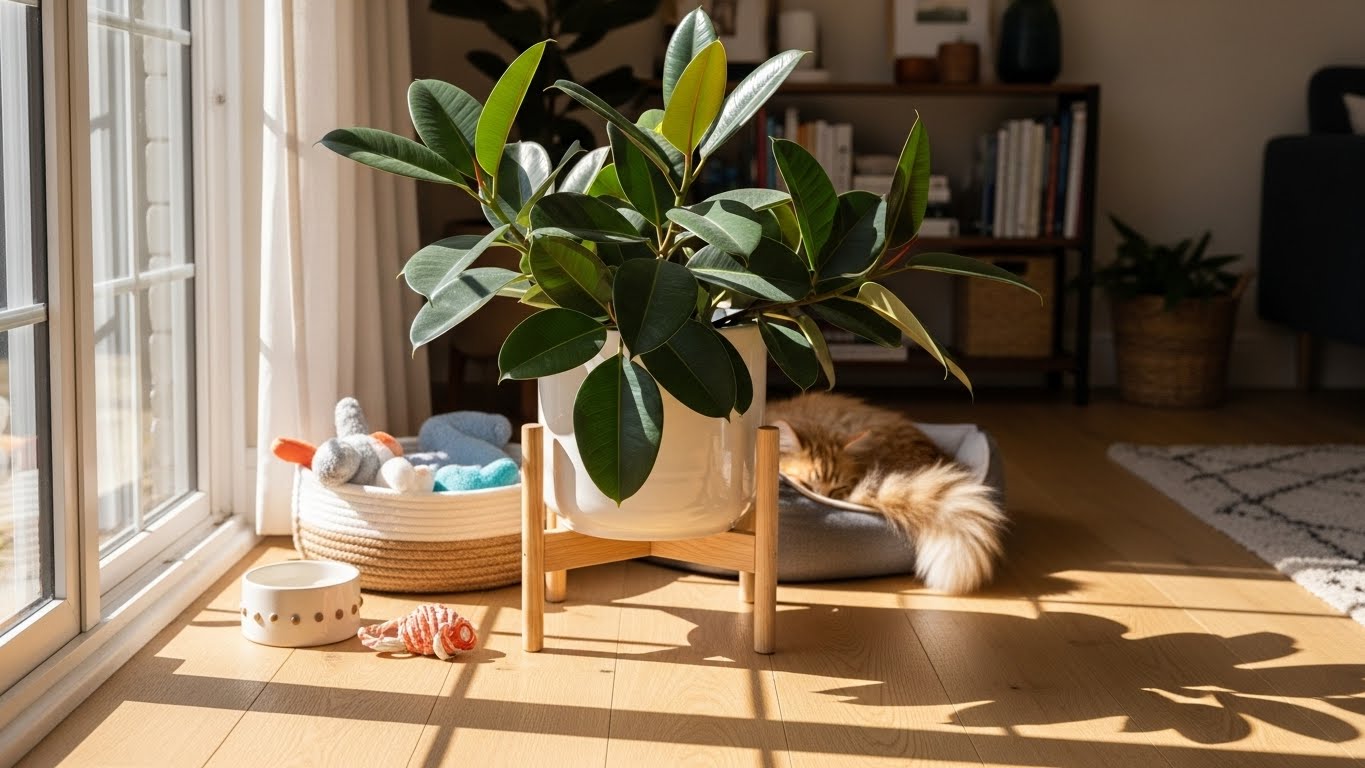
Rubber plants may look great in your home, but they aren’t pet-friendly. These plants have a toxic milky sap that can irritate your pets, causing symptoms like drooling, vomiting, and diarrhea. If your furry friend nibbles on a rubber plant, it’s important to contact a vet right away. To keep your pets safe, consider choosing plants that are non-toxic—there are plenty of options out there! You’ll discover more about keeping your home pet-friendly in the sections ahead.
Key Takeaways
- Rubber plants (Ficus elastica) are toxic to pets due to their milky sap.
- Ingestion can cause gastrointestinal issues, including vomiting and diarrhea.
- Contact with the sap may lead to skin irritation in pets.
- Keeping rubber plants out of pets’ reach helps prevent accidental ingestion.
- Non-toxic alternatives include Spider Plant, Boston Fern, and Areca Palm for pet-friendly homes.
Understanding Rubber Plants: An Overview
Rubber plants, also known as Ficus elastica, are popular houseplants that can bring a touch of nature into your home. Their glossy leaves and robust growth make them a favorite among indoor gardening enthusiasts. To thrive, rubber plants require just the right amount of sunlight; they prefer bright, indirect light. When it comes to plant care, watering is essential—make sure the soil dries out between waterings to prevent root rot. They also enjoy humidity, so misting their leaves can keep them happy. If you’re looking to add some greenery to your space, rubber plants are a fantastic choice. Their adaptability and low maintenance make them perfect companions for your indoor gardening journey! Additionally, understanding their light requirements can help ensure they flourish in your home.
The Toxicity of Rubber Plants
While many people adore the aesthetic appeal of rubber plants, it’s crucial to understand their potential toxicity to pets. These beautiful plants can pose risks, so let’s prioritize pet safety! Here are some key points to keep in mind:
Rubber plants are stunning but can be harmful to pets; prioritize their safety before introducing these plants to your home.
- Rubber plants contain a milky sap that can irritate pets.
- Ingestion may lead to gastrointestinal issues.
- Contact with the sap can cause skin irritation.
- Symptoms can vary based on the size and health of your pet.
Before you bring a rubber plant into your home, consider how it might affect your furry friends. Keeping your pets safe is a top priority, so make sure you’re informed about any plants you choose to invite into your space.
Common Symptoms of Rubber Plant Toxicity in Pets
When pets accidentally munch on a rubber plant, you might notice some warning signs that indicate their body is reacting to the toxins. Common symptoms include drooling, vomiting, and even diarrhea. You may also observe changes in your pet’s behavior, like increased agitation or lethargy. It’s essential to pay close attention to these signs for symptom identification, as quick action can help your furry friend recover. If your pet seems unusually restless or is pawing at their mouth, it’s worth checking for any plant remnants. Always trust your instincts—if something feels off, don’t hesitate to consult your vet. Recognizing these symptoms early can make all the difference in ensuring your pet stays safe and healthy.
Safe vs. Toxic Plants: A Comparison
Understanding the difference between safe and toxic plants is crucial for pet owners, especially since many popular houseplants can pose risks to our furry friends. Here’s a quick comparison to help you navigate your indoor jungle:
- Safe Indoor Plants: Spider Plant, Boston Fern, Areca Palm, Christmas Cactus
- Toxic Plants: Rubber Plant, Philodendron, Pothos, Oleander
While safe indoor plants can enhance your home without worry, toxic plants can lead to unwanted health issues for your pets. It’s essential to create an environment that nurtures both your greenery and your furry companions. By choosing wisely, you can enjoy a beautiful home while keeping your pets safe. Remember, a little knowledge goes a long way in ensuring a harmonious living space!
What to Do If Your Pet Ingests a Rubber Plant
If you think your pet has eaten a rubber plant, it’s important to act fast! First, look for symptoms like drooling, vomiting, or difficulty breathing. Then, don’t hesitate to contact your veterinarian right away and follow their care instructions to keep your furry friend safe and healthy.
Identify Symptoms Quickly
Identifying symptoms quickly can make all the difference if your pet ingests a rubber plant, so it’s crucial to be aware of what to look for. With a quick response, you can guarantee your furry friend gets the help they need. Here are some symptoms to watch out for:
- Vomiting or nausea
- Diarrhea
- Drooling or excessive salivation
- Lethargy or weakness
Being familiar with these signs can aid in symptom recognition, allowing you to act fast. If you notice any of these symptoms, don’t hesitate to take action! It’s always better to be safe than sorry when it comes to your pet’s health. Keep a close eye on your furry companion, and stay informed for their wellbeing!
Contact Veterinarian Immediately
When your pet accidentally munches on a rubber plant, it’s essential to act fast and contact your veterinarian right away. Don’t wait for symptoms to worsen; pet safety should always come first. Let your vet know what happened, how much your pet might have eaten, and any symptoms you’ve noticed. They’re trained to handle these situations and can provide the best advice for your furry friend.
While rubber plants can be toxic, prompt action can make all the difference. Remember, your pet’s health is a priority, and staying calm will help you communicate effectively. So, grab your phone and reach out to your vet, ensuring your beloved companion gets the care they need!
Follow Care Instructions
Following up on that urgent call to your vet, it’s important to know what steps to take next if your pet ingests a rubber plant. Here’s what you should do:
- Stay Calm: Your pet can sense your anxiety, so take a deep breath.
- Monitor Symptoms: Keep an eye on your furry friend for any signs of distress, like vomiting or lethargy.
- Follow Vet’s Advice: If your vet gives you care instructions, make certain to follow them to the letter.
- Prevent Future Issues: Guarantee your rubber plant gets proper watering and ideal lighting to keep it healthy and out of reach.
Taking these steps can help you feel more in control during a stressful situation. Your pet’s safety is what matters most!
Creating a Pet-Friendly Home With Indoor Plants
When you’re creating a pet-friendly home with indoor plants, it’s key to choose options that are safe for your furry friends. You’ll want to be aware of any plants that might be toxic, so you can keep your pets happy and healthy. With the right selections and a little knowledge, you can enjoy the beauty of greenery without worrying about your pets’ safety.
Safe Plant Choices
Creating a pet-friendly home with indoor plants is easier than you might think, especially if you choose the right varieties. By focusing on pet safe gardening, you can guarantee your furry friends stay safe and happy. Here are a few indoor plants that promote indoor plant safety:
- Spider Plant: Easy to care for and non-toxic to pets.
- Boston Fern: A lush option that adds humidity without harm.
- Bamboo Palm: Perfect for bright spaces, and completely safe.
- Areca Palm: A beautiful addition that cleans the air and is pet-friendly.
With these choices, you can create a vibrant indoor garden that complements your lifestyle while keeping your pets safe. So go ahead, nurture your green thumb without worry!
Toxicity Awareness Tips
To guarantee your home is a safe haven for your furry friends, it’s essential to be aware of which plants can pose a risk. Toxic plant awareness is key in creating a pet-friendly indoor environment. Here are some quick tips:
Plant Type | Toxicity Level | Pet Safety Tips |
|---|---|---|
Rubber Plant | Moderate | Keep out of reach |
Pothos | Low | Monitor interactions |
Philodendron | Moderate | Educate family members |
Peace Lily | High | Avoid bringing inside |
Engaging in pet safety education helps you make informed decisions. Always research plants before bringing them home, and consider non-toxic alternatives. Your pets deserve a safe space to explore, so stay informed and protect them!
Alternative Pet-Safe Plants for Your Collection
If you’re looking to expand your plant collection without risking your furry friend’s health, you’re in luck! There are plenty of beautiful, pet-safe options to choose from. Here are some fantastic pet-safe herbs and non-toxic succulents that’ll brighten your home:
- Spider Plant: Easy to care for and purifies the air.
- Bamboo Palm: Adds a tropical vibe while being safe for pets.
- Areca Palm: A lovely, feathery plant that thrives indoors.
- Mint: Not only safe for pets, but also great for freshening up your meals!
These plants not only make your space more inviting, but they also guarantee your furry pals can roam freely without worry. Enjoy your gardening journey with these safe choices!
How to Care for Rubber Plants Safely Around Pets
When you bring a rubber plant into your home, it’s crucial to take a few extra precautions to keep your pets safe and happy. First, place your rubber plant out of reach, ideally on a high shelf or in a room that your pets can’t access. This keeps curious paws from nibbling on the leaves. Next, make sure you use pet-safe fertilizers and pest control methods when tending to your rubber plant care routine. Regularly wipe down the leaves to prevent dust buildup, making it easier to spot any potential pests. Finally, educate yourself about pet safety by checking for signs of distress, so you can act quickly if needed. Your furry friends will thank you for it!
Signs of Allergic Reactions in Pets
When you have a rubber plant at home, it’s important to watch for signs that your pet might be having an allergic reaction. Common symptoms include itching, sneezing, or even unusual behaviors like hiding or excessive grooming. If you notice any of these signs, it’s essential to take immediate action to keep your furry friend safe and healthy.
Common Symptoms to Observe
Recognizing the signs of allergic reactions in your pets is essential, especially if you suspect they might have come into contact with a rubber plant. Keeping an eye on your furry friend’s behavior can help with early symptom recognition. Here are some common symptoms to observe:
- Itching or scratching: Excessive grooming can indicate discomfort.
- Red or swollen skin: Look for inflamed areas, especially around the face and paws.
- Vomiting or diarrhea: Digestive issues can arise in response to allergens.
- Lethargy or unusual behavior: If your pet seems more tired or withdrawn, it’s worth investigating.
Being attentive to these signs can make a big difference in your pet’s health and happiness. Remember, early detection is key!
Immediate Actions to Take
If you notice any signs of an allergic reaction in your pet after they’ve been around a rubber plant, it’s crucial to act quickly. First, check for symptoms like itching, swelling, or vomiting. If your furry friend shows any of these signs, remove them from the plant’s vicinity immediately. For pet safety, you might want to keep the rubber plant out of reach or consider relocating it altogether. Next, wash your pet’s paws and face with mild soap and water to remove any potential irritants. If symptoms persist or worsen, don’t hesitate to contact your veterinarian. Remember, prompt action helps guarantee your pet’s well-being while you continue to enjoy your plant care journey!
The Importance of Plant Placement in Your Home
Plant placement in your home is crucial, not just for aesthetics but also for the well-being of your family and pets. The right indoor arrangement can enhance your space while ensuring plant safety. Here are a few tips to take into account:
- Avoid high-traffic areas: This minimizes the risk of accidental knocks or spills.
- Evaluate light levels: Place plants where they’ll thrive without causing harm to your pets.
- Choose pet-safe spots: Keep plants out of reach of curious paws and snouts.
- Balance aesthetics and safety: Select plants that look great but are also safe for your furry friends.
Educating Pet Owners About Plant Safety
When it comes to keeping your pets safe, understanding which plants can be harmful is vital for every pet owner. You’ll want to develop strong pet awareness to guarantee your furry friends are in a safe environment. Here’s a handy table to help you identify safe and toxic plants:
Plant | Pet-Friendly | Toxic |
|---|---|---|
Rubber Plant | No | Yes |
Spider Plant | Yes | No |
Aloe Vera | No | Yes |
Boston Fern | Yes | No |
Peace Lily | No | Yes |
Staying informed about plant safety is essential. Regularly checking your plants and knowing their effects can prevent accidents, keeping your pets healthy and happy. You’ve got this!
Resources for Pet Owners and Plant Enthusiasts
Finding the right resources to keep both your pets and plants thriving can feel overwhelming, but it doesn’t have to be! You can easily strike a balance between plant care and pet safety with the right information. Here are some helpful resources you should check out:
- Books on Indoor Gardening: Look for guides that focus on pet-friendly plants.
- Online Forums: Join communities where fellow pet owners and plant lovers share tips.
- Local Gardening Clubs: Connect with others who can offer hands-on advice and support.
- Veterinary Websites: Explore articles that specifically address plant toxicity for pets.
Conclusion
In summary, while rubber plants can add a touch of green to your home, it’s essential to keep your pets’ safety in mind. Remember, “an ounce of prevention is worth a pound of cure.” By knowing the risks and managing plant placement, you can enjoy your indoor jungle without worry. Always stay informed about which plants are safe for your furry friends. With a little care, you can create a beautiful, pet-friendly environment that everyone will love!


