

Areca palm leaves curl because of light, water, or pests. If your plant isn’t getting enough bright, indirect light, the leaves might get weak and curl up. Inconsistent watering can stress the plant, too. Make sure you’re keeping the soil slightly moist, but not soggy. Also, watch out for pests hiding on your leaves—check for any signs of trouble. With the right care, you’ll have a healthy palm in no time, and there’s more to learn about it!
Key Takeaways
💡 If you’re curious about starting your Areca Palm journey from seeds, this article provides valuable insights.
➜ Discover proven techniques
- Inconsistent watering can lead to Areca palm leaf curling; maintain a consistent schedule with slightly moist soil.
- Low humidity levels can negatively affect leaf health; ensure humidity is adequate for optimal growth.
- Bright, indirect sunlight is crucial; insufficient light can cause curling and slow growth.
- Check for pests regularly; infestations can damage leaves and lead to curling.
- Nutrient deficiencies may cause leaf curling; ensure proper fertilization and soil nourishment.
Understanding Areca Palm Leaf Curling
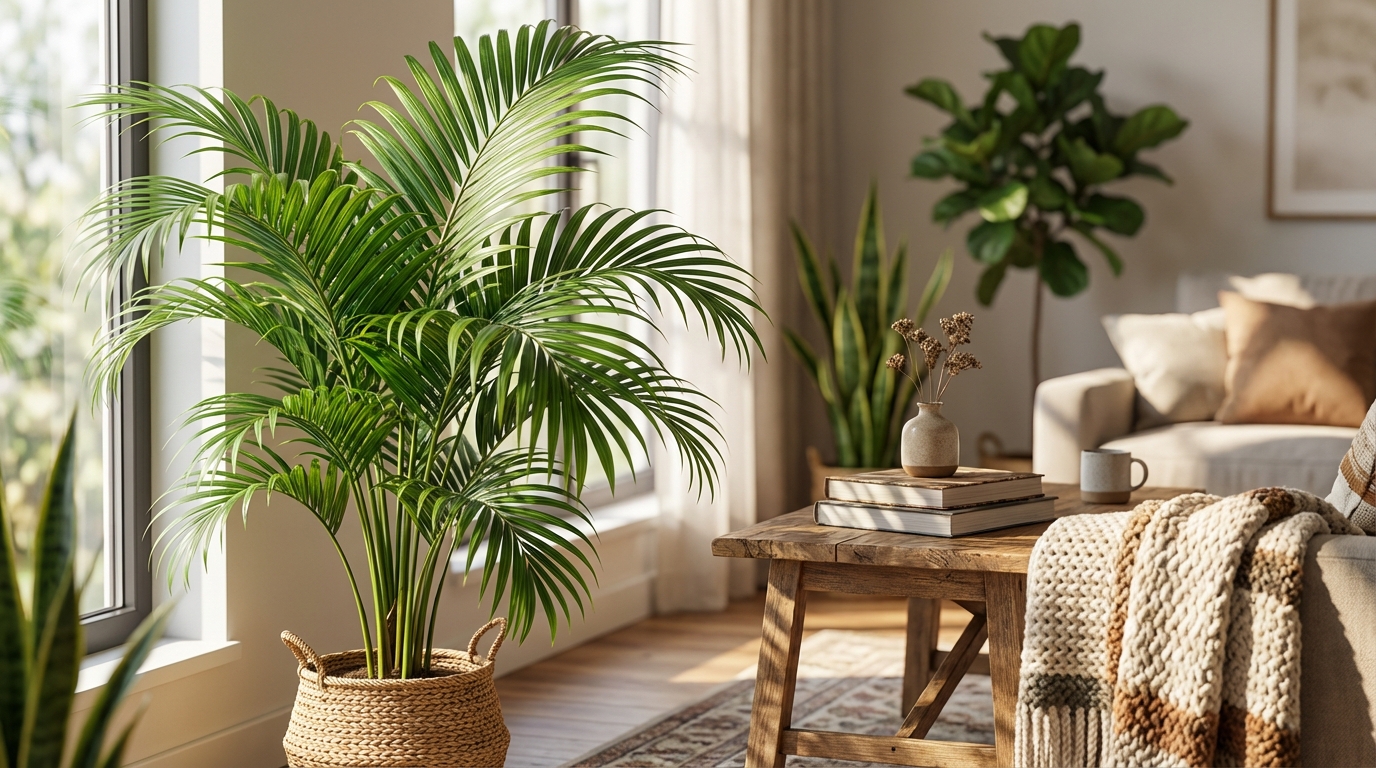
Understanding Areca Palm Leaf Curling can be quite fascinating, especially if you love plants! When you notice your Areca palm’s leaves curling, it’s essential to take into account the leaf structure and what might be going wrong. Curling causes can stem from various factors, including inconsistent watering, low humidity, or even nutrient deficiencies. A healthy Areca palm thrives in a balanced environment, so it’s vital to keep an eye on its needs. If the leaves curl, it may be a cry for help. Regularly checking for pests or ensuring the right pot size can also make a big difference. Additionally, ensuring the right humidity levels is crucial for maintaining leaf health. With a little care and attention, you’ll help your Areca palm bounce back to its beautiful self!
The Role of Light in Leaf Health
Light plays an essential role in keeping your Areca palm healthy and vibrant. Without enough light, you might notice signs like curling leaves or slow growth, which can be frustrating. To keep your plant thriving, it’s important to understand the ideal light conditions it needs to flourish.
Importance of Adequate Light
When you’re caring for an Areca palm, you might not realize just how essential proper lighting is for keeping those beautiful leaves healthy and vibrant. Adequate light helps your palm thrive, promoting lush green foliage and robust growth. Natural sunlight is ideal, so placing your palm near a window where it can soak up those rays is key. If natural light isn’t an option, consider using grow lights to mimic the sun’s warmth. These lights can provide the energy your palm needs to flourish, especially during darker months. Remember, a well-lit Areca palm not only looks stunning but also stays healthier, making your efforts in providing the right light truly worthwhile!
Signs of Insufficient Light
Without the right amount of light, your Areca palm can show some clear signs that it’s not feeling its best. If your plant isn’t getting enough natural light, you might notice the following:
- Leaves starting to turn yellow or pale
- Slow or stunted growth, leaving you wondering what’s wrong
- Leaf tips curling, giving it an unhappy appearance
These symptoms often indicate that your palm needs better light exposure. Remember, Areca palms thrive in bright, indirect sunlight, so if they’re not getting it, they’ll let you know! By paying attention to these signs, you can help your Areca palm bounce back and enjoy a healthy, vibrant life. Don’t hesitate to reposition it for a happier, greener look!
Optimal Light Conditions
Getting the right amount of light is a game changer for your Areca palm’s health and happiness. These beautiful plants thrive best in bright, indirect sunlight. Direct sun can scorch their delicate leaves, causing curling or browning. Instead, aim for locations where they can soak up gentle, natural light, like near a window with sheer curtains.
To keep your Areca palm thriving, rotate it occasionally. This guarantees all sides get equal light, promoting balanced growth. If you notice your palm stretching towards the light, it might be a sign it needs a brighter spot. Remember, providing ideal lighting conditions will help your Areca palm flourish, keeping those vibrant leaves healthy and happy. Your palm will thank you!
Watering Practices for Areca Palms
When it comes to keeping your Areca palm healthy, watering is key! You’ll want to find that sweet spot for frequency, as both too much and too little water can lead to problems. Let’s explore how to tell if your plant’s getting the right amount, so those lovely leaves can thrive!
💡 Pests can be a significant factor in leaf curling. This article will help you identify and manage these threats.
➜ Explore advanced methods
Optimal Watering Frequency
To guarantee your Areca palm thrives, figuring out the ideal watering frequency is key to its health and happiness. You want to master the right watering techniques to keep your plant feeling loved and vibrant. Here are some tips to help you out:
- Check the soil moisture regularly; it should be slightly moist but not soggy.
- Water your Areca palm every 1 to 2 weeks, adjusting based on the season and humidity levels.
- Always use well-draining soil to prevent water from sitting too long, which can harm your palm.
Signs of Overwatering
Even with the right watering frequency, Areca palms can still face some challenges, particularly if they get too much water. You’ll want to keep an eye out for overwatering signs that could signal trouble. Yellowing leaves often hint that your plant’s roots are drowning. If the fronds start wilting or browning at the tips, that’s another clear sign. Check the soil, too; if it feels soggy or has a foul odor, your palm’s root health may be at risk. Remember, healthy roots are essential for your Areca’s growth, so guarantee they have good drainage. If you notice these signs, adjust your watering routine to help your palm thrive again!
Underwatering Symptoms
Underwatering can be just as harmful to your Areca palm as overwatering, and spotting the symptoms early is key to keeping your plant healthy. When your palm isn’t getting enough water, it can experience moisture stress, leading to some telltale signs.
- Leaves might start curling or wilting.
- The tips of the leaves can turn brown and crispy.
- The soil will feel dry to the touch.
If you notice these underwatering symptoms, it’s time to adjust your watering routine. Remember, Areca palms love consistent moisture, so don’t let them dry out completely. By paying attention to your plant and responding to its needs, you can help it thrive and keep those beautiful fronds looking their best!
Identifying and Treating Pests
Pests can be sneaky little troublemakers, often hiding on your Areca palm and causing those frustrating leaf curls. To tackle this issue, start with pest identification. Look for tiny webs, sticky residues, or small insects like spider mites and aphids. Don’t worry; you can often spot them with a close inspection. Once you identify the pests, consider your treatment options. Neem oil is a natural remedy that works wonders, suffocating the pests and keeping your plant safe. You can also use insecticidal soap, which targets those pesky invaders without harming your palm. Remember, regular checks can help prevent infestations, so keep an eye out and give your Areca the care it deserves!
Environmental Factors Affecting Growth
While you may think that just watering your Areca palm is enough, environmental factors play an essential role in its overall growth and health. Paying attention to these elements can make a big difference.
Watering your Areca palm is just the start; environmental factors greatly influence its growth and well-being.
- Soil Composition: Well-draining soil is vital for your palm’s roots. A mix of potting soil and sand can promote healthy growth.
- Humidity Levels: Areca palms thrive in humidity, so keep the air moist. You can mist the leaves or use a humidifier for extra support.
- Light Conditions: Bright, indirect sunlight is ideal. Too much direct sun can scorch the leaves, while too little can stunt growth.
Tips for Reviving Curling Leaves
When you notice your Areca palm’s leaves curling, it’s essential to act quickly, as this often signals underlying issues that need addressing. First, assess its environment; make sure it’s receiving the right amount of light and water. Next, consider leaf restoration techniques like pruning damaged leaves to promote new growth. You can also enhance your palm’s health with nutrient supplementation strategies, such as adding a balanced fertilizer to nourish the soil. Regularly check for pests, too; if you spot any, treat them promptly. With these steps, you’ll help your Areca palm bounce back and thrive. Remember, a little attention goes a long way in nurturing your beloved plant, making it vibrant and happy again!
Conclusion
In conclusion, if your areca palm’s leaves are curling, don’t panic! By checking the light, adjusting your watering routine, and keeping an eye out for pests, you can help your plant thrive. Remember, “a stitch in time saves nine.” Taking these steps early can prevent bigger issues later on. With a little care and attention, your palm can bounce back and bring beauty to your space once more. Happy gardening!
💡 Light conditions play a vital role in the health of your Areca Palm. Learn how to optimize lighting for lush growth.
➜ Get the step-by-step guide


