
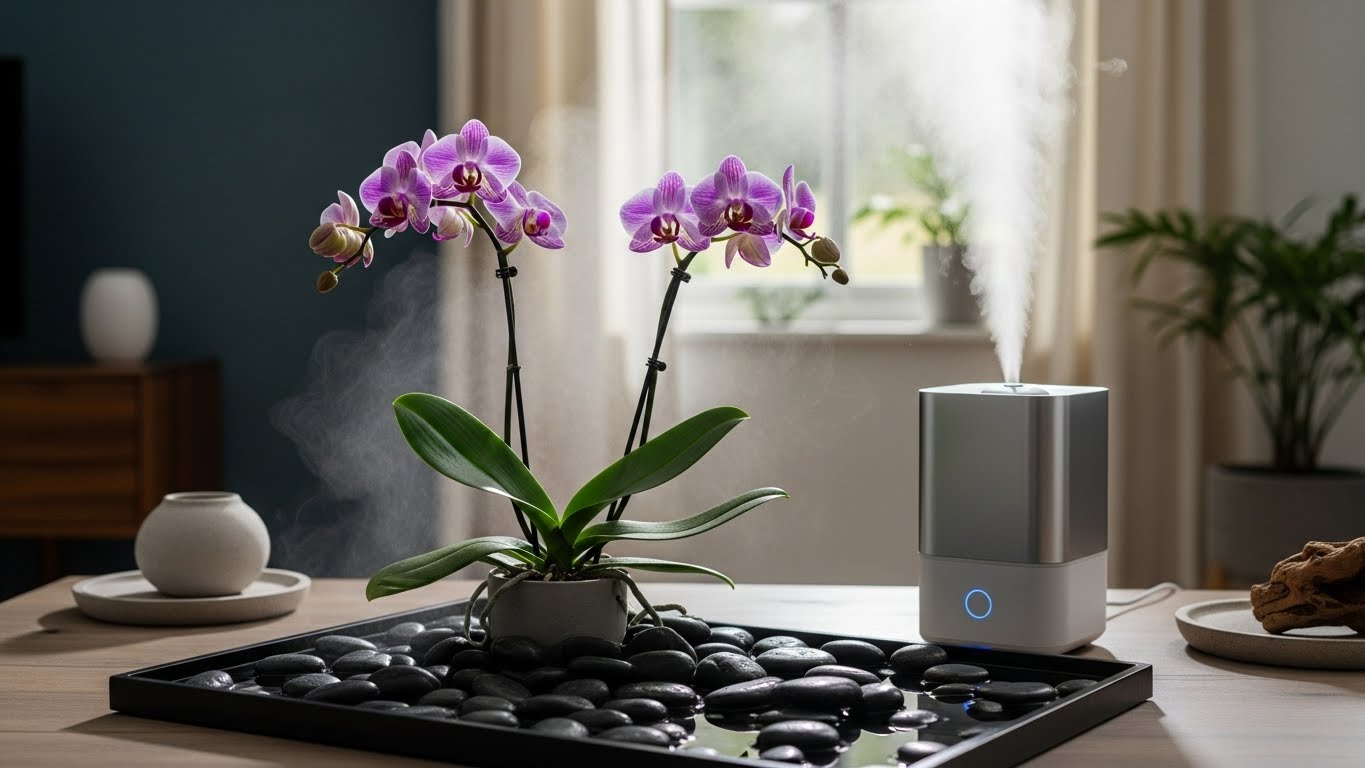
To keep your orchids healthy indoors, aim for humidity levels between 40% and 70%. Most orchids, like Phalaenopsis and Paphiopedilum, thrive best in 50% to 70% humidity. Too low can stress your plants, while too high can cause mold. To maintain these levels, try using pebble trays or misting your orchids regularly. Keeping an eye on your plants’ health will help you gauge their needs. There’s much more to discover about creating the perfect orchid environment!
Key Takeaways
- Orchids thrive best in humidity levels of 40% to 70%, depending on the species.
- Phalaenopsis and Paphiopedilum orchids prefer humidity between 50% to 70%.
- Cattleya orchids thrive in slightly lower humidity, ideally between 40% and 60%.
- Maintain consistent humidity using pebble trays, misting, or humidifiers.
- Regularly monitor humidity levels with a hygrometer to ensure optimal conditions for orchid health.
Understanding Orchid Humidity Needs

When it comes to keeping your orchids happy and healthy, understanding their humidity needs is essential. Orchids thrive in environments with higher humidity, typically between 50% to 70%. You might want to reflect on various humidity sources like pebble trays, misting, or even a humidifier to create that cozy atmosphere they adore. The humidity effects on your orchids can be quite dramatic; too little moisture makes them dry and stressed, while too much can lead to mold or rot. By paying attention to these needs, you’ll foster strong, vibrant plants that bloom beautifully. Remember, your orchids aren’t just plants; they’re living companions that flourish with the right care and love, so let’s give them the humidity they crave! Additionally, maintaining humidity levels in your indoor environment is crucial for promoting overall orchid health and encouraging blooming.
Ideal Humidity Levels for Different Orchid Types
When it comes to keeping your orchids happy, understanding their unique humidity needs is key! Different types, like Phalaenopsis, Cattleya, and Paphiopedilum, each have their own preferences that can really impact their growth. Let’s explore the ideal humidity levels for these fascinating varieties, so you can create the perfect environment for your indoor garden!
Phalaenopsis Humidity Needs
Phalaenopsis orchids, often called “moth orchids,” thrive best in humidity levels ranging from 50% to 70%. To keep your beautiful blooms happy and healthy, here are some tips to reflect upon:
- Watering: Guarantee you give them enough water without overdoing it; let the top inch of soil dry out between phalaenopsis watering.
- Light: Place them in bright, indirect light; too much direct sun can be harmful.
- Humidity: If your home’s humidity is low, contemplate using a humidity tray or a humidifier.
- Temperature: Keep them in a warm spot, ideally between 65°F to 75°F, for best growth.
Cattleya Humidity Preferences
Cattleyas, known for their stunning blooms and vibrant colors, prefer humidity levels between 40% and 60%. To keep your Cattleya happy and thriving, aim for a consistent humidity around this range. If the air in your home is too dry, consider using a humidifier or placing a tray of water nearby. It’s also essential to monitor Cattleya watering; let the potting medium dry slightly between waterings to avoid root rot. Additionally, remember that Cattleya temperature plays a vital role in their overall health. They enjoy warm conditions, ideally between 70°F and 85°F during the day. By maintaining the right humidity and temperature, you’ll create a cozy environment for your Cattleyas to flourish, rewarding you with gorgeous flowers.
Paphiopedilum Ideal Conditions
If you want to create the perfect environment for your Paphiopedilum orchids, you’ll need to pay close attention to their humidity needs. These lovely orchids thrive in moisture, so here’s what you should aim for:
- Humidity Level: Keep it between 50% to 70%.
- Watering Schedule: Water them weekly, ensuring the potting mix stays moist but not soggy.
- Misting: Lightly mist them a few times a week to boost humidity.
- Humidity Tray: Place a tray filled with water and pebbles under their pot to naturally elevate humidity.
With proper paphiopedilum care and attentive paphiopedilum watering, you’ll watch your orchids flourish beautifully. Happy growing!
How to Measure Humidity in Your Home
To keep your orchids happy, you’ll need to measure the humidity in your home. You can use specialized tools like hygrometers, or try some simple DIY methods to get a sense of the moisture levels in the air. Knowing how to check humidity will help you create the perfect environment for your plants to thrive!
Humidity Measurement Tools
Measuring humidity in your home is essential for keeping your orchids happy and healthy, as these beautiful plants thrive in moist environments. To guarantee your orchids receive the right humidity, you’ll want to invest in some humidity measurement tools. Here are four hygrometer types and humidity monitors to take into account:
- Analog Hygrometers: Simple and classic, easy to read.
- Digital Hygrometers: More precise and often come with additional features.
- Smart Humidity Monitors: Connect to your smartphone for real-time updates.
- Wireless Sensors: Place them throughout your home for thorough readings.
Each of these tools can help you keep track of humidity levels, allowing your orchids to flourish in their perfect environment.
DIY Humidity Testing Methods
When it comes to ensuring your orchids thrive indoors, knowing the humidity levels in your home is just as important as watering them correctly. You can easily measure humidity with DIY methods. One simple approach is to create humidity traps: place shallow bowls of water near your orchids. After a few hours, check the water level; if it’s evaporated considerably, your home might need more moisture.
Another option is to use moisture indicators like a hygrometer, which can be homemade using a wet and dry bulb thermometer. Simply wrap a wet cloth around one bulb, and compare the temperatures. These methods will help you keep a close eye on your orchid’s environment, ensuring they flourish!
Tips for Maintaining Optimal Humidity
Maintaining ideal humidity for your orchids can feel like a balancing act, but with a few simple tips, you can create the perfect environment for your beautiful plants to thrive. Here are some effective strategies to try:
Creating the right humidity for your orchids is essential; simple strategies can help your plants thrive beautifully.
- Use humidity trays: Place trays filled with water and pebbles under your pots, allowing moisture to evaporate and surround your orchids.
- Incorporate misting techniques: Gently mist your orchids a few times a week, especially during dry spells, to keep them happy and hydrated.
- Group your orchids: Cluster your plants together to create a mini humid microclimate, helping them share moisture.
- Monitor humidity levels: Invest in a hygrometer to track humidity, ensuring you adjust your methods as needed.
With these tips, your orchids will flourish beautifully!
Common Humidity-Related Issues and Solutions
Humidity plays a crucial role in the health of your orchids, and if you’re not careful, you might encounter some common issues that can hinder their growth. One major problem is humidity stress, which often shows up as wilting or browning leaves. When your orchids aren’t getting enough moisture, they become unhappy, leading to stunted growth. On the flip side, too much humidity can result in root rot, a sneaky issue that can destroy your plant’s roots. To solve these problems, you can adjust your watering routine, ensuring your orchids get just the right amount of moisture. Regularly check the soil’s moisture level, and use pots with good drainage to help your beautiful orchids thrive in their perfect humidity zone.
Additional Methods to Increase Humidity for Orchids
If you’re looking to boost humidity levels for your orchids, there are several effective methods you can try that don’t require complicated setups. Here are some simple yet powerful ways to keep your orchids happy and thriving:
- Misting Techniques: Lightly mist your orchids daily to provide instant moisture, but avoid soaking them.
- Humidity Trays: Place a shallow tray filled with water and pebbles under your pots. As the water evaporates, it increases humidity around the plants.
- Group Planting: Cluster your orchids together; they’ll create a mini humid environment, helping each other thrive.
- Use a Humidifier: If you’re really dedicated, consider a small humidifier to maintain consistent humidity levels.
Try these methods, and watch your orchids flourish!
Conclusion
To conclude, keeping your orchids happy indoors means understanding their humidity needs. Most orchids thrive at humidity levels between 40% and 70%. To put that in perspective, a simple household humidifier can boost your home’s moisture by 30%, creating a cozy environment for your plants. By measuring humidity and adjusting it as needed, you’ll help your orchids flourish. So, embrace these tips, and watch your beautiful orchids thrive in their ideal indoor climate!


