
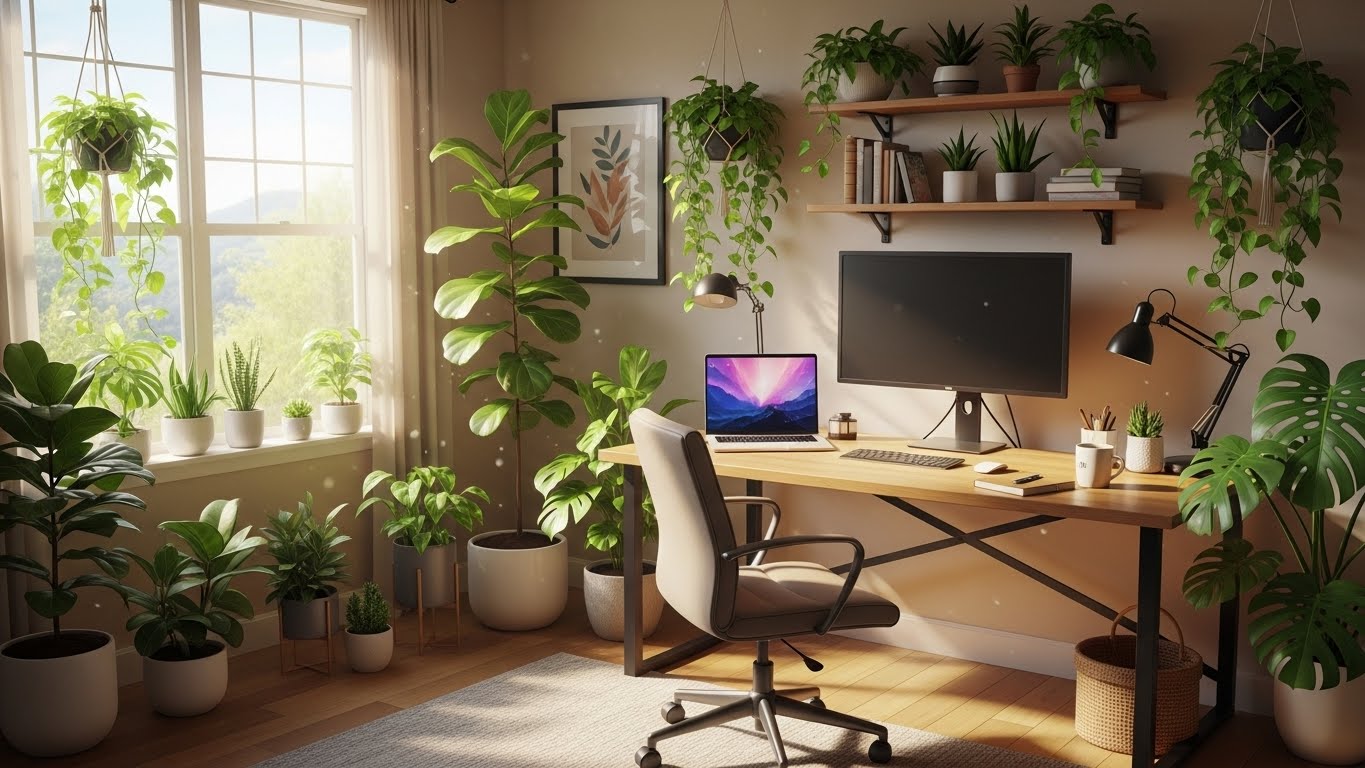
The Biophilic Home Office: Cultivating Focus and Serenity in the Modern Workspace
The contemporary home office has evolved beyond a mere place of work; it is now an integral component of personal well-being, a command center from which we navigate the demands of an “always-on” professional culture. In this environment, the persistent challenge is maintaining focus and mitigating stress. A powerful, evidence-based solution lies in the principle of biophilia—the innate human tendency to seek connections with nature. Integrating living plants into the home office is not simply an act of decoration; it is a strategic application of biophilic design, a method for creating a more restorative, productive, and serene workspace.
💡 Learn how to strategycally place your indoor plants for maximum impact.
➜ Discover proven techniques
The Science of Green: Beyond Aesthetics
A robust body of research substantiates the tangible benefits of incorporating plants into a work environment, moving the practice from anecdotal to evidence-based. These advantages are not medical claims but well-documented psychological and performance-based outcomes.
- Productivity and Focus: The presence of plants has been consistently linked to significant gains in performance. Studies have demonstrated that employees in green-rich environments can be up to 15% more productive and work 12% faster on computer-based tasks compared to those in plant-less spaces. This boost is attributed to an enhanced ability to concentrate and a greater sense of workplace satisfaction.
- Stress and Mood Regulation: Greenery has a profound impact on emotional well-being. Research indicates that office plants can reduce tension and anxiety by 37%, lessen fatigue by 38%, and lower feelings of depression or dejection by 58%. The color green itself is associated with calm and relaxation in color psychology, and the presence of living plants creates a tranquil ambiance that can buffer the effects of job-related stress.
- Attention Restoration: The mechanism behind these benefits is explained by the Attention Restoration Theory. Modern work requires prolonged periods of directed attention, a finite cognitive resource that becomes depleted, leading to mental fatigue. Viewing natural elements like plants engages “soft fascination,” a form of effortless attention that allows our directed-attention capabilities to rest and recover. These restorative micro-breaks, even just a glance at a leaf, help renew our capacity to concentrate, thereby reducing stress and enhancing performance.
- Acoustic Benefits: In a home office, which may be part of a larger, active living space, ambient noise can be a significant distraction. Plants, particularly larger ones with broad leaves, act as natural sound absorbers. They can dampen echoes and soften background noise, creating a quieter, more focused work environment. This is especially beneficial for neurodiverse individuals who may be more sensitive to auditory distractions.
The cumulative evidence points to a conclusion beyond simple aesthetics. The placement of a plant is an act of cognitive ergonomics. Just as an ergonomic chair supports the body, a well-placed plant supports the mind. It is a tool for managing finite mental resources. The reduction in attention fatigue directly correlates with lower stress and frees up the cognitive capacity required for deep, productive work. Therefore, curating a green workspace is a deliberate strategy to optimize the cognitive environment for sustained high performance.
Part I: The Green Roster — Your Curated Guide to Office-Ready Plants
Selecting the right plant for a home office involves balancing aesthetics with the practical realities of the space: light, size, and maintenance. The following plants have been curated for their resilience in typical indoor settings, their visual appeal in a professional context, and their manageable care requirements. To simplify the selection process, they are organized by the three primary light conditions found in most homes. All selected varieties are unscented to prevent sensory distractions in a focused workspace.
The Home Office Desk Fit Matrix
This matrix provides a comprehensive, at-a-glance comparison to help identify the perfect plant for any specific home office setup. It cross-references the most critical decision-making factors: light availability, desk space, watering commitment, pet safety, and the potential risk to nearby electronics. The “Near-Electronics Risk” is assessed based on the plant’s watering needs, misting requirements, and tendency for guttation (the secretion of water droplets from leaves), with “Low” indicating minimal risk and “High” suggesting a need for greater caution and distance from sensitive equipment.
Plant Name | Light Zone | Ideal Desk Size | Watering Frequency | Pet-Safe? (ASPCA Verified) | Near-Electronics Risk |
Snake Plant (Dracaena trifasciata) | Low | Small to Large | Every 2–4 weeks | No | Low |
ZZ Plant (Zamioculcas zamiifolia) | Low | Small to Medium | Every 2–4 weeks | Yes (Mild Irritant) | Low |
Cast Iron Plant (Aspidistra elatior) | Low | Medium to Large | Every 1–2 weeks | Yes | Low |
Pothos (Epipremnum aureum) | Low to Medium | Small (trailing) | Every 1–2 weeks | No | Medium |
Heartleaf Philodendron (P. hederaceum) | Low to Medium | Small (trailing) | Every 1–2 weeks | No | Medium |
Spider Plant (Chlorophytum comosum) | Medium | Small to Medium | Weekly | Yes | Low |
Peace Lily (Spathiphyllum) | Medium | Medium | Weekly | No | Medium |
Chinese Evergreen (Aglaonema) | Low to Medium | Small to Medium | Every 1–2 weeks | No | Medium |
Parlor Palm (Chamaedorea elegans) | Medium | Medium to Large | Every 1–2 weeks | Yes | Medium |
Prayer Plant (Maranta leuconeura) | Bright, Indirect | Small | Weekly | Yes | High |
Calathea (Calathea spp.) | Bright, Indirect | Small to Medium | Weekly | Yes | High |
Fittonia (Nerve Plant) (Fittonia albivenis) | Medium | Small | Weekly | Yes | High |
Bromeliad (Bromeliaceae) | Bright, Indirect | Small to Medium | Every 1–2 weeks | Yes | Low |
Air Plant (Tillandsia) | Bright, Indirect | Small | Weekly (soak/mist) | Yes | High |
Detailed Plant Profiles
Low Light Legends (Unfussy & Resilient)
These plants are champions of tolerance, capable of thriving even in rooms with north-facing windows or spaces reliant on artificial fluorescent lighting.
- Snake Plant (Dracaena trifasciata): With its upright, architectural leaves, the Snake Plant offers a modern, sculptural element. It is famously low-maintenance, tolerating infrequent watering and a wide range of light conditions. Its vertical growth habit makes it ideal for tight corners or small desks. Note: Toxic to cats and dogs if ingested.
- ZZ Plant (Zamioculcas zamiifolia): The ZZ Plant features glossy, dark green leaves on arching stems, reflecting light and brightening dim spaces. It is exceptionally drought-tolerant due to its water-storing rhizomes, making it perfect for the forgetful plant owner. Note: Contains calcium oxalate crystals, which can be a mild irritant to pets and humans if ingested.
- Cast Iron Plant (Aspidistra elatior): True to its name, this plant is nearly indestructible. Its lush, deep green, lance-shaped leaves add a touch of classic elegance. It withstands low light, low humidity, and infrequent watering with grace. Note: It is non-toxic and safe for homes with pets.
- Pothos (Epipremnum aureum): A versatile and fast-growing vine, Pothos is ideal for placing on a high shelf or bookshelf where its heart-shaped leaves can cascade down. It is highly adaptable to various light levels and is very communicative, with leaves that wilt slightly when thirsty. Note: Toxic to cats and dogs.
Medium Light Mainstays (The Versatile Core)
These plants flourish in the balanced light of an east-facing window or a spot several feet away from a brighter west- or south-facing window.
- Heartleaf Philodendron (Philodendron hederaceum): Similar in appearance and habit to Pothos, this vining plant has classic heart-shaped leaves and is exceptionally easy to care for. It thrives in a range of conditions and is quick to propagate. Note: Toxic to pets and humans if ingested.
- Spider Plant (Chlorophytum comosum): A classic for a reason, the Spider Plant has arching, variegated leaves and produces small plantlets, or “pups,” that can be easily propagated. It is resilient and adaptable. Note: It is non-toxic and pet-safe.
- Peace Lily (Spathiphyllum): Known for its elegant, dark green leaves and distinctive white spathe flowers, the Peace Lily adds a touch of sophistication. It has the helpful trait of drooping dramatically when it needs water, removing guesswork. Note: Contains insoluble calcium oxalates and is toxic to pets.
- Chinese Evergreen (Aglaonema): This plant is prized for its richly patterned foliage, which can feature shades of silver, pink, and red. It’s a slow-growing and durable choice that tolerates lower light levels well. Note: Toxic to cats and dogs.
- Parlor Palm (Chamaedorea elegans): This plant delivers the classic, feathery look of a tropical palm in a compact, manageable size perfect for an office. It is slow-growing and adapts well to indoor conditions. Note: It is non-toxic and pet-safe.
Bright, Indirect Stars (For the Sunnier Spot)
These plants require a spot with bright, filtered light, such as near a sheer-curtained south-facing window or in a room that receives abundant ambient light.
- Prayer Plant (Maranta leuconeura): Famous for its intricately patterned leaves with striking veins, this plant exhibits nyctinasty—its leaves fold up at night as if in prayer. This movement adds a dynamic element to the workspace. Note: It is non-toxic and pet-safe.
- Calathea (Calathea spp.): Often grouped with Prayer Plants, Calatheas are renowned for their stunning, ornate foliage, which comes in a vast array of patterns and colors. They are a statement piece for any desk. Note: They are non-toxic and safe for pets.
- Fittonia (Nerve Plant) (Fittonia albivenis): This compact plant is notable for its deeply veined leaves, which can be pink, red, or white against a green background. It thrives in high humidity, making it an excellent candidate for a terrarium. Note: It is non-toxic and pet-safe.
- Bromeliad (Bromeliaceae): Bromeliads offer a vibrant pop of color with their long-lasting, flower-like bracts that emerge from a rosette of stiff leaves. They are relatively low-maintenance and bring a tropical feel. Note: They are non-toxic and pet-safe.
- Air Plant (Tillandsia): These unique epiphytes require no soil, offering maximum versatility for creative displays. They can be placed in glass globes, mounted on wood, or arranged in ceramic holders, making them a minimalist’s dream. Note: They are non-toxic and pet-safe.
Part II: The Ergonomic Greenhouse — Strategic Setup for Health and Safety
Setting up a home office with plants is more than just placement; it’s about designing a micro-environment where plants and technology can coexist safely and effectively. This requires a holistic approach that considers the interplay of light, visibility, airflow, and equipment to ensure the health of both the botanical and technological assets of the workspace. A change in one element has ripple effects on the others; for example, moving a plant to avoid monitor glare might place it in a low-airflow corner, which in turn increases local humidity and potential risk to electronics over time. This interconnectedness means the setup process must be strategic.
Positioning for Productivity: Beyond the Windowsill
💡 Transform your workspace by learning how to use plants as natural dividers.
➜ Explore advanced methods
- Eye-Level Greenery: To maximize the restorative benefits, plants should be placed within the direct line of sight from the desk chair. This positioning facilitates the effortless “micro-breaks” that combat attention fatigue. A small plant on the corner of the desk or a larger one on a stand adjacent to the workspace ensures that the calming effects of nature are just a glance away.
- Glare-Free Placement: Reflections on a computer screen can cause significant eye strain. To prevent this, plants should never be placed directly between the user and the monitor. A tall plant positioned directly behind a monitor can also reflect light from a window onto the screen. The optimal placement is to the side of the monitor setup, where the foliage can be seen without interfering with the screen’s visibility.
- Airflow is Non-Negotiable: Good air circulation is vital for preventing the buildup of stagnant air, which can lead to fungal diseases and attract pests. Avoid tucking plants into tight, unventilated corners. Furthermore, keep plants away from the direct path of heating or air conditioning vents, as the constant drafts and temperature fluctuations can cause stress, leading to leaf drop and browning.
Cable-Safe Hydration: Protecting Your Tech Investment
The primary concern when mixing plants and electronics is the risk of water damage. A disciplined and strategic approach to watering is essential to protect computers, monitors, and peripherals.
💡 Maximize natural light and aesthetics in your office with these window styling tips.
➜ Get the step-by-step guide
- The Mandatory Saucer: Every plant pot must have a deep, non-porous saucer or be placed inside a decorative cachepot without drainage holes. This is the first and most critical line of defense to catch any excess water that drains from the pot after watering.
- Bottom-Watering Technique: For maximum safety, adopt the bottom-watering method. Place the plant in a sink or a separate basin filled with a few inches of water and allow the soil to absorb moisture from the bottom up for 15-20 minutes. This technique completely eliminates the risk of spills and splashes on the desk surface.
- Precision Tools: When top-watering is necessary, use a watering can with a long, narrow spout. This allows for precise delivery of water directly to the soil at the base of the plant, minimizing the chance of splashing onto leaves, the desk, or nearby cables.
- The Microfiber Wipe-Down: For plants that appreciate higher humidity (like Calatheas or Fittonias), avoid misting, which can disperse fine water droplets onto electronic components. Instead, incorporate a weekly “leaf-wipe day” into the maintenance routine. Gently wipe the top and bottom of the leaves with a damp microfiber cloth. This cleans away dust, improving photosynthesis, and provides a localized humidity boost without aerosolizing water.
- Guttation Awareness: Some plants, particularly aroids like Pothos and Philodendron, may exhibit a natural process called guttation, where they excrete small droplets of excess water from the tips of their leaves, especially overnight. While harmless to the plant, this moisture can drip onto surfaces below. For plants prone to this phenomenon, it is wise to place them on a protective mat or ensure they are not positioned directly above sensitive electronics.
Part III: Thriving Together — Effortless Maintenance and Smart Solutions
Consistent care is the key to a thriving indoor garden, but it need not be a time-consuming burden. By establishing a simple routine and leveraging modern technology, plant maintenance can become a seamless and enjoyable part of the work week.
The Two-Minute Weekly Wellness Check
This rapid checklist is designed to be completed in less than two minutes, transforming plant care from a daunting task into a quick, restorative ritual.
- Soil Moisture Check: The most reliable method is the “finger test.” Insert a finger about one inch into the soil. If it feels dry at that depth, it may be time to water. If it feels damp, wait a few more days.
- Visual Scan: Quickly inspect the plant for any early signs of stress. Look for yellowing or browning leaves, brown tips, or wilting foliage. Catching these issues early is key to easy correction.
- Pest Inspection: Briefly check the undersides of a few leaves and the joints where leaves meet the stem. This is where common pests like spider mites or mealybugs tend to hide.
- Rotation: Give the pot a quarter-turn. This ensures all sides of the plant receive equal light exposure over time, promoting even growth and preventing the plant from leaning towards the light source.
- Dust-Off Reminder: Notice if a layer of dust is accumulating on the leaves. If so, make a mental note for a monthly wipe-down with a damp cloth to ensure the leaves can photosynthesize efficiently.
The Set-and-Forget Solution: A Guide to Self-Watering Planters
For the busy professional, frequent traveler, or novice plant owner, self-watering planters offer an elegant, low-maintenance solution that removes the guesswork from hydration.
- How They Work: These planters operate on a simple sub-irrigation principle. They consist of a growing chamber for the plant and a separate water reservoir below. The two are connected by a mechanism that allows the soil to draw water up as needed.
- Wicking System: The most common type uses an absorbent wick, often made of cotton or nylon rope, that extends from the water reservoir up into the soil. Through capillary action, the wick draws water upwards, keeping the soil consistently moist.
- Reservoir System: In this design, a porous barrier or an open-air gap separates the soil from the water reservoir. The plant’s roots eventually grow down through or around this barrier to access the water directly, a process known as osmosis.
- Choosing the Right System: Wicking systems are ideal for most tropical houseplants that prefer consistently moist soil, such as Peace Lilies, Ferns, and Fittonias. However, they are not suitable for plants that require their soil to dry out completely between waterings, like succulents, cacti, Snake Plants, or ZZ Plants, as the constant moisture can lead to root rot. Many modern self-watering planters come in a variety of styles, from sleek minimalist designs to modular, stackable units perfect for creating a green wall effect.
Part IV: Camera-Ready Greenery — Mastering the Professional Plant Backdrop
In the age of video conferencing, the home office background has become a new form of professional expression. A thoughtfully curated backdrop featuring real plants projects authenticity, stability, and an attention to detail that a generic virtual background cannot replicate. It is a powerful tool for non-verbal communication and personal branding. A well-maintained plant collection subconsciously signals positive traits like nurturing and growth, while a cohesive design communicates organization and aesthetic sensibility. This transforms plant styling from a mere decorative act into a strategic component of one’s professional persona.
Principles of Plant Styling for Video Calls
- Create Depth and Dimension: Avoid a flat, two-dimensional look by layering plants at varying distances from the camera. Position a larger floor plant in the background, a medium-sized plant on a bookshelf in the mid-ground, and perhaps a small, intriguing plant on the corner of the desk in the foreground. This staggering creates a more dynamic and visually interesting composition.
- Strategic Placement and Framing: The subject of the call should remain the focal point. Avoid placing a large or bushy plant directly behind the head, as this can be distracting. Instead, use the “rule of thirds” and position statement plants off-center to frame the shot. A tall, slender plant can create a pleasing vertical line on one side, while a trailing plant can soften the hard edge of a bookshelf on the other.
- Cohesive Container Curation: The choice of pots and planters is as important as the plants themselves. To achieve a polished and intentional look, select containers that adhere to a consistent color palette. A simple and effective scheme involves using neutral colors like white, grey, or terracotta for the majority of pots, with one or two accent pieces in a metallic finish or a single bold color. This creates harmony and prevents the background from appearing cluttered.
- Varying Height, Texture, and Form: A visually compelling arrangement includes a variety of plant shapes. Combine the strong, upright lines of a Snake Plant with the soft, cascading habit of a Pothos and the full, feathery texture of a Parlor Palm. This diversity in form adds richness and sophistication to the overall design.
Creative Display Ideas
- The Elevated Bookshelf: Bookshelves are a prime location for video call backdrops. Break up rows of books by integrating small- to medium-sized plants. Place a trailing plant like a Pothos or Spider Plant on a top shelf, allowing its foliage to cascade elegantly down the side, which softens the structure and adds a dynamic, living element.
- Vertical Interest with Hanging Planters: Utilize vertical space to draw the eye upward and add layers to the composition. Macrame hangers can introduce a touch of bohemian texture, while sleek, modern hanging planters can complement a minimalist aesthetic. These are particularly effective for trailing plants and can be positioned to fill empty visual space in the upper corners of the camera frame.
- Layering with Plant Stands: A common mistake is having all plants at floor or desk level. Use plant stands of varying heights to elevate floor plants so they are visible in the camera frame. This technique is essential for creating the mid-ground layer and adds a sense of intentional, multi-level design to the space.
Conclusion: Your Greener Workspace Awaits
The integration of indoor plants into the work-from-home environment represents a meaningful investment in both personal well-being and professional presentation. The evidence is clear: the presence of greenery can sharpen focus, elevate mood, and reduce stress by tapping into our innate connection with the natural world. By understanding the principles of cognitive ergonomics, one can transform a simple houseplant into a powerful tool for sustaining mental energy throughout the workday.
From selecting the right resilient, low-maintenance species for any light condition to implementing safe, tech-friendly setup and care routines, the path to a greener office is both accessible and rewarding. The modern professional is now equipped not only to cultivate a thriving indoor garden but also to style it into a sophisticated, camera-ready backdrop that communicates competence and authenticity in every virtual interaction. This guide provides the framework; the journey of creating a more productive, serene, and beautiful workspace now begins.
💡 Learn how to fill those empty corners in your office with tall, striking plants.
➜ Master this approach


