
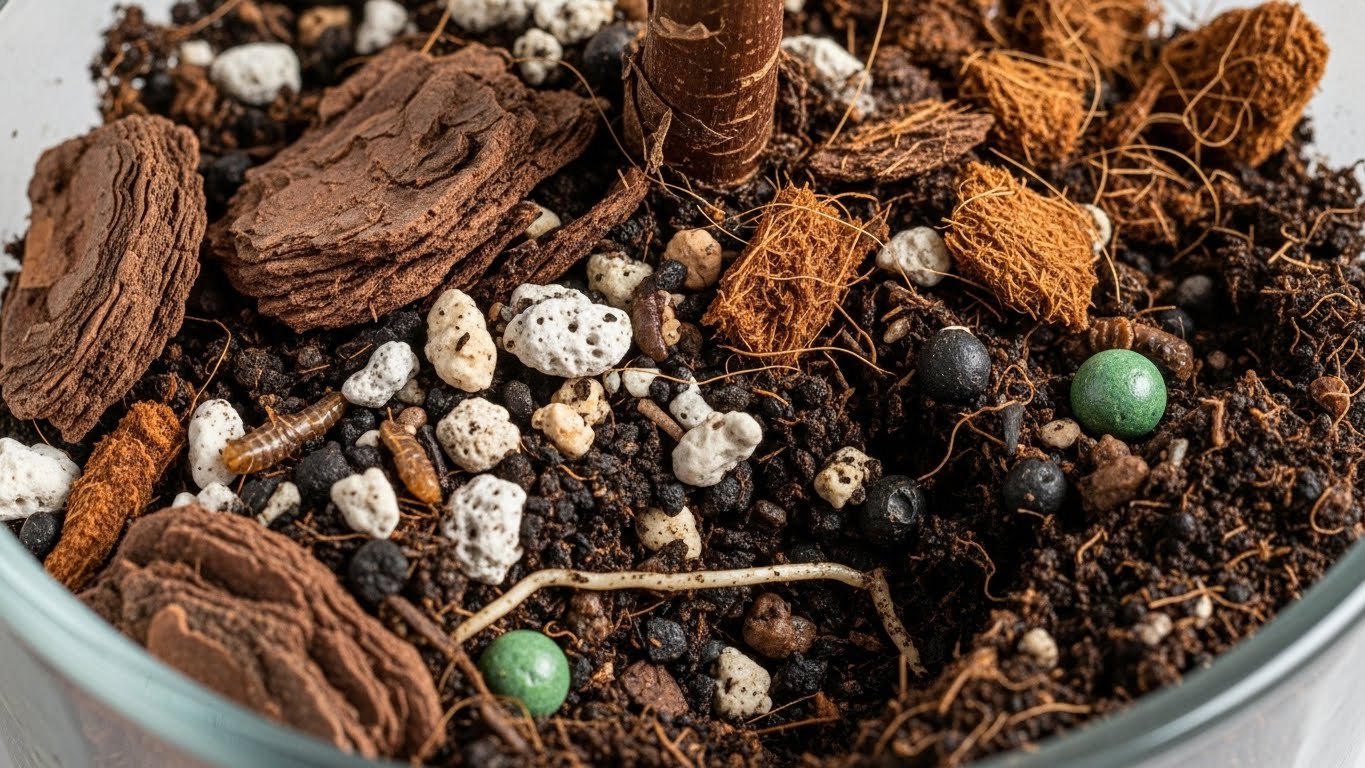
To keep your rubber plant thriving, use a potting mix that drains well and is rich in nutrients. Combine equal parts potting soil, perlite, and orchid bark for a perfect blend. This mix helps prevent root rot while providing essential food for your plant. Make sure your pot has drainage holes to avoid water buildup. With the right soil, your rubber plant will grow strong and healthy, and you’ll discover even more tips for caring for it!
Key Takeaways
- Use a potting mix with good drainage, such as one with peat moss, perlite, and coconut coir, to prevent root rot.
- Incorporate organic compost to enhance nutrient levels and improve soil structure for optimal rubber plant growth.
- Aim for a pH level between 6.0 and 6.5 to ensure effective nutrient absorption for your rubber plant.
- Consider commercial mixes designed for tropical plants or experiment with DIY recipes for tailored drainage and nutrient support.
- Regularly check for pests and ensure proper light and humidity conditions to complement your potting mix for a healthy rubber plant.
Understanding the Rubber Plant’s Needs
When you bring a rubber plant into your home, it’s important to understand its specific needs to help it thrive. These plants love bright, indirect light, so placing them near a window where they can soak up that sunshine is ideal. However, avoid direct sunlight, as it can scorch their lovely leaves.
In addition to light requirements, rubber plants also have humidity preferences. They enjoy a humid environment, so consider misting them occasionally or placing a pebble tray filled with water nearby to keep the air moist. By accommodating these needs, you’ll create a cozy home for your rubber plant, allowing it to grow strong and healthy. Additionally, ensuring proper soil mix will further enhance their growth potential. Embrace this journey with your new green friend, and watch it flourish!
Importance of Well-Draining Soil
Having well-draining soil is essential for your rubber plant’s health, as it prevents the roots from sitting in water, which can lead to root rot. To achieve the right soil composition, consider these drainage techniques:
- Add Perlite: This lightweight material improves aeration and drainage.
- Use Orchid Bark: It creates air pockets, allowing excess water to escape easily.
- Incorporate Coconut Coir: This natural fiber retains moisture while promoting drainage.
- Choose a Quality Pot: Guarantee your pot has sufficient drainage holes to prevent water buildup.
Key Components of an Ideal Potting Mix
To create the perfect potting mix for your rubber plant, you need to focus on a few key components. First, good drainage and aeration help prevent root rot, while nutrient-rich organic matter provides essential food for your plant. Finally, balancing the pH guarantees your rubber plant can absorb these nutrients effectively, setting the stage for a thriving green companion!
Drainage and Aeration Importance
A healthy rubber plant thrives in an environment that offers both proper drainage and adequate aeration, making these two factors essential components of an ideal potting mix. Without them, your plant can struggle, leading to issues like root rot. Here are some effective drainage techniques and aeration methods to take into account:
- Use well-draining potting soil: Look for mixes that contain perlite or sand.
- Choose pots with drainage holes: This allows excess water to escape.
- Incorporate organic materials: Adding materials like bark can improve air circulation.
- Avoid compacting the soil: Gently loosen the mix to promote airflow.
Nutrient-Rich Organic Matter
When you think about creating the perfect potting mix for your rubber plant, incorporating nutrient-rich organic matter is essential for its growth and health. Organic compost benefits your plant by providing essential nutrients and improving soil structure. It helps retain moisture, ensuring your rubber plant has a steady supply of water, which is critical for its well-being. This nutrient retention promotes strong root development, leading to healthier, more vibrant leaves. You can easily create a blend by combining compost with peat moss or coconut coir. As you nurture your plant, remember that a rich potting mix not only supports its immediate needs but also fosters long-term growth, making your rubber plant thrive in its environment. Happy planting!
Ph Balance Considerations
Understanding pH balance is essential for creating an ideal potting mix for your rubber plant, as it directly affects nutrient availability and overall plant health. A pH level between 6.0 and 7.0 works best, so regular pH testing is key. Here’s how to maintain that balance:
- Test your soil: Use a pH meter or test kit to check your mix regularly.
- Choose the right amendments: Consider adding lime to raise pH or sulfur to lower it.
- Incorporate organic matter: Compost or worm castings can help buffer pH levels.
- Monitor moisture: Overwatering can affect pH, so guarantee your mix drains well.
Commercial Potting Mixes for Rubber Plants
When choosing a commercial potting mix for your rubber plant, it’s important to take into account the key ingredients that will help it thrive. Popular brands have specific formulas designed to provide the right balance of nutrients and drainage, so you’ll want to explore those options. Mixing in some additional materials can optimize drainage and guarantee your plant stays healthy and happy!
Key Ingredients to Consider
Choosing the right potting mix for your rubber plant can make all the difference in its growth and health. When selecting a commercial mix, keep these key ingredients in mind to guarantee ideal soil texture and nutrient levels:
- Peat Moss: This helps retain moisture while providing aeration.
- Perlite: It improves drainage and prevents soil compaction, which is vital for root health.
- Coconut Coir: An excellent organic amendment, it enhances water retention and adds beneficial properties.
- Worm Castings: These provide essential nutrients and improve soil fertility, giving your plant a boost.
Popular Brand Recommendations
Finding the right potting mix for your rubber plant can greatly enhance its growth and health, so let’s explore some popular commercial brands that many plant enthusiasts swear by. These mixes are known for their brand popularity and come in various packaging options to suit your needs.
Brand Name | Packaging Options |
|---|---|
Miracle-Gro | 8 qt, 16 qt, 2 cu ft |
FoxFarm | 1.5 cu ft, 2 cu ft |
Espoma | 4 qt, 8 qt, 1 cu ft |
Black Gold | 16 qt, 2 cu ft |
Each of these brands offers quality potting mixes designed to support the unique needs of your rubber plant, helping you cultivate a thriving indoor garden.
Mixing for Optimal Drainage
Creating the perfect potting mix for your rubber plant is essential, especially since these plants thrive in well-draining soil. To achieve ideal drainage, consider these effective drainage techniques that’ll keep your plant happy:
- Use a commercial potting mix designed for tropical plants.
- Add perlite or coarse sand to improve aeration and drainage.
- Ensure proper potting depth; choose a pot with drainage holes to help excess water escape.
- Mix in organic matter, like peat moss or coconut coir, for moisture retention without sogginess.
DIY Potting Mix Recipes
When it comes to potting mixes for your rubber plant, having a DIY recipe at your fingertips can make all the difference in its growth and health. You can create a suitable mix by combining equal parts potting soil, perlite, and orchid bark. This blend guarantees good drainage while retaining essential moisture. Another option is to mix one part coco coir, one part vermiculite, and one part compost. These DIY potting variations not only provide nutrients but also support healthy root development. Don’t hesitate to experiment with different ratios to find what works best for your plant. With these recipes, you’ll nurture your rubber plant into a thriving, beautiful addition to your home. Happy potting!
Peat Moss: Benefits and Drawbacks
When considering peat moss for your rubber plant’s potting mix, it’s essential to weigh its benefits and drawbacks. On one hand, peat moss excels at retaining moisture, which keeps your plant hydrated; on the other hand, you need to think about its pH level and how it impacts your plant’s health. Additionally, the environmental concerns surrounding peat harvesting can make you reconsider whether it’s the right choice for your gardening needs.
Water Retention Properties
Peat moss is a popular choice for potting mixes, especially when it comes to rubber plants, because of its impressive water retention properties. This material helps maintain moisture regulation, ensuring your plant stays hydrated without waterlogging. Here are some benefits and drawbacks of using peat moss:
- Excellent water retention: It holds moisture well, keeping roots happy.
- Lightweight: It’s easy to handle and mix with other components.
- Acidic: This can benefit certain plants but may not suit all.
- Decomposes slowly: It lasts longer than some organic materials, but over time, it can compact.
Incorporating peat moss into your potting mix can make a real difference for your rubber plant’s health!
Ph Level Considerations
Understanding the pH level of your potting mix is essential for the health of your rubber plant, as it directly affects nutrient availability and root growth. Ideally, you want the pH to be slightly acidic, around 6.0 to 6.5. This range helps your plant absorb nutrients effectively. To guarantee your mix is in this sweet spot, you can do some simple pH testing using kits available at garden centers.
If your soil’s pH is off, don’t worry! You can use soil amendments like lime to raise pH or sulfur to lower it. Just remember, balance is key. Keeping an eye on your potting mix’s pH will lead to a thriving, happy rubber plant that you’ll cherish for years to come!
Environmental Impact Concerns
While keeping your rubber plant healthy by monitoring its pH levels, it’s also important to think about the environmental impact of the materials in your potting mix. Peat moss is popular, but its harvesting can harm ecosystems. Consider these points when choosing your mix:
- Sustainable Sourcing: Look for materials that don’t deplete natural resources.
- Eco Friendly Alternatives: Explore options like coconut coir or composted bark that are better for the planet.
- Carbon Footprint: Assess how materials are sourced and transported.
- Biodiversity: Opt for mixes that support healthy ecosystems.
Perlite and Vermiculite: Enhancing Drainage
When it comes to creating the perfect potting mix for your rubber plant, adding perlite and vermiculite can make a world of difference in drainage. Perlite benefits your mix by creating air pockets, allowing excess water to escape while keeping the soil light and fluffy. This helps prevent root rot, which rubber plants are particularly sensitive to. On the other hand, vermiculite uses include retaining moisture and essential nutrients, ensuring your plant stays hydrated without becoming waterlogged. By combining these two fantastic ingredients, you’ll achieve a balanced potting mix that promotes healthy growth. So, don’t hesitate—grab some perlite and vermiculite, and watch your rubber plant thrive in its cozy, well-draining home!
The Role of Bark and Coconut Coir
To create a well-rounded potting mix for your rubber plant, incorporating bark and coconut coir is a fantastic choice. These natural materials bring several benefits that help your plant thrive. Here’s why you should consider them:
- Bark Benefits: Bark improves aeration, allowing roots to breathe and preventing waterlogging.
- Coconut Coir: This sustainable option retains moisture while offering excellent drainage, making it great for rubber plants.
- Nutrient-Rich: Both materials can hold nutrients, providing essential support for growth.
- Lightweight: They keep the mix light, making it easier to manage and repot your plant.
Fertilizing Your Potting Mix
Fertilizing your potting mix is essential for keeping your rubber plant healthy and vibrant, as it provides the nutrients your plant needs to grow strong. You’ll want to choose the right fertilizer types and pay attention to nutrient timing. Here’s a quick guide to help you out:
Fertilizer Type | When to Apply |
|---|---|
Liquid Fertilizer | Every 4-6 weeks |
Slow-Release Granules | Every 2-3 months |
Organic Options | Every 6-8 weeks |
Balanced Fertilizer | During growth season |
Diluted Fertilizer | After watering |
Signs Your Rubber Plant Needs Repotting
Recognizing the signs that your rubber plant needs repotting can make a big difference in its health and growth. If you notice any of these indicators, it’s time to check on its potting frequency and root health:
- Roots are visible: If you see roots poking out of the drainage holes, your plant is definitely ready for a bigger home.
- Stunted growth: If your rubber plant’s growth has slowed or stopped, it might be root-bound.
- Yellowing leaves: This could signal stress, often from cramped roots.
- Soil dries out quickly: If the soil dries out too fast, it might indicate the roots have filled the pot.
Keep an eye on these signs, and your rubber plant will thrive!
Maintaining Soil Moisture Levels
Maintaining the right soil moisture levels for your rubber plant is essential, especially since it can directly affect its overall health. You want to strike a balance; too much moisture can lead to root rot, while too little can cause your plant to droop and lose leaves. To keep your soil moisture just right, consider using a potting mix that promotes moisture retention, like a blend with peat moss or coconut coir. Check the soil regularly by sticking your finger about an inch deep—if it feels dry, it’s time to water. Remember, your rubber plant thrives on consistency, so aim for even moisture. With a little attention, you’ll help your rubber plant flourish beautifully!
Common Mistakes to Avoid
While caring for your rubber plant can be a rewarding experience, it’s easy to make some common mistakes that could hinder its growth. Here are a few pitfalls to avoid:
- Overwatering Issues: Too much water can lead to root rot, so always check the soil moisture before watering.
- Ignoring Drainage: Verify your pot has drainage holes; stagnant water can create a breeding ground for pests.
- Neglecting Light Needs: Rubber plants thrive in bright, indirect light. Too little light can stunt their growth.
- Not Checking for Pest Problems: Regularly inspect your plant for pests like spider mites or aphids, as they can cause significant damage.
Tips for Long-Term Care and Maintenance
Taking care of a rubber plant doesn’t end with avoiding mistakes; it’s also about nurturing its growth over time. Regularly apply pruning techniques to keep your plant healthy and encourage bushier growth. Snip off any dead or yellowing leaves, and trim back long stems to promote a fuller appearance. This helps your plant focus its energy on new growth.
Additionally, stay vigilant with pest management. Check the leaves often for signs of pests like spider mites or mealybugs. If you spot any, act quickly by wiping them off with a damp cloth or using an insecticidal soap. By giving your rubber plant this ongoing attention, you’ll create a thriving, vibrant companion that brings joy to your space for years to come!
Conclusion
In summary, choosing the right potting mix for your rubber plant is essential for its health and growth. By understanding its needs and opting for a well-draining mix, you’ll create a thriving environment for your leafy friend. Whether you go for a commercial blend or whip up your own concoction, your rubber plant will appreciate the effort—just like a medieval knight appreciates a shiny new sword! So, keep these tips in mind, and watch your plant flourish!


