
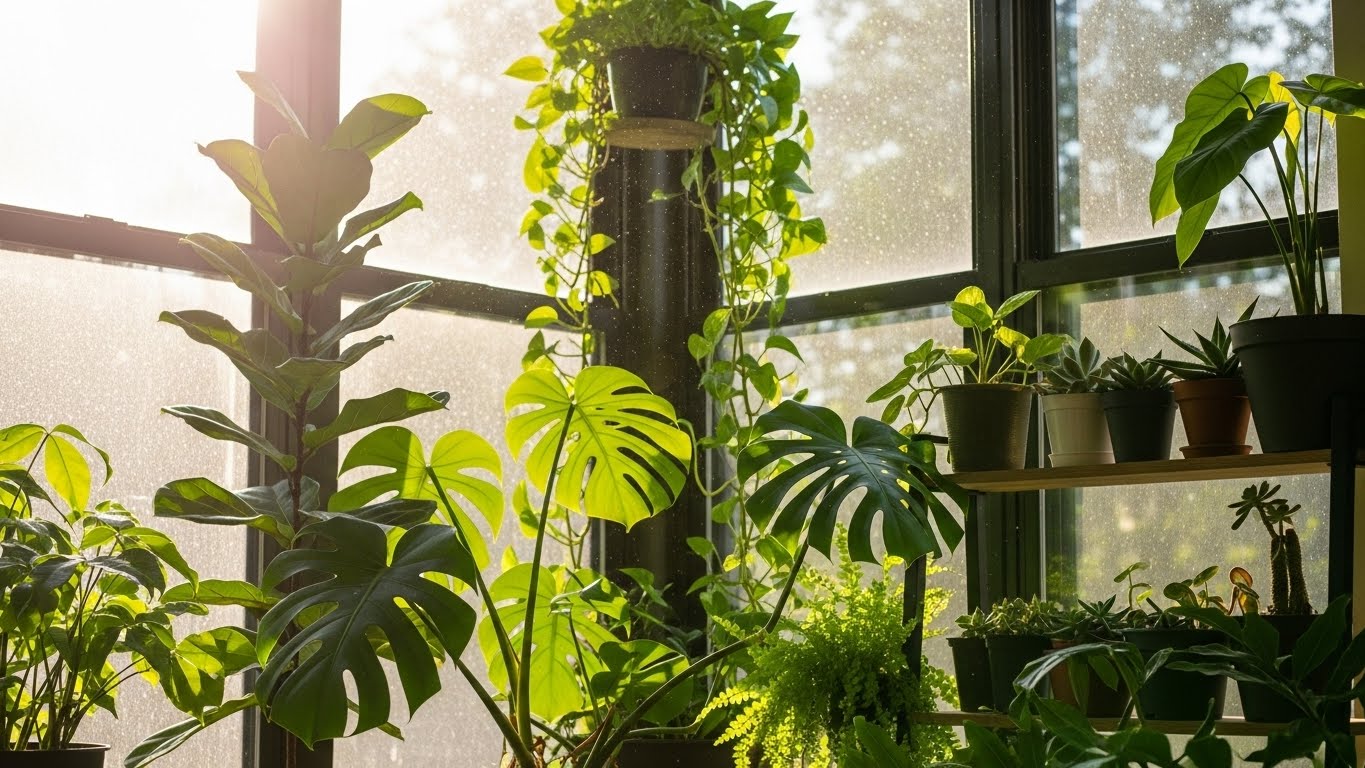
If you’re looking for plants that thrive in bright, indirect light without scorching, you’ve got some great options! Consider the Snake Plant, Pothos, and Spider Plant; they’re all low-maintenance and beautifully green. The ZZ Plant and Peace Lily also excel in these conditions while adding lovely decorative flair. Don’t forget the Fiddle Leaf Fig for a standout statement piece! Curious about more fabulous choices and care tips? Keep exploring to discover the perfect indoor plants for your space!
Snake Plant
💡 Understanding the right lighting conditions is crucial for plant health. This article will help you avoid common pitfalls.
➜ Learn to avoid common lighting mistakes
When it comes to bright-indirect light plants, the Snake Plant, also known as Sansevieria or mother-in-law’s tongue, stands out as a fantastic choice for indoor spaces. You’ll love its striking, sword-like leaves that come in various snake plant varieties, each adding a unique flair to your home. One of the best things about snake plants is their ability to thrive on neglect; they don’t need constant attention. Plus, they offer a range of benefits, like improving air quality and releasing oxygen, making your space feel fresh and lively. Whether you choose the classic green or the elegant variegated types, having a Snake Plant means enjoying a low-maintenance, stylish companion that brightens your day!
Pothos
Pothos, often referred to as Devil’s Ivy, is a fantastic choice for bright-indirect light environments, and it’s no wonder why so many people love this plant. With various pothos varieties, like Golden Pothos and Marble Queen, you can easily find one that fits your style. You’ll appreciate how simple pothos propagation is, letting you create new plants from cuttings in no time.
Here’s a quick overview of pothos varieties:
Variety | Leaf Color | Growth Habit |
|---|---|---|
Golden Pothos | Green with gold | Trailing |
Marble Queen | Green and white | Trailing |
Neon Pothos | Bright green | Trailing |
Jade Pothos | Dark green | Trailing |
Caring for your pothos will bring you joy and greenery to your space!
Spider Plant
Now let’s talk about the Spider Plant, a fantastic choice for bright, indirect light. You’ll want to know the ideal growing conditions, how to care for it, and some pest management tips to keep your plant thriving. With a little attention, you’ll see this lush green beauty flourish in your space!
Ideal Growing Conditions
To thrive, Spider Plants need a few specific growing conditions that make them truly happy. First, they love bright, indirect light; too much direct sunlight can scorch their leaves. Ideally, place them near a window where they can soak up that gentle brightness. Next, humidity levels play a vital role in their happiness. Spider Plants enjoy a humid environment, so if your home is dry, consider misting them occasionally or placing a small humidifier nearby. This helps keep those gorgeous green leaves healthy and vibrant. Finally, a temperature range of 65-75°F is perfect for them. With these ideal conditions, you’ll see your Spider Plant flourish and produce its charming little spiderettes!
Care and Maintenance
Caring for your Spider Plant is a rewarding experience that can lead to a thriving, lush addition to your home. To keep it happy, aim for a watering frequency of every 1-2 weeks, allowing the top inch of soil to dry out before you give it a drink. This helps prevent overwatering, which can harm your plant.
Speaking of soil, a well-draining potting mix is ideal—look for one that’s light and airy, promoting healthy root growth. You might even consider adding perlite or sand for extra drainage. Keep your Spider Plant in bright, indirect light, and watch it flourish with those vibrant green leaves. With just a little care, you’ll enjoy a beautiful, low-maintenance friend!
Pest Management Tips
When you notice tiny pests on your Spider Plant, don’t panic! First, take a closer look; those little critters are often manageable. Try using natural pest repellents like neem oil or insecticidal soap. These organic pest control options are safe for your plant and effective against common pests like spider mites and aphids. Just mix them with water, spray on the affected areas, and watch those pests disappear!
Regularly inspecting your plant helps catch infestations early. Also, keep your Spider Plant clean by wiping its leaves with a damp cloth. This simple habit not only removes dirt but also discourages pests. Remember, with a little care and the right approach, your Spider Plant will thrive, free from unwanted visitors!
ZZ Plant
The ZZ Plant, with its glossy, dark green leaves, is a fantastic addition to any indoor garden, especially if you’re looking for a low-maintenance option that thrives in bright-indirect light. One of the best zz plant benefits is its ability to tolerate neglect; it doesn’t need frequent watering, making it perfect for busy folks. Plus, it helps purify the air, creating a healthier environment for you. If you’re interested in zz plant propagation, you can easily grow new plants by dividing the rhizomes or using leaf cuttings. Simply place them in soil, and with a little patience, you’ll have new friends sprouting in no time. Embrace this resilient beauty, and watch your indoor space flourish!
Peace Lily
Add a touch of elegance to your indoor garden with the Peace Lily, a stunning plant known for its beautiful white blooms and lush green leaves. Not only does it brighten up any space, but it also offers impressive peace lily benefits. This plant helps purify the air, removing toxins and creating a healthier environment for you and your loved ones. However, be cautious—peace lily toxicity means it can be harmful if ingested by pets or small children, so keep it out of reach. With proper care, including bright-indirect light and regular watering, your Peace Lily will thrive, rewarding you with its long-lasting beauty and air-cleansing abilities, making it a cherished addition to your home.
Dracaena
Now that we’ve covered the Peace Lily, let’s turn our attention to Dracaena, a popular choice for bright-indirect light. You’ll discover various Dracaena varieties, each with its own unique look and care needs. Plus, we’ll tackle some common issues you might face, ensuring your plant stays healthy and vibrant!
Dracaena Varieties Explained
When you think about houseplants that thrive in bright, indirect light, Dracaena varieties definitely come to mind. There are several dracaena types you might adore, like the popular Dracaena marginata with its striking spiky leaves, or the elegant Dracaena fragrans, known for its lush green foliage. Each type has its own charm, but they all share similar dracaena care needs. They prefer well-draining soil and should be watered when the top inch of soil feels dry. Too much direct sunlight can scorch their lovely leaves, so keep them in that perfect bright, indirect light. With just a bit of attention, your Dracaena can flourish, adding a touch of greenery to your space that you’ll love.
Ideal Care Practices
Caring for your Dracaena plants isn’t just about keeping them in bright, indirect light; it involves a few other key practices that will help them thrive. First, focus on plant nutrition. Use a balanced liquid fertilizer every month during the growing season to guarantee your plants get essential nutrients. Next, let’s talk about watering techniques. Dracaenas prefer to dry out a bit between waterings, so check the top inch of soil; if it’s dry, it’s time to water. When you do, water thoroughly until it drains out the bottom. Remember, overwatering can lead to root rot, which you definitely want to avoid! With these practices, your Dracaena will flourish, adding beauty to your space.
💡 If you’re looking for plants that not only love bright indirect light but also grow rapidly, this article is a must-read.
➜ Discover which plants thrive quickly
Common Issues Addressed
Dracaena plants, while generally easy to care for, can face a few common issues that might leave you scratching your head. Understanding these challenges is key to keeping your plant happy and healthy. Here are some common plant issues you might encounter:
💡 For those interested in optimizing their indoor spaces, this article highlights plants that thrive under specific lighting conditions.
➜ Explore the best plants for unique lighting
- Brown tips on leaves: This often signals underwatering or low humidity.
- Yellowing leaves: Overwatering or poor drainage could be to blame.
- Leaf drop: This can happen due to sudden temperature changes or light adaptation challenges.
- Pests: Small bugs like spider mites and mealybugs may invade, so keep an eye out!
Rubber Plant
The Rubber Plant, known for its striking glossy leaves, not only adds a touch of elegance to your space but also thrives in bright, indirect light, making it an excellent choice for indoor gardening. When it comes to rubber plant care, keep the soil slightly moist, but don’t let it sit in water. You’ll find several rubber plant varieties, like the classic green or the stunning variegated types, each bringing its unique charm. Dust the leaves occasionally to keep them shiny and happy. If you notice your plant growing tall, don’t hesitate to trim it back for a bushier look! With just a bit of love and attention, your Rubber Plant will flourish, brightening your home for years to come.
Parlor Palm
The Parlor Palm is a fantastic choice for bright-indirect light spaces, and it’s surprisingly easy to care for. With its lush fronds and elegant stature, this plant adds a touch of tropical charm to any room, making it both aesthetically pleasing and a great conversation starter. Let’s explore how to keep your Parlor Palm happy and healthy, along with tips on how it can enhance your living space!
Care Requirements
When you bring a Parlor Palm into your home, you’re welcoming a lovely companion that thrives in bright-indirect light, making it an excellent choice for those who may not have a lot of direct sunlight. To guarantee your Parlor Palm flourishes, keep these care requirements in mind:
- Light Intensity: Place it near a window with filtered light to mimic its natural habitat.
- Humidity Levels: Keep the air around it humid; misting the leaves helps.
- Watering: Water when the top inch of soil feels dry, but don’t let it sit in soggy soil.
- Temperature: Maintain a warm environment, ideally between 65°F and 80°F, avoiding cold drafts.
With these simple guidelines, your Parlor Palm will thrive beautifully in your space!
Aesthetic Appeal
Bringing a Parlor Palm into your home instantly adds a touch of elegance and tropical flair. This plant not only brightens your space but also enhances your aesthetic design, making it a perfect centerpiece for any room. Its feathery fronds create a lush ambiance, inviting warmth and tranquility.
Here’s how you can arrange it beautifully:
Element | Description |
|---|---|
Height | Can grow up to 6 feet tall |
Potting | Use a decorative ceramic pot |
Placement | Ideal for corners or tabletops |
Companion Plants | Ferns and snake plants complement well |
Incorporating the Parlor Palm into your plant arrangement will surely captivate your friends and family, creating a cozy and inviting atmosphere.
Fiddle Leaf Fig
Fiddle Leaf Figs are a fantastic choice if you’re looking to add a touch of tropical flair to your home! These vibrant plants thrive in bright, indirect light and can make any room feel more alive. To guarantee your fiddle leaf care is exceptional, remember these simple tips:
Add a vibrant touch of tropical flair to your home with Fiddle Leaf Figs, thriving in bright, indirect light.
- Water when the top inch of soil feels dry.
- Wipe leaves gently to remove dust and keep them shiny.
- Rotate the plant occasionally for even growth.
- For fiddle leaf propagation, take a cutting and place it in water until roots develop.
With a little love and attention, your fiddle leaf fig will flourish, bringing joy and warmth into your space. Embrace this delightful plant and watch it grow!
Boston Fern
Boston ferns are another fantastic option for bright, indirect light spaces, adding lush greenery and a touch of elegance to your home. These beauties thrive in well-draining pots, so choose a nice hanging basket or a shelf where they can cascade gracefully. One of the amazing Boston fern benefits is their air-purifying abilities; they help remove toxins, making your space healthier. When it comes to Boston fern placement, keep them in a spot with humidity, like a bathroom or kitchen, to help them flourish. Remember to mist their fronds regularly to mimic their natural environment. With a bit of care, these ferns can truly become a stunning focal point in your living space, inviting nature right into your home!
Calathea
Calathea plants are a vibrant choice for bright, indirect light areas, showcasing stunning foliage patterns that can instantly liven up any room. With so many Calathea varieties, it’s easy to find one that suits your style. Here are four popular options you might love:
Calathea plants bring vibrant beauty to any space with their stunning foliage, perfect for bright, indirect light areas.
- Calathea Medallion – Features round leaves with striking silver patterns.
- Calathea Orbifolia – Boasts large, green leaves with bold white stripes.
- Calathea Rattlesnake – Offers elongated leaves with wavy edges and unique markings.
- Calathea Zabrina – Displays eye-catching, zebra-like stripes on its leaves.
For proper Calathea care, keep the soil moist but not soggy, maintain humidity, and avoid direct sunlight. You’ll adore the way these plants bring life into your space!
Philodendron
Philodendron plants are a fantastic choice for bright, indirect light areas, and they’re loved for their lush, green foliage that can transform any space into a vibrant oasis. With various philodendron varieties, like the popular Heartleaf and the dramatic Pink Princess, you can find one that fits your style perfectly. When it comes to philodendron care, they thrive with consistent watering—just make sure the soil dries out slightly between waterings. They enjoy humidity, so misting them occasionally will keep their leaves happy and healthy. Place your philodendron near a window, but avoid direct sunlight, which can scorch those beautiful leaves. With a little love and attention, your philodendron will flourish and bring joy to your home!
Conclusion
To sum up, choosing bright, indirect light plants can transform your space while keeping your plants healthy and happy. Did you know that the Snake Plant can convert carbon dioxide into oxygen at night, making it a fantastic air purifier? With options like Pothos, Peace Lilies, and Fiddle Leaf Figs, you’ve got plenty of choices to add beauty to your home. So, go ahead and pick some plants that thrive without scorching, and enjoy the benefits they bring!
💡 If you’re interested in adding vibrant colors to your space, this guide on medium-light plants will help you choose the best options.
➜ Master the selection of colorful medium-light plants


