
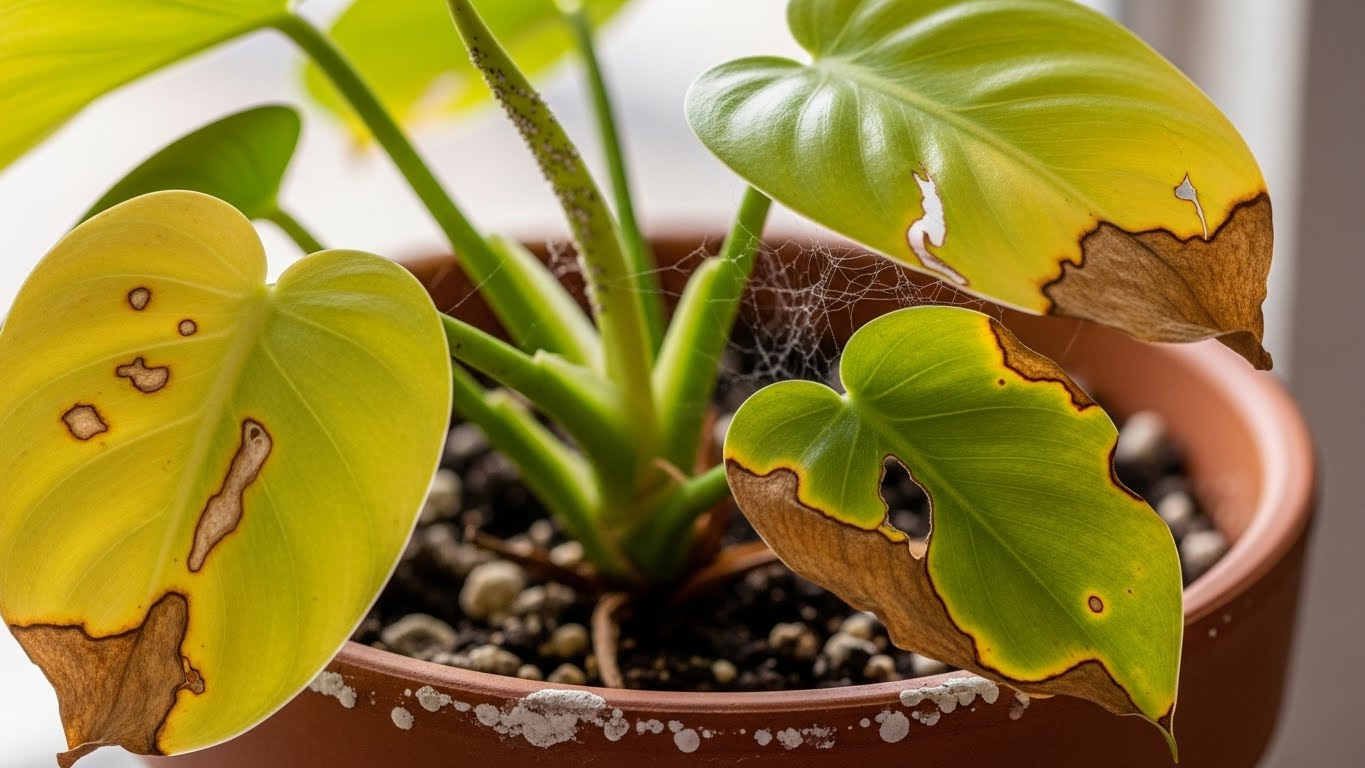
Philodendrons can face common problems like yellow leaves and leggy growth. Yellow leaves often signal issues like overwatering or poor light conditions, while leggy growth means your plant’s not getting enough light. To fix these, make sure your plant has bright, indirect light, check soil moisture carefully, and prune occasionally to encourage bushier growth. Additionally, consider nutrient needs, as deficiencies can lead to problems too. Keep exploring for more tips to keep your Philodendron thriving!
Key Takeaways
- Yellow leaves in philodendrons often indicate overwatering, poor light conditions, or nutrient deficiencies that need to be addressed.
- Leggy growth results from insufficient light; moving the plant closer to a light source can improve its appearance.
- Regular pruning encourages fuller growth and prevents sparse, leggy stems in philodendrons.
- Ensure consistent humidity and proper drainage to mitigate water-related issues affecting leaf color and growth.
- Monitor for pests and diseases, as infestations can lead to yellowing leaves and overall plant distress.
Understanding Yellow Leaves in Philodendrons
Yellow leaves on your philodendron can feel like a mystery, but they often signal something significant about your plant’s health. Understanding the leaf discoloration effects is essential for nurturing your green friend. When you notice those yellowing leaves, it might be your plant’s way of expressing distress caused by environmental stressors. Too much or too little sunlight, improper watering, or sudden temperature changes can all contribute to this issue. These factors can disrupt the natural processes of your philodendron, leading to those telltale yellow leaves. So, take a moment to assess its surroundings. By tuning into these signals and providing the right care, you can help restore your plant’s vibrancy and guarantee it thrives in your home.
Common Causes of Yellowing Leaves
Have you ever wondered what might be causing those pesky yellow leaves on your philodendron? One common culprit is a pH imbalance in the soil. Philodendrons thrive in slightly acidic conditions, so if the pH strays too far from that, it can affect nutrient absorption, leading to yellowing leaves. Another major factor is overwatering stress. When you give your plant too much water, it can drown the roots, causing them to rot. This rotting can prevent your philodendron from taking in the nutrients it needs, resulting in those sad yellow leaves. By keeping an eye on your watering routine and ensuring the soil’s pH is just right, you can help your plant stay healthy and vibrant.
How to Fix Yellow Leaves
When you notice those yellow leaves on your philodendron, it’s time to take action and bring your plant back to life. First, check the soil moisture—if it’s too dry or soggy, adjust your watering routine. Your philodendron loves consistent humidity, so find a balance that works! Next, be mindful of temperature fluctuations. Make sure your plant isn’t too close to drafts or heat sources, as these can stress it out. A cozy spot with stable temperatures will help your plant thrive. Finally, don’t forget to give it some bright, indirect light; this will boost its health and liveliness. With a little TLC, those yellow leaves will soon be a thing of the past, and your philodendron will flourish again!
Identifying Leggy Growth in Philodendrons
If you’ve noticed your philodendron stretching toward the light and looking a bit sparse, you might be dealing with leggy growth. This happens when your plant doesn’t get enough sunlight, causing it to reach out for more. Let’s explore the causes of this issue and discover some simple solutions to help your philodendron thrive again!
Causes of Leggy Growth
Leggy growth in philodendrons can often signal that your plant is feeling a bit neglected, and recognizing the signs early can help you bring it back to its vibrant self. This growth pattern usually arises from a few key factors:
- Insufficient light: Your plant might be stretching for sunlight, leading to long, thin stems.
- Lack of pruning: Not trimming back your philodendron can allow it to grow wildly, resulting in leggy stems.
- Poor soil health: Weak roots can’t support healthy growth, causing your plant to reach for more light.
- Inconsistent watering: Over or under-watering can stress your plant, contributing to its leggy appearance.
Solutions for Leggy Plants
To tackle the issue of leggy growth in your philodendron, it’s important to first identify the signs and understand what your plant really needs. Legginess often means your plant isn’t getting enough light, so light adjustments can make a world of difference. Pruning techniques can also help rejuvenate your plant, encouraging new growth and fullness.
Here’s a quick reference to help you:
Signs of Legginess | Light Adjustment Tips | Pruning Techniques |
|---|---|---|
Long stems | Move closer to light | Trim back stems |
Sparse leaves | Rotate weekly | Cut above a leaf node |
Weak stems | Use grow lights | Remove unhealthy leaves |
With these steps, your philodendron can thrive beautifully!
Reasons for Leggy Growth
When you notice your philodendron becoming leggy, it usually means it’s not getting enough light or it’s being pruned too lightly. Insufficient light makes the plant stretch toward the sun, resulting in long, weak stems. Additionally, if you don’t prune your plant regularly, it can lead to sparse growth, making your philodendron look less vibrant and full.
Insufficient Light Exposure
Many plant lovers might notice their Philodendron stretching toward the light, creating a leggy appearance that can be quite concerning. This leggy growth often happens when your plant isn’t getting enough light, making it reach out for more. Understanding its light requirements and making a light adjustment can help your Philodendron thrive.
Here are some signs that your plant might need more light:
- Leaves are smaller than usual
- Stems appear elongated or thin
- New growth is sparse and weak
- The plant is leaning towards a light source
Overly Sparse Pruning
Overly sparse pruning can also lead to leggy growth in your Philodendron, compounding the issue of insufficient light exposure. When you don’t prune enough, your plant might stretch toward the light, creating long, weak stems with few leaves. This can impact its overall plant health, making it look unbalanced and sad.
To tackle this, try using effective pruning techniques. Regularly trim back those long stems, encouraging fuller growth. Aim to cut just above a node, as this stimulates new growth and keeps your plant bushy. Remember, a little love through proper pruning goes a long way! By maintaining a routine, you’ll help your Philodendron thrive, looking vibrant and lush, rather than leggy and sparse.
Solutions to Promote Bushier Growth
To promote bushier growth in your philodendron, you’ll want to focus on a few key strategies that can make a big difference. First, mastering effective pruning techniques is essential; snipping back leggy stems encourages new growth and a fuller appearance. Next, verify your soil quality is excellent, as rich, well-draining soil helps roots thrive. Here are some other tips to keep in mind:
- Water consistently but avoid overwatering.
- Fertilize during the growing season to give your plant extra nutrients.
- Rotate your plant occasionally for even light exposure.
- Repot your philodendron every year or two to refresh the soil and provide space for growth.
Importance of Proper Lighting
When it comes to keeping your philodendron happy and healthy, proper lighting plays an essential role in its growth and overall appearance. You’ll want to pay attention to light intensity and light duration, as these factors greatly impact your plant’s well-being. Philodendrons thrive in bright, indirect light, so placing them near a window is ideal. Too much direct sunlight can scorch their leaves, while too little light can lead to leggy growth and yellowing leaves. Aim for around 12 hours of light each day, adjusting as seasons change. Remember, your philodendron will reward you with lush, vibrant foliage when you get the lighting just right, making it a joy to care for!
Nutrient Needs for Healthy Philodendrons
While you might think that water and light are the only things your philodendron needs, it actually thrives on a balanced diet of nutrients, too! To keep your plant healthy, pay attention to its fertilizer types and soil composition. Here are some essential nutrients to take into account:
- Nitrogen: Promotes lush, green growth.
- Phosphorus: Encourages strong root development and flowering.
- Potassium: Helps with overall plant health and disease resistance.
- Micronutrients: These trace elements support various functions in your plant.
Make sure you’re using the right fertilizer and check your soil composition regularly. A well-balanced diet will help your philodendron flourish, showcasing those beautiful, vibrant leaves you love!
Conclusion
In the world of philodendrons, yellow leaves and leggy growth can feel like pesky weeds in your garden of dreams. But don’t worry! By understanding the causes and implementing the right fixes, you can turn those frowns upside down. Remember, with proper lighting and nutrient love, your philodendrons can thrive and become the lush beauties you envision. So roll up your sleeves and give your plants the care they deserve; they’ll reward you with vibrant, healthy growth!


