
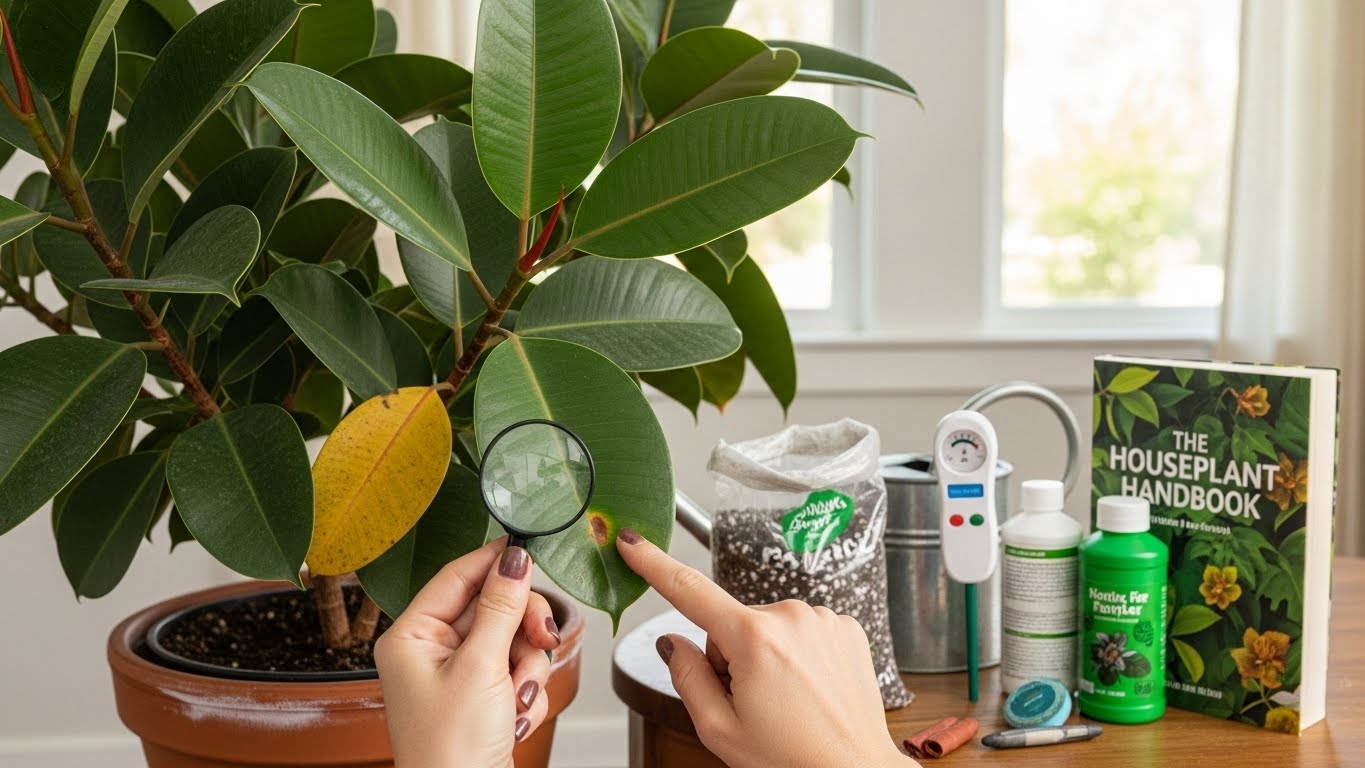
If your rubber plant’s leaves are drooping, it might be overwatered—let the top inches of soil dry before watering again. Yellow leaves could mean nutrient deficiency or watering mistakes, so try fertilizing or adjusting your watering schedule. Watch out for pests like spider mites; a soap and water mix can help. Brown spots might suggest root rot, so verify proper drainage. Finally, stunted growth often results from inadequate light or soil issues. Keep an eye on these, and you’ll spot more tips soon!
Key Takeaways
- Drooping leaves often result from overwatering; allow soil to dry before watering again and increase humidity if needed.
- Yellowing leaves may indicate nutrient deficiency or improper watering; fertilize and adjust watering frequency accordingly.
- Check for pest infestations like spider mites or mealybugs; treat with soap and water or neem oil for effective control.
- Leaf brown spots can stem from dust or root rot; clean leaves regularly and ensure proper drainage in the pot.
- Stunted growth is usually due to inadequate light or soil quality; ensure proper lighting and nutrient-rich, well-draining soil for optimal growth.
Drooping Leaves: Causes and Solutions
When you notice your rubber plant’s leaves drooping, it can be a bit concerning, but don’t worry—there are several reasons why this might happen, and luckily, many of them are easy to fix! One common culprit is overwatering issues. If the soil feels soggy, your plant’s roots might be drowning, leading to droopy leaves. To fix this, let the top few inches of soil dry out before watering again.
Another factor to evaluate is humidity levels. Rubber plants love humidity, so if your home’s air is too dry, it could stress your plant. You can increase humidity by misting the leaves or placing a humidifier nearby. Additionally, maintaining optimal humidity levels can significantly improve your plant’s overall health. With a little care, your rubber plant can perk back up in no time!
Yellowing Leaves: Identifying the Issue
Yellowing leaves on your rubber plant can be a signal that something isn’t right, and recognizing the cause can help you bring your plant back to health. Often, this issue stems from nutrient deficiency or watering problems. Take a moment to assess your plant’s environment and care routine.
Possible Cause | Signs | Quick Fix |
|---|---|---|
Nutrient Deficiency | Leaves turn yellow, especially lower ones | Fertilize with a balanced formula |
Overwatering | Yellowing plus drooping leaves | Reduce watering frequency |
Underwatering | Leaves yellow and dry out | Water thoroughly and consistently |
Pest Infestations: Common Pests and Treatments
Pest infestations can sneak up on your rubber plant, causing distress that’s easy to overlook. To keep your plant happy, it’s vital to practice pest identification. Common pests include spider mites, mealybugs, and aphids. You might spot tiny webs or white cotton-like clusters on the leaves.
For natural treatments, try mixing a few drops of dish soap with water and spraying it on affected areas. Neem oil is another great option; it’s effective and eco-friendly. Be certain to check your plant regularly, as early detection makes all the difference. With a little care and attention, you can keep those pests at bay and guarantee your rubber plant thrives beautifully!
Leaf Brown Spots: Prevention and Remedies
Have you ever noticed brown spots appearing on your rubber plant’s leaves? These unsightly marks can signal a few issues, but don’t worry! With some simple adjustments, you can keep your plant healthy and happy. First, focus on proper leaf care by cleaning the leaves regularly. Dust can block sunlight and contribute to problems. Next, check your soil health; overwatering or poor drainage can cause root rot, leading to brown spots. Make sure your pot has drainage holes and let the soil dry out between waterings. Finally, consider maintaining consistent humidity levels, as dry air can stress your plant. By paying attention to these factors, you’ll help your rubber plant thrive, free of those pesky brown spots!
Stunted Growth: Factors Affecting Growth and How to Revive
Stunted growth in your rubber plant can be frustrating, especially when you’re keen to see it flourish. Several factors can contribute to this issue, with light conditions and soil quality being key players. Let’s take a look:
Factor | Impact on Growth |
|---|---|
Light Conditions | Insufficient light slows growth; too much can scorch leaves. |
Soil Quality | Poor drainage or nutrient-deficient soil can stunt development. |
Watering | Overwatering leads to root rot, while underwatering dries out roots. |
Temperature | Extreme heat or cold can stress your plant, hindering growth. |
To revive your rubber plant, make certain it’s getting bright, indirect light, and use well-draining soil. Adjust your watering habits, and keep it in a stable temperature range for healthier growth.
Conclusion
Taking care of your rubber plant can feel like solving a puzzle; each leaf droop or yellow spot is a clue to what it needs. Just like a detective, you’ve got the tools to crack the case! By understanding common problems and their fixes, you can help your plant thrive. Remember, with a little attention and love, your rubber plant can grow strong and vibrant, just like a superhero in a garden, ready to brighten up your space!


