
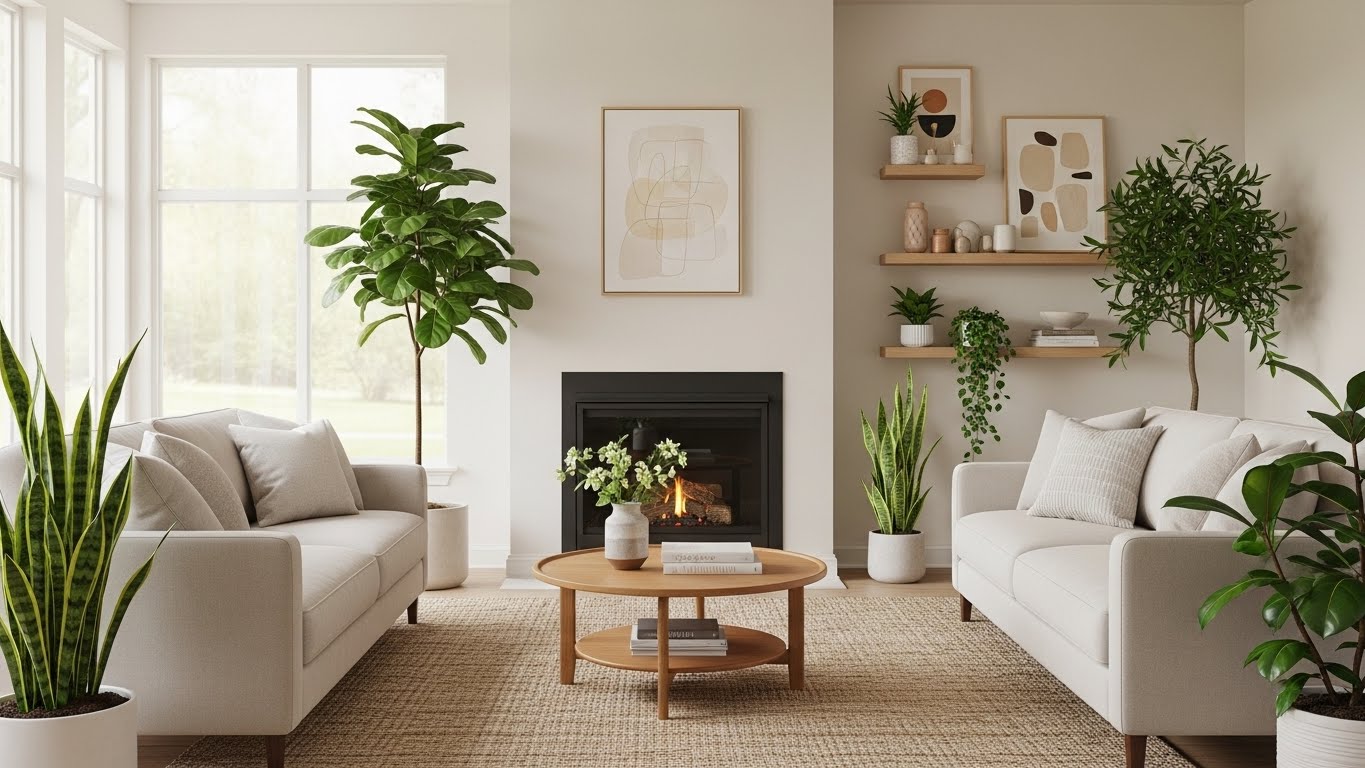
Part 1: The New Sanctuary: Why Feng Shui and Houseplants are Defining Modern American Homes
Introduction: Beyond Aesthetics to Well-Being
💡 Understanding where to position your indoor plants can significantly enhance the harmony in your home.
➜ Discover proven techniques
In recent years, a profound shift has occurred in the way Americans relate to their homes. No longer just a place of shelter, the modern home is increasingly viewed as a personal sanctuary—a space dedicated to well-being, restoration, and personal growth. This trend, accelerated by an increase in time spent within our own walls, has sparked a renewed interest in creating environments that not only look good but also feel good. At the heart of this movement are two parallel phenomena: the explosive popularity of indoor plants and a growing curiosity about the ancient principles of Feng Shui.
The houseplant boom is more than a fleeting decorative trend; it reflects a deep, intrinsic need for a connection to nature. This concept, known as biophilic design, posits that humans have an innate desire to affiliate with other forms of life, and that incorporating natural elements into our built environments can reduce stress, improve air quality, and enhance overall well-being. The vibrant green of a fiddle leaf fig in a sunlit corner or the gentle cascade of a pothos from a bookshelf answers this call, bringing a piece of the living world indoors.
Simultaneously, homeowners are discovering that Feng Shui, the ancient Chinese art of placement, offers a sophisticated and time-tested framework for achieving the very harmony they seek. Far from being a rigid set of mystical rules, Feng Shui—which translates to “wind-water”—is a design philosophy centered on arranging our surroundings to optimize the flow of positive energy, or Chi. It provides a language and a methodology for transforming a home into a space that actively supports its inhabitants’ health, relationships, and prosperity. This article will demonstrate how the timeless principles of Feng Shui, particularly through the intentional use of indoor plants, can be adapted to create a home that is not only stylish and on-trend but also a source of positive energy, growth, and tranquility.
The Convergence of Ancient Philosophy and Modern Trends
A closer examination reveals that the core tenets of Feng Shui are not foreign concepts running counter to contemporary U.S. design trends; they are, in fact, their historical precedents. The principles that have guided Feng Shui masters for millennia—decluttering to promote energy flow, maximizing natural light, and incorporating natural elements—are the very same ideals championed by modern movements like minimalism and biophilic design.
Modern minimalism advocates for decluttering to create a sense of calm and order; Feng Shui has taught for centuries that clutter leads to stagnant energy and hinders the free movement of Chi, fostering a revitalizing environment only when streamlined. Contemporary architecture and wellness design prioritize large windows and abundant natural light to uplift the spirit; Feng Shui identifies natural light as a cornerstone that invigorates spaces with vibrant energy. Most significantly, the scientific principles of biophilic design, which confirm our need for a connection with nature, find their intuitive and spiritual counterpart in the Feng Shui imperative to bring nature indoors through plants and natural materials like wood and stone.
In this light, Feng Shui is not an alternative to modern design but its philosophical ancestor. It provides the “why”—the intricate system of balancing energy and the five elements—for the “what” that contemporary design already embraces. By understanding these foundational principles, one can approach home decorating not just as an aesthetic exercise, but as a mindful practice of creating a truly supportive and harmonious sanctuary.
Part 2: The Foundations of Feng Shui: A Practical Guide for the Modern Home
To effectively use plants as Feng Shui tools, it is essential to first grasp the core concepts that govern the practice. These principles provide a logical framework for understanding how the placement of objects, the use of color, and the presence of natural elements can influence the atmosphere of a space.
Understanding Chi: The Vibe of Your Home
At the heart of Feng Shui is the concept of Chi (sometimes spelled qi), the invisible life force energy that flows through all things, including our homes. It can be understood in modern terms as the “vibe,” “atmosphere,” or “feel” of a room. When you walk into a space that feels bright, welcoming, and uplifting, you are experiencing good, flowing Chi. Conversely, a room that feels stuffy, oppressive, or chaotic is likely suffering from blocked or stagnant Chi.
The primary goal of Feng Shui is to design a space that encourages the smooth, gentle, and unobstructed circulation of positive Chi. The way furniture is arranged, the quality of light and air, and the presence of clutter all have a direct impact on this flow.
The most immediate and practical application of this principle is decluttering. Clutter—from piles of mail on the counter to overstuffed closets and blocked hallways—is the single biggest impediment to the flow of Chi. It creates blockages where energy becomes stagnant, which can manifest as feelings of being stuck, lethargic, or overwhelmed in life. By clearing clutter and organizing belongings, one allows energy to move freely, fostering an environment that feels calm, revitalizing, and full of potential.
The Five Elements: Nature’s Building Blocks for a Balanced Home
Feng Shui operates on the principle that the universe is composed of five fundamental elements: Wood, Fire, Earth, Metal, and Water. A harmonious home is one where these five elements are present and in balance. Each element is associated with specific qualities, shapes, colors, and materials, which can be intentionally incorporated into home decor to enhance certain energies.
- Wood: Represents growth, vitality, creativity, and expansion. It is embodied by living plants and trees, wooden furniture, and natural fabrics like cotton. Its colors are greens and blues, and its shapes are tall and columnar, like a tree trunk. This is the element most directly connected to the use of houseplants.
- Fire: Represents passion, inspiration, leadership, and visibility. It is introduced through candles, fireplaces, and all forms of lighting. Its colors are reds, bright oranges, purples, and pinks, and its shape is the triangle.
- Earth: Represents stability, grounding, self-care, and nourishment. It is brought in with items made of clay, stone, or ceramic, as well as images of landscapes. Its colors are earthy tones like brown, beige, and yellow, and its shapes are square and rectangular.
- Metal: Represents precision, clarity, joy, and efficiency. It is incorporated through metal objects (iron, gold, silver), rocks, and stones. Its colors are white, gray, and metallics, and its shapes are round, spherical, and oval.
- Water: Represents wisdom, spirituality, and the flow of life. It is symbolized by mirrors, glass, fountains, aquariums, and reflective surfaces. Its colors are black and dark blue, and its shapes are wavy, curvy, and asymmetrical.
These elements interact in natural cycles. In the Productive Cycle, one element nourishes the next: Water nourishes Wood (plants), Wood fuels Fire, Fire creates Earth (ash), Earth bears Metal, and Metal carries Water (condensation). Understanding this cycle is key to plant placement; for example, adding a Water element (like a blue pot) can strengthen a Wood element (a plant).
The Bagua Map: Your Home’s Energy Blueprint
The Bagua is one of the most powerful tools in Feng Shui. It is an energy map that is overlaid on a home’s floor plan to divide it into nine distinct areas, or “guas.” Each gua corresponds to a specific aspect of life, such as wealth, relationships, or career. By identifying these areas, one can intentionally place objects, colors, and plants to enhance the energy and support goals related to that life area.
While traditional Feng Shui uses a complex, compass-based Bagua, this method can be challenging to apply to the diverse layouts of modern U.S. homes. A more accessible and widely used approach, particularly in the West, is the BTB (Black Hat Sect) method. This simplified system dispenses with the compass and instead aligns the Bagua map with the home’s main entrance. This adaptation makes Feng Shui practical and applicable for anyone, regardless of their home’s directional orientation.
To apply the simplified Bagua, one should sketch a floor plan of their home (or a single room) and draw a three-by-three grid over it. The bottom edge of this grid (containing the Knowledge, Career, and Helpful People areas) is always aligned with the wall that contains the main front door.
Position (From Front Door) | Gua (Life Area) | Core Element | Associated Colors |
Back Left | Wealth & Prosperity (Xun) | Wood | Purple, Green, Gold |
Back Center | Fame & Reputation (Li) | Fire | Red, Orange |
Back Right | Love & Relationships (Kun) | Earth | Pink, Red, White |
Middle Left | Family & Health (Zhen) | Wood | Green, Blue, Teal |
Center | Health & Well-being (Tai Ji) | Earth | Yellow, Brown, Orange |
Middle Right | Children & Creativity (Dui) | Metal | White, Gray, Metallics |
Front Left | Knowledge & Self-Cultivation (Gen) | Earth | Black, Dark Blue, Green |
Front Center | Career & Life Path (Kan) | Water | Black, Dark Blue |
Front Right | Helpful People & Travel (Qian) | Metal | Gray, White, Silver |
This table provides a quick-reference guide to the nine life areas of the simplified Bagua map, their corresponding elements, and associated colors.
Part 3: The Living Cure: Choosing and Placing Feng Shui Plants
Within the five-element system, plants hold a special and powerful role. As the most direct and vibrant representation of the Wood element, they are considered “living cures” that can actively improve the energy of a space.
Why Plants? The Unique Power of the Wood Element
Plants are the primary carriers of the Wood element, which embodies the energies of growth, vitality, action, healing, and kindness. Unlike inanimate decor, a living plant is constantly growing and changing, introducing a dynamic and vibrant life force energy (Chi) into the home. This living energy helps to counteract stagnation, purify the air, and reconnect the home’s inhabitants with the natural world, a fundamental goal of both Feng Shui and modern wellness design. The simple act of caring for a plant—watering it, pruning it, watching it grow—is itself a practice that cultivates compassion and mindfulness.
The Feng Shui Plant Directory: Cultivating Good Energy
💡 Using plants as natural room dividers can create distinct spaces while maintathisng a sense of unity.
➜ Explore advanced methods
While nearly any healthy plant can improve Chi, certain varieties are particularly favored in Feng Shui for their symbolic meanings and beneficial characteristics, such as soft, rounded leaves that promote a gentle and nourishing energy.
- Money Tree (Pachira aquatica): Perhaps the most famous Feng Shui plant, the Money Tree is a powerful symbol of wealth, prosperity, and good fortune. Its braided trunk is said to represent interconnectedness and longevity, while its lush green leaves promote vibrant growth energy. It is relatively easy to care for and tolerates lower light, making it suitable for many indoor spaces.
- Jade Plant (Crassula ovata): Often called a “money plant,” the Jade Plant features succulent, coin-shaped leaves that symbolize the steady accumulation of wealth. Its sturdy, tree-like growth represents stability and resilience, making it a popular choice for entryways and home offices.
- Lucky Bamboo (Dracaena sanderiana): A symbol of resilience, strength, and good fortune, Lucky Bamboo is highly valued in Feng Shui. Its straight, segmented stalks represent upward growth and progress. The number of stalks carries specific meaning (e.g., two for love, five for wealth), and arrangements are often designed to represent all five elements in harmony.
- Peace Lily (Spathiphyllum): With its elegant white blooms and dark, glossy leaves, the Peace Lily represents purity, peace, and spiritual healing. It is an excellent air purifier and is believed to balance energy, calm tensions, and transform negative Chi into positive Chi, making it ideal for living rooms or areas where disagreements may occur.
- Snake Plant (Dracaena trifasciata): Also known as Mother-in-Law’s Tongue, the Snake Plant’s strong, upright leaves symbolize protection and resilience. In Feng Shui, it is often used as a shield to ward off negative energy and is valued for its hardiness and air-purifying qualities. Its upward growth helps to cut through stagnant energy.
- Rubber Plant (Ficus elastica): The Rubber Plant’s large, glossy, rounded leaves are considered auspicious, symbolizing abundance, happiness, and wealth. Their soft shape is ideal for softening harsh corners and grounding the energy of a space.
- Pothos (Epipremnum aureum): Known for its heart-shaped leaves and long, trailing vines, Pothos is excellent for spreading soft, calming energy throughout a room. It is incredibly easy to care for, symbolizing perseverance. Its vines can be used to soften sharp edges on shelves or frame doorways.
- Orchids: These elegant flowers are potent symbols of love, beauty, fertility, and perfection. In Feng Shui, they are used to enhance relationships and foster harmony and creativity. An orchid in the bedroom or the relationship corner of the Bagua can help cultivate romance and spiritual growth.
Plants to Avoid or Use with Intention
💡 Boho-inspired arrangements can evoke a relaxed and harmonious atmosphere, perfect for your Feng Shui goals.
➜ Get the step-by-step guide
Just as some plants are recommended, others should be used with caution or avoided altogether to maintain a harmonious environment. This is primarily related to the concept of Sha Chi, or sharp, attacking energy.
- Rule 1: Avoid Spiky Plants in Relaxing Areas. Plants with sharp, spiky, or thorny features—such as cacti and some agave varieties—are believed to project Sha Chi. This aggressive energy can create a sense of tension and is generally discouraged in areas meant for rest and relaxation, such as bedrooms, living rooms, and dining areas. While a cactus is not inherently “bad,” its energy is more protective than nurturing. If used, it is best placed in a more protective capacity, such as near an entryway or outside a window, to ward off negative influences.
- Rule 2: Never Keep Dead or Dying Plants. This is one of the most critical rules in Feng Shui. A sick, dying, or dead plant embodies stagnant, draining energy. It represents a failure of life force and can attract negative Chi into the home. Any plant that is unhealthy should be nursed back to health in a separate area or discarded immediately. Similarly, dried flower arrangements, while sometimes aesthetically pleasing, are also considered to represent dead energy and should be avoided.
Part 4: Strategic Placement: A Room-by-Room Guide to Harmony
Once the right plants have been chosen, their placement becomes the key to activating their Feng Shui benefits. Each area of the home has a unique energetic purpose, and strategic plant placement can enhance that function.
The Entryway: The Mouth of Chi
The main entrance to a home is known as the “Mouth of Chi” because it is the primary portal through which all energy—and opportunity—enters one’s life. Creating a welcoming, positive, and vibrant entryway is therefore of paramount importance.
- Do: The entryway should be kept bright, clean, and completely free of clutter. Place a healthy, thriving plant with soft, rounded leaves on either side of the front door or just inside the foyer to welcome and attract positive Chi. Excellent choices include the Jade Plant, Areca Palm, or a Money Tree, which symbolize prosperity and growth greeting all who enter.
- Don’t: Never block the doorway or create a narrow, obstructed path, as this will constrict the flow of energy. Avoid placing plants with sharp, spiky leaves, like the Snake Plant, directly facing the door, as their energy can feel uninviting or confrontational to incoming Chi and guests.
Softening “Poison Arrows”: Plants as Architectural Healers
In Feng Shui, “poison arrows” (Sha Chi) refer to the sharp, cutting energy that emanates from structural angles, such as the exposed corners of walls, square pillars, or the sharp edges of large furniture. This focused, aggressive energy can create a sense of unease and drain the vitality of those in its path.
Many modern homes, particularly those with open-concept layouts, feature these unavoidable architectural elements. Plants offer a perfect and aesthetically pleasing “cure.” By placing a tall, leafy plant in front of a sharp corner, the plant’s living energy and soft foliage work to diffuse and soften the harsh line of the poison arrow, transforming a source of negative energy into a vibrant focal point. This technique is a prime example of how a Feng Shui principle aligns perfectly with a contemporary interior design solution, as designers often use large plants to fill and enliven awkward, empty corners. A tall Ficus, Rubber Plant, or Fiddle Leaf Fig is an ideal choice for this purpose.
The Bedroom Sanctuary: Nurturing Restful Energy
The bedroom is a space for rest, rejuvenation, and intimacy, requiring a calm, yin energy. There has been some debate in Feng Shui circles about the appropriateness of plants in the bedroom. Traditional views sometimes discouraged them due to their active, yang (growth) energy. However, modern BTB Feng Shui generally supports the inclusion of a few well-chosen plants, recognizing their air-purifying and healing qualities while debunking the myth that their nighttime carbon dioxide release is significant enough to be harmful.
- Do: Choose plants that promote tranquility and have soft, rounded leaves, such as a Peace Lily, orchids, or a Pothos with heart-shaped leaves. Place them across the room from the bed, rather than right next to it, to keep their active growth energy from disturbing sleep. The primary focus should be on ensuring the bed is in the “commanding position”—where one can see the door without being directly in line with it—to foster a sense of security.
- Don’t: Avoid overcrowding the room with plants, as too much Wood element can create an excess of active (yang) energy, leading to restlessness. Spiky or sharp-leaved plants are strongly discouraged in the bedroom.
The Power Duo: Maximizing Energy with Plants and Mirrors
Mirrors are considered the “aspirin” of Feng Shui—powerful tools that can be used to correct and enhance the energy of a room. Their primary function is to act as energy amplifiers, reflecting and doubling whatever is in their view. When paired with plants, they create a potent combination for cultivating positive Chi.
- Do: Strategically place a mirror so that it reflects a beautiful, lush, and healthy plant. This simple act visually and energetically doubles the vibrant Wood energy of the plant, amplifying its qualities of growth, vitality, and healing. This technique is particularly effective in a dining room, where reflecting a plant can symbolize a doubling of abundance and nourishment, or in the Wealth corner of the Bagua to magnify prosperity. Reflecting a view of a garden or trees from a window can also bring that powerful outdoor energy inside.
- Don’t: Be mindful of what a mirror reflects. Never place a mirror where it reflects a cluttered corner, a dying plant, or an unsightly view, as this will double the negative energy in the space. It is also a fundamental Feng Shui rule to avoid placing a mirror so that it directly faces the front door, as this is believed to push all the beneficial Chi that enters right back out.
Advanced Placement: A Bagua Plant Placement Cheat Sheet
For a more targeted approach, plants can be placed in specific Bagua areas to activate the energy associated with that aspect of life. The following table serves as a practical guide for intentional plant placement.
Bagua Area & Location | Goal / Intention | Plant Recommendations (The ‘Do’s’) | Placement Tips & Cautions (The ‘Don’ts’) |
Wealth & Prosperity (Back Left) | To cultivate abundance, financial growth, and good fortune. | Use plants with coin-shaped, rounded, or lush, abundant leaves. Recommended: Money Tree, Jade Plant, Pothos, Chinese Money Plant. | Ensure the plant is exceptionally healthy and vibrant. This is a Wood element area, so plants are highly beneficial here. |
Fame & Reputation (Back Center) | To enhance visibility, recognition, and how one is perceived by the world. | Choose plants with vibrant, upward growth or striking, colorful flowers that draw attention. Recommended: Monstera, Bird of Paradise, Orchids, Bromeliads. | This is a Fire element area. Since Wood feeds Fire, placing a plant here can fuel one’s reputation and passion. |
Love & Relationships (Back Right) | To attract a partner or nurture existing relationships with kindness and harmony. | Select plants with soft, flowing, or heart-shaped leaves. Placing plants in pairs (two matching pots) is highly symbolic. Recommended: Heartleaf Philodendron, Peace Lily, Jasmine, Orchids. | This is an Earth element area. A small plant is acceptable, but avoid large plants as Wood can weaken Earth, potentially creating instability in relationships. |
Family & Health (Middle Left) | To promote good communication, harmonious family relations, and vitality. | Use easy-to-grow plants with soft, flowing energy that symbolize connection and well-being. Recommended: Peace Lily, Philodendrons, Lucky Bamboo. | As a Wood element area, this is a natural and powerful location for healthy houseplants. |
Children & Creativity (Middle Right) | To enhance creativity, encourage childlike enthusiasm, and support the completion of projects. | Choose lush, playful, or interesting plants. Recommended: Rubber Plant for its lush growth, Spider Plant for its playful “babies”. | This is a Metal element area. Avoid an overabundance of large plants, as Metal controls (cuts) Wood, which could stifle creativity. |
Knowledge & Self-Cultivation (Front Left) | To support learning, focus, clarity, and personal growth. | Place plants with expansive growth or calm, rounded leaves that promote a peaceful environment for contemplation. Recommended: Jade Plant, Peace Lily. | This is an Earth element area. Use small plants to avoid the Wood element overpowering the stability needed for study. |
Career & Life Path (Front Center) | To promote advancement, new opportunities, and a smooth journey in one’s work life. | Select plants with vibrant, upward growth to symbolize career progression. Recommended: Lucky Bamboo, Monstera, Snake Plant. | This is a Water element area. Since Water nourishes Wood, plants do very well here and can symbolize growth in one’s life path. |
Helpful People & Travel (Front Right) | To attract mentors, support from others, and safe travels. | Place a healthy, thriving plant here to activate supportive energy. Recommended: Any healthy plant with rounded leaves, like a Rubber Plant or Jade Plant. | This is a Metal element area. Like the Children & Creativity area, use plants judiciously to avoid an elemental clash. |
Part 5: Practical Considerations for the Plant-Filled Home
Applying Feng Shui principles must be grounded in the practical realities of modern life. A truly harmonious home is not only energetically balanced but also safe, functional, and well-maintained for all its inhabitants.
The Pet-Safety Check: A Non-Negotiable Priority
In the contemporary U.S. household, pets are cherished members of the family. The goal of creating a safe, nurturing sanctuary with Feng Shui is fundamentally undermined if that sanctuary contains hidden dangers for its most vulnerable residents. A sick or poisoned pet is a source of profound stress, heartbreak, and negative energy, directly contradicting the entire purpose of the practice. Therefore, before bringing any new plant into a home with pets, checking its toxicity is an absolute and non-negotiable priority. Many popular Feng Shui plants are, unfortunately, toxic to cats and dogs.
Common Feng Shui Plant | Toxic to Cats? | Toxic to Dogs? | Primary Symptoms of Ingestion |
Peace Lily (Spathiphyllum) | Yes | Yes | Contains insoluble calcium oxalates. Causes oral irritation, intense burning of mouth/tongue, drooling, vomiting, difficulty swallowing. |
Jade Plant (Crassula ovata) | Yes | Yes | Moderately toxic. Causes vomiting, diarrhea, depression, and incoordination. Cats may be more sensitive. |
Snake Plant (Dracaena trifasciata) | Yes | Yes | Mildly to moderately toxic. Can cause nausea, vomiting, and diarrhea. |
Pothos (Epipremnum aureum) | Yes | Yes | Contains insoluble calcium oxalates. Causes oral irritation, intense burning of mouth/tongue, drooling, vomiting, difficulty swallowing. |
Lucky Bamboo (Dracaena sanderiana) | Yes | Yes | Moderately toxic. Can cause vomiting, depression, weakness, and lack of coordination. |
Aloe Vera | Yes | Yes | Can cause vomiting, diarrhea, and tremors if ingested. |
Areca Palm | No | No | Considered non-toxic and a safe choice for homes with pets. |
Money Tree (Pachira aquatica) | No | No | Generally considered non-toxic and safe for pets. |
Spider Plant | No | No | Considered non-toxic, though mild gastrointestinal upset can occur if large amounts are eaten. |
Orchids | No | No | Most common varieties are considered non-toxic and safe for pets. |
This table provides critical pet-safety information for common Feng Shui plants. Always consult the ASPCA’s plant list or a veterinarian for confirmation.
Safe and Stylish Display: Integrating Plants without the Peril
Beyond pet safety, practical placement is key to ensuring that your indoor garden enhances, rather than detracts from, your home’s harmony and functionality.
- Avoiding Trip Hazards: High-traffic areas like entryways, hallways, and staircases require careful planning. Keep main pathways clear by avoiding large floor planters. Instead, utilize vertical space with wall-mounted shelves, secure hanging planters, or place smaller pots on sturdy furniture like console tables or credenzas.
- Preventing Water Damage: Water can cause significant damage to floors, furniture, and walls. Always use a drainage saucer or a decorative cachepot (a pot without a hole that holds the nursery pot) to catch excess water. For plants on wooden furniture or floors, place a cork mat or other protective pad beneath the saucer as an extra precaution. When possible, water plants in a sink or bathtub, allowing them to drain completely before returning them to their display location to prevent drips and overflow.
- Shelf Safety and Weight Capacity: Plants in ceramic pots filled with wet soil can be deceptively heavy. When using floating shelves, it is crucial to ensure they are installed correctly to handle the load. A heavy-duty floating shelf bracket, when properly screwed into wall studs, can typically support 45-50 pounds per stud it is attached to. A shelf attached to two studs can therefore hold around 100 pounds. However, shelves attached only to drywall with anchors should be reserved for very light items, with a recommended maximum weight of around 20 pounds. Always consider the combined weight of the pot, soil, and water. For heavier plants, opt for sturdy, well-balanced floor-standing plant stands.
Part 6: Conclusion: Your Home, Your Energy
Feng Shui, when stripped of its complexities, is an empowering and intuitive design philosophy that guides us toward creating spaces that nurture and support us. It teaches that our homes are not merely passive backdrops to our lives but active participants in our well-being. By thoughtfully incorporating indoor plants—the living embodiment of the Wood element’s energy of growth and vitality—we can profoundly influence the atmosphere of our homes.
The principles of promoting Chi flow, balancing the five elements, and using the Bagua map as a guide are not arcane rules but practical tools. They align seamlessly with the modern American desire to transform our living spaces into personalized sanctuaries that foster health, connection, and peace. From placing a Jade Plant in the entryway to welcome prosperity, to using a Peace Lily to soften a tense corner, each intentional act of placement can contribute to a more harmonious whole.
The journey into Feng Shui does not require a complete home overhaul. It can begin simply. Start with one healthy plant in a single Bagua area that resonates with a personal goal. Place a Money Tree in your home office to support your career, or a pair of orchids in your relationship corner to cultivate love. Pay attention not just to how the room looks, but to how it feels. Ultimately, the most effective Feng Shui is that which aligns with your own intuition and brings a sense of joy, calm, and vitality to you and your family. Your home is a reflection of your energy; with these principles, you can ensure it reflects the very best.
💡 Creating a cozy reading nook with plants can enhance relaxation and tranquility in your home.
➜ Master this approach


