
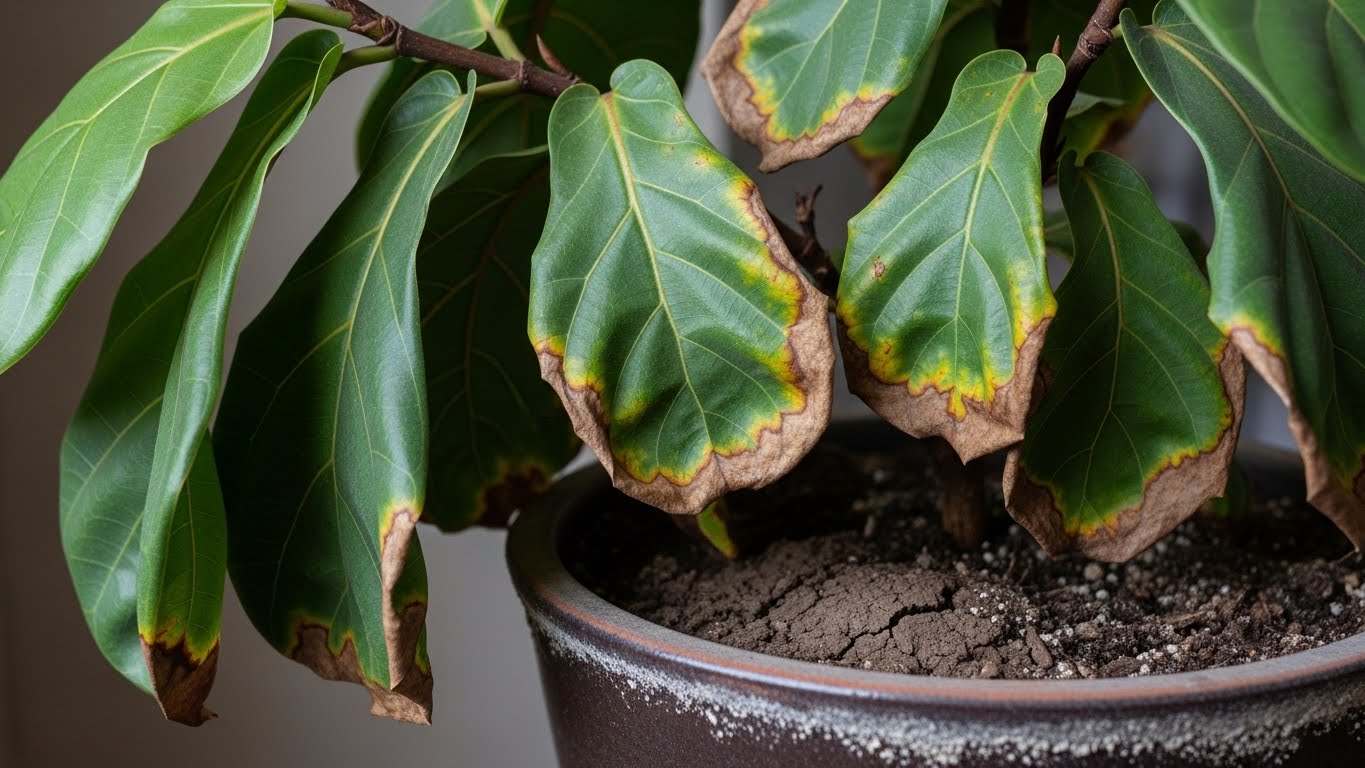
If your fiddle leaf fig isn’t growing, it’s likely due to a few common culprits. First, it might not be getting enough light, so try moving it closer to a window. Over or underwatering can also stress the roots, so check the soil moisture. Make certain you’re using well-draining soil, as poor drainage can lead to root rot. Watch out for pesky pests like spider mites, and make sure your plant isn’t exposed to sudden temperature changes. Keep exploring to uncover the secrets to a thriving fiddle leaf fig!
Key Takeaways
💡 If your fiddle leaf fig isn’t thriving, it’s crucial to understand the underlying issues.
➜ Discover proven techniques
- Insufficient light can lead to yellowing leaves and stunted growth; ensure your fiddle leaf fig receives at least six hours of indirect sunlight daily.
- Inconsistent watering practices stress the roots; check soil moisture regularly and water when the top inch feels dry.
- Using improper soil can cause poor drainage and root rot; opt for a well-draining, nutrient-rich potting mix.
- Pest infestations, such as spider mites or mealybugs, can damage leaves; inspect regularly and treat with insecticidal soap or neem oil if needed.
- Temperature stress from drafts or fluctuations can hinder growth; maintain a stable temperature between 60-75°F for optimal health.
Insufficient Light Conditions
When your fiddle leaf fig isn’t growing as it should, one of the first things you should consider is whether it’s getting enough light. These lovely plants thrive in bright, indirect sunlight, and without it, you might notice some changes in leaf color and growth patterns. If the leaves start turning yellow or dropping, that’s a clear sign they’re not happy. You’ve got to find that sweet spot! Try moving your fig closer to a window, but be careful of direct sunlight, which can scorch those beautiful leaves. Make sure it gets at least six hours of light daily. With the right lighting, your fiddle leaf fig can flourish, giving you lush, vibrant foliage that brightens your space. Additionally, proper lighting is crucial for photosynthesis, which affects the plant’s overall health and growth.
Inconsistent Watering Practices
Inconsistent watering practices can leave your fiddle leaf fig feeling confused and unhappy, so it’s essential to find a routine that suits its needs. Remember, your plant thrives on stable soil moisture levels. If you water too much one week and then forget the next, it can stress the roots, leading to poor root health. To keep your fiddle leaf fig vibrant, check the top inch of the soil; if it feels dry, it’s time to water. Aim for a balance—your plant loves consistent care. Regularly monitoring soil moisture helps you create a nurturing environment, allowing your fiddle leaf fig to grow strong and healthy. With a little attention, you’ll see your plant thrive!
Improper Soil Type
Improper soil type can seriously hinder your fiddle leaf fig’s growth, so it’s essential to choose a mix that meets its specific needs. Fiddle leaf figs thrive in well-draining soil, which helps prevent water from pooling around the roots. If the soil doesn’t drain properly, you risk root rot, a common issue that limits growth. Additionally, consider the nutrient levels in your soil. Your plant craves rich nutrients to flourish, so a mix that balances organic matter with aeration is key. A good potting mix often contains peat, perlite, and bark, which together create the perfect environment. By ensuring your fiddle leaf fig has the right soil, you’re setting it up for success and vibrant, healthy growth.
💡 Humidity plays a significant role in the health of your fiddle leaf fig.
➜ Explore advanced methods
Pest Infestations
Pest infestations can sneak up on your fiddle leaf fig, especially if it’s already struggling due to improper soil. Tiny pests like spider mites and mealybugs love to make themselves at home on your plant, leading to unsightly leaf damage. You might notice yellowing leaves or sticky residue on the leaves—those are signs your fiddle leaf fig needs attention!
To tackle these pests, start with effective pest control methods. Gently wipe the leaves with a damp cloth to remove any bugs. You can also use insecticidal soap or neem oil for a more thorough treatment. Keeping a close eye on your plant will help you catch any infestations early, allowing your fiddle leaf fig to thrive and grow strong!
Temperature Stress
When your fiddle leaf fig doesn’t grow as expected, temperature stress might be the culprit. These plants thrive in warm, consistent temperatures, so you need to keep an eye on their surroundings. Here are some signs to watch for:
- Cold drafts from windows or doors
- Sudden changes in temperature
- Unstable indoor climates
- Low humidity levels
- Prolonged exposure to direct heat
Seasonal changes can also impact your plant’s growth. If it’s sitting near drafty windows, it may struggle to adapt. Make sure to provide a stable environment, ideally between 60-75°F. By addressing temperature stress, you’ll help your fiddle leaf fig flourish and grow like you’ve always wanted!
Conclusion
To sum up, if your fiddle leaf fig isn’t growing, it could be due to insufficient light, inconsistent watering, improper soil, pests, or temperature stress. Did you know that fiddle leaf figs can grow up to 10 feet tall in the right conditions? That’s impressive! By addressing these five key factors, you can help your plant thrive and reach its full potential. Remember, a little care goes a long way in keeping your fiddle leaf fig happy and healthy!
💡 The right soil mix can dramatically affect your fiddle leaf fig’s growth.
➜ Get the step-by-step guide


