
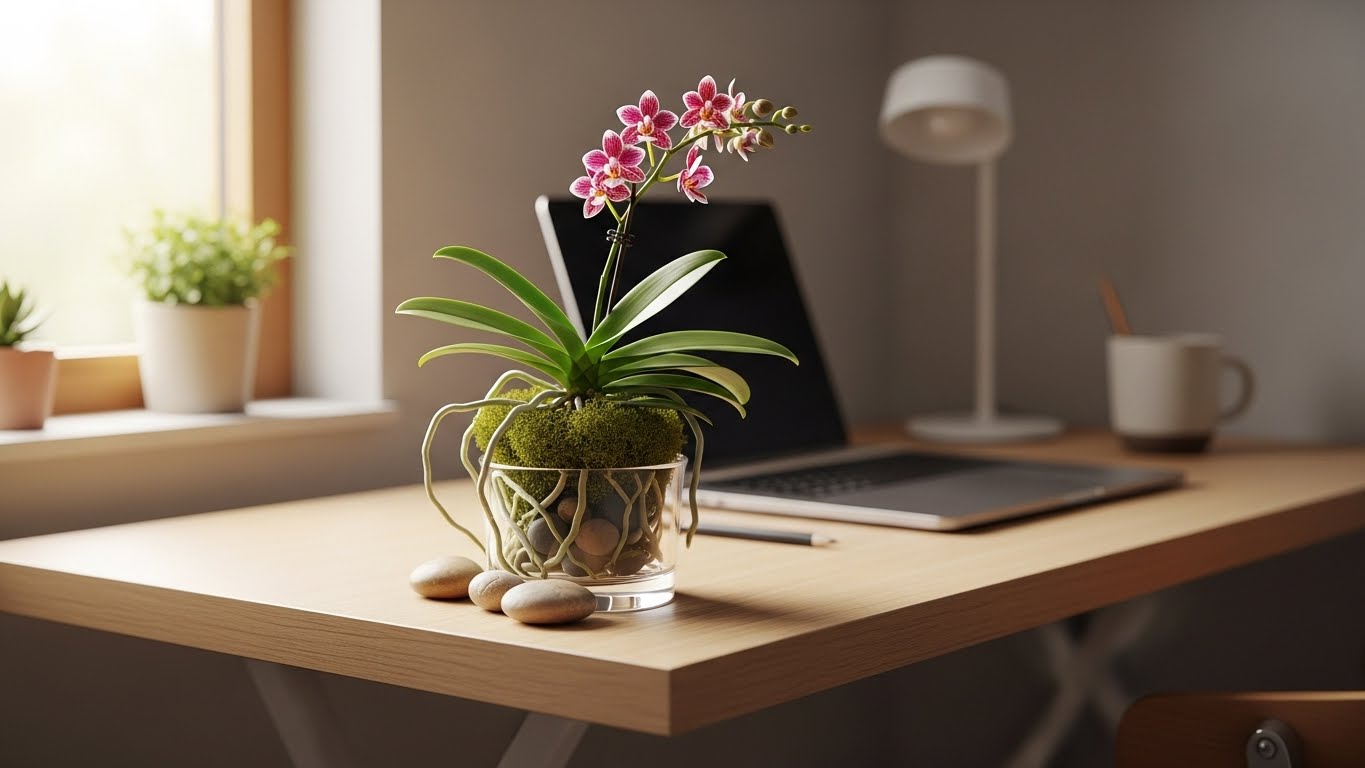
To care for mini orchids on your desk or shelf, start by choosing a variety that suits your space, like Phalaenopsis. Place your orchids in bright, indirect sunlight, avoiding direct sun. Water them every 1-2 weeks, letting the potting mix dry a bit in between, and keep humidity around 50-70% by misting or using a pebble tray. Fertilize every 2-4 weeks with diluted orchid fertilizer. Keep an eye out for pests, and you’ll create a thriving, beautiful display! You’ll discover more tips ahead.
Key Takeaways
- Place mini orchids in bright, indirect sunlight near windows to ensure they thrive without direct sun exposure.
- Water every 1 to 2 weeks, allowing the potting mix to dry slightly between waterings to prevent root rot.
- Maintain humidity levels around 50-70% by using a pebble tray with water and misting the orchids regularly.
- Fertilize with a balanced orchid fertilizer every 2-4 weeks during the growing season, diluted to half strength for optimal results.
- Regularly check for pests like aphids or spider mites, and treat infestations promptly with insecticidal soap or neem oil.
Choosing the Right Mini Orchid for Your Space

When you’re ready to choose the right mini orchid for your space, it’s important to contemplate a few key factors that can help you find the perfect match. Start by exploring various mini orchid varieties—like Phalaenopsis or Dendrobium—that can brighten up your area. Think about your decor too; a vibrant orchid can pop beautifully in a decorative pot, making it a stunning focal point. Consider how much room you have; some orchids require a bit more space to flourish. Finally, don’t forget to think about the colors that resonate with you. Selecting the right combination of mini orchid and pot can create a cozy, inviting atmosphere that feels just right for you! Additionally, understanding light preferences for each orchid variety is crucial in ensuring they thrive in your chosen location.
Ideal Lighting Conditions for Mini Orchids
After you’ve chosen the perfect mini orchid to brighten your space, the next step is guaranteeing it gets the right amount of light. Mini orchids thrive best in bright, indirect sunlight, so find a cozy spot that meets their needs. Here’s what to keep in mind about indoor lighting:
Choosing the right lighting is essential for your mini orchid’s health; aim for bright, indirect sunlight for optimal growth.
- Natural light is ideal, so place your orchid near a window, but avoid direct sunlight, which can scorch the leaves.
- If natural light’s limited, consider using grow lights to mimic the sunlight they crave.
- Rotate your orchid occasionally to guarantee even growth and prevent it from leaning towards the light.
Watering and Humidity Needs
To keep your mini orchid healthy and happy, you’ll need to pay close attention to its watering and humidity needs. Watering frequency is key; typically, you should water your orchid every 1 to 2 weeks, allowing the potting mix to dry slightly between waterings. Overwatering can lead to root rot, so keep an eye on those roots. Aim for humidity levels around 50-70%, which can be tricky in dry indoor air. To boost humidity, consider placing a small tray filled with water and pebbles beneath your pot, or mist your orchid lightly a couple of times a week. By staying mindful of these needs, you’ll create a thriving environment for your mini orchid to flourish and bloom beautifully!
Fertilizing Your Mini Orchid Properly
Fertilizing your mini orchid properly is essential for keeping it vibrant and blooming, especially since these petite plants thrive on the right nutrients. To guarantee your little beauty flourishes, you’ll want to pay attention to the fertilizer types you use and stick to a consistent feeding schedule.
Proper fertilization is key to a thriving mini orchid, ensuring it remains vibrant and blooms beautifully.
Here are a few tips to guide you:
- Use a balanced orchid fertilizer, ideally with a 30-10-10 ratio.
- Fertilize every 2-4 weeks during the growing season, which typically runs from spring to summer.
- Dilute the fertilizer to half strength to avoid overwhelming your mini orchid.
Common Pests and Troubleshooting Tips
Even with the best care, mini orchids can sometimes encounter pesky pests that threaten their health and beauty. To keep your little plant thriving, it’s essential to practice pest identification and pest prevention. Here’s a quick reference to help you spot and tackle common pests:
Pest | Signs of Infestation |
|---|---|
Aphids | Sticky residue, distorted leaves |
Spider Mites | Webbing, yellowing leaves |
Mealybugs | White, cottony spots |
Scale Insects | Bumps on stems and leaves |
Fungus Gnats | Tiny flies, damp soil |
If you notice any of these signs, act fast! Use insecticidal soap or neem oil for treatment, and always make certain your orchids have good air circulation to prevent future issues.
Conclusion
Caring for mini orchids can be a rewarding journey, turning your desk or shelf into a vibrant oasis. With the right lighting, watering, and a sprinkle of fertilizer, these little beauties can thrive and bring you joy. Remember, even the smallest plants can make a big impact! So, why not embrace the challenge and watch your mini orchid bloom? You’ll not only enjoy their beauty but also experience the satisfaction of nurturing life right in your own space!


