To create a lasting succulent centerpiece, start by selecting a mix of unique succulents with different shapes and colors. Choose a container with good drainage, then prepare a soil mix with potting soil, sand, and organic matter for ideal growth. Arrange your succulents thoughtfully and water them deeply but infrequently, letting the soil dry out completely between waterings. Regularly clean your plants and refresh the arrangement for a vibrant display that uplifts your space. Explore more tips to enhance your centerpiece!
Key Takeaways
- Select hardy succulent varieties that thrive in low humidity and can withstand varying light conditions for lasting displays.
- Use containers with proper drainage and suitable materials like terracotta or ceramic to prevent root rot.
- Prepare a well-draining soil mix with potting soil, sand or perlite, and organic matter to provide optimal growth conditions.
- Water deeply but infrequently, allowing the soil to dry out completely between waterings to prevent overwatering.
- Regularly refresh your arrangement and monitor for pests or diseases to maintain a vibrant and healthy centerpiece.
Selecting the Right Succulents
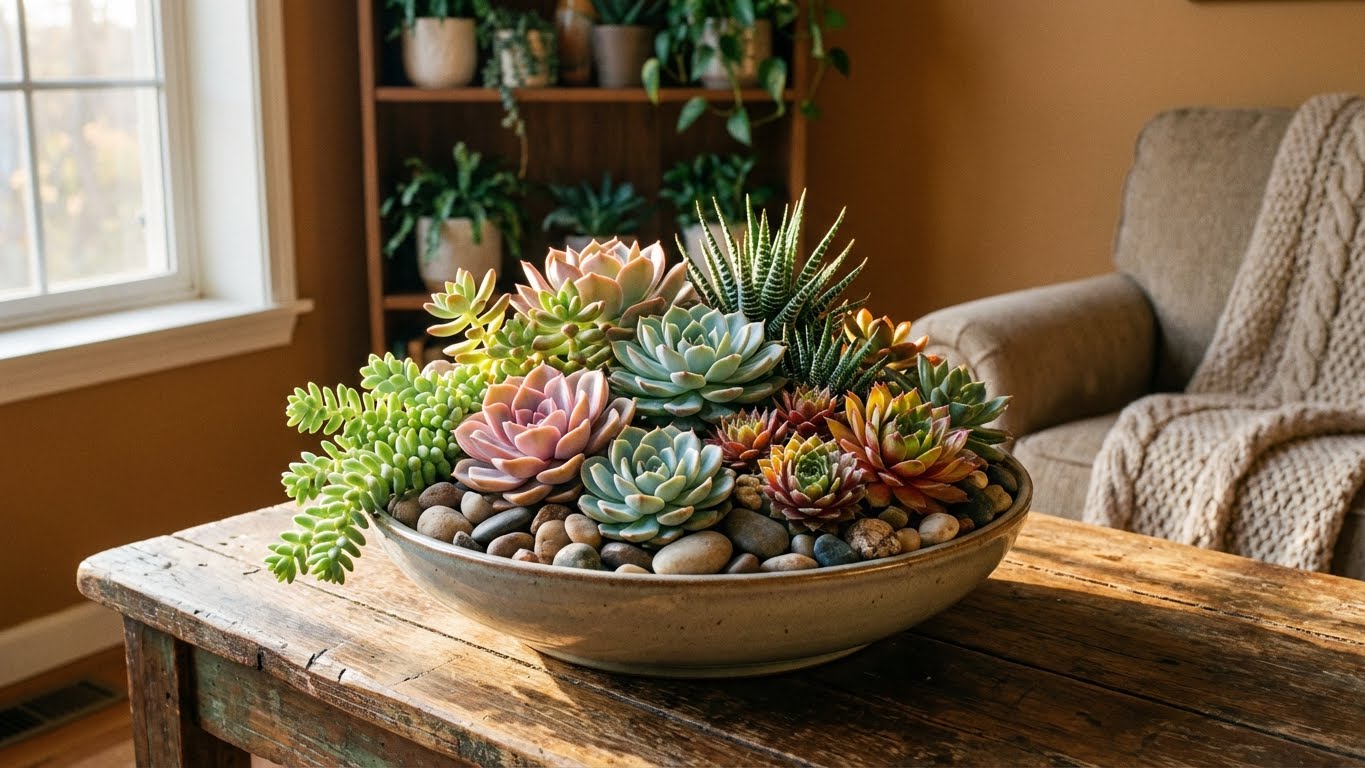
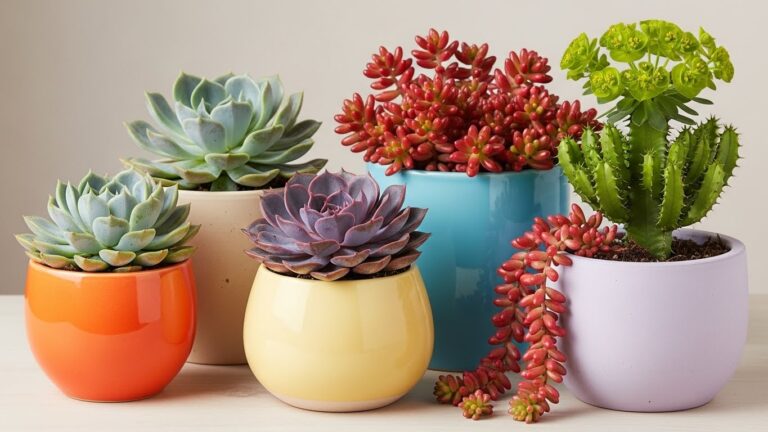
When you’re ready to create your stunning succulent centerpiece, selecting the right succulents is key to making it a showstopper. Start by exploring various succulent varieties; each one brings its own texture and charm. For a striking look, mix and match colors—think soft greens paired with vibrant pinks and deep purples. This colorful combination not only adds depth but also draws the eye in, creating a delightful visual experience. Consider the shapes as well; round, plump leaves contrast beautifully with spiky varieties. Don’t forget to choose plants that thrive together, ensuring your centerpiece stays lively and fresh. With the right selection, you’ll create a centerpiece that’s not just beautiful but also a true reflection of your style. Additionally, ensure your chosen succulents can tolerate low humidity levels, as this is essential for preventing issues like root rot.
Choosing the Perfect Container
After selecting the right succulents, the next step is choosing the perfect container to showcase your beautiful plants. Think about container materials like ceramic, terracotta, or even metal. Each material has its charm, but remember, some retain moisture better than others. If you’re worried about overwatering, opt for containers with good drainage holes.
Container sizes matter too! A pot that’s too small can stunt your plants’ growth, while one that’s too large may hold excess moisture. Aim for a container that’s just a bit larger than your succulent’s root ball. This way, your plants will thrive and look stunning in their new home. With the right container, your succulent centerpiece will shine with personality and style!
Preparing the Soil Mix
Preparing the soil mix is essential for ensuring your succulents thrive, as the right blend provides excellent drainage and aeration. To create the perfect mix, start with a base of potting soil, then add coarse sand or perlite to improve soil drainage. This helps prevent water from pooling around your plants’ roots, which can lead to rot. Next, consider adding a bit of organic matter, like compost, to provide a nutrient balance that promotes growth. Aim for a mix that’s about 50% potting soil, 30% sand or perlite, and 20% organic matter. This combination will keep your succulents healthy and happy, allowing them to flourish in their new home. With the right soil, you’re set for success!
Arranging Your Succulents
Now that you’ve got your soil mix ready, it’s time to think about arranging your succulents. Start by choosing the right containers that match your style, then layer different soil types to give your plants the best chance to thrive. This careful arrangement not only helps the succulents grow but also makes your centerpiece look stunning!
Choosing the Right Containers
When it comes to creating a stunning succulent centerpiece, choosing the right containers is essential, and there are countless options to contemplate! The materials and shapes you select can truly elevate your arrangement. From rustic terracotta to sleek glass, each material brings a unique vibe. Additionally, container shapes like round, square, or even whimsical designs can add character and charm.
Here’s a quick overview to help guide your choice:
Container Materials | Container Shapes |
|---|---|
Terracotta | Round |
Glass | Square |
Ceramic | Hexagonal |
Metal | Unique/Whimsical |
Layering With Soil Types
Creating a beautiful succulent centerpiece involves more than just picking the right plants; it’s also about how you layer the soil types to support their growth and showcase their beauty. Start with a layer of coarse gravel or small rocks at the bottom, ensuring excellent drainage. This is essential since succulents dislike sitting in water. Next, add a mix of potting soil and sand, using soil layering techniques to help retain moisture without suffocating the roots. Finally, sprinkle a top layer of fine soil to keep things neat and attractive. By combining these elements thoughtfully, you’ll create a thriving environment for your succulents, allowing them to shine and flourish in your centerpiece.
Watering Guidelines for Succulents
Watering your succulents might seem simple, but getting it just right is key to keeping them healthy! You’ll want to pay attention to how often you water and look out for signs of overwatering, so your little green friends stay happy. Let’s explore some helpful tips on how to make sure your succulents thrive without drowning them!
Watering Frequency Tips
To keep your succulents thriving, you need to understand their unique watering needs, especially since these plants are adapted to store water in their leaves and stems. Different succulent types have varying requirements, but a general rule is to water deeply but infrequently. This means you should moisten the soil thoroughly, then allow it to dry out completely before the next watering. Depending on your environment, this could be every 1-3 weeks. When using different watering methods, like bottom watering or misting, make sure you’re not overdoing it. Always check for dryness by sticking your finger in the soil. Trust your instincts, and soon you’ll develop a rhythm that keeps your succulent centerpiece healthy and beautiful!
Signs of Overwatering
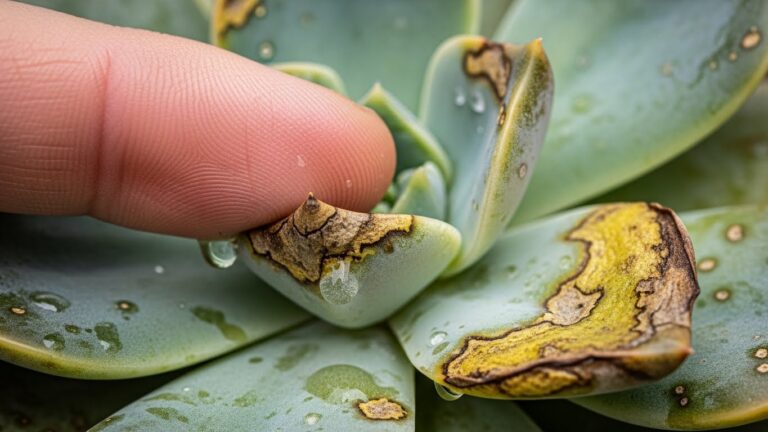
When you notice your succulent’s leaves turning yellow or becoming mushy, it’s time to take a closer look, as these are telltale signs of overwatering. Your plant might be struggling with root rot, which can be detrimental if not addressed. Here are three signs that indicate your succulent is getting too much water:
- Leaf Discoloration: Yellow, brown, or translucent leaves are clear warnings.
- Mushy Texture: If the leaves feel soft and squishy, they’re likely waterlogged.
- Foul Smell: A bad odor from the soil can indicate rotting roots.
Adding Decorative Elements
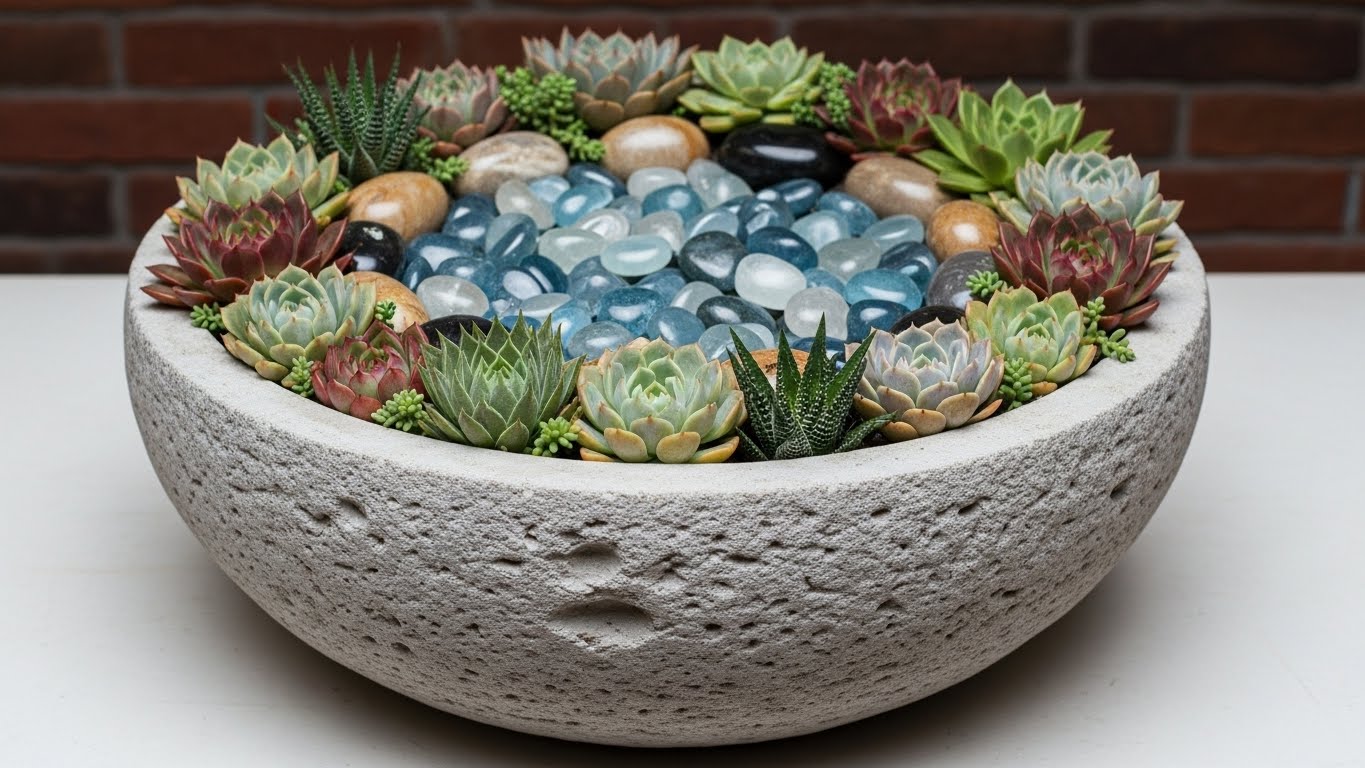
Adding decorative elements can truly elevate your succulent centerpiece, transforming it from simple to stunning in no time. Start by choosing decorative stones that complement your plants; they not only add texture but also help with drainage. Think about using white or gray stones for a clean look, or colorful pebbles to bring vibrancy. Next, consider incorporating seasonal accents. In fall, tiny pumpkins or autumn leaves can add warmth, while festive ornaments work wonders during the winter holidays. You might even add a small figurine or two for a personal touch. With these decorative choices, your succulent centerpiece will feel more inviting and unique, reflecting your style and creativity while creating a cozy atmosphere for any gathering.
Placement and Care Tips
Once you’ve added those decorative elements to your succulent centerpiece, the fun doesn’t stop there! Placement and care are essential for keeping your arrangement vibrant. Here are some tips to help you thrive:
- Lighting Conditions: Place your centerpiece in a bright spot, but avoid direct sunlight that can scorch the leaves.
- Watering Needs: Check the soil moisture weekly. Succulents prefer dry conditions, so water only when the soil feels dry to touch.
- Seasonal Adjustments: As seasons change, be ready to move your centerpiece. In winter, they may need a little more warmth and light.
Refreshing Your Centerpiece Over Time
Revitalizing your succulent centerpiece keeps it looking lively and engaging, especially as the plants grow and seasons change. To give your arrangement a new look, consider making seasonal updates. Swap out some succulents for others that boast vibrant color variations, reflecting the mood of the season. For example, in spring, you might incorporate pastel hues, while fall is perfect for rich, warm tones.
You can also rearrange the existing plants, creating new patterns or clusters that draw the eye. Don’t forget to clean any dust from the leaves or container, adding to the overall novelty. By regularly renewing your centerpiece, you not only maintain its beauty but also create a joyful atmosphere that brightens your space.
Conclusion
Creating a succulent centerpiece isn’t just about decoration; it’s a symbol of resilience and growth. Just like these hardy plants, you can nurture and adapt your centerpiece over time, reflecting your own journey. By selecting the right succulents, arranging them thoughtfully, and caring for them well, you bring life into your space. So, embrace your creativity, and let your centerpiece flourish, reminding you that with a little effort, beauty can thrive even in unexpected places.