
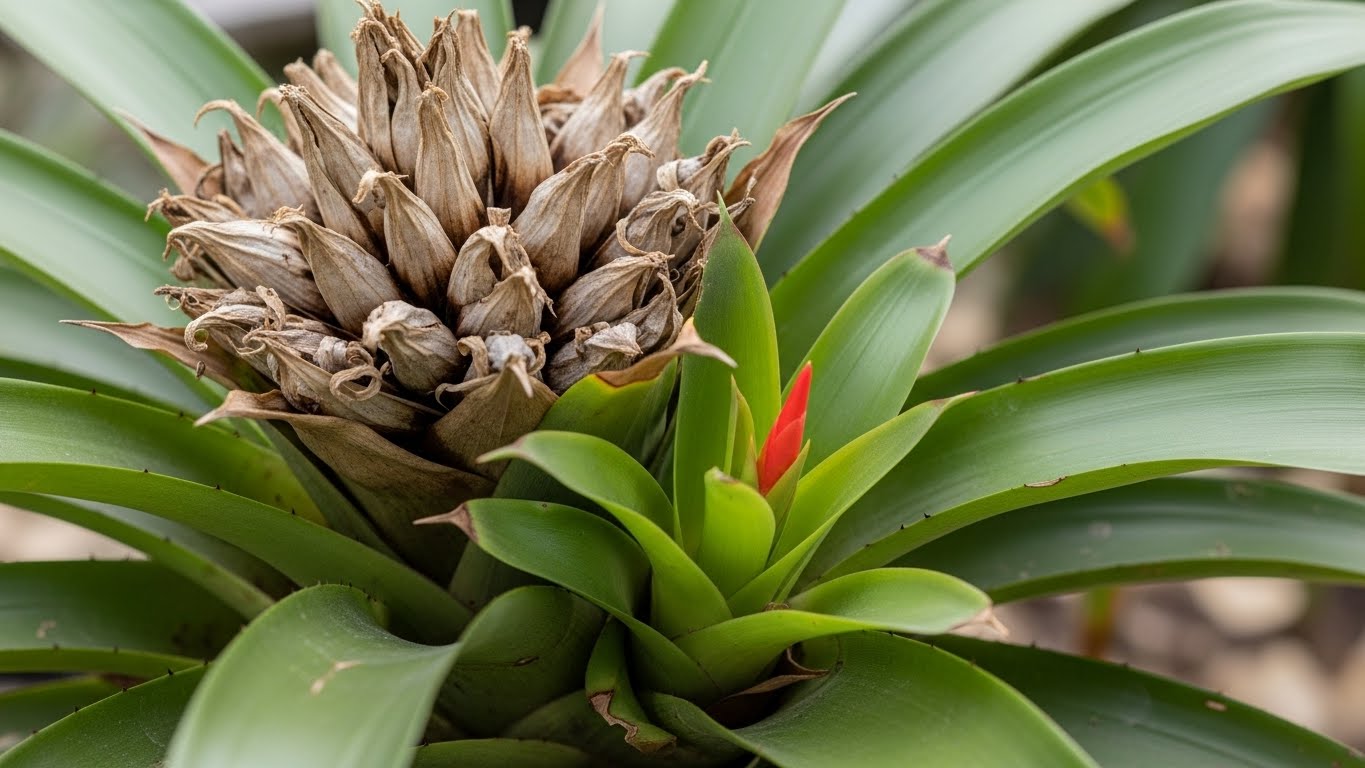
To keep your bromeliads thriving after they bloom, start by pruning the spent bloom stalks and any yellowing leaves. Adjust your watering routine to let the soil dry slightly between waterings—this helps prevent rot. Fertilize sparingly, and provide bright, indirect light to promote healthy growth. Regularly check for pests and encourage offsets by separating the pups when they’re big enough. Stick around, and you’ll discover more tips to guarantee your plants flourish!
Key Takeaways
💡 To ensure your bromeliads thrive throughout the year, it’s essential to follow a structured care calendar.
➜ Get the step-by-step guide
- Prune spent bloom stalks close to the base to redirect energy to leaves and pups.
- Reduce watering frequency after blooming to prevent rot during the dormancy phase.
- Maintain bright, indirect light to support new growth post-blooming.
- Fertilize sparingly with diluted bromeliad fertilizer every four to six weeks during active growth.
- Monitor for pests and maintain cleanliness to ensure overall plant health.
Understanding Bromeliad Life Cycles
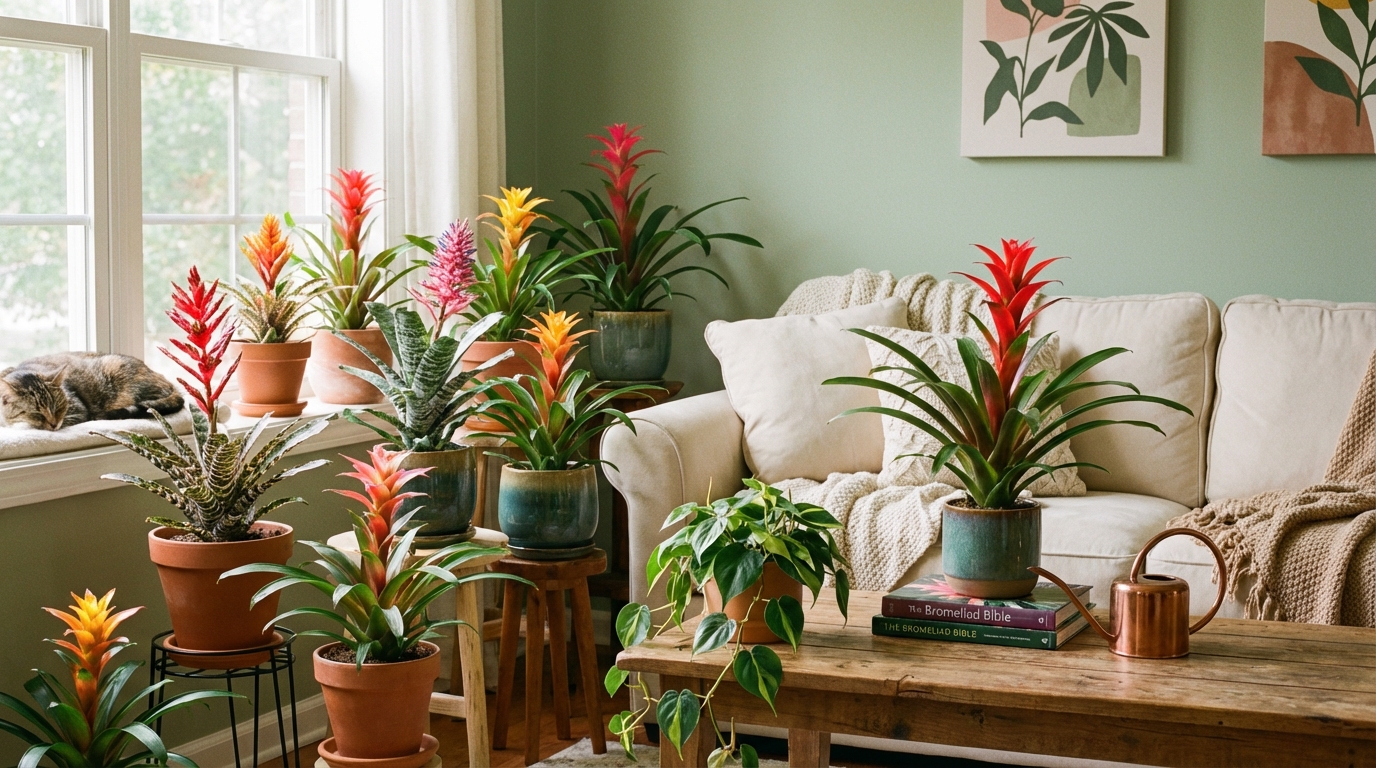
Bromeliads might seem like just another pretty plant, but understanding their life cycles can reveal the secrets to keeping them healthy and thriving. These unique plants go through distinct stages, each influencing their growth. During the active growth phase, bromeliads flourish, soaking up light and moisture. You’ll notice their vibrant colors and lush foliage during this time. However, they also experience periods of plant dormancy, where growth slows down, and they focus on conserving energy. Recognizing these cycles is vital; it helps you adjust your care routine accordingly. For instance, during dormancy, cut back on watering to prevent rot. By tuning into these phases, you can nurture your bromeliads and enjoy their beauty for years to come. Additionally, understanding the epiphytic nature of bromeliads can help you provide the right environment for them to thrive.
Recognizing Signs of Blooming Completion
As your bromeliad nears the end of its blooming phase, you’ll notice some important signs that indicate it’s time to say goodbye to those vibrant flowers. Pay close attention to any color changes in the petals, which often shift from bright and lively to faded or dull, signaling the end of their life cycle. You might also see wilting petals, a clear sign that your plant is wrapping up its blooming journey, so keep an eye out for these changes!
Color Change Indicators
When you notice color changes in your bromeliads, it’s often a sign that their blooming phase is wrapping up. You might see a shift from bright, vibrant hues to softer, more muted color variations. This change signals that the flowers are nearing the end of their bloom longevity. Keep an eye out for these changes, as they can help you prepare for the next steps in caring for your plant. As the bloom fades, your bromeliad still needs your love and attention, so don’t forget to keep it hydrated and in a suitable spot. Recognizing these color changes will allow you to nurture your bromeliad through this natural cycle, ensuring it remains healthy and beautiful long after the flowers are gone.
Wilting Petals Signs
Recognizing wilting petals can be essential for understanding when your bromeliad’s blooming phase is coming to an end. As flowers mature, you’ll notice signs of petal wilting. This is a natural part of the life cycle, and with proper bloom maintenance, you can care for your plant effectively.
Sign of Wilting | What to Do |
|---|---|
Color fading | Check for water needs |
Petals drooping | Guarantee proper light |
Edges browning | Trim dead foliage gently |
Petals falling off | Prepare for post-bloom care |
Stay attentive to these signs. By recognizing petal wilting, you can help your bromeliad shift smoothly into its next phase, keeping it healthy and vibrant.
Pruning After Blooming
Pruning your bromeliads after they’ve finished blooming is an essential step in keeping them healthy and vibrant. Once the flowers fade, it’s time to apply some pruning techniques to encourage new growth. Start by removing the spent bloom stalk, cutting it close to the base of the plant. This not only tidies up your bromeliad but also allows energy to redirect to its leaves and pups. For post-bloom care, check for any dead or yellowing leaves; trimming these can enhance air circulation and light access. Remember, a little care goes a long way! Embrace the process, and your bromeliads will reward you with lush foliage and new blooms in no time. Happy pruning!
Adjusting Watering Practices
Adjusting your watering practices is essential for keeping bromeliads thriving, especially since these unique plants have specific needs. You’ll want to find the right balance in water frequency and moisture levels to keep your bromeliads happy. Here’s a quick guide to help you out:
Time of Year | Water Frequency | Moisture Level |
|---|---|---|
Spring | Once a week | Keep the soil damp |
Summer | Twice a week | Maintain moderate moisture |
Fall | Every 10 days | Slightly drier |
Winter | Once every 2 weeks | Allow soil to dry out |
Fertilizing Your Bromeliad
When it comes to keeping your bromeliads healthy and vibrant, understanding how to fertilize them is key to their growth and overall well-being. You’ll want to choose the right fertilizer types, like a balanced liquid fertilizer or a slow-release granule, to give your plants the nutrients they crave. During the growing season, fertilize every four to six weeks, but be careful not to overdo it, as too much can harm your plant. Always dilute the fertilizer to avoid burning the roots. If your bromeliad is in bloom, hold off on fertilizing until after it flowers. By following these tips, you’ll keep your bromeliad thriving and full of life for years to come!
💡 Understanding common issues is vital for maintathisng healthy bromeliads post-bloom.
➜ Discover proven techniques
Providing Ideal Light Conditions
Providing your bromeliads with the right light conditions is essential for their health and growth, as these vibrant plants thrive best in bright, indirect sunlight. To guarantee your bromeliads flourish, consider these key points about light intensity:
💡 If you want your bromeliads to bloom beautifully, understanding the right techniques is key.
➜ Master this approach
- Location: Place your bromeliads near a window with filtered light, avoiding direct sun that can scorch their leaves.
- Rotation: Rotate your plants every few weeks to promote even growth and prevent leaning towards the light source.
- Seasonal Adjustments: Be mindful of seasonal changes; adjust their placement to provide consistent indirect sunlight throughout the year.
- Artificial Light: If natural light is scarce, use grow lights to mimic the bright, indirect sunlight they crave.
With the right light, your bromeliads will thrive beautifully!
Repotting for Continued Growth
When it’s time to repot your bromeliad, you’ll want to pick the right soil and container to keep it thriving. Using a well-draining soil mix, like one designed for orchids, helps prevent water from pooling around the roots. Plus, choosing a pot that’s just a bit larger than the current one encourages healthy growth without overwhelming your plant.
Choose Appropriate Soil
Choosing the right soil for your bromeliads is essential for their health and growth. The ideal soil composition should support their unique drainage requirements while providing the nutrients they need. Here’s what to look for:
- Well-draining mix: Use a potting mix designed for orchids or bromeliads.
- Organic matter: Incorporate materials like pine bark or coconut coir for moisture retention.
- Aeration: Confirm the soil allows air to reach the roots, preventing rot.
- pH balance: Aim for a slightly acidic to neutral pH for best nutrient absorption.
Select Proper Container
Selecting the right container for your bromeliads can make all the difference in their growth and overall health. When choosing, consider container types like ceramic, plastic, or terracotta. Each has its benefits; for instance, terracotta allows better airflow while plastic retains moisture longer. Whatever you select, make sure it has drainage holes. These holes are essential because they prevent water from sitting at the bottom, which can lead to root rot. Your bromeliad thrives on a balance of moisture and dryness, so a well-draining container helps achieve that. Don’t forget to repot your bromeliad every couple of years to refresh its environment. With the right container, your bromeliad will feel at home, allowing it to flourish beautifully.
Managing Pests and Diseases
Although you might think that bromeliads are tough plants, they can still face threats from pests and diseases that harm their health. To keep your bromeliads thriving, focus on effective pest control and disease prevention. Here’s how you can manage these challenges:
Bromeliads may seem resilient, but they require vigilant care to combat pests and diseases for optimal health.
- Inspect Regularly: Check your plants for signs of pests like mealybugs or aphids.
- Maintain Cleanliness: Remove dead leaves and debris, as they can harbor diseases.
- Use Natural Remedies: Consider neem oil or insecticidal soap to treat infestations.
- Ensure Proper Airflow: Space your plants to prevent mold and fungal issues.
Encouraging Offsets and Propagation
Once you’ve guaranteed your bromeliads are healthy and free from pests, it’s time to focus on encouraging offsets, also known as pups, which can lead to new plants and a vibrant collection. To kick off offset propagation, keep an eye on your bromeliads for small pups sprouting at the base. Once they’re about one-third the size of the parent plant, you can gently separate them using a sharp, clean knife. This is where bromeliad division comes into play! After separating, let the pups dry for a day or two to prevent rot, then plant them in well-draining soil. Water them lightly, and soon you’ll have delightful new additions to your bromeliad family, ready to thrive and bloom!
Conclusion
Keeping your bromeliads alive after they bloom is like nurturing a friendship—you need care, attention, and the right conditions for it to thrive. By adjusting your watering habits, providing proper light, and even repotting when necessary, you can help your plant continue its journey. Remember, these vibrant beauties can surprise you by producing offsets, ensuring their legacy lives on. With a little patience and love, your bromeliads will keep bringing joy long after their flowers fade!
💡 Choosing the right pot can significantly impact the longevity of your bromeliads after they bloom.
➜ Explore advanced methods


