
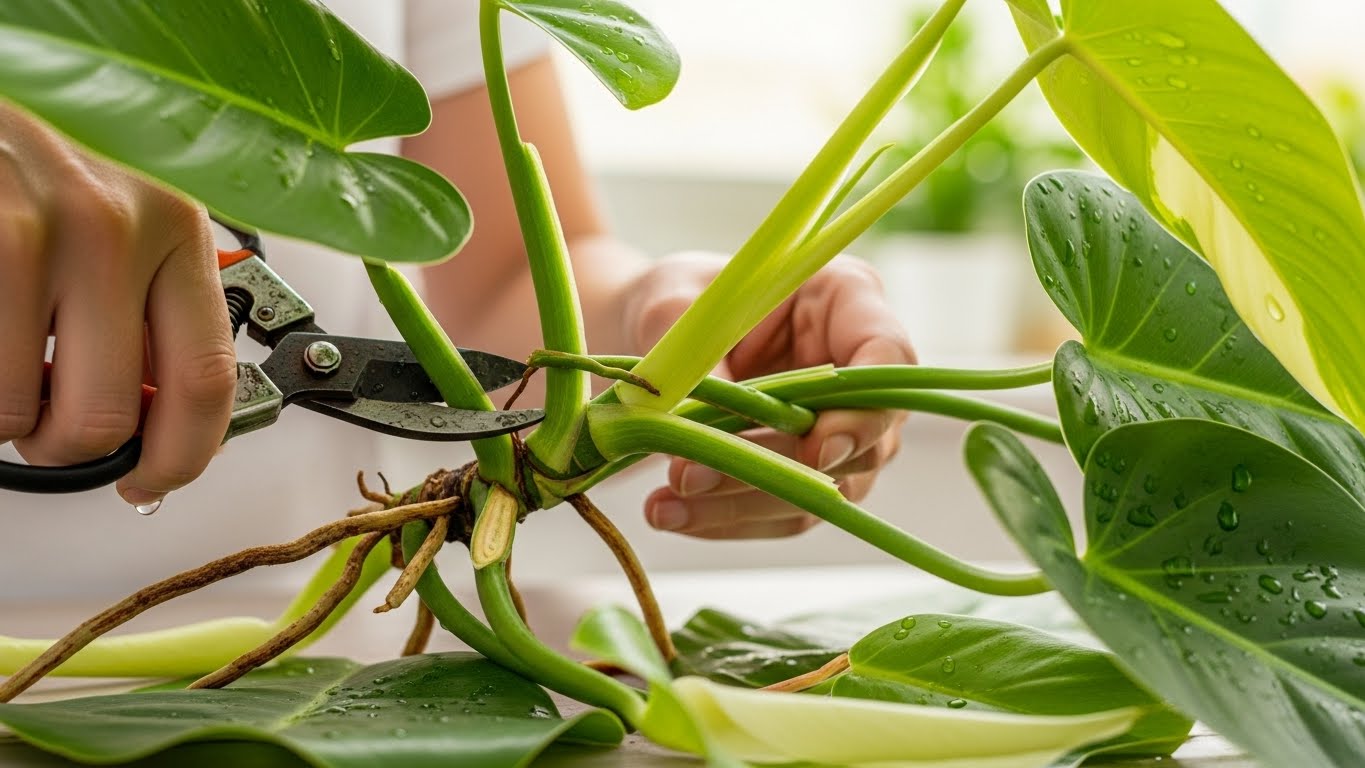
To prune your philodendron for fuller growth, start by trimming yellowing leaves and leggy stems, ideally during spring or early summer. Use sharp pruning shears to make clean cuts just above a node or leaf. This promotes new growth and helps keep the plant shapely. Remember not to over-prune and monitor for pests during the process. By regularly shaping your plant, you can create a vibrant centerpiece. Keep going to discover more tips on maintaining your philodendron!
Key Takeaways
- Prune during spring to encourage vibrant new growth and shape the plant effectively as it comes out of winter dormancy.
- Trim leggy stems to promote bushier growth and enhance the overall fullness of your Philodendron.
- Remove yellowing or damaged leaves regularly to ensure the plant remains healthy and aesthetically pleasing.
- Use clean, sharp pruning shears to make precise cuts just above a node or leaf for optimal growth stimulation.
- Monitor for pests during and after pruning, using natural solutions like neem oil to maintain plant health and vitality.
Understanding the Philodendron’s Growth Patterns
When you’re getting to know your Philodendron, it’s exciting to see how it grows and changes over time. Understanding its growth habits is key to nurturing a thriving plant. Philodendrons typically grow in a lush, trailing manner, sending out long vines that reach for light. You’ll notice how these vines can sometimes become unruly, but that’s where your pruning effects come into play. By trimming back those long stems, you encourage bushier growth and help maintain a more balanced shape. Regular pruning not only keeps your Philodendron looking neat but also promotes healthier leaves. As you engage with your plant, you’ll develop a deeper connection, watching it flourish in response to your care and attention.
When Is the Best Time to Prune?
The best time to prune your Philodendron is during its active growing season, which typically spans from spring to early summer. This is when you’ll see vibrant spring growth, making it the perfect opportunity to shape your plant and encourage fuller foliage. Pruning now helps your Philodendron bounce back quickly, as it thrives on the warmth and light of the season. If you wait until its winter dormancy, you might end up stunting its growth or even causing stress. So, grab those pruning shears when the days get longer, and your plant is ready to flourish. Remember, a little trim can lead to a lush, healthy Philodendron that brings joy to your space!
Tools You Will Need for Pruning
To successfully prune your Philodendron, you’ll need a few essential tools that make the job easier and guarantee clean cuts. First up, a good pair of pruning shears is a must. They’ll help you snip away dead leaves and stems with precision, promoting healthy growth. Look for shears that fit comfortably in your hand, as you’ll be using them a lot! Next, don’t forget your gardening gloves. They protect your hands from thorns and dirt, making the process more enjoyable. Plus, they keep your skin safe from any sap that can be a bit irritating. With these tools in hand, you’re all set to give your Philodendron the care it deserves and watch it flourish!
Identifying Which Parts to Prune
Pruning your Philodendron isn’t just about cutting; it’s about knowing which parts need your attention to keep the plant looking its best. To achieve your pruning goals, focus on these areas:
- Yellowing or damaged leaves: These are signs of poor leaf health and should be removed to encourage new growth.
- Leggy stems: If your plant looks sparse, trimming back long stems can promote a fuller appearance.
- Crowded sections: If leaves are competing for space, pruning helps improve air circulation and light access.
- Dead or wilted foliage: Removing this not only cleans up the plant but also boosts its overall health.
Techniques for Cutting Stems and Leaves
When it comes to pruning your philodendron, knowing where and when to cut makes all the difference. You’ll want to identify the right pruning points, cutting just above a node or leaf to encourage new growth. Timing your cuts during the plant’s active growth period boosts your chances of a healthy and vibrant plant.
Identifying Pruning Points
Identifying the right spots to prune your Philodendron can make a big difference in its growth and appearance. Look for these growth indicators to determine your pruning points:
- Leggy stems: When stems become long and sparse, it’s time to trim them back.
- Yellowing leaves: Remove leaves that have turned yellow, as they can drain energy from healthier parts.
- Crowded growth: If your plant looks bushy and tangled, snipping some stems can help rejuvenate it.
- New growth tips: Focus on cutting just above the nodes where new leaves are emerging to encourage fuller growth.
Use these pruning techniques to keep your Philodendron thriving, and soon you’ll see it flourish beautifully! Happy pruning!
Timing Your Cuts
Timing your cuts can greatly influence how well your Philodendron responds to pruning, so it’s essential to choose the right moments. Ideal pruning happens during the growing season, usually spring and early summer. During this time, your plant is full of energy and ready to bounce back from cuts.
Keep an eye on seasonal variations; if you live in a region with distinct seasons, adjust your pruning schedule accordingly. Avoid cutting during the winter months when your plant is dormant, as this can hinder its growth. By selecting the right time to prune, you’ll encourage fuller, healthier growth in your Philodendron, creating a lush and thriving indoor companion you can cherish.
How to Encourage Bushier Growth
To encourage bushier growth in your philodendron, you’ll want to focus on the right timing for pruning, effective cutting techniques, and proper fertilization. By strategically trimming your plant and providing it with the nutrients it needs, you can promote fuller and healthier foliage. Let’s explore how these simple steps can make a big difference in your plant’s appearance!
Timing for Pruning
When you think about giving your philodendron that perfect trim, timing plays an essential role in encouraging bushier growth. To truly make the most of your pruning efforts, consider the seasonal changes and growth cycles of your plant. The best times to prune are:
- Early Spring: As new growth begins, your plant’s energy is focused on producing leaves.
- Mid-Summer: This is when your philodendron is thriving, making it ideal for trimming.
- Late Summer: A gentle trim can help redirect energy for the fall.
- Before Winter: Preparing your plant for the dormancy period can help it bounce back in spring.
Cutting Techniques Explained
Mastering the right cutting techniques can transform your philodendron into a lush, bushy beauty. By using effective pruning methods, you’ll encourage side growth and fullness. Start by cutting just above a leaf node; this stimulates new growth. Don’t hesitate to prune back leggy stems—shorter ones will thrive, leading to a denser appearance.
Here’s a quick reference for effective cutting techniques:
Technique | Description |
|---|---|
Leaf Node Cutting | Cut just above a leaf node for new growth. |
Back Pruning | Trim leggy stems to encourage fullness. |
Thinning Out | Remove weak stems to boost overall health. |
With these techniques in mind, you’ll soon enjoy a thriving, bushy philodendron that’ll brighten up your space!
Fertilization for Growth
Revealing the secret to a bushier philodendron often lies in the right fertilization approach. By using organic fertilizers with slow release nutrients, you can give your plant the boost it needs. Here’s how to get started:
- Choose the right fertilizer: Select a balanced organic fertilizer designed for houseplants.
- Timing is key: Fertilize every 4-6 weeks during the growing season to encourage lush growth.
- Apply evenly: Spread the fertilizer evenly around the base of your plant, avoiding direct contact with the stems.
- Monitor moisture: Water your philodendron after fertilizing to help nutrients seep into the soil.
With a little care, your philodendron will thrive, becoming fuller and more vibrant, bringing joy to your space!
Dealing With Leggy Growth
Leggy growth in your philodendron can be frustrating, especially when you want a lush, full plant. This happens when your plant stretches toward light, leaving you with long, spindly stems and sparse leaves. To tackle leggy growth, you’ll want to embrace some effective pruning techniques. Start by cutting back those lengthy stems to just above a leaf node; this encourages new growth and fullness. Don’t be shy—removing about a third of the plant can stimulate healthy branches. You might also consider rotating your plant regularly, ensuring it gets even light from all sides. With a little care, you’ll soon see your philodendron transform into the beautiful, bushy companion you’ve always desired!
Pruning for Shape and Structure
When you want your philodendron to have a well-defined shape and structure, pruning becomes an essential tool in your gardening toolkit. Employing various shaping techniques can yield impressive structure benefits, making your plant not only healthier but also more aesthetically pleasing.
Here are some key approaches to contemplate:
- Trim leggy stems to encourage bushier growth.
- Cut back overgrown branches to maintain a balanced appearance.
- Pinch off new growth to promote fullness and density.
- Shape the plant by removing any undesired leaves or stems.
The Importance of Clean Cuts
While it might seem like a small detail, making clean cuts during pruning is essential for the health of your philodendron. When you snip branches, using sharp, clean tools helps prevent tearing or crushing the stems. This allows your plant to heal faster and encourages new growth. Remember, clean cuts promote better air circulation and reduce the risk of disease, keeping your plant vibrant and happy.
To achieve this, focus on proper pruning techniques. Angle your cuts slightly to allow water to run off, preventing rot. Always disinfect your tools before use to eliminate any harmful bacteria. By prioritizing clean cuts, you’re setting your philodendron up for fuller, healthier growth, enhancing its beauty for you to enjoy.
How to Handle Pests During Pruning
Pests can be a real nuisance during pruning, especially if you’re trying to keep your philodendron healthy and thriving. You want to tackle any pest issues head-on, using effective pest control methods. Here are some organic solutions to evaluate while you prune:
Pest control is essential during pruning to ensure your philodendron remains healthy and flourishing.
- Neem oil: A natural insecticide that repels pests and keeps your plant safe.
- Soap solution: Mix mild soap with water to create a gentle spray for pests like aphids.
- Diatomaceous earth: Sprinkle this powder around the base to deter crawling insects.
- Companion planting: Surround your philodendron with plants that repel pests naturally.
Aftercare: Caring for Your Pruned Philodendron
After you’ve tackled any pest issues during pruning, it’s time to focus on aftercare for your pruned philodendron. You’ll want to keep a consistent watering schedule, letting the soil dry slightly between waterings to avoid overwatering. Remember, your philodendron loves humidity, so mist it regularly or place a humidifier nearby to meet its humidity requirements. This will encourage lush, vibrant growth. Keep it in bright, indirect light, but avoid direct sun to prevent leaf burn. If you notice yellowing leaves, check your watering habits. With some love and attention, your philodendron will thrive and reward you with fuller growth and beautiful foliage. Enjoy nurturing your plant as it flourishes!
Signs Your Philodendron Needs Pruning
Sometimes, your philodendron might need a little extra care, and pruning is a key part of keeping it healthy and happy. Recognizing the right pruning indicators can enhance your plant’s energy and promote fuller growth. Here are some signs that your philodendron could use a trim:
- Yellowing or browning leaves
- Leggy growth with long stems and few leaves
- Dead or wilted leaves that won’t perk up
- Overcrowded growth that looks messy
Common Mistakes to Avoid While Pruning
When you’re pruning your Philodendron, it’s easy to make some common mistakes that can really affect your plant’s health. Timing is essential—pruning at the wrong moment can hinder growth, while over-pruning can lead to stress and damage. Let’s explore these pitfalls so you can keep your plant thriving!
Timing Errors in Pruning
Timing is essential when it comes to pruning your philodendron, as making mistakes in this area can hinder your plant’s growth. Avoid common timing issues to guarantee your plant thrives. Here are some pruning mistakes to watch out for:
- Pruning during the wrong season can shock your plant.
- Cutting back too early in spring may limit growth.
- Waiting too long could result in overgrown, tangled vines.
- Failing to take into account the plant’s growth cycle leads to missed opportunities.
Over-Pruning Consequences Explained
Over-pruning can be just as damaging as pruning at the wrong time, leading to a variety of problems for your philodendron. You might notice some clear signs of over-pruning, like yellowing leaves, stunted growth, or an overall lack of vigor. When you cut too many stems or leaves, you can hinder the plant’s ability to photosynthesize, which is essential for its health. The over pruning effects can also leave your philodendron looking sparse and leggy, rather than lush and full. To avoid these pitfalls, always step back and assess before making any cuts. Remember, a little pruning goes a long way, and your plant will thank you for it by thriving beautifully!
Propagating Cuttings From Pruned Philodendron
If you’ve just pruned your philodendron and are looking to make the most of those cuttings, you’re in for a rewarding experience! Cutting propagation is a fantastic way to encourage root development while expanding your plant collection. Here’s how to get started:
If you’ve pruned your philodendron, try cutting propagation for new growth and to expand your collection!
- Choose healthy cuttings: Look for stems with at least two leaves.
- Prepare the cuttings: Trim just below a leaf node for better growth.
- Place in water or soil: Water works wonders, but soil is also effective for rooting.
- Provide warmth and light: Keep your cuttings in a warm spot with indirect sunlight.
With a little patience, you’ll watch those roots grow, and before you know it, new philodendrons will be thriving in your home!
Maintaining a Regular Pruning Schedule
Maintaining a regular pruning schedule for your philodendron is key to keeping it healthy and thriving. You’ll discover that regular pruning not only encourages new growth but also helps prevent issues like pests and disease. So, let’s explore how often you should prune, the best times of year for it, and the benefits you’ll reap from staying on track!
Benefits of Regular Pruning
Pruning your Philodendron regularly not only keeps it looking its best but also promotes healthier growth. By making pruning a part of your routine, you’ll enjoy enhanced aesthetics and improved health for your plant. Here are some benefits you can expect:
- Encourages bushier growth: Removing old leaves helps new ones flourish.
- Prevents disease: Pruning dead or damaged leaves reduces the risk of pests and infections.
- Improves air circulation: Thinning out crowded areas allows better airflow, which keeps your plant thriving.
- Shapes your plant: Regular trimming helps maintain a beautiful form, making it a stunning addition to your space.
Ideal Pruning Frequency
Keeping your Philodendron healthy and vibrant means sticking to a regular pruning schedule. Aim to prune your plant every 4 to 6 weeks during its active growing season. This frequency helps you utilize effective pruning techniques that encourage fuller growth and aid in growth stimulation. As you trim back any leggy stems or yellowing leaves, you’ll not only maintain its shape but also promote new, fresh growth. Remember, consistency is key! If you notice your plant starting to look a bit unruly, don’t hesitate to give it some love. By committing to regular pruning, you’re ensuring your Philodendron remains lush and thriving, creating a beautiful centerpiece in your home. Trust me, your plant will thank you!
Seasonal Pruning Tips
As your Philodendron grows, it’s essential to adjust your pruning practices according to the changing seasons. Seasonal considerations can greatly influence how your plant thrives, especially with the climate impact on its growth. Here’s how to maintain a regular pruning schedule throughout the year:
- Spring: Focus on removing any dead or yellowing leaves to promote new growth.
- Summer: Trim back leggy stems to encourage bushier growth and shape.
- Fall: Evaluate the overall health; reduce excessive foliage to prepare for dormancy.
- Winter: Lightly prune to maintain a neat appearance, but avoid major cuts.
Conclusion
By giving your philodendron a little trim, you’re not just snipping away leaves; you’re encouraging it to flourish like never before. With the right techniques and timing, your plant will reward you with lush, vibrant growth. Remember to keep an eye out for those telltale signs that it’s time for a little makeover. So, grab your tools, embrace the pruning process, and watch your philodendron thrive, turning your space into a green paradise!


