
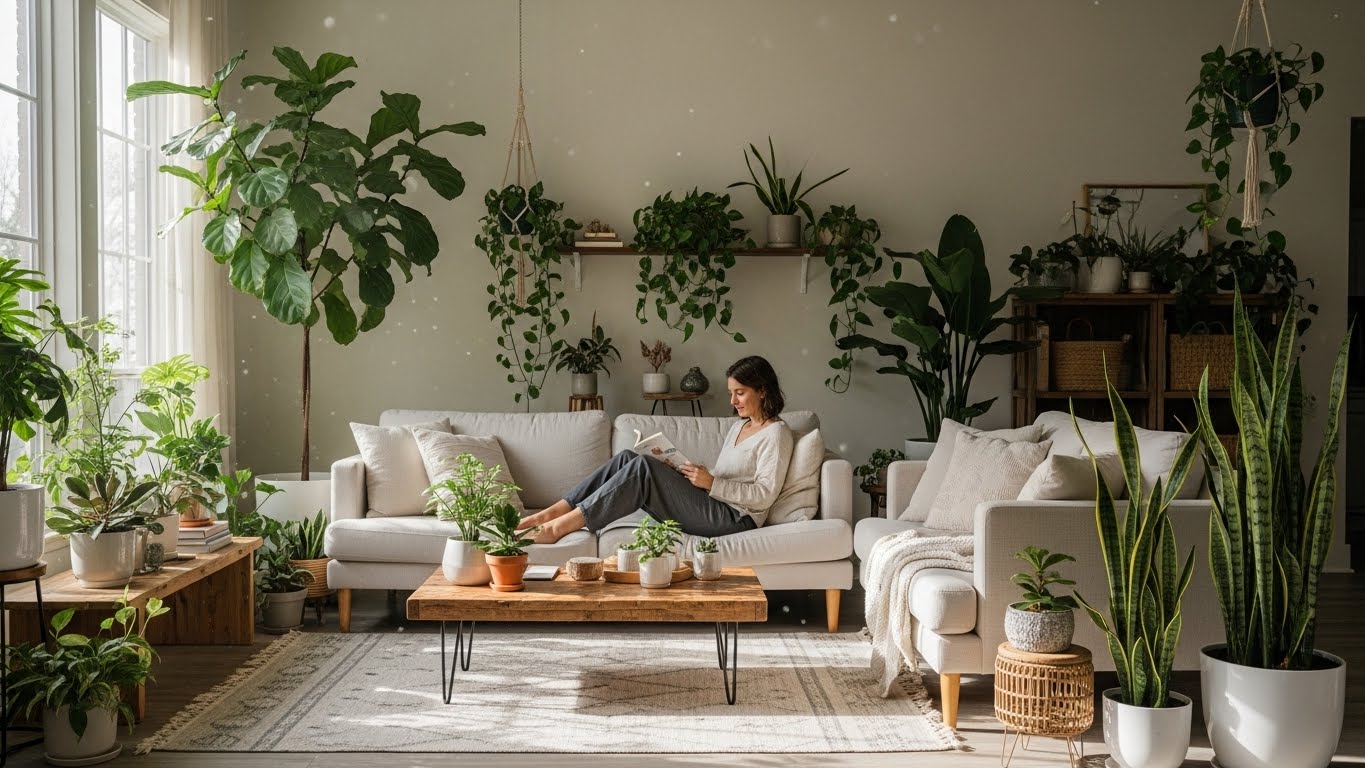
Introduction: Beyond Decoration — The Science of Restorative Interiors
There is a quiet, intuitive sense of calm that settles over us in the presence of greenery. A potted fern in a sunlit corner or the lush leaves of a monstera can transform the feeling of a room, softening its edges and infusing it with a sense of vitality. For many, this response feels purely aesthetic—a simple appreciation for natural beauty. However, a growing body of scientific evidence reveals this feeling is not a mere preference but a profound biological and psychological response, deeply encoded in our evolutionary history. Intentionally curating an indoor green space is far more than an act of interior design; it is an evidence-based wellness practice.
Since we now spend, on average, more than 85% of our lives indoors, the nature of our interior environments has a significant and measurable impact on our mental and physical well-being. This reality demands a fundamental shift in how we perceive the objects we live with. Houseplants, in this context, are not passive decorative items. They are active participants in our home’s “wellness ecosystem,” capable of measurably reducing physiological stress, restoring cognitive function, and fostering a deeper connection to the natural world.
This understanding is rooted in several key scientific principles. The first is the Biophilia Hypothesis, which posits that humans possess an innate tendency to seek connections with nature and other forms of life. This “love of living things” is a relic of our evolution, a time when survival depended on a keen attunement to the natural environment. Further building on this foundation are two critical psychological frameworks: Stress Recovery Theory, which explains how nature can rapidly calm our physiological systems, and Attention Restoration Theory, which details how natural environments can heal our minds from cognitive fatigue. By exploring these concepts, we can begin to understand the precise mechanisms through which a simple houseplant can become a powerful tool for cultivating a restorative sanctuary within our own homes.
The Biophilic Brain: Why We Are Hardwired to Respond to Plants
Our positive response to the natural world is not a learned behavior but an evolutionary inheritance. The Biophilic Hypothesis, first popularized by psychoanalyst Erich Fromm and later biologist Edward O. Wilson, suggests that our affiliation with nature is a biological need, essential for our psychological health. For millennia, our ancestors’ survival was contingent upon their ability to read and respond to natural cues. A green, thriving landscape signified water, food, and shelter, triggering feelings of safety and well-being. In contrast, a barren environment signaled scarcity and danger, activating a stress response. Though we now live in climate-controlled buildings, our brains and bodies still operate on this ancient programming. When we bring plants indoors, we are providing our nervous system with powerful signals of safety and vitality, which in turn triggers two distinct but interconnected benefits: physiological stress reduction and cognitive restoration.
The Calming Effect: Stress Recovery Theory
One of the most immediate and measurable effects of being around plants is a direct reduction in physiological stress. This phenomenon is explained by Stress Recovery Theory, which posits that exposure to natural environments can produce a rapid, positive shift in our autonomic nervous system—the system that controls involuntary functions like heart rate, blood pressure, and breathing. It helps move us from a state of stress, governed by the sympathetic nervous system (the “fight-or-flight” response), to a state of calm, governed by the parasympathetic nervous system (the “rest-and-digest” response).
Multiple university-led studies have validated this effect. Research has shown that both active interaction with and passive viewing of indoor plants can lead to a significant decrease in cortisol, the primary hormone our bodies produce when under stress. As cortisol levels in the bloodstream fall, we experience a tangible feeling of calmness and ease.
A landmark randomized crossover study published in the Journal of Physiological Anthropology provided compelling evidence for this mechanism. In the study, young male adults were assigned two tasks: transplanting a houseplant and completing a task on a computer. The researchers measured physiological stress markers, including heart rate variability and blood pressure. The results were unequivocal. The computer task caused sympathetic nervous system activity to increase, a clear indicator of stress. In contrast, the transplanting task suppressed this activity, lowered diastolic blood pressure, and elicited self-reported feelings of being more “comfortable, soothed, and natural”. This demonstrates that active engagement with plants is a powerful antidote to the “technostress” that defines much of modern life.
This calming effect is so potent that it has been observed in clinical settings. Studies conducted in hospitals found that the presence of ornamental plants in patient rooms can reduce physiological arousal (measured by skin conductance), increase parasympathetic activity, and even improve outcomes for patients recovering from surgery. These findings underscore the profound ability of simple greenery to soothe our bodies at a fundamental, physiological level.
The Focusing Effect: Attention Restoration Theory (ART)
Beyond calming the body, plants also have a remarkable ability to restore the mind. This cognitive benefit is explained by Attention Restoration Theory (ART), developed by environmental psychologists Rachel and Stephen Kaplan. ART is based on the idea that we have two types of attention: directed attention and involuntary attention.
Directed attention is the kind we use for work, studying, driving in traffic, and navigating complex urban environments. It requires intense focus and the active suppression of distractions. Over time, this mental effort leads to what the Kaplans call “directed attention fatigue”—a state of mental exhaustion characterized by irritability, distractibility, and diminished cognitive performance.
Involuntary attention, on the other hand, is effortless. It is captured by things that are inherently interesting and engaging, without requiring any mental exertion. This is where nature comes in. Natural environments are rich in stimuli that produce “soft fascination”—the rustling of leaves, the intricate pattern on a fern’s frond, the slow unfurling of a new leaf. These elements gently hold our attention without demanding it, allowing our capacity for directed attention to rest and replenish.
The presence of houseplants in offices and homes provides a constant, accessible source of this soft fascination. A brief glance at a nearby plant can provide a “micro-restorative” experience, helping to break the cycle of mental fatigue. This is why studies have consistently linked the presence of plants in work environments to reduced health complaints, higher job satisfaction, and improved cognitive performance and productivity.
These two powerful effects—stress recovery and attention restoration—do not operate in isolation. They are deeply synergistic and create a virtuous cycle of well-being. A body in a state of high physiological stress, with elevated cortisol and sympathetic nervous system activity, is a body primed for threat detection. In this state, the mind cannot easily disengage from worry and analysis to enter the gentle, reflective state of soft fascination required for cognitive restoration. Therefore, the physiological calming that plants provide is a crucial prerequisite for their cognitive benefits. By first soothing the body’s stress response, plants create the necessary internal conditions for the mind to begin its restorative process. A restored mind, in turn, is more resilient and less susceptible to future stressors, creating a powerful, positive feedback loop that enhances overall mental balance.
A Curated Guide to Calming Houseplants
While the presence of almost any healthy plant can confer benefits, certain species are particularly effective at creating a calming atmosphere due to their specific visual, sensory, and care characteristics. The following guide is curated based on scientific findings about which plant forms are most psychologically restorative, grouping them by the specific ambiance they help to create. This approach moves beyond simple aesthetics to help select a plant that meets a specific psychological need.
The Soft & Serene Collection (For Visual Relaxation)
This collection features plants with gentle, lush foliage and soft, rounded shapes. A study by the Royal Horticultural Society and the University of Reading found that these forms are consistently perceived as more beautiful, relaxing, and uplifting. These plants embody a nurturing, enveloping quality, creating a visual sense of safety and tranquility.
- Boston Fern (Nephrolepis exaltata): With its delicate, feathery fronds that arch gracefully outwards, the Boston Fern evokes the serene, dappled light of a forest floor. Its lush, dense foliage creates a powerful sense of natural abundance and tranquility, making it ideal for softening hard architectural lines and bringing a feeling of woodland harmony into the home.
- Pet-Safe? Yes.
- Spider Plant (Chlorophytum comosum): The Spider Plant is characterized by its fountain-like cascade of slender, arching leaves. It is famously easy-going and resilient, and its habit of producing small “spiderette” offshoots offers a delightful and tangible sign of life and growth. For new plant owners, its forgiving nature can help build confidence and a sense of achievement, making the act of care itself a positive experience.
- Pet-Safe? Yes.
- Calathea / Prayer Plant (Calathea spp.): Known for their breathtakingly ornate leaves, which feature intricate patterns of green, cream, and pink, Calatheas offer a source of “soft fascination.” Many varieties exhibit nyctinasty, a fascinating behavior where the leaves fold upwards at night, resembling hands in prayer, and lower again in the morning. This gentle, daily movement provides a dynamic yet calming presence, encouraging mindful observation.
- Pet-Safe? Yes.
The Grounded & Resilient Collection (For Low-Stress Nurturing)
This group includes plants with strong, simple, architectural forms and exceptionally easy-care requirements. Their inherent resilience helps to mitigate one of the primary concerns for new plant owners: the fear of killing them. By thriving on a degree of neglect, these plants make the nurturing process a source of calm rather than anxiety. Their stoic, stable presence can impart a sense of reassurance and protection, grounding the energy of a space.
- Snake Plant (Dracaena trifasciata): With its upright, sword-shaped leaves, the Snake Plant has a bold, architectural presence that conveys strength and stability. It is renowned for its ability to tolerate low light and infrequent watering, making it one of the most resilient houseplants available. This toughness can be psychologically reassuring, a living symbol of perseverance in any environment.
- Pet-Safe? No, mildly toxic if ingested.
- ZZ Plant (Zamioculcas zamiifolia): Often called the “eternity plant,” the ZZ Plant is the epitome of a low-maintenance champion. Its arching stems are lined with waxy, deep green leaves that reflect light beautifully. Its ability to store water in underground rhizomes means it can go for long periods without watering, making its care virtually stress-free. Its slow, steady growth provides a calm, enduring presence.
- Pet-Safe? No, mildly toxic if ingested.
- Golden Pothos (Epipremnum aureum): This lush, trailing vine is one of the most forgiving and adaptable houseplants. Its heart-shaped leaves, often variegated with yellow or cream, create a cascade of greenery that can brighten any space. Its vigorous growth is highly rewarding, providing a constant and visible affirmation of life and vitality. A joint study by RHS Science and the University of Reading found Pothos to be one of the most preferred plants for enhancing well-being.
- Pet-Safe? No, toxic if ingested.
The Aromatic & Uplifting Collection (For Sensory Calm)
This collection features plants that engage the sense of smell, one of our most powerful senses for influencing mood and memory. The subtle, natural fragrances from these plants can create a deeply calming and restorative atmosphere. It is important to note, however, that individuals with sensitivity to scents should approach these plants with care, as strong fragrances can sometimes be a trigger for headaches or irritation.
- Lavender (Lavandula): The scent of lavender is perhaps the most well-known natural fragrance for relaxation. Research suggests its aroma can help lower levels of the stress hormone cortisol in the blood, reduce anxiety, and promote more restful sleep. An indoor lavender plant requires significant direct sunlight to thrive but rewards the effort with its deeply calming presence.
- Pet-Safe? No, mildly toxic if ingested.
- Jasmine (Jasminum spp.): The sweet, delicate fragrance of jasmine flowers, particularly potent in the evening, has been linked in studies to reduced anxiety and improved sleep quality. The scent is believed to interact with the central nervous system, promoting a sense of peace and well-being.
- Pet-Safe? Yes (true jasmine species).
- Peace Lily (Spathiphyllum): With its elegant, glossy green leaves and iconic white spathe blooms, the Peace Lily is a visual symbol of serenity and purity. The flowers produce a very light, sweet fragrance that is generally not overpowering. It is an excellent choice for adding a touch of grace to shaded corners and humid rooms like bedrooms or bathrooms.
- Pet-Safe? No, toxic if ingested.
- Weeping Fig (Ficus benjamina): While not aromatic, the Weeping Fig is included here for its exceptional performance in the RHS/University of Reading study, where it was a front-runner for perceived well-being benefits. Participants praised its lush, green, high-leaf-area canopy and its ability to be pruned into pleasing, soft shapes like spheres, which were deemed the most relaxing and beautiful.
- Pet-Safe? No, toxic if ingested.
The Calming Fit Matrix: Your Personal Plant Prescription
Choosing the right plant can feel overwhelming. The fear of selecting a plant that won’t survive in a given environment or that might be unsafe for pets can add stress to what should be a calming endeavor. This matrix is designed to eliminate that guesswork. It synthesizes the key practical considerations—light, care, and pet safety—with the psychological and wellness factors discussed throughout this report. Use this table as a practical guide to select a plant that is not only suited to a specific home but is also optimized to deliver the desired mental wellness benefits.
Plant Name | Light Requirement | Care Level | Fragrance Profile | Pet-Safe? | Ideal Placement (Psychological Effect) |
Snake Plant | Low to Bright, Indirect | Very Easy | None | No (Mildly Toxic) | Bedroom (Nighttime Oxygen), Office (Grounding Focus) |
ZZ Plant | Low to Bright, Indirect | Very Easy | None | No (Mildly Toxic) | Office, Living Room (Resilient Presence) |
Spider Plant | Bright, Indirect | Easy | None | Yes | Kitchen, Bathroom (Cheerful, Humidity-Loving) |
Golden Pothos | Low to Bright, Indirect | Easy | None | No (Toxic) | Living Room, Office (Visible Growth & Achievement) |
Peace Lily | Medium to Low, Indirect | Medium | Light & Sweet | No (Toxic) | Bedroom, Bathroom (Serenity & Humidity) |
Boston Fern | Bright, Indirect | Medium | Earthy | Yes | Bathroom, Living Room (Lush Tranquility) |
Lavender | Full, Direct Sun (6-8 hrs) | Medium | Strong & Calming | No (Mildly Toxic) | Sunny Windowsill (Aromatherapy & Relaxation) |
Jasmine | Bright, Indirect (4-6 hrs) | Medium-Hard | Strong & Sweet | Yes | Sunny Bedroom or Living Area (Uplifting & Sleep-Aid) |
Calathea | Medium, Indirect | Medium-Hard | None | Yes | Living Room, Humid Spaces (Mindful Observation) |
Weeping Fig | Bright, Indirect | Medium | None | No (Toxic) | Bright Living Room, Hallway (Architectural Calm) |
The Art of Mindful Plant Care: A 5-Minute Weekly Ritual for Presence
While the passive presence of plants is beneficial, research confirms that the deepest psychological rewards come from active interaction. The process of nurturing a living thing fosters a unique connection and grounds us in the present moment. This reframes plant maintenance from a chore into a powerful, meditative practice. The following structured routine transforms simple care tasks into a weekly ritual of mindfulness, designed to take no more than five minutes in total.
Your 5-Minute Weekly Micro-Care Ritual
Monday: Mindful Observation (1 minute)
Begin the week by simply being present with a chosen plant. Stand or sit comfortably and observe it without judgment or the urge to act. Notice the intricate patterns on the leaves, the subtle variations in color, and any signs of new growth. Observe its overall form and how it interacts with the light in the room. This is an exercise in pure, non-judgmental awareness, training the mind to focus and find beauty in the details.
Wednesday: The Tactile Check-In (2 minutes)
Mid-week is a time to engage the sense of touch. Gently feel the texture of a leaf—is it waxy, soft, or velvety? More importantly, connect with the soil. Insert a finger about two inches deep to gauge the moisture level. Is it dry, damp, or moist? This physical connection grounds the body and provides direct information about the plant’s needs. If the soil is dry, proceed with mindful watering. Pour the water slowly and deliberately, listening to the sound it makes as it meets the soil and watching as it is absorbed. This transforms a simple task into a sensory experience.
Friday: Groom & Gratitude (2 minutes)
End the work week with a small act of cleansing and care. Using a soft, damp cloth, gently wipe any accumulated dust from the leaves. This not only helps the plant photosynthesize more efficiently but is also a nurturing gesture. As the leaves are cleaned, prune any that have yellowed or dried. As this is done, take a moment to reflect on one thing for which to be grateful that this plant brings to the space—its color, its shape, the quiet companionship, or the simple reminder of the natural world.
This simple routine is more than just horticulture; it is a profound metaphor for self-care. The act of providing water becomes a tangible reminder to nourish and hydrate our own bodies. Ensuring the plant receives adequate light prompts us to seek out sources of positivity and energy in our own lives. Pruning away a dead leaf is a physical representation of the mental practice of letting go of thoughts, habits, or worries that no longer serve us. By creating a stable, nurturing environment for a plant, we are simultaneously practicing the very skills needed to create a stable, nurturing inner environment for ourselves. In this way, the mindful care of a plant becomes a weekly meditative lesson in the art of caring for the self.
Designing for Wellness: Strategic Placement for Maximum Benefit
Integrating plants into a home for maximum psychological benefit goes beyond simply placing a pot on a windowsill. It involves applying the principles of biophilic design—an approach to architecture and interior design that seeks to connect building occupants more closely to nature. This means thinking strategically about how plants can be used to shape the emotional and psychological atmosphere of each room.
- The Bedroom Sanctuary: The bedroom should be a haven for rest and tranquility. Plants like the Peace Lily or Snake Plant are ideal here. The Peace Lily’s association with serenity and its preference for lower light make it a calming presence, while the Snake Plant is unique in its ability to release oxygen at night, which can contribute to a feeling of fresher air during sleep. Placing them on a bedside table or a dresser ensures they are within view upon waking and before sleeping.
- The Focused Home Office: In a space dedicated to concentration and productivity, plants can help restore directed attention and create a grounding atmosphere. The resilient ZZ Plant or a vibrant Golden Pothos are excellent choices. Their presence has been linked to improved perceptions of air quality and concentration. Placing them in the line of sight from a desk allows for easy, momentary visual breaks that can combat mental fatigue.
- The Social Living Room: As the heart of the home, the living room benefits from plants that create a beautiful, welcoming, and vital atmosphere. Larger, architectural plants like a Weeping Fig or a lush palm can serve as natural focal points. Research has shown that exposure to more beautiful plants can even increase prosocial behavior—actions that benefit others, such as cooperation and sharing—making these plants ideal for fostering a positive social environment.
- The Lush Bathroom & Kitchen: These high-humidity environments are perfect for plants that thrive in moist air. A Boston Fern cascading from a high shelf or a Spider Plant on a countertop can transform these functional spaces into lush, spa-like retreats. They not only appreciate the ambient moisture but also add a vibrant touch of green that can make daily routines feel more refreshing and connected to nature.
The most profound wellness benefits, however, emerge when moving beyond the placement of a single, isolated plant to create a cohesive “biophilic narrative” throughout the home. This involves using plants as architectural elements to shape experience. For instance, biophilic design emphasizes the importance of “prospect and refuge”—the feeling of being in a safe, protected space (refuge) while having a clear view of the surroundings (prospect). A tall, leafy plant like a Ficus placed next to a comfortable reading chair creates a cozy, protected nook—a perfect “refuge.” A series of smaller plants arranged along a windowsill can guide the eye outward, enhancing the “prospect” of the view beyond. Using a consistent palette of plants—for example, various types of ferns or tropicals—across different rooms can weave a common natural thread through the home, making the entire space feel like an integrated, restorative ecosystem rather than a collection of separate rooms with isolated decorations. This sophisticated approach uses plants not just as objects in a space, but as tools to architecturally shape the feeling of a space.
Conclusion: Cultivating Your Inner and Outer Garden
The gentle presence of indoor plants offers more than just a touch of natural beauty; it provides a scientifically supported pathway to reduced stress and enhanced mental well-being. Grounded in our innate biophilic connection to the living world, houseplants can measurably calm our physiological stress response, restore our minds from cognitive fatigue, and anchor us in the present moment. The evidence, synthesized from numerous studies, points to a clear and consistent positive effect, with the presence of indoor greenery leading to an increase in positive emotions and a reduction in negative feelings.
Success in this practice hinges on two key elements: thoughtful selection and mindful interaction. By choosing plants whose aesthetic qualities and care requirements align with our personal needs and home environments, we set the stage for a rewarding relationship. The true depth of the benefit, however, is unlocked through the process of care itself. The simple, weekly ritual of observing, watering, and grooming a plant becomes a powerful act of mindfulness—a tangible metaphor for the nurturing our own minds and bodies require. This creates a beautiful, symbiotic relationship: we care for our plants, and in turn, they care for us, providing a quiet, constant source of vitality and calm.
The journey into creating a green sanctuary need not be complex. It can begin with a single plant, chosen with intention and placed in a corner of a room. From that one small act of bringing nature indoors, a deeper connection can grow—a relationship that not only enhances the beauty of our physical space but also cultivates the resilience and peace of our inner garden.


