
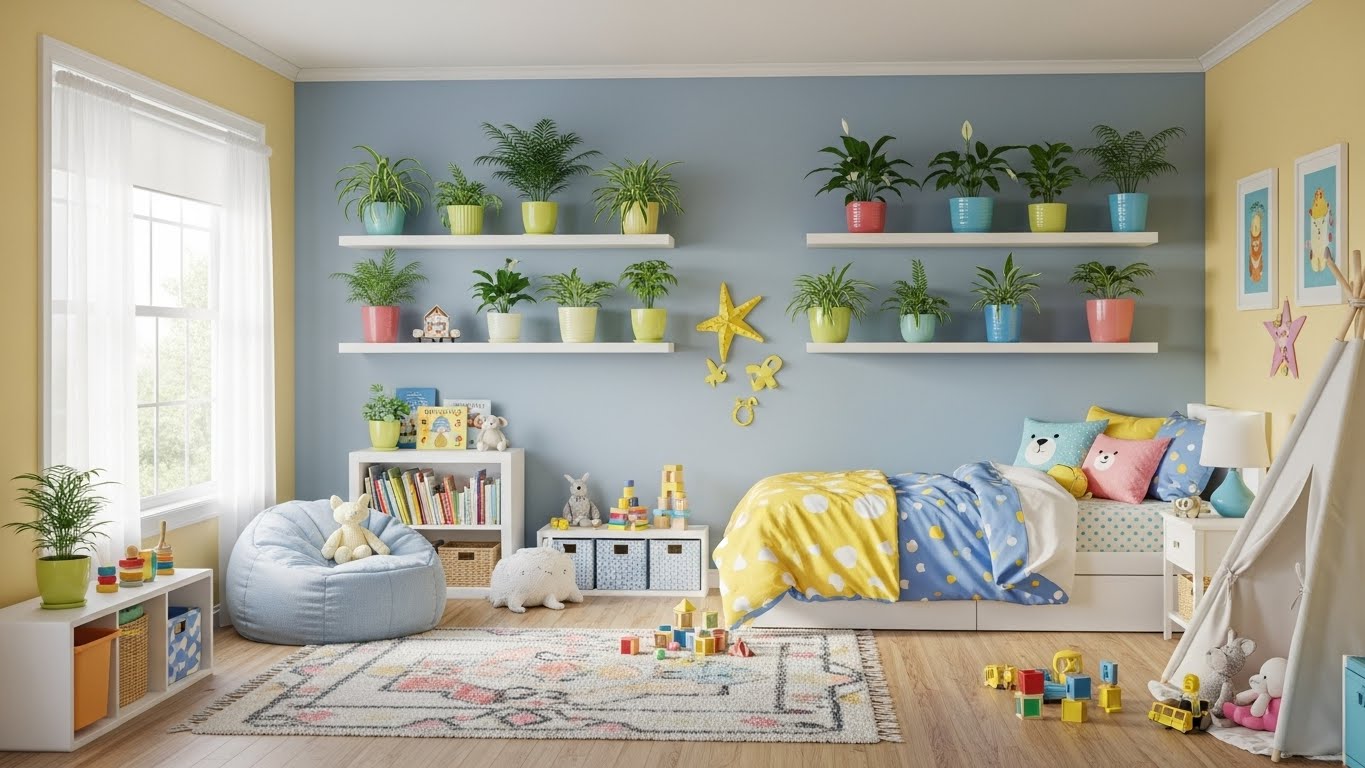
More Than Just Greenery—Cultivating Calm, Curiosity, and Clean Air
Placing a living plant in a child’s room does more than just add a splash of color. It introduces a quiet, living companion that can transform a simple bedroom into a sanctuary for growth, calm, and discovery. For parents, the primary concerns are straightforward: is it safe, and will it survive? This guide addresses those questions head-on, offering a definitive resource for selecting houseplants that are not only non-toxic and low-maintenance but also bring profound, science-backed benefits to a child’s environment. A plant is not merely decor; it is a silent teacher, a natural air purifier, and a soothing presence, contributing to a healthier and more harmonious space for play, sleep, and learning.
The Secret Superpowers of a Bedroom Plant
Beyond their aesthetic appeal, houseplants possess remarkable abilities that can significantly enhance a child’s physical and psychological well-being. These benefits are not just anecdotal; they are supported by a growing body of scientific research that positions the humble houseplant as a powerful tool for creating a healthier home environment.
The Fresh Air Friends: Your Child’s Personal Air Purifiers
Indoor air can be more polluted than outdoor air, containing volatile organic compounds (VOCs) released from common household items like furniture, clothing, and cleaning products. A landmark study by NASA revealed that many common houseplants are incredibly effective at filtering these airborne toxins.
Plants such as the Boston Fern, Spider Plant, and Areca Palm are celebrated for their ability to remove pollutants like formaldehyde, benzene, xylene, and toluene from the air. By absorbing these gases through their leaves and roots, they act as natural, living air purifiers. Furthermore, through the process of transpiration, plants release moisture into the air. This natural humidifying effect can help alleviate issues associated with dry air, such as dry skin and respiratory irritation, contributing to a more comfortable atmosphere and promoting better sleep for a child.
A Green Prescription for Calm and Focus
The presence of nature has a deeply restorative effect on the human mind. This connection is explained by the concept of “biophilia,” which posits that humans have an innate tendency to seek connections with nature and other forms of life. Interacting with plants can trigger positive responses in the brain, similar to those experienced when petting an animal, and has been shown to lower levels of cortisol, the body’s primary stress hormone.
This creates a powerful, interconnected system of wellness within a child’s room. The physical benefit of cleaner air leads to the physiological benefit of better sleep, which in turn supports the cognitive benefit of improved focus. Simultaneously, the act of caring for the plant provides a direct psychological benefit by reducing stress. This positive feedback loop demonstrates that a plant is not just providing separate advantages but is actively creating a holistic environment conducive to a child’s overall well-being. Studies have documented that indoor plants can reduce fatigue and headaches, improve mood, and even speed recovery from illness. For school-aged children, the cognitive boost is particularly compelling. Research has shown that students in classrooms with live plants are more attentive and better able to concentrate. Some studies even link exposure to green settings with a reduction in symptoms of ADHD.
The First “Pet” Plant: Lessons in Nurturing and Responsibility
Caring for a plant can be a child’s first introduction to the responsibility of nurturing another living thing. The simple, repetitive tasks of watering and checking for sunlight teach valuable life lessons about routine, consistency, and cause and effect—if the plant is watered, it thrives; if it is neglected, it wilts. This low-stakes responsibility fosters a sense of accomplishment and ownership.
This reframes the plant from a simple decorative object into a proactive investment in a child’s developmental environment. For parents, the decision to add a plant becomes a deliberate, health-conscious choice, akin to selecting educational toys or healthy foods. When done as a family activity, plant care helps develop essential skills like communication and following directions. More profoundly, it cultivates empathy and a connection to the natural world, which is increasingly important in a digitally-focused age. Watching a tiny “spider baby” sprout roots or seeing a new leaf unfurl instills a sense of wonder and provides a tangible reward for their care and effort.
The Ultimate Guide to Kid-Safe & Parent-Proof Plants
Selecting the right plant is the most critical step. The ideal choice is one that is both completely safe for curious hands and mouths and resilient enough to withstand the occasional lapse in a busy family’s care schedule.
A Note on “Kid-Safe”
The most reliable and scientifically rigorous public resource for plant toxicity is the database maintained by the American Society for the Prevention of Cruelty to Animals (ASPCA). While this data is primarily focused on cats and dogs, it is widely accepted by horticulturalists and pediatricians as the gold standard for determining child safety in the home. All plants recommended in this guide are classified as non-toxic by the ASPCA.
At-a-Glance Guide to Kid-Safe Indoor Plants
This table provides a quick overview to help families shortlist plants based on their specific home environment and lifestyle.
Plant Name | Light Needs | Water Needs | Kid-Friendly Feature | Mess Factor |
Spider Plant | Low to Bright, Indirect | Let top 1-2″ of soil dry | Propagating “babies” | Low |
Parlor Palm | Low to Bright, Indirect | Let top 1″ of soil dry | Sturdy, rip-resistant leaves | Low |
Boston Fern | Bright, Indirect | Keep soil moist | Feathery, touchable fronds | Medium (sheds dry leaflets) |
African Violet | Bright, Indirect | Water from bottom | Fuzzy leaves, colorful flowers | Low |
Christmas Cactus | Bright, Indirect | Let top 0.5″ of soil dry | Holiday blooms | Medium (drops spent flowers) |
Peperomia | Medium to Bright, Indirect | Let soil dry out between waterings | Huge variety of fun patterns | Low (can drop leaves if stressed) |
Prayer Plant | Medium to Bright, Indirect | Keep soil moist | Leaves “dance” up and down | Low (can drop leaves if stressed) |
Money Tree | Bright, Indirect | Let top 2″ of soil dry | Unique braided trunk | Medium (can drop leaves if stressed) |
Spider Plant (Chlorophytum comosum): The Indestructible Friend with Endless Babies
- Safety First: Confirmed non-toxic to cats and dogs by the ASPCA.
- Parent-Proof Care: The Spider Plant is the champion of resilience, making it “easy” even for the most forgetful caretaker. It thrives in bright, indirect light but readily tolerates lower light conditions. Its fleshy roots store water, making it forgiving of an inconsistent watering schedule; watering when the top 1-2 inches of soil feel dry is a good rule of thumb. It is also a fantastic air purifier, known to remove formaldehyde and xylene.
- Kid-Friendly Fun: The Spider Plant is an interactive science project. It famously produces cascading “spiderettes” or “babies” at the end of long stems. Children can watch these miniatures grow and then, with a parent’s help, snip them off and propagate them in water or soil, creating a whole new generation of plants. This provides a tangible and exciting lesson in plant biology.
Parlor Palm (Chamaedorea elegans): The Low-Light Tropical Escape
- Safety First: Confirmed non-toxic by the ASPCA.
- Parent-Proof Care: This plant is “easy” because it is one of the best palms for tolerating the low-light conditions common in many rooms. It prefers its soil to be kept evenly moist, but not soggy; water when the top inch of soil is dry. As a very slow grower, it will not quickly outgrow its designated space, making it a long-term, low-fuss companion.
- Kid-Friendly Fun: With its classic arching fronds, the Parlor Palm can spark a child’s imagination, transforming a bedroom corner into a prehistoric jungle for toy dinosaurs. Its foliage is surprisingly sturdy and not easily ripped, making it durable enough for a child’s room.
Boston Fern (Nephrolepis exaltata): The Feathery Air-Purifying Powerhouse
- Safety First: Confirmed non-toxic by the ASPCA.
- Parent-Proof Care: The Boston Fern is “easy” provided its core need for humidity is met. It prefers bright, indirect light and consistently moist soil. Its biggest challenge in a centrally heated home is dry air, which can cause its delicate leaflets to turn brown and crispy. This can be managed by regular misting, placing it on a pebble tray with water, or running a humidifier nearby. In return for this extra attention, it offers top-tier air purification, removing formaldehyde, xylene, and toluene.
- Kid-Friendly Fun: The lush, feathery texture of its fronds is visually appealing and provides a gentle tactile experience. Its large, spreading shape can make a dramatic green statement, filling an empty corner with a sense of life and vitality.
African Violet (Saintpaulia): The Fuzzy, Flowering Gem
- Safety First: Confirmed non-toxic by the ASPCA.
- Parent-Proof Care: This plant is “easy” once its specific watering preference is understood. It needs bright, indirect light to produce its signature flowers. The key to success is to avoid getting water on its velvety leaves, which can cause unsightly spots. The best method is bottom-watering: placing the pot in a saucer of water for about 30 minutes and allowing the soil to soak up moisture from below.
- Kid-Friendly Fun: The African Violet is a sensory delight. Its soft, fuzzy leaves are irresistible to little hands, offering a unique texture to explore. The ability to produce vibrant flowers in shades of purple, pink, and white almost continuously provides a rewarding and colorful display.
Christmas Cactus (Schlumbergera): The Surprise Winter Bloomer
- Safety First: Confirmed non-toxic by the ASPCA.
- Parent-Proof Care: This is a tropical rainforest cactus, not a desert dweller, a crucial distinction for its care. It is “easy” as long as it is not treated like a typical succulent. It prefers bright, indirect light and appreciates higher humidity. It should be watered when the top half-inch of soil feels dry.
- Kid-Friendly Fun: The uniquely segmented, arching stems are interesting year-round, but the real magic happens in winter. The sudden explosion of vibrant, tubular flowers in pink, red, or white around the holiday season can be a source of wonder and excitement for a child.
Peperomia (Peperomia spp.): The Collector’s Dream of Shapes and Colors
- Safety First: The entire Peperomia genus is classified as non-toxic by the ASPCA, offering a wide array of safe choices.
- Parent-Proof Care: Peperomias are “easy” due to their semi-succulent nature. They thrive in medium to bright indirect light and, most importantly, prefer their soil to dry out between waterings, making them resilient to a bit of underwatering. Overwatering is their main enemy.
- Kid-Friendly Fun: The sheer variety of Peperomia makes it an exciting plant to collect. The Watermelon Peperomia (Peperomia argyreia) has leaves that look just like tiny watermelons, while the Ripple Peperomia (Peperomia caperata) has deeply textured leaves. This diversity sparks curiosity and can turn plant care into a fun hobby.
Prayer Plant (Maranta leuconeura): The Plant That Dances with the Sun
- Safety First: Confirmed non-toxic by the ASPCA.
- Parent-Proof Care: The Prayer Plant is “easy” with consistent attention to its moisture needs. It prefers medium to bright indirect light and soil that is kept consistently moist but not waterlogged. A pro tip for preventing the common issue of brown, crispy leaf tips is to use filtered water, rainwater, or tap water that has been left out overnight, as the plant can be sensitive to chemicals like chlorine and fluoride.
- Kid-Friendly Fun: This plant offers a daily dose of magic. Its leaves exhibit a behavior called nyctinasty, folding up at night like hands in prayer and lowering again in the morning. This fascinating movement is captivating for children to observe and can be turned into a fun science project by recording a time-lapse video of its daily “dance”.
Money Tree (Pachira aquatica): The Braided Trunk of Good Fortune
- Safety First: Confirmed non-toxic by the ASPCA.
- Parent-Proof Care: The Money Tree is “easy” for those who tend to be generous with watering. It thrives in bright, indirect light and enjoys a deep, thorough watering when the top 2 inches of soil have dried out. It also loves humidity, making it a good candidate for a bathroom or a spot near a humidifier.
- Kid-Friendly Fun: The most distinctive feature is its braided trunk, which is visually interesting and fun for children to examine. The folklore that the plant brings good luck and prosperity provides a charming story to share, turning the plant into a character in the room.
Creating a Safe and Thriving Green Haven
True “safety” in a child’s room is a multi-layered concept that extends beyond a simple non-toxic label. It encompasses the physical stability of the plant’s container, the management of potential messes, proper hygiene, and a plan for dealing with pests gently. Addressing this full spectrum of parental concerns is key to successfully and confidently integrating a plant into the family home.
The Un-topple-able Pot: Choosing the Right Foundation
The stability of the plant’s container is paramount, especially with toddlers who may pull or lean on furniture.
- Weight and Material: Heavy materials like ceramic, unglazed terracotta, concrete, or stoneware are preferable to lightweight plastic, as they provide a sturdier base and are much harder to tip over. While plastic pots are durable and won’t break if dropped, their light weight makes them less stable for taller plants.
- Shape: The shape of the pot significantly impacts its stability. A pot with a wide, flat base is far more stable than a tall, narrow pot or one that tapers toward the bottom. Bowl-shaped or square planters offer excellent stability.
- Material Safety: It is important to choose planters made from non-toxic materials. Natural options like cedar wood, terracotta, and glass are safe choices. If choosing plastic, look for those with recycling codes #4 (LDPE) or #5 (PP), which are considered safer and less likely to leach chemicals. Avoid using recycled containers with unknown histories, such as old paint cans or food buckets that may have held toxic substances.
- Drainage: A drainage hole is non-negotiable for plant health. Without it, water pools at the bottom of the pot, leading to root rot, which is one of the most common reasons houseplants fail.
Beyond Toxicity: Managing Mess and Minor Hazards
Living with plants involves a degree of maintenance, and being prepared for minor messes makes the experience more enjoyable. This practical, honest approach builds trust; it acknowledges that while plants are wonderful, they are also living things that can be untidy.
- Shedding: It is normal for some plants to shed. A Christmas Cactus will naturally drop its spent flowers after blooming, which is a sign of a healthy cycle. Plants like the Money Tree, Peperomia, and Prayer Plant may drop leaves when they are stressed by a sudden change in location, temperature, or watering routine. This is often a temporary adjustment period. An Areca Palm will naturally shed its oldest, lowest fronds as it grows. Framing this as predictable and manageable tidying, rather than a sign of failure, helps set realistic expectations for parents.
- Choking Hazard: While the recommended plants are non-toxic if ingested, it is important to note that small, firm plant parts—like a detached segment of a Christmas Cactus or a woody piece of a Money Tree—could theoretically pose a choking hazard for very small, unsupervised children. As a general best practice, it is wise to place plants on a sturdy shelf or plant stand that is out of a toddler’s immediate reach.
- Soil Play: Toddlers are naturally curious about dirt. To discourage them from digging in the pot, one can place a layer of larger, decorative river stones on top of the soil. For older children, this presents a teaching moment about respecting the plant’s home and learning to touch gently.
A Clean Bill of Health: Plant and People Hygiene
Good hygiene benefits both the plant and the child.
- Plant Hygiene: Regularly cleaning a plant’s leaves is like clearing its lungs. Dust accumulation can block sunlight and clog the pores (stomata) that the plant uses for gas exchange, hindering photosynthesis. Gently wiping the leaves with a soft, damp cloth every few weeks keeps the plant healthy and vibrant. This is also a great time to remove any yellowing or dead leaves, which helps prevent pests and diseases.
- Handwashing: It is important to establish a simple rule: after touching the plant or its soil, hands should be washed. This is a basic and healthy habit, no different than washing hands after playing outside or before eating.
When Pests Come to Visit: A Parent’s Guide to Gentle Pest Control
Even the healthiest indoor plants can occasionally attract common pests like spider mites, aphids, or mealybugs. In a child’s room, it is crucial to use non-toxic pest control methods.
- Prevention First: Good prevention is the best defense. Ensure good air circulation around the plant, avoid overwatering, and inspect the leaves (including the undersides) regularly for any early signs of trouble.
- Gentle Solutions: If pests appear, start with the gentlest methods. Many pests can be physically removed by wiping the leaves with a damp cloth or dislodged with a gentle spray of water in a sink or shower. For more persistent infestations, commercially available insecticidal soaps or neem oil are effective and safe options when used according to the label directions. Natural repellents, such as a spray made from diluted peppermint oil, can also deter some insects.
Growing Together: A Family Guide to Plant Care
Involving children in plant care transforms a chore into a shared activity, fostering connection and creating lasting memories. It turns the abstract benefits of plants into tangible, hands-on experiences.
Little Hands, Big Help: Age-Appropriate Plant Chores
This table offers a roadmap for involving children at different developmental stages, turning plant care into an opportunity for learning and growth.
Age Group | Suitable Chores | Developmental Benefit |
Ages 2-4 | – Watering with a small, child-sized watering can. – Helping to choose flower colors. – Gently dusting large, sturdy leaves with a cloth. – Planting large seeds (like beans or sunflowers) with help. | Develops fine motor skills, introduces cause and effect, fosters sensory exploration. |
Ages 5-8 | – Misting leaves with a spray bottle. – Removing dead or yellow leaves (deadheading). – Checking if the soil is dry by touching the surface. – Helping to re-pot a plant by scooping soil. | Builds responsibility and routine, enhances observation skills, teaches the plant life cycle. |
Ages 9+ | – Propagating “babies” from a Spider Plant. – Researching a plant’s needs (light, water). – Mixing fertilizer into the watering can (with supervision). – Pruning leggy stems to encourage fuller growth. | Encourages critical thinking and problem-solving, develops planning skills, introduces basic scientific concepts. |
From Seedling to Scientist: Turning Care into Curiosity
Plant care can be a springboard for countless learning activities that nurture a child’s natural curiosity.
- Keep a Growth Journal: Encourage the child to draw a picture of their plant each week or help them measure its height with a ruler. This simple practice teaches observation and documents the rewarding process of growth over time.
- Become a Plant Explorer: Provide a magnifying glass to inspect the intricate patterns on a Prayer Plant’s leaves or the fuzzy texture of an African Violet. This encourages close observation and an appreciation for the details of nature.
- World Travelers: Look up the plant’s native country on a map. Learning that the Parlor Palm comes from the rainforests of Mexico or the Money Tree from the swamps of Central America connects the plant to geography and different ecosystems.
- Simple Science Experiments: The propagation of a Spider Plant offers a perfect opportunity for a first experiment. Place one “pup” in a glass of water and another directly in a small pot of soil. Observing which one sprouts roots faster is a fun, hands-on lesson in botany.
From Our Windowsill to Yours: A Final Word of Encouragement
The journey of adding a plant to a child’s room is about so much more than horticulture. It is about cultivating a space that is healthier, calmer, and more connected to the natural world. It is about planting seeds of responsibility, curiosity, and empathy that will grow alongside the child. Start small, choose a plant that brings joy, and embrace the simple, profound rewards of growing together.


