
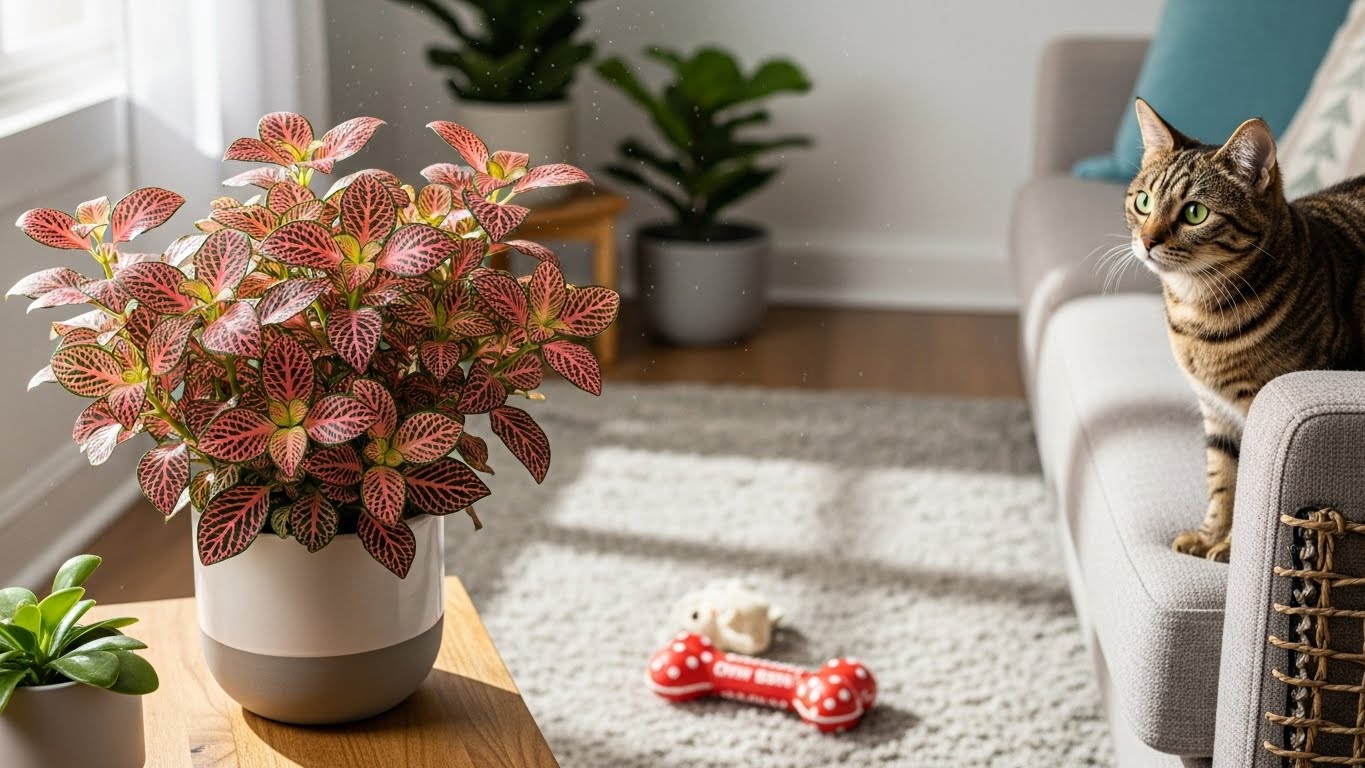
Fittonia, also known as the nerve plant, is a fantastic choice for pet-friendly homes since it’s non-toxic for both cats and dogs! With its colorful leaves and unique patterns, it not only brightens your space but also helps purify the air. You won’t have to worry about your furry friends getting into trouble with this plant. If you’re curious about more plant options or pet safety tips, there’s plenty more to explore!
💡 Understanding how to care for your Fittonia is crucial for its health and longevity.
➜ Master the essential care techniques
Key Takeaways
💡 If you’re looking to keep your Fittonia healthy and vibrant, understanding its care requirements is crucial.
➜ Discover proven techniques
- Fittonia, also known as the nerve plant, is non-toxic to both cats and dogs, ensuring pet safety in homes.
- Its vibrant foliage enhances home aesthetics while being safe for curious pets to explore.
- The plant promotes air purification, contributing to a healthier environment for pets and their owners.
- Low maintenance requirements allow pet owners to spend more quality time with their furry friends.
- Always research and choose pet-friendly plants to ensure a safe living space for your pets.
Understanding Fittonia: An Overview
Fittonia, often called the nerve plant, is a vibrant and unique houseplant that many people love for its stunning foliage. Its colorful leaves, often featuring shades of green, pink, or white, make it a delightful addition to your home. When it comes to fittonia care, keep in mind that these plants thrive in humidity and bright, indirect light. Water them regularly, but be careful not to overwater; you want the soil to be moist, not soggy. There are several fittonia varieties to choose from, including the popular ‘Silver’ and ‘Pink’ types, each offering its own charm. Additionally, Fittonia is non-toxic to pets, making it a safe choice for homes with cats and dogs. Whether you’re a seasoned plant lover or a beginner, caring for a fittonia can be a rewarding experience, bringing life to your space.
The Benefits of Having Fittonia as a Houseplant
Having Fittonia as a houseplant can really brighten up your space with its stunning colors and unique leaf patterns. Not only does it enhance the aesthetic appeal of your home, but it also helps purify the air, creating a healthier environment for you and your pets. Plus, it’s low maintenance, making it a perfect choice for anyone looking to add a touch of greenery without too much fuss!
Aesthetic Appeal and Variety
When you think about adding a splash of color and life to your home, consider the vibrant leaves of the Fittonia plant, which can instantly brighten up any space. This stunning houseplant offers a variety of aesthetic varieties, each showcasing unique patterns and vibrant colors like deep green, bright pink, and rich white. You can mix and match these beauties to create a lively display on your shelves or tabletops. Fittonia’s lush foliage not only draws the eye but also serves as a delightful conversation starter. As you nurture these plants, you’ll appreciate their adaptability and resilience, making them an ideal choice for both new and experienced plant lovers. Transform your home with Fittonia, and enjoy the beauty it brings!
Air Purification Properties
Breathing fresh air is something we often take for granted, but having plants like Fittonia in your home can make a big difference. These vibrant little plants not only brighten your space but also contribute to air purification, helping to filter out harmful toxins from indoor air. When you surround yourself with Fittonia, you’re creating a healthier environment for you and your pets. They absorb carbon dioxide and release oxygen, promoting better air quality. Plus, their lush leaves can increase humidity, which is great for skin and respiratory health. By adding Fittonia to your home, you’re embracing a natural way to keep your indoor air clean and fresh, making your space feel even more inviting and cozy.
Low Maintenance Care
Fittonia, with its stunningly colorful leaves, is perfect for anyone looking for a low-maintenance houseplant that still makes a big impact. You’ll love how easy care is with this little gem! Fittonia thrives in low light and only needs watering when the top inch of soil feels dry, making it ideal for busy lives. Plus, its vibrant colors brighten up any space, creating a cozy atmosphere.
Not only is it forgiving if you forget to water occasionally, but it also doesn’t require fancy fertilizers. Just a little attention, and you’ll have a lush, beautiful plant that adds charm to your home while being safe for your pets. With Fittonia, you get beauty without the hassle!
Common Concerns About Plant Toxicity
When you bring a Fittonia plant into your home, it’s natural to wonder about its safety for your furry friends. Understanding the specifics of plant toxicity can help ease your worries and guarantee a happy environment for both you and your pets. So, let’s explore what makes the Fittonia non-toxic and how you can keep your cats and dogs safe around plants!
Fittonia Plant Overview
The vibrant Fittonia plant, often called the nerve plant, is a popular choice for adding a splash of color to homes and offices. With its unique fittonia plant characteristics and stunning foliage, it’s no wonder you’re drawn to this beauty. Fittonia thrives in low light and enjoys humidity, making it perfect for indoor spaces.
Here are three notable features about fittonia’s growth habits:
💡 Identifying and solving common problems can help you maintain a safe environment for your pets.
➜ Discover proven solutions for common issues
💡 Identifying and solving common issues with your Fittonia can help maintain a safe environment for your pets.
➜ Get the step-by-step guide
- Size: Typically grows up to 6-12 inches tall, making it an ideal tabletop plant.
- Leaf Patterns: Features striking, veined leaves in green, pink, or white.
- Watering Needs: Prefers consistent moisture but dislikes standing water.
Toxicity in Pets
💡 Understanding the distinctions between similar plants can help you make informed choices for your home and pets.
➜ Learn the differences between Fittonia and Nerve Plant
As you bring vibrant plants like the Fittonia into your home, it’s important to contemplate how they might affect your furry friends. While Fittonia is non-toxic for cats and dogs, not all plants share this safety. Pet poisoning can occur with many common houseplants, so proper plant identification is key. Always research before introducing new greenery into your space. Signs of pet poisoning can include drooling, vomiting, or lethargy, so stay alert. If your pet shows any concerning symptoms, don’t hesitate to contact your vet. Creating a pet-friendly environment means balancing your love for plants with the safety of your beloved companions. Keep your plants and pets safe, and enjoy the beauty they both bring into your life!
💡 Understanding the differences between Fittonia and similar plants can help you make informed choices for your pet-friendly home.
➜ Master this approach
Fittonia and Its Effects on Cats
Have you ever wondered how the Fittonia plant affects the furry friends in your home? Good news! Fittonia is non-toxic for cats, making it a safe addition to your indoor jungle. Here are some fittonia benefits that you and your kitty can enjoy:
Fittonia is a cat-safe plant that brightens your home while providing air purification and easy care.
- Air Purification: Fittonia helps cleanse the air, promoting a healthier environment for your pet.
- Aesthetic Appeal: Its stunning leaves can brighten up your space, creating a cozy atmosphere for you and your cat.
- Low Maintenance: Fittonia care is simple, requiring minimal effort to keep it thriving, allowing you to focus on cuddling your furball.
Fittonia and Its Effects on Dogs
When you bring a Fittonia into your home, you can rest easy knowing it’s safe for your dog. This vibrant plant, often called the nerve plant, isn’t toxic, allowing your furry friend to explore without worries. During your Fittonia care routine, make sure your dog doesn’t chew on the leaves, even though they won’t cause harm if ingested. Fittonia toxicity is a non-issue, so you can focus on creating a cozy space filled with greenery. Just remember to keep your plant in a spot with indirect sunlight and maintain moist soil. Your pup might enjoy sniffing around, and it’s a great way to bring a touch of nature indoors while keeping your pet safe and sound.
Signs of Plant Toxicity in Pets
Understanding the signs of plant toxicity in pets is important for any animal lover. When your furry friend ingests a harmful plant, you’ll want to be alert for specific symptoms of poisoning. Here are three key signs to watch for:
- Vomiting or diarrhea – These can indicate irritation in the stomach or intestines.
- Lethargy or weakness – If your pet seems unusually tired or disinterested in play, it could be a warning sign.
- Excessive drooling or pawing at the mouth – This may suggest discomfort or pain.
To keep your pets safe, adopt prevention strategies like researching plants before bringing them home and keeping potentially harmful ones out of reach. Your vigilance can make all the difference in ensuring their well-being!
Safe Alternatives to Fittonia for Pet Owners
If you’re looking for pet-friendly plants that can brighten up your home just like Fittonia, you’re in luck! There are several delightful herbal alternatives that you can consider. For instance, spider plants are not only safe for your furry friends, but they also thrive in various conditions. Another great option is the Boston fern, which adds a lush feel to your space while being completely non-toxic. If you want a colorful touch, try the parlor palm; its elegant fronds will cheer up any room without harming your pets. These pet-friendly plants will not only keep your home vibrant, but they’ll also guarantee your beloved companions stay safe and happy. So go ahead, explore these wonderful options!
Tips for Creating a Pet-Friendly Home With Plants
Creating a pet-friendly home with plants is easier than you might think, especially when you choose the right greenery! You can enjoy beautiful plants while keeping your furry friends safe. Here are some pet proofing strategies to contemplate:
- Select Safe Plant Choices: Opt for non-toxic plants like spider plants or Boston ferns that won’t harm your pets if they take a nibble.
- Place Plants Out of Reach: Position your plants on high shelves or in hanging pots, so curious cats and dogs can’t reach them.
- Create Barriers: Use decorative rocks or fences around your plants to deter your pets from digging or chewing.
With these simple tips, you can create a vibrant, pet-friendly paradise in your home!
Conclusion
To sum up, Fittonia is a safe choice for your furry friends, as it’s considered non-toxic for both cats and dogs. Did you know that about 70% of homes in the U.S. have at least one houseplant? With this in mind, you can enjoy the vibrant beauty of Fittonia without worrying about your pets’ safety. Just remember to keep an eye on your pets’ behavior, and you’ll create a happy, plant-friendly environment for everyone!
💡 Considering alternative growing methods can enhance your Fittonia’s health and safety for pets.
➜ Explore advanced methods
💡 Considering Fittonia for your workspace? Learn how it can enhance your environment while keeping pets safe.
➜ Explore the benefits of Fittonia as a desk plant


