
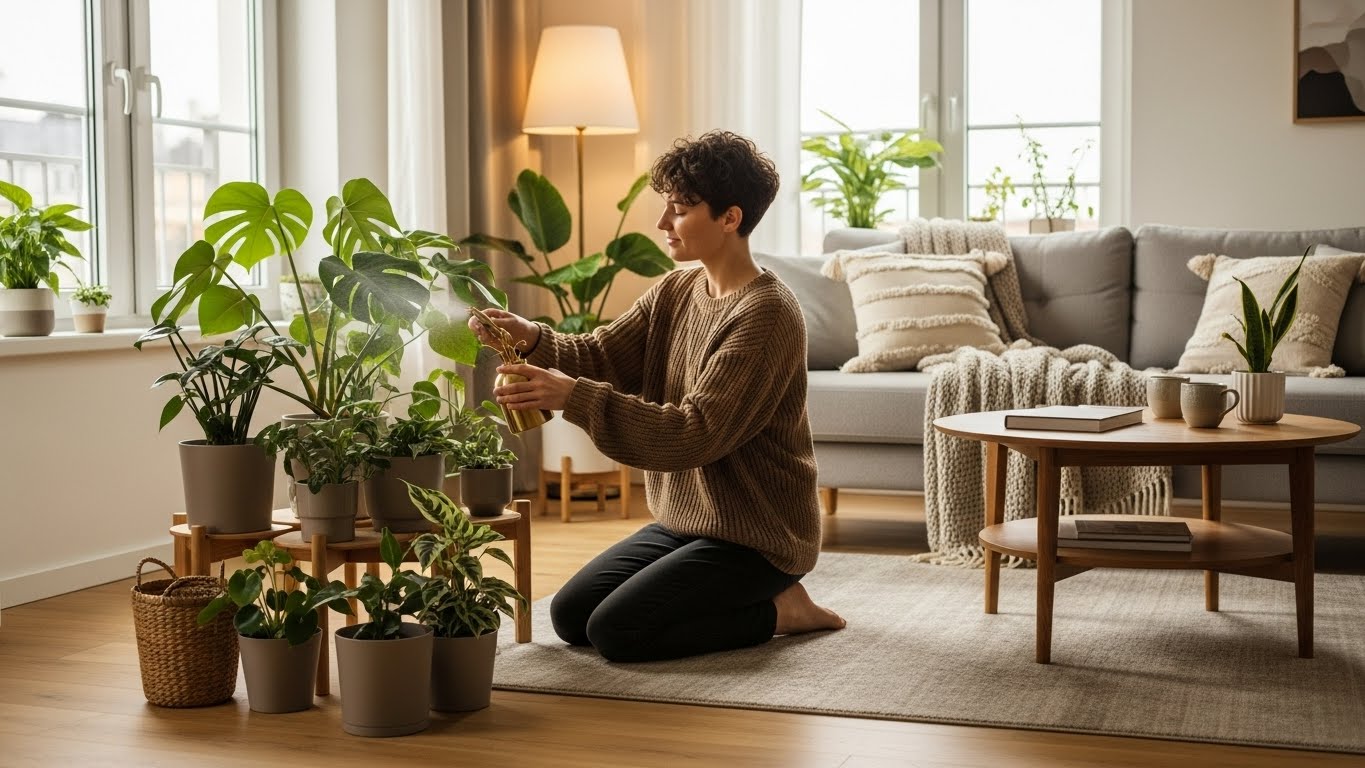
Introduction: The Urban Jungle in the Digital Age
The modern Millennial or Gen Z home is often defined not by the traditional markers of adulthood—a mortgage, a picket fence, or a nursery—but by the carefully curated presence of an “urban jungle.” Sun-drenched corners host fiddle-leaf figs, bookshelves overflow with trailing pothos instead of paperbacks, and social media feeds are punctuated by the proud unfurling of a new monstera leaf. This phenomenon, which has seen houseplants transform from quiet decorative objects into central figures of domestic life, is more than a fleeting aesthetic choice; it is a significant cultural signifier for a generation navigating a world of unprecedented challenges and opportunities. One in three people under 40 now identify as a “plant parent,” a term that itself signals a profound shift in how we relate to the nature we bring indoors.
The rise of “plant parenting” is a complex, adaptive response to the distinct pressures of 21st-century life. It represents a confluence of an innate human need for nature, a generational search for meaning and nurturing, the tangible constraints of urban living, and the amplifying power of digital communities. The pandemic era, in particular, served as a powerful catalyst, transforming homes into sanctuaries and workspaces, and intensifying the desire for a connection to the living world. As a result, a simple hobby has blossomed into a multi-billion-dollar industry and a defining lifestyle. This report posits that to truly understand this green revolution, one must look beyond the leaves and into the soil of human psychology, sociology, and behavioral science, where the deep roots of this trend are found.
I. The Green Revolution: A Generational Shift in Domesticity
The embrace of houseplants by younger generations is not merely an anecdotal observation; it is a quantifiable economic and social shift that has reshaped the horticultural industry and redefined modern domesticity. This movement is underpinned by robust market growth, driven by a specific demographic responding to a unique set of socio-economic conditions.
The Market Boom in Numbers
The indoor plant market has experienced explosive growth, transforming into a formidable economic sector. Valued at approximately USD 17.5 billion to USD 19.4 billion in 2023-2024, the industry is on a steep upward trajectory, with forecasts projecting it to reach between USD 28.6 billion and USD 29.9 billion by 2032. This represents a compound annual growth rate (CAGR) of between 4.9% and 5.7%, indicating sustained and vigorous expansion. Some estimates are even more bullish, suggesting the global market could be worth nearly USD 32.8 billion by 2034.
This growth is not evenly distributed across demographics. Millennials and Generation Z are unequivocally the engine of this green revolution. In 2021, Millennials accounted for a staggering 65% increase in houseplant sales, with Gen Z following closely behind with a 44% increase. This demographic dominance is reflected in consumer spending habits. The average American plant owner now spends approximately $74 per year on houseplants, with a lifetime expenditure of around $566. This spending intensified during the COVID-19 pandemic, when the average plant parent’s expenditure on their hobby jumped to $124.50. Such figures demonstrate that for these generations, houseplants are not a trivial expense but a valued investment in their living spaces and personal well-being.
Metric | Value |
Global Market Size (2023-2024) | USD 17.5 Billion – 19.4 Billion |
Projected Market Size (2032) | USD 28.6 Billion – 29.9 Billion |
Compound Annual Growth Rate (CAGR) | 4.9% – 5.7% |
Sales Growth (2021) | Millennials: +65%, Gen Z: +44% |
Average Annual Spend (US) | $74 |
Average Lifetime Spend (US) | $566 |
Average Pandemic-Era Spend | $124.50 |
Table 1: The Houseplant Market at a Glance: Key Growth and Demographic Statistics |
The Socio-Economic Soil: Catalysts for the Trend
The fertile ground for this trend was prepared by a combination of broad societal shifts that uniquely affect younger generations.
Urbanization and Nature Deficit
A primary driver is the relentless pace of global urbanization. As more people live in cities—with the urban population expected to grow by 68% by 2050—access to private gardens and natural green spaces has become a luxury. Urban dwellers now spend upwards of 80% of their lives indoors, often in compact apartments with limited connection to the outdoors. In this context, houseplants offer a critical and accessible solution to “bring nature indoors,” satisfying a deep-seated need in an environment increasingly devoid of it. This phenomenon addresses what has been termed a “nature-deficit,” a disconnect from the natural world that can have adverse effects on well-being.
The Pandemic Accelerator
While the houseplant trend was well-established before 2020, the COVID-19 pandemic acted as a powerful accelerant. Confined to their homes, which suddenly had to function as “sanctuaries, workspaces, and recreational zones,” people sought comfort, peace, and a tangible connection to life and nature. This period of intense indoor living and heightened stress created a mass-scale, real-world experiment that powerfully validated the psychological underpinnings of the trend. The subsequent explosion in plant sales was not coincidental; it was an intuitive mass response to an acute nature deficit and a collective need for a therapeutic outlet. During lockdowns, 73% of plant owners reported that their hobby had a positive impact on their mental health, and nearly two-thirds of American plant owners increased their collections.
Delayed Milestones and Redefined Domesticity
Compounding these factors are the economic realities facing Millennials and Gen Z. Burdened by student debt, facing a competitive job market, and priced out of homeownership, these generations have delayed or redefined traditional life milestones. In a world where major life goals feel increasingly unattainable, plant ownership represents an achievable form of investment and control. It is a strategic reallocation of resources. While they may not be able to control the housing market, they can exert agency over their immediate living environment. Spending $74 a year to transform a rented apartment into a lush, personalized sanctuary is a rational and empowering act. It is an affordable investment in well-being that yields immediate, tangible returns, allowing them to create a sense of home and stability in otherwise transient living situations.
II. The Biophilic Brain: An Innate Need for Nature in a Concrete World
The powerful appeal of houseplants is not merely a product of social trends or economic constraints; it is deeply rooted in human biology and psychology. The scientific framework for understanding this connection is grounded in the Biophilia Hypothesis, which posits that our affinity for the natural world is a hardwired, evolutionary trait. The myriad documented benefits of indoor greenery provide compelling evidence for this innate bond.
The Biophilia Hypothesis: Our Hardwired Connection
First popularized by biologist Edward O. Wilson, the Biophilia Hypothesis suggests that humans possess an “innate tendency to focus on life and life-like processes”. This is not a learned preference but a biological predisposition, a product of millennia spent evolving in close connection with the natural world. In modern, highly urbanized societies, this fundamental need is often unmet, creating a psychological “discord” or “nature-deficit” that can negatively impact health and well-being. From this perspective, the act of bringing plants into our homes and offices is a direct and powerful intervention—an attempt to restore a crucial element of the environment for which we are evolutionarily adapted.
Scientific Evidence: The Tangible Benefits of Indoor Greenery
A robust and growing body of scientific research substantiates the claims of the Biophilia Hypothesis, demonstrating that interaction with indoor plants yields measurable physiological and psychological benefits.
Stress Reduction (Stress Recovery Theory – SRT)
One of the most well-documented benefits of houseplants is their capacity to reduce stress. This aligns with Stress Recovery Theory (SRT), which proposes that exposure to natural environments facilitates recovery from stress. Studies consistently show that both passive viewing and active interaction with plants can calm the nervous system.
- Physiological Markers: Research has demonstrated that engaging with plants leads to a decrease in cortisol levels, the body’s primary stress hormone. A landmark study published in the Journal of Physiological Anthropology compared the effects of repotting a plant with completing a computer task. The plant-related activity suppressed sympathetic nervous system activity (the “fight-or-flight” response) and lowered diastolic blood pressure. In contrast, the computer task caused a spike in both.
- Psychological Markers: The same study found that participants reported feeling significantly more “comfortable, soothed, and natural” after the gardening task, underscoring the psychological relief that accompanies the physiological response.
Cognitive Enhancement (Attention Restoration Theory – ART)
Attention Restoration Theory (ART) suggests that natural environments can help restore our capacity for directed attention, which becomes fatigued by the demands of modern life. The presence of indoor plants provides a “soft fascination” that engages our involuntary attention, allowing our directed-attention mechanisms to rest and recover.
- Productivity and Focus: Studies have linked the presence of plants in workspaces to significant gains in cognitive performance. Research from the University of Exeter, for instance, found that introducing plants into an office led to a 15% increase in productivity. Other studies have corroborated these findings, showing that plants can improve concentration, enhance memory, and even boost creativity.
Mood and Well-being
Beyond stress reduction and cognitive gains, plants have a demonstrable positive effect on overall mood and life satisfaction. A meta-analysis of 49 studies confirmed that exposure to natural environments has a medium-to-large effect on both increasing positive affect and decreasing negative affect. In a home or office setting, this translates to tangible improvements in daily life. Surveys show that 43% of plant owners believe caring for their plants improves their well-being, and a vast majority report feeling happier in the presence of their plants.
Air Quality
While the scale of the effect in a typical room is a subject of ongoing scientific discussion, the ability of plants to purify the air is well-established. The 1989 NASA Clean Air Study famously found that common houseplants could remove up to 87% of airborne toxins like benzene and formaldehyde within 24 hours. This adds a tangible physical health benefit to the psychological rewards of plant ownership.
The cumulative evidence suggests that for generations highly attuned to mental health and wellness, houseplants are far more than decoration. They function as accessible, non-pharmacological tools for self-care. The act of purchasing and tending to a plant is an evidence-based strategy for managing the chronic stress of modern life, aligning perfectly with a broader cultural shift toward proactive, holistic health practices. Crucially, the most profound benefits appear to be unlocked not through mere passive ownership, but through the active, hands-on process of care. This distinction highlights that it is the relationship with the plant, defined by the routine of nurturing, that holds the greatest therapeutic potential.
Benefit Category | Key Research Findings |
Stress Reduction | Suppressed sympathetic nervous system activity and lowered diastolic blood pressure; Reduced cortisol levels; Participants report feeling more “comfortable and soothed”. |
Cognitive Enhancement | 15% increase in productivity and improved cognitive function; 12% faster work speed in a computer lab with plants present; Improved attention and concentration. |
Mood Improvement | Increased feelings of happiness and life satisfaction; 43% of owners report improved well-being from plant care; Exposure to plants linked to increased positive affect. |
Air Purification | Removal of up to 87% of airborne toxins (e.g., benzene, formaldehyde) in 24 hours in controlled environments. |
Table 2: Psychological and Physiological Benefits of Indoor Plants: A Synthesis of Research Findings |
III. “Pets Are the New Kids, Plants Are the New Pets”: The Psychology of Nurturing
Beyond the biophilic appeal and tangible wellness benefits, the houseplant trend is profoundly shaped by a deep-seated psychological need: the drive to nurture. For Millennials and Gen Z, who are navigating shifting life scripts and timelines, plant care has emerged as a powerful and accessible outlet for this fundamental human instinct. This has given rise to the “plant parent” identity—a cultural phenomenon that reframes a hobby as a meaningful relationship built on care, responsibility, and emotional investment.
The Innate Drive to Nurture
Caring for another living thing is a deeply ingrained human behavior. For generations that are delaying or forgoing traditional parenthood due to economic pressures and lifestyle choices, this instinct seeks alternative outlets. While pets have long filled this role, houseplants offer a lower-cost, lower-maintenance alternative that is particularly well-suited to the urban, often transient, lifestyles of many young adults. This is not mere speculation; it is the primary motivator for the youngest cohort of plant enthusiasts. A 2020 study found that for Gen Z, the top reason for owning a plant was “the desire to care for something alive”—a driver almost twice as prevalent in this age group compared to any other.
The “Plant Parent” Identity
The widespread adoption of the term “plant parent” is itself psychologically significant. It elevates the act of owning a plant from a simple hobby to a relational identity defined by responsibility and care. This identity is not monolithic; the emotional bond people form with their plants exists on a wide spectrum. A revealing Australian study conducted during the pandemic categorized plant owners into four distinct archetypes based on their level of emotional engagement:
- Highly Connected (14%): This group views their plants as integral members of the family. They experience deep emotional attachment, name their plants, express profound grief over their loss—even holding symbolic funerals—and feel a parental sense of responsibility for their well-being.
- Engaged (42%): The largest group, these individuals care deeply for their plants and derive significant joy and pride from watching them thrive. The emotional connection is strong, though less intense than that of the “Highly Connected” group.
- Limited Engagement (23%): These owners appreciate plants for their aesthetic value but have minimal emotional investment. The plants are part of the decor, not companions.
- No Relationship (12%): For this segment, plants are entirely passive objects, often received as gifts and not actively cared for or emotionally regarded.
This spectrum reveals that for a majority of owners (the “Highly Connected” and “Engaged” groups, totaling 56%), plant parenting is a genuinely meaningful and emotional endeavor. This identity is also linked to the cultivation of positive personality traits. The act of nurturing a plant requires and reinforces qualities such as patience, empathy, responsibility, and resilience—all valuable attributes in other areas of life.
The act of plant parenting can be understood as a form of low-stakes rehearsal for the responsibilities of adulthood. Young adulthood is a critical period for developing consequential thinking—the ability to link actions to outcomes. A plant provides immediate, visible feedback on one’s caregiving efforts. A thriving plant with new growth is a tangible reward that boosts self-esteem and affirms one’s competence. Conversely, a wilting or dying plant offers a direct, albeit sometimes painful, lesson in the consequences of neglect. This entire cycle serves as a microcosm of the larger challenges of responsibility, allowing individuals to build these essential life skills in a manageable and forgiving context before applying them to more complex domains like careers, partnerships, or future families.
Furthermore, in an age characterized by high social anxiety and the pressures of maintaining a curated online persona, plants offer a unique and valuable form of companionship. The fact that 70% of plant owners report talking to their plants points to a relational, not merely custodial, bond. Unlike a pet that can be demanding or a person who can be judgmental, a plant’s needs are straightforward and its responses are direct. It provides a “quiet, non-judgmental companionship” that can be profoundly therapeutic. For a generation navigating a complex social and digital landscape, this simple, silent, and appreciative relationship offers a grounding and validating presence.
Archetype | Prevalence | Defining Characteristics | Key Attitude/Quote |
Highly Connected | 14% | Views plants as family; names them; mourns losses with deep emotion; holds symbolic funerals. | “They are like my children.” |
Engaged | 42% | Cares deeply for plants; finds joy and pride in new growth and successful care. | Takes pride in keeping plants alive. |
Limited Engagement | 23% | Enjoys plants for their aesthetic value; minimal emotional investment or interaction. | “Indoor plants are fine, but we prefer the view of our garden outside.” |
No Relationship | 12% | Sees plants purely as decor or gifts; does not actively purchase or care for them. | Plants are objects, not companions. |
Table 3: The Spectrum of Plant Parenthood: Levels of Emotional Engagement (Based on a 2020 Australian Study) |
IV. The Digital Greenhouse: How Social Media Cultivated a Movement
The transformation of houseplant ownership from a quiet hobby into a global cultural phenomenon is inextricably linked to the rise of visually-driven social media platforms. Instagram, Pinterest, and especially TikTok did not merely reflect the trend; they actively shaped and accelerated it, creating a “digital greenhouse” where inspiration, knowledge, and community could flourish on an unprecedented scale.
The Visual Language of the Urban Jungle
Social media provided the perfect medium for the houseplant trend’s visual appeal. Platforms like Instagram and TikTok became vast, crowd-sourced galleries for the “plant parent aesthetic”—a distinct visual style characterized by sun-drenched interiors, artfully arranged “shelfies” (shelves laden with plants), and a broader ambiance of rustic, mindful domesticity. This aesthetic is about more than just the plants themselves; it encompasses a whole lifestyle, featuring elements like vintage watering cans, natural textures, and an overall feeling of a serene “green sanctuary”. The sheer scale of this digital conversation is staggering, with hashtags like #plantmom accumulating over 2.6 million uses and #plantsoftiktok garnering an incredible 3.4 billion views.
This digital ecosystem functions as a massive, user-generated guide to biophilic design, even for individuals unfamiliar with the scientific term. Biophilic design is the practice of intentionally incorporating nature into built environments to improve human well-being. The “plant parent aesthetic” that dominates social media is, in effect, a practical and highly visual demonstration of these principles. Users see firsthand how plants can transform a generic apartment into a personalized oasis, learn which species are best suited for different light conditions, and gain endless inspiration for styling and placement. Social media has thus translated abstract scientific concepts into a tangible, aspirational, and, crucially, replicable aesthetic, mainstreaming the practice of biophilic design on a global scale.
From Inspiration to Action: The Influence on Consumer Behavior
This flood of visual inspiration has a direct and powerful impact on consumer behavior, making social media a primary driver of the industry’s growth. Data shows that nearly 67% of houseplant purchasers follow plant-related accounts, and almost half admit to being influenced to buy a specific plant after seeing it in a social media post. These platforms are particularly effective at creating demand for trendy and rare varieties, such as the Variegated Monstera or the Pink Princess Philodendron. “Plantfluencers” showcase these desirable specimens, creating a sense of aspiration and exclusivity that can drive prices to remarkable heights.
Community, Knowledge, and Connection
Beyond aesthetics and commerce, social media fosters vibrant and supportive communities. Online forums and groups have become invaluable resources where enthusiasts can share care tips, troubleshoot common problems like pests or yellowing leaves, and celebrate their successes. This collective knowledge-sharing democratizes horticulture, making it far more accessible to novices and helping to mitigate the “fear of failure” that can be a barrier to entry. These digital connections often spill over into the real world, with community members organizing local plant swaps and meetups, further strengthening the sense of shared identity and belonging that defines the movement.
The very nature of plant life makes it perfectly suited for the narrative structures of social media. The lifecycle of a plant provides a compelling, slow-burn story arc that is ideal for creating episodic content. A plant’s journey—from a small cutting to a flourishing specimen, the dramatic unfurling of a new leaf, a successful propagation attempt, or a hard-won recovery from near-death—is a powerful visual narrative of growth, resilience, and the rewards of patient care. This allows creators to produce a continuous stream of engaging content, such as “progress pics,” time-lapse videos, and care tutorials. This inherent “storytelling” potential is a key factor in the trend’s remarkable staying power in the digital sphere, offering a dynamic and evolving narrative that a static decorative object could never provide.
V. The Habit Loop of Horticulture: The Reinforcing Power of a Care Routine
The enduring appeal of plant parenting can be powerfully explained through the lens of behavioral psychology, specifically through the framework of the habit loop. The regular, mindful tasks involved in plant care create a deeply reinforcing cycle of cue, routine, and reward that not only makes the hobby psychologically compelling but can also serve as a foundational “keystone habit” for broader well-being.
Introducing the Habit Loop: Cue, Routine, Reward
Popularized by author Charles Duhigg, the habit loop is a simple yet profound neurological model that explains how behaviors become automatic. It consists of three stages: a cue, which is a trigger that tells the brain to initiate a behavior; a routine, which is the behavior itself; and a reward, which is the positive reinforcement that helps the brain determine if the loop is worth remembering for the future. The more this loop is repeated, the more ingrained the habit becomes.
Applying the Habit Loop to Plant Care
The practice of caring for houseplants fits this model perfectly, creating a powerful, self-reinforcing cycle.
- The Cue (The Trigger): The triggers for a plant care routine are varied and can be environmental, temporal, or emotional. An environmental cue might be the sight of a drooping leaf or the feel of dry soil during a daily walk-through of one’s living space. A temporal cue could be a specific time of day or a designated day of the week, such as “Watering Wednesdays,” that anchors the routine in a predictable schedule. Perhaps most importantly, an emotional cue can be the feeling of stress, anxiety, or digital fatigue, prompting the desire for a mindful, grounding activity.
- The Routine (The Behavior): The routine consists of the physical, tactile acts of care: watering, pruning dead leaves, misting, rotating the plant towards the light, or gently wiping dust from its foliage. This process is inherently mindful. It requires a person to slow down, pay close attention to the needs of another living thing, and engage their senses. Crucially, it is an analog, screen-free activity that provides a welcome respite from the constant cognitive demands of a digitally saturated world.
- The Reward (The Payoff): The rewards of this routine are multi-layered, which is key to the habit’s strength and persistence.
- Immediate and Visible: The plant provides instant positive feedback. A thirsty plant visibly perks up within hours of being watered. Removing a yellowing leaf instantly improves the plant’s appearance. This creates a quick and satisfying sense of accomplishment.
- Emotional and Psychological: The routine delivers a powerful emotional payoff. There is the sense of pride and successful nurturing that comes from seeing a plant thrive under one’s care. The mindful nature of the tasks induces a state of calm and relaxation, effectively serving as a form of meditation.
- Neurological: The act of gardening has been shown to trigger the release of “feel-good” neurotransmitters like serotonin and dopamine while reducing stress hormones like cortisol. One fascinating study even found that a common soil bacterium, Mycobacterium vaccae, can trigger the release of serotonin, suggesting that the very act of getting one’s hands dirty can have an antidepressant effect.
This simple, predictable, and highly rewarding routine can function as a “keystone habit”—a foundational behavior that sparks a chain reaction of other positive habits. For an individual feeling “stuck” due to depression or overwhelmed by a chaotic schedule, the structured, low-demand nature of a plant care routine can be the first step toward re-establishing a sense of order and daily purpose. The small, consistent success of keeping a plant alive can build the confidence and momentum needed to tackle other wellness goals, creating a positive ripple effect throughout a person’s life. In this way, the habit loop of horticulture becomes a powerful, self-regulating mechanism for managing the daily stresses of a hyper-connected world—not just a hobby, but a built-in recovery cycle.
VI. The Wilted Leaf: The Challenges and Psychological Costs of Plant Parenthood
While the houseplant trend is overwhelmingly associated with positive outcomes, a complete psychological analysis must also acknowledge its potential downsides. The same emotional investment that makes plant care so rewarding can also make it a source of anxiety, guilt, and self-recrimination. Furthermore, the movement is not immune to the pressures of consumerism, creating a complex tension between a genuine love for nature and the pitfalls of a commodified hobby.
The Anxieties of Nurturing
The flip side of the deep-seated desire to nurture is the pervasive fear of failure. This anxiety is widespread among younger plant owners, with one study finding that 48% of Millennials worry about their ability to keep their plants alive. Common issues like yellowing or browning leaves—the most frequent problems reported by owners—can become significant sources of stress. This anxiety is not unfounded. Research from the University of Reading and the Royal Horticultural Society has shown that the presence of neglected, unhealthy-looking plants can have a more detrimental effect on a person’s well-being than having no plants at all, significantly increasing feelings of stress.
The Weight of a Dead Plant: Guilt, Failure, and Burnout
When a plant dies, the emotional fallout can be surprisingly intense. For those who have embraced the “plant parent” identity, the loss is not merely that of a decorative object; it can trigger feelings of “extreme guilt and shame”. This emotional response is often disproportionate to the material loss, suggesting that the plant’s life has become a proxy for the owner’s own sense of competence and self-worth. In the context of plant care as a “rehearsal for adulthood,” a dead plant can feel like a tangible failure in that rehearsal, tapping into deeper anxieties: “If I can’t even keep this plant alive, how can I possibly handle a career, a long-term relationship, or a pet?”
This dynamic is particularly acute for individuals experiencing periods of depression or burnout. The very inability to perform the simple, routine tasks of plant care can become a painful, visible symbol of their internal struggles. The plants, once a source of joy and a tool for mental wellness, can transform into a constant, green reminder of one’s perceived inadequacies, turning a therapeutic hobby into a source of profound distress.
The Consumerist Critique: Nature, Commodified
The houseplant movement also embodies a fundamental tension between an authentic connection with nature and the performance of that connection through consumerist acquisition. The hobby can be financially demanding, with average annual spending reaching $74 in the U.S. and over £300 in the U.K.. The social media-driven chase for rare and trendy plants, like the Monstera Thai Constellation, can inflate prices to exorbitant levels, shifting the focus from nurturing to collecting and status-seeking.
This consumerist impulse creates an environmental paradox. A trend rooted in a love for nature can inadvertently contribute to unsustainable practices. The mass production of houseplants involves a significant environmental footprint, including the use of plastic pots and trays, pesticides, and the energy required for heating and lighting commercial greenhouses, not to mention the carbon cost of shipping plants across the globe. This internal contradiction highlights the complexity of the trend: it is not a pure “return to nature” but a complex negotiation of that desire within the framework of a global, social media-driven consumer culture.
Conclusion: More Than Decor—The Future of Our Relationship with Indoor Nature
The proliferation of houseplants in the homes of Millennials and Gen Z is far more than a simple interior design trend. It is a sophisticated and multi-layered psychological and sociological phenomenon—a quiet, green rebellion against the pressures of modern life. The analysis reveals that plant parenting is a deeply resonant, adaptive behavior, driven by the convergence of our innate biophilic wiring, a powerful and unmet generational need to nurture, the practical constraints of urban living, and the community-building power of the digital age.
The humble houseplant has been elevated to a potent symbol for these generations. It represents a manageable form of responsibility in a world where traditional milestones are often deferred or feel unattainable. It offers an accessible and vital connection to the natural world for an increasingly urbanized populace suffering from a deficit of nature. It serves as a scientifically-backed, non-pharmacological tool for managing stress and enhancing mental well-being. And, perhaps most importantly, it provides a means to create a personal sanctuary—a space of calm, control, and life—in an often uncertain and overwhelming world.
The enduring popularity of this movement signals a significant cultural shift. It points toward a future where well-being is not an afterthought but is deeply integrated into the fabric of our domestic spaces. It suggests a blurring of the lines between home decor and active self-care, where the objects we surround ourselves with are chosen not just for their aesthetic value but for their capacity to soothe, heal, and connect. Ultimately, the plant parenting trend reveals that for many, the future of our relationship with nature will be defined not by grand excursions into the wilderness, but by the small, consistent, and deeply meaningful acts of care we extend to the living things we choose to bring into our homes. This is not just about cultivating plants; it is about a generation actively cultivating a new and more mindful definition of a good, healthy, and purposeful life.


