
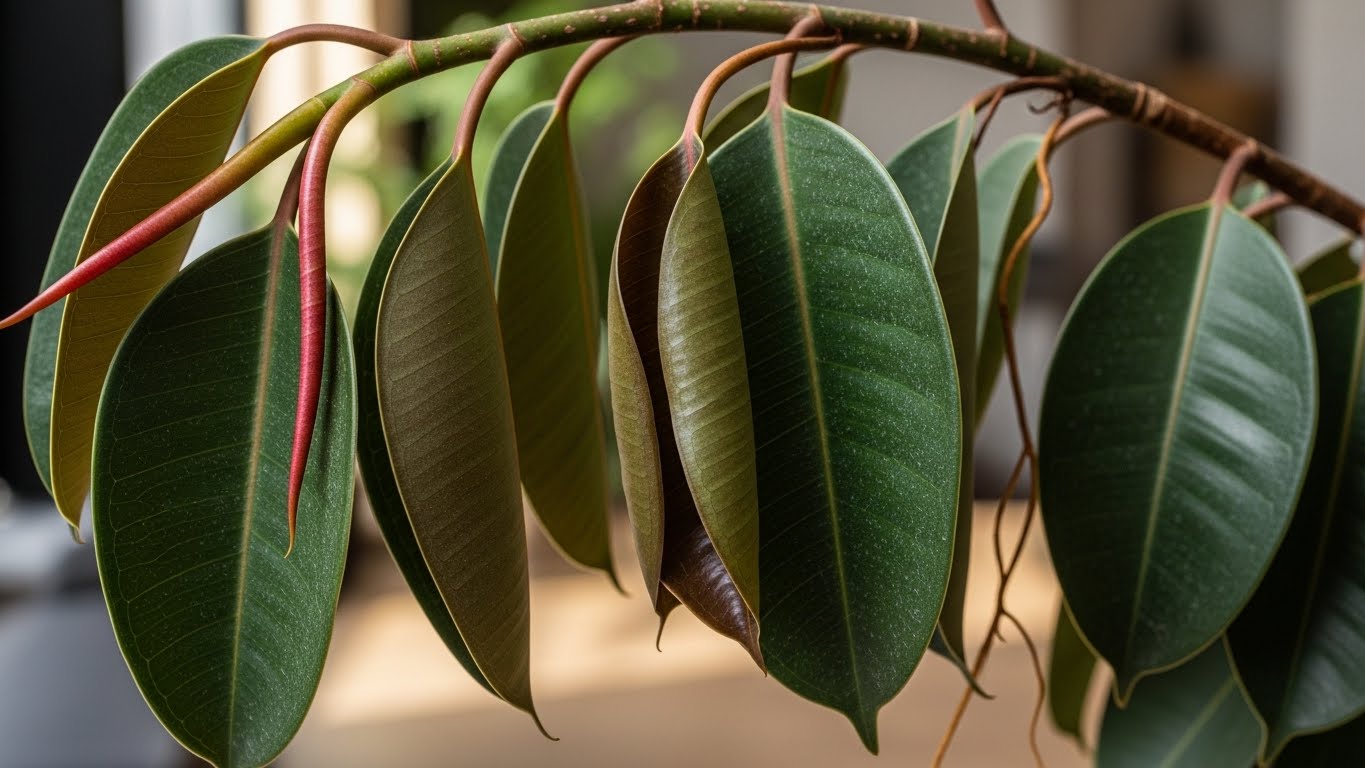
If your rubber plant’s drooping, check its care routine! Make certain it’s in bright, indirect light and isn’t getting too much or too little water; let the top inch of soil dry out before watering again. Keep its temperature comfortable, ideally between 65°F and 80°F. Don’t forget about humidity, too! If you see yellow leaves or pests, those could be signs of trouble. Let’s explore what else you can do to bring your plant back to life!
Key Takeaways
- Check soil moisture; overwatering can cause drooping leaves and root rot, while underwatering leads to dryness and crispy edges.
- Ensure your rubber plant receives bright, indirect light for 10-12 hours daily; inadequate light can lead to drooping.
- Maintain temperature between 65°F and 80°F; extreme temperatures can stress the plant and cause drooping.
- Inspect for pests like spider mites or aphids, which may cause drooping and energy loss; treat affected areas promptly.
- Consider repotting if the plant is root-bound; insufficient space can lead to drooping and poor growth.
Understanding Rubber Plant Needs
When you bring a rubber plant into your home, it’s essential to understand what this vibrant green beauty needs to thrive. Rubber plant care starts with the right environment. They love bright, indirect light but can tolerate some shade. Make sure you place your plant where it can soak up that sunlight without burning its leaves.
As for temperature, rubber plants prefer warm conditions, ideally between 65°F and 80°F. Humidity is another vital factor; they enjoy a bit of moisture in the air, so misting them occasionally helps. Finally, pay attention to the potting mix – a well-draining soil mix supports their growth requirements. Water movement ensures water can move freely while retaining enough moisture for hydration. By meeting these needs, you’ll keep your rubber plant happy and healthy!
Overwatering Issues
Overwatering can be a sneaky problem that leads to drooping leaves and a sad rubber plant, so it’s essential to keep an eye on your watering habits. When you give your plant too much water, it can struggle to absorb what it needs, leading to moisture retention in the soil. This excess moisture can cause root rot, which is a serious issue that can kill your plant. To avoid this, make sure your pot has drainage holes, and let the top inch of soil dry out before watering again. If you notice yellowing leaves or a mushy stem, it’s time to reevaluate your watering routine. Remember, your rubber plant thrives on a balanced approach to hydration!
Underwatering Symptoms
If your rubber plant seems to be drooping, it might be a sign that it’s not getting enough water. You’ll notice the leaves looking dry and wrinkled, and they might even start to drop off. Don’t worry, though—there are simple recovery steps you can take to bring your plant back to life!
Signs of Underwatering
Recognizing the signs of underwatering your rubber plant is essential for keeping it healthy and vibrant, especially since this popular houseplant can show some clear clues when it’s not getting enough water. One major indicator is drooping leaves; they may also appear crispy or even brown at the edges. If you notice these changes, it’s time to check the root health. You can use a moisture gauge to see if the soil is too dry. Another sign is if the plant seems to be growing slowly or not at all. Remember, your rubber plant relies on your care, so pay attention to these signals to keep it thriving and happy.
Recovery Steps Needed
When you notice your rubber plant’s leaves drooping and showing signs of distress, it’s time to take action to help it bounce back. Start by checking the soil; if it feels dry, give your plant a thorough watering until it drains from the bottom. This helps revive root health, allowing your plant to absorb necessary moisture. After watering, keep an eye on the nutrient balance; consider adding a balanced fertilizer to replenish nutrients. Make sure your rubber plant is in bright, indirect light, as this encourages healthy growth. Over the next few weeks, watch for signs of recovery, like perkier leaves. With a little love and care, your rubber plant will thrive again!
Light Conditions
Light conditions play an essential role in keeping your rubber plant healthy and vibrant. You need to understand the difference between indirect and direct light, as well as how to recognize the signs that your plant isn’t getting enough light. Let’s explore the ideal light levels that can help your rubber plant thrive!
Optimal Light Levels
To keep your rubber plant thriving, it’s essential to provide the right amount of light. Both light intensity and light duration play critical roles in your plant’s health. Too little light can lead to drooping leaves, while too much can scorch them.
Here’s a quick guide to help you understand ideal light conditions:
Light Intensity | Light Duration |
|---|---|
Bright, indirect light | 10-12 hours/day |
Moderate light | 8-10 hours/day |
Low light | 6-8 hours/day |
Direct light | 4-6 hours/day |
Monitor these factors closely, and adjust your plant’s location as needed. You’ll soon see it perk up and flourish, bringing joy to your space!
Indirect vs. Direct Light
Have you ever wondered what the difference is between indirect and direct light for your rubber plant? Understanding this can really help your plant thrive! Direct light means your plant’s getting bright sunlight for several hours, which can be intense and might scorch its leaves. On the other hand, indirect light is softer, often filtered through a curtain or bouncing off a wall. It provides a gentler light intensity and is usually better for rubber plants. You’ll want to pay attention to light duration too; they prefer around 12 hours of light daily. So, find that sweet spot in your home where your rubber plant feels cozy, and watch it flourish!
Signs of Insufficient Light
When your rubber plant isn’t getting enough light, it can start to show some pretty clear signs that it’s unhappy. You might notice its leaves drooping or losing their vibrant color, turning a dull green or even yellow. This often happens because the light intensity isn’t strong enough or the light duration isn’t long enough for your plant to thrive. If you see it stretching toward the light, that’s a definite cry for help! Make sure to adjust its placement, so it receives adequate indirect light. Remember, rubber plants love bright spots! By paying attention to these signs, you can help your rubber plant bounce back and flourish, creating a happier home for both of you.
Temperature Stress
Temperature stress can sneak up on your rubber plant, causing its leaves to droop and lose their vibrant appeal. Rubber plants thrive best in temperatures between 60°F and 75°F, so it’s essential to keep an eye on those temperature preferences. If you notice significant temperature fluctuations, like placing your plant too close to a drafty window or a heater, it can lead to stress. You might see the leaves curling or wilting as a sign that your plant isn’t happy. To help your rubber plant flourish, maintain a stable environment, avoiding sudden changes. Consider using a thermometer to monitor conditions, ensuring your leafy friend stays cozy and healthy. With a little attention, you can keep your plant thriving!
Humidity Levels
Humidity plays a big role in the well-being of your rubber plant, just as temperature does. When humidity levels drop too low, it can stress your plant, causing those lovely leaves to droop. Ideally, you want to maintain humidity control between 40% and 60%. If you notice the air in your home is too dry, consider using a humidifier or placing a tray of water near your plant. Misting the leaves can also help, but don’t overdo it! Too much moisture can lead to other issues. Check the humidity regularly; your rubber plant will thrive when it’s in a comfortable environment. Keep an eye on those levels, and watch your plant perk up with joy!
Pests and Insects
When you notice your rubber plant drooping, pests and insects might be the sneaky culprits behind the problem. Identifying common pests like spider mites and aphids is the first step, as they can seriously affect your plant’s health. Don’t worry, though—there are plenty of treatment and prevention tips to help you keep these pesky intruders at bay!
Common Pests Identified
Rubber plants are not only beautiful additions to your home, but they can also attract a variety of common pests that might make them droop or lose their energy. Identifying these pests early is essential for pest prevention and keeping your plant healthy. Watch out for spider mites, which create fine webs on leaves; aphids, tiny green bugs that cluster on stems; and mealybugs, which look like small cotton balls. Each of these pests can sap your plant’s strength. You’ll know you’ve got a problem if you notice yellowing leaves or sticky residue. By staying vigilant and checking your plant regularly, you can guarantee it thrives and remains the stunning centerpiece you adore!
Treatment and Prevention Tips
Keeping your rubber plant pest-free is essential for its health and vigor! Start by inspecting your plant regularly, looking for signs of pests like spider mites or aphids. If you spot any, gently wipe the leaves with a damp cloth or spray them with insecticidal soap. Leaf pruning is also important; removing affected leaves helps prevent the spread of pests.
To keep your plant thriving, maintain a balanced nutrient regimen, ensuring it gets the right mix of fertilizers. This promotes strong growth, making it less susceptible to infestations. Additionally, be mindful of watering—overwatering can attract unwanted bugs. By staying proactive, you’ll give your rubber plant the best chance to flourish, free from pests!
Soil Quality
Soil quality plays an essential role in keeping your rubber plant healthy and vibrant. You want to guarantee the soil has the right balance of nutrients, organic matter, and proper soil pH. Ideally, a slightly acidic pH between 6.0 and 6.5 is best for your rubber plant, helping it absorb nutrients effectively. When choosing soil, look for a mix that contains organic matter, like compost or peat moss, which nourishes your plant and improves drainage. This combination promotes strong root growth and prevents drooping. Regularly check the soil’s moisture levels, as well; overwatering can lead to root rot. By maintaining high-quality soil, you’ll help your rubber plant thrive and stay perky!
Pot Size and Drainage
When it comes to keeping your rubber plant happy, pot size and drainage are just as important as soil quality. If your plant’s drooping, it might be time for a pot adjustment. Here are three things to check:
- Pot Size: Confirm your pot isn’t too small; a cramped root system can lead to drooping.
- Drainage Solutions: Look for pots with drainage holes to avoid waterlogging, which can cause root rot.
- Repotting Frequency: Repot every couple of years to refresh soil and accommodate growth.
Seasonal Changes
As the seasons change, your rubber plant may respond in surprising ways, signaling that it needs some extra care. Seasonal care is essential, especially during temperature fluctuations. A sudden drop or rise in temperature can stress your plant, causing drooping leaves.
Here’s a quick guide to help you understand seasonal needs:
Season | Temperature Range (°F) | Care Tips |
|---|---|---|
Spring | 65-75 | Increase watering as growth starts. |
Summer | 70-80 | guarantee bright, indirect sunlight. |
Fall | 60-70 | Reduce watering as growth slows. |
Winter | 55-65 | Keep away from drafts and heaters. |
Pay attention to these changes, and your rubber plant will thrive throughout the seasons!
Fertilization Practices
Fertilizing your rubber plant can make a big difference in its health and growth! To keep your plant thriving, focus on achieving a good nutrient balance with organic fertilizers. Here are three simple tips to help you out:
- Choose the Right Fertilizer: Look for organic options, like compost or fish emulsion, that provide essential nutrients without harmful chemicals.
- Frequency Matters: Fertilize during the growing season, about every 4-6 weeks, to support its active growth.
- Watch for Signs: If your rubber plant’s leaves start to yellow or droop, it might need a nutrient boost, so pay attention!
Leaf Health and Care
Taking care of your rubber plant’s leaves is essential for its overall health and beauty, so you’ll want to pay close attention to their condition. Leaf discoloration can indicate several issues, like overwatering, underwatering, or inadequate light. If you notice yellowing or browning, it’s time to investigate the causes and adjust your care routine accordingly.
Regularly checking for pests is important too, as they can damage those lovely leaves. When leaves start to look tired or damaged, don’t hesitate to use proper pruning techniques. Snipping away unhealthy leaves not only improves your plant’s appearance but also promotes new growth. Keep an eye on your rubber plant’s leaves; they tell you a lot about its needs and well-being!
When to Seek Professional Help
If you notice that your rubber plant is drooping despite your best care efforts, it might be time to seek professional help. Don’t hesitate; sometimes, your plant needs a little extra support. Here are some signs that call for a professional diagnosis or emergency care:
- Persistent Drooping: If the drooping continues for more than a week, despite adjustments.
- Pest Infestation: If you spot tiny bugs or webs on the leaves, it’s time to get expert help.
- Unusual Discoloration: If the leaves are turning yellow or brown, that could signal more serious issues.
A trained professional can assess your plant’s health and recommend the best steps to revive it. Remember, it’s okay to ask for help!
Conclusion
So, if your rubber plant’s drooping, don’t panic! By checking its watering, light, and temperature, you can uncover the mystery behind its sad leaves. Think of it like a puzzle – each piece matters! With a little care and attention, your plant can bounce back to its vibrant self. Remember, a happy plant means a happy home, so get ready to revive your leafy friend with these simple tips!


