
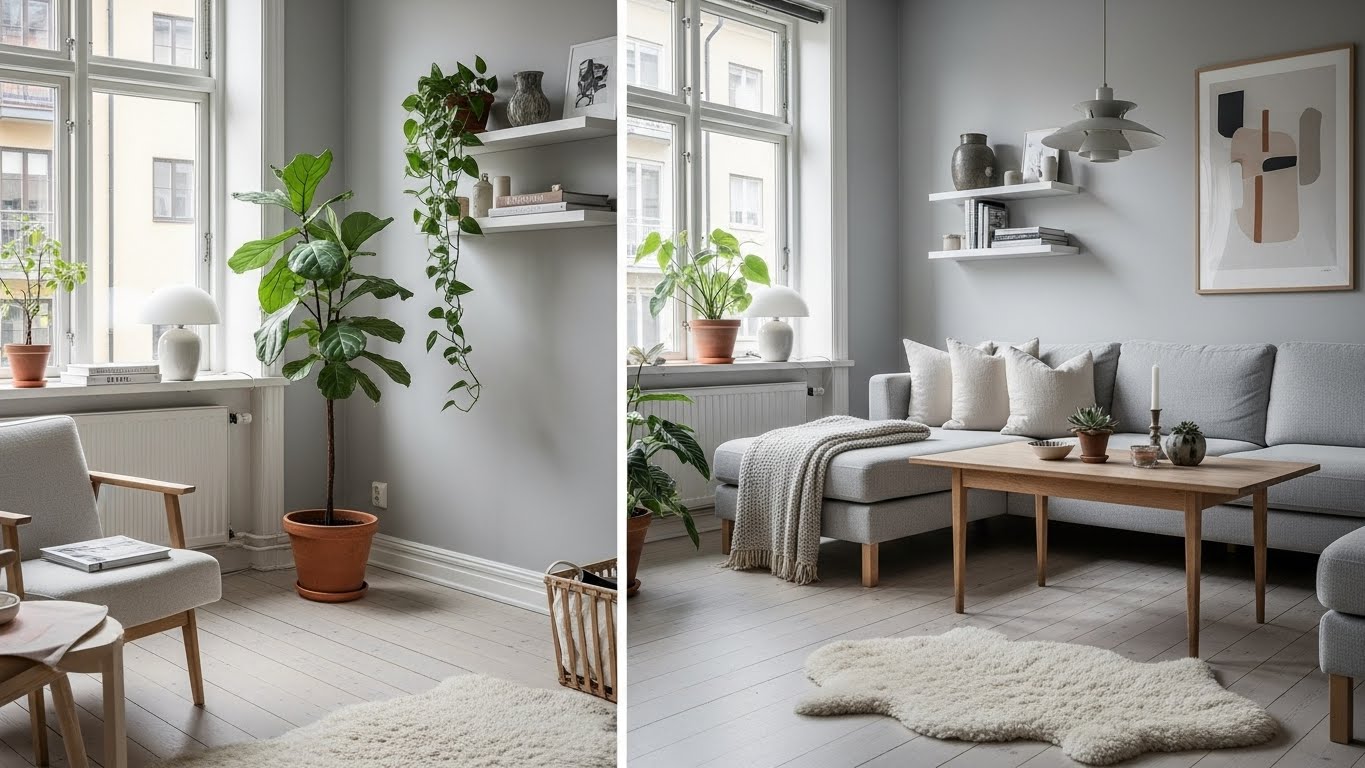
Introduction: Beyond Decoration—The Soul of Scandinavian Greenery
In the realm of Scandinavian design, indoor plants are not mere accessories; they are essential, living components that embody the philosophy’s core tenets. More than just a pop of color, greenery is the breathing soul of a minimalist space, a vital link to the natural world. This design ethos, born from the long, dark winters of the Nordic countries, reflects a deep cultural yearning for light, warmth, and nature. It is a direct and functional response to an environment that necessitates the creation of bright, life-affirming sanctuaries indoors.
💡 To truly master the art of Scandinavian decor with indoor plants, understanding plant placement is crucial.
➜ Discover proven techniques
At the heart of this approach lies hygge (pronounced hyoo-guh), the Danish concept of creating an atmosphere of cozy contentment and well-being. Parallel to this is the principle of biophilia, the recognition of humanity’s innate attraction to nature and natural processes. The deliberate integration of indoor plants serves as the physical manifestation of these ideas. It is a fundamental method for cultivating hygge and satisfying our biophilic needs, transforming a house into a home that nurtures and restores. This guide explores the foundations of creating a Scandinavian canvas, curating the ideal plants, mastering the art of placement, and adopting a minimalist care philosophy that aligns with this serene way of life.
Part I: The Canvas—Crafting a Scandinavian Foundation for Greenery
To successfully integrate plants into a Scandinavian interior, one must first prepare the ideal canvas. The greenery is not there to conceal flaws but to accentuate and harmonize with a well-designed, intentional space. The foundational elements of light, space, and texture work in concert to create an environment where both inhabitants and their botanical counterparts can thrive.
Harnessing the Light
The Scandinavian reverence for natural light is a direct, functional response to the region’s historically long and dark winters; it is a psychological necessity as much as an aesthetic choice. The entire design framework is engineered to capture and amplify every available photon.
This begins with a light, airy color palette for the walls. Shades of soft white, ivory, eggshell, and warm-toned gray act as reflective surfaces, bouncing daylight throughout a room and fostering a sense of openness. Matte or satin paint finishes are preferred, as they diffuse light gently without creating a harsh glare. This effect is further enhanced by light-colored wood floors—typically birch, oak, or pine—which contribute to the bright, harmonious atmosphere. To complete the strategy, window treatments are kept to a minimum. Sheer, gauzy curtains or, more often, completely bare windows ensure an unobstructed influx of light, a critical consideration when selecting plants for both [/types/bright-light/] and [/types/low-light/] areas.
The Power of Negative Space
In Scandinavian design, empty space is not a void to be filled but an active and powerful element. Negative space is the intentional, uncluttered area around objects, which allows each piece—from a chair to a plant—to breathe and be appreciated for its form and function. This “less is more” philosophy has profound psychological benefits. An uncluttered environment reduces cognitive load and visual overstimulation, which has been shown to calm the brain’s emotional control center, the amygdala.
Neuroscientific research indicates that environments with balanced negative space can increase alpha wave activity in the brain, fostering a state of relaxed alertness akin to meditation. By eliminating visual noise, the mind is freed from excessive processing, allowing for deeper thought and emotional regulation. In this context, an indoor plant ceases to be just another object. Placed intentionally within this carefully composed space, it becomes a “living sculpture”. The negative space around it creates a high-contrast backdrop, engaging the brain’s perceptual ability to find significance in its unique form, texture, and color, transforming it into a meditative focal point.
A Symphony of Texture
To prevent the minimalist, neutral-toned interior from feeling cold or sterile, Scandinavian design masterfully layers natural textures. This practice is fundamental to achieving hygge, adding physical warmth and tactile comfort that invites touch and relaxation. The material palette is drawn directly from the Nordic landscape.
Light-colored woods such as birch and oak are prominent in furniture, flooring, and accents, forging a tangible connection to the region’s forests. Softness and depth are introduced through textiles like thick wool throws, linen curtains, jute rugs, and plush sheepskins draped over chairs. The grounding presence of stone, slate, and unglazed ceramics further enhances the natural, earthy feel. Within this composition, plants serve as the ultimate organic texture. The glossy sheen of a Rubber Plant’s leaf, the feathery foliage of a fern, or the delicate structure of an Olive Tree provide a living, dynamic contrast to the clean lines of the surrounding decor, completing the sensory experience.
Part II: The Living Art—Curating the Perfect Scandi Plants
The selection of plants for a Scandinavian home is a curatorial act. The objective is not to amass a collection but to thoughtfully select a few specimens whose form and function align with the design’s core principles. The emphasis is on plants with strong, clean, and architectural silhouettes that serve as living sculptures, complementing the minimalist aesthetic with understated elegance.
The Upright Architects: Ficus altissima & Rubber Plant (Ficus elastica)
- Ficus altissima (Council Tree): This ficus is defined by its bold, upright, tree-like form and large, leathery oval leaves, which are beautifully marbled with shades of lime green and yellow. Through strategic pruning, it can be encouraged to develop a full, branching canopy or trained as a more streamlined single-stem tree, offering significant architectural versatility. Its clean vertical lines add height to a room, drawing the eye upward without consuming a large footprint, making it an ideal anchor for a corner or to frame a minimalist sofa. The bright variegation provides a subtle yet vibrant splash of color against a neutral wall.
- Care: Ficus altissima thrives in consistent, [/types/bright-light/] indirect sunlight, such as that from an east-facing window. It requires watering every 1-2 weeks, allowing the top 1-2 inches of its well-draining soil to dry out between sessions.
- Rubber Plant (Ficus elastica): A timeless classic, the Rubber Plant is prized for its large, glossy, deep green or dramatic burgundy leaves that make a powerful statement. Its robust form can be pruned to encourage a bushier habit or left to grow as a tall, commanding single-trunk tree. The simple, bold shape of its leaves and its rich, deep coloration create a stunning contrast against white walls and light oak floors, embodying a refined and impactful simplicity.
- Care: This plant prefers bright, indirect light, with variegated varieties requiring more light to maintain their coloring. It is crucial to avoid overwatering; allow the top half of the soil to dry out completely before watering again. It appreciates average room humidity.
The Mediterranean Muse: Olive Tree (Olea europaea)
The indoor Olive Tree is celebrated for its delicate, airy structure, with slender, willowy branches and distinctive silvery-green foliage. It evokes a sense of timeless Mediterranean charm and natural elegance. Its light, open silhouette and muted coloration perfectly echo the Nordic appreciation for naturalism, adding organic movement to a room without overwhelming the pared-back palette. When housed in a simple terracotta or ceramic pot, it functions as a piece of living art, its subtle form a study in earthy sophistication.
- Care: The Olive Tree is demanding when it comes to light, requiring at least six hours of direct sun each day. An unobstructed south-facing window is essential for it to thrive indoors. It is highly drought-tolerant and sensitive to overwatering; water only when the top half of the soil has dried out completely. Excellent drainage is non-negotiable, making a cactus or succulent mix an ideal soil choice.
The Modern Minimalists: ZZ Raven & Cast Iron Plant (Aspidistra elatior)
- ZZ Raven (Zamioculcas zamiifolia ‘Raven’): This striking plant is a true showstopper. New growth emerges in a vibrant lime green before maturing into a dramatic, near-black shade of deep purple. The plant grows in upright, arching stems lined with glossy, architectural leaflets. The deep, dark foliage provides a powerful, high-contrast element in a neutral interior, perfectly suited for a chic black-and-white aesthetic when paired with a simple white planter. Its clean, geometric form is the epitome of modern minimalism.
- Care: The ZZ Raven is famously low-maintenance, embodying the Scandi principle of functionality. It tolerates a wide spectrum of conditions, from [/types/low-light/] corners to brighter spots. Due to its water-storing rhizomes, it is exceptionally drought-tolerant and should only be watered when the soil has dried out completely, typically every 3-4 weeks.
- Cast Iron Plant (Aspidistra elatior): True to its name, this plant is nearly indestructible. It features tough, leathery, deep green sword-shaped leaves that grow in a dense, upright clump directly from the soil, creating a simple and contained silhouette. As the ultimate low-light and low-maintenance specimen, it is a perfect choice for adding a touch of living green to darker hallways, under console tables, or in offices where light is limited. Its unfussy, vertical form provides texture and life without creating any visual clutter.
- Care: The Cast Iron Plant thrives in low to moderate indirect light and its leaves will scorch in direct sun. It is very drought-tolerant and should be watered only when the top inch or two of soil is dry. It is not particular about soil type or humidity, making it one of the easiest houseplants to maintain.
The Graceful Cascade: String of Pearls (Senecio rowleyanus)
This unique trailing succulent is characterized by its long, delicate stems adorned with small, spherical leaves that resemble a string of green beads. Its cascading form introduces a soft, organic curve that is perfect for breaking up the hard, clean lines of Scandinavian architecture and furniture. Placed on a floating shelf, the edge of a bookshelf, or in a hanging planter, its trailing habit adds a sense of gentle movement and whimsy to a structured space, preventing the decor from feeling too rigid.
- Care: String of Pearls requires bright, indirect light to flourish. As a succulent, its greatest enemy is overwatering. The soil must be allowed to dry out completely between waterings to prevent root rot. A well-draining cactus mix and a pot with a drainage hole are absolutely essential for its survival.
For more detailed information, consult our comprehensive [/plant-care-guides/].
💡 Incorporating statement plants can elevate your decor, but it’s important to do so without creating clutter.
➜ Master this approach
Part III: The Composition—Styling Plants with Scandinavian Intent
Styling plants in a Scandinavian home is an exercise in restraint and intention. Each plant is placed with purpose, whether to anchor a space, soften a line, or introduce a subtle layer of texture and color. The composition is as important as the plant itself.
💡 Scandinavian decor often features neutral palettes, making it essential to know how to pair plants effectively.
➜ Explore advanced methods
Creating Focal Points
In minimalist decor, a single, large statement plant can effectively anchor an entire room, providing a natural focal point that adds vertical interest and commands attention without creating clutter. Placing a tall Ficus altissima or a sculptural Olive Tree in an otherwise empty corner can balance the visual weight of furniture on the opposite side of the room, giving the space a sense of completeness. A bold, dark-leaved Rubber Plant positioned against a vast white wall becomes a piece of living art, its strong form creating a dramatic and sophisticated contrast.
Softening the Lines
The clean, often straight lines of Scandinavian furniture and architecture provide a perfect foil for the organic forms of plants. Trailing plants are particularly effective at softening these hard edges and introducing a sense of gentle movement. A String of Pearls allowed to drape from a floating wooden shelf breaks up the severe horizontal line with its delicate, cascading beads. Similarly, a Philodendron or Pothos can be styled to spill down the side of a bookshelf or cabinet, infusing the rigid structure with a touch of wild, natural grace. Hanging planters are another excellent tool, utilizing vertical space to draw the eye upward while keeping floors uncluttered, a key tenet of the design style.
The Art of the Vessel: Planters & Palettes
The choice of planter is critical; it should serve as a quiet, complementary base that elevates the plant without competing for attention. The focus is on natural materials that add subtle texture, such as matte or unglazed ceramic, raw concrete, classic terracotta, and light woods like birch and oak.
The color palette for planters is equally restrained, adhering to neutral and earthy tones: whites, soft grays, charcoal, black, and tan. This limited palette creates a cohesive and calming visual experience. Adopting a uniform planter palette throughout the home—for example, using only white ceramic pots of varying sizes—is a powerful strategy. This consistency reduces visual noise and reinforces the minimalist aesthetic, ensuring the plant collection feels curated and intentional rather than random and chaotic.
The Scandi Pairings Matrix
To translate these principles into practice, the following matrix provides a guide for creating harmonious combinations of plant form, planter material, and textural accents.
Plant Form | Ideal Planter (Material & Color) | Complementary Textures & Accents | Placement Concept |
Tall & Sculptural (e.g., Ficus altissima, Olive Tree) | Matte Ceramic (White, Light Gray); Concrete; Light Wood (Birch, Oak) | Linen throw blanket, jute rug, smooth river stones, pale oak side table | Corner anchor to add height; flanking a minimalist sofa; beside a large window |
Bold & Glossy (e.g., Rubber Plant, ZZ Raven) | Glazed Ceramic (Black, Charcoal); Textured Concrete (Weathered Ash) | Sheepskin rug, leather accent chair, black metal floor lamp, slate coasters | As a statement piece against a white wall; adding depth to a neutral corner |
Upright & Clumping (e.g., Aspidistra) | Terracotta (natural); Ribbed Ceramic (Tan, Sandstone) | Wool cushions, woven basket for storage, unframed canvas art | Low-light hallway; under a console table; adding life to a functional office space |
Delicate & Trailing (e.g., String of Pearls) | Small Ceramic Bowl (White, Pink); Hanging Planter (Clay with Jute Rope) | Gauzy sheer curtains, smooth ceramic vase, stack of hardcover books | Draped from a floating shelf; cascading from a bookshelf; in a hanging basket in a bright nook |
Part IV: The Ritual—Minimalist Care for a Thriving Home
The Scandinavian approach to plant care mirrors its design philosophy: it is simple, functional, and mindful. Plant maintenance is not a stressful chore but a grounding ritual that contributes to an unencumbered lifestyle.
The Rhythm of Watering
A minimalist care routine rejects rigid schedules in favor of an observant, needs-based approach. The goal is to tune into the plant’s natural rhythm. The most reliable method is to check the soil moisture directly. The “finger test”—inserting a finger one to two inches into the soil—is a simple and effective way to gauge a plant’s thirst. It’s essential to recognize that different plants have different needs; a drought-tolerant succulent and a moisture-loving fern will require vastly different cadences. Watering deeply but infrequently is generally the best practice, as this encourages the growth of a strong, deep root system, making the plant more resilient over time.
Functional Aesthetics: Concealed Trays and Cohesive Systems
In a design style that prizes clean lines, a standard plastic drip tray can be a jarring visual disruption. The solution lies in integrating function with aesthetics. The most common and effective method is the use of a cache pot: a decorative outer pot without a drainage hole. The plant remains in its functional nursery pot (with drainage), which is then placed inside the cache pot. This system completely conceals the drainage mechanism while protecting surfaces. The only requirement is to empty any excess water from the cache pot after watering to prevent the plant’s roots from sitting in water. For a more integrated solution, many modern planters are designed with hidden or built-in drip trays that maintain a seamless, clean silhouette.
Effortless Upkeep
Maintenance should be a simple, grounding practice. Regularly wiping leaves with a damp cloth removes dust, which not only enhances the plant’s natural beauty but also improves its ability to photosynthesize and thrive. Pruning is done with a light hand, primarily to maintain a plant’s desired shape or to remove any yellowing or damaged leaves, preserving its clean form. Fertilizing is also kept simple; for most of these low-maintenance plants, feeding with a diluted, balanced liquid fertilizer once a month during the active growing seasons of spring and summer is entirely sufficient.
Conclusion: A Home That Breathes
Ultimately, the thoughtful integration of indoor plants transforms a Scandinavian house into a home. They are not objects placed in a space, but living partners used to create the space. They are the tangible embodiment of the design’s highest ideals: the celebration of light, the appreciation for natural texture, and the deep, restorative connection to the outdoors. By carefully selecting plants for their form, styling them with intention, and caring for them with a mindful, minimalist approach, one can cultivate a home that is more than just visually serene—it is a functional, beautiful, and deeply personal sanctuary that truly breathes. This approach is not about chasing a fleeting trend, but about fostering a more balanced, peaceful, and connected way of living.
For further ideas on crafting your personal sanctuary, explore our [/decor-inspiration/].
💡 Using plants as natural dividers can enhance both functionality and aesthetics in your Scandinavian home.
➜ Get the step-by-step guide


