
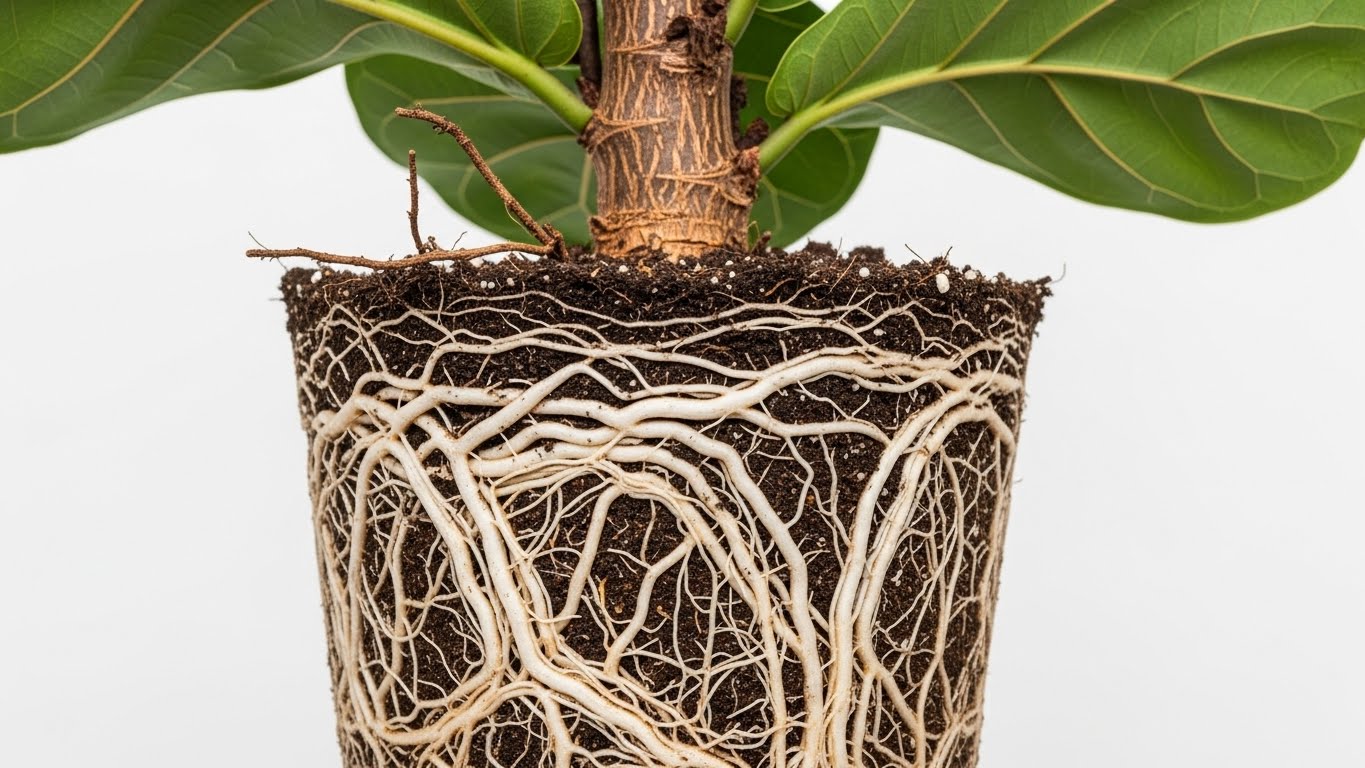
If your fiddle leaf fig is showing signs of needing repotting, pay attention! You might notice roots circling the pot, indicating it’s root bound. Wilting leaves and yellowing foliage can signal stress, too. If growth is stunted or the soil seems soggy, those are major red flags. Don’t forget to check for pests that could be causing problems. Keep an eye out—nipping these issues in the bud is key to your plant’s health! Discover more ways to help your fiddle leaf fig thrive!
Key Takeaways
💡 Understanding when and how to repot your fiddle leaf fig is crucial for its health.
➜ Get the step-by-step guide
- Roots are circling the pot’s edges, indicating the plant is root bound and needs more space for growth.
- Leaves are wilting or yellowing, suggesting potential watering issues or nutrient deficiencies that may require repotting.
- Soil feels consistently soggy or has an unpleasant odor, indicating overwatering and possible root rot that necessitates a soil refresh.
- Growth has slowed significantly, signaling that the plant may be struggling due to poor drainage or nutrient availability.
- Regular inspections reveal pests or dusty leaves, which may require repotting to improve overall plant health and vitality.
Root Bound Condition
When it comes to caring for your fiddle leaf fig, recognizing the signs of a root bound condition is crucial, and it’s more common than you might think! When roots outgrow their pot size, they start circling around the edges, limiting new root growth. This can hinder your plant’s ability to absorb water and nutrients, leading to poor overall health. You might notice slower growth or even signs of distress, like yellowing leaves. To check, gently slide your plant out of the pot and inspect the roots. If they’re tightly packed, it’s time to repot in a larger container. Remember, giving your fiddle leaf fig the right pot size is key to keeping it thriving and happy! Additionally, using a well-draining soil mix will promote healthy root systems and prevent water retention.
Wilting Leaves
If you notice your fiddle leaf fig’s leaves wilting, it’s a clear signal that something’s not right. This could be due to various factors like improper watering practices or poor soil quality, which both play a crucial role in your plant’s health. Understanding these causes is key to reviving your plant and ensuring it thrives in its new pot!
Causes of Wilting Leaves
Wilting leaves on your fiddle leaf fig can be a real cause for concern, especially when you want your plant to thrive. One major culprit is leaf moisture; if your plant isn’t getting enough water, it can start to droop. On the flip side, overwatering can also lead to wilting, creating a tricky balance. Environmental stress, like sudden temperature changes or drafts, can play a role too. Your fiddle leaf fig loves consistency, so keep it in a stable spot. If you notice wilting, check the soil moisture and the surrounding environment. A little attention can go a long way in bringing those leaves back to life and ensuring your plant stays healthy and vibrant!
Watering Practices Impact
Watering your fiddle leaf fig can make all the difference in keeping those leaves perky and vibrant. If you notice wilting leaves, it might be time to reassess your watering frequency. Too much or too little water can hinder moisture retention, leaving your plant sad and droopy.
Here’s a quick table to help you gauge your watering habits:
Watering Frequency | Signs of Overwatering | Signs of Underwatering |
|---|---|---|
Every 1-2 weeks | Yellowing leaves | Dry, crispy leaves |
Every 3-4 weeks | Mushy stems | Wilting leaves |
Monthly | Root rot | Leaf drop |
Keep an eye on your fiddle leaf fig, and adjust your watering routine to keep those leaves looking fabulous and full of life!
Soil Quality Importance
When you notice your fiddle leaf fig’s leaves drooping, it could be a sign that the soil they’re growing in isn’t up to par. Healthy soil is essential for your plant’s happiness, providing crucial soil nutrients that keep it thriving. If the soil’s quality declines, it can lead to drainage issues, causing water to pool and roots to suffocate. This lack of oxygen can make your fig feel sluggish and unwell, resulting in those sad, wilting leaves. To revive your plant, check for compacted soil and consider repotting it in fresh, well-draining potting mix. By giving your fiddle leaf fig the right soil, you’re ensuring it has everything it needs to stand tall and proud.
Stunted Growth
If you notice your fiddle leaf fig isn’t growing as it once did, it might be a sign that it’s time to repot. Stunted growth can be frustrating, but recognizing the causes and solutions can help your plant thrive again. Here are some common stunted growth causes to check for:
If your fiddle leaf fig is slowing down, it may be time for a repotting to restore its growth.
- Root Bound: The roots may have outgrown their pot.
- Nutrient Deficiency: The soil might lack essential nutrients.
- Poor Drainage: Waterlogged soil can hinder growth.
- Light Levels: Insufficient light can slow down growth.
To tackle these stunted growth solutions, consider repotting into a larger pot with fresh soil. Verify it has good drainage, and don’t forget to provide adequate light. Your fiddle leaf fig will thank you!
💡 If your fiddle leaf fig isn’t thriving, it may be due to factors beyond repotting.
➜ Discover proven techniques
Excessive Watering
When you notice your fiddle leaf fig’s leaves turning yellow or dropping off, you might be dealing with excessive watering. This can lead to root rot, a serious issue that can damage your plant beyond repair. Keep an eye on the soil—if it feels consistently soggy or doesn’t dry out between waterings, it’s time to take action!
💡 Choosing the right soil mix is essential for the success of your repotted fiddle leaf fig.
➜ Explore advanced methods
Root Rot Symptoms
Overwatering your Fiddle Leaf Fig can lead to root rot, a serious condition that can quickly harm your plant. Keeping an eye on your plant’s root health is essential. Here are some symptoms to watch for:
- Yellowing Leaves: If the leaves start turning yellow, it’s a sign that something’s off.
- Wilting: Even with enough water, wilting can indicate root problems.
- Brown Spots: Dark, mushy spots on leaves may signal root rot due to drainage issues.
- Foul Odor: A musty smell from the soil often means your roots are in trouble.
If you notice these signs, it’s time to reassess your watering routine and guarantee your Fiddle Leaf Fig has good drainage to thrive!
Soil Saturation Indicators
Recognizing the signs of soil saturation is just as important as spotting root rot, especially since both issues stem from excessive watering. When your fiddle leaf fig’s moisture levels are too high, you might notice a few telltale signs. First, the soil feels constantly wet to the touch, making it tricky to gauge when to water again. You might also see yellowing leaves or even leaf drop, as your plant struggles with drainage issues. Another indicator is the presence of mold or a musty smell around the pot. If you notice these signs, it’s time to evaluate your watering routine and consider repotting. Your fiddle leaf fig deserves the best care to thrive!
Soil Degradation
Soil degradation can sneak up on your fiddle leaf fig, and it’s essential to keep an eye out for signs that your plant’s soil is losing its magic. When this happens, your plant can struggle as it lacks the necessary soil nutrients and organic matter. Here are a few signs to watch for:
- Poor Drainage: Water sits on top instead of soaking in.
- Weak Growth: Your fig isn’t shooting up like it used to.
- Dusty Soil Surface: A crust forms, preventing moisture absorption.
- Unpleasant Odor: A sour smell indicates anaerobic conditions.
If you notice any of these signs, it might be time to repot your fiddle leaf fig and refresh its soil for a happy, thriving plant!
Yellowing Leaves
When you notice your fiddle leaf fig’s leaves turning yellow, it can feel like a warning sign that something’s not right with your plant’s health. Yellowing leaves can be one of the common leaf discoloration causes, often indicating a nutrient deficiency. Your plant might be lacking essential nutrients like nitrogen, iron, or magnesium, which are vital for vibrant leaves.
To identify nutrient deficiency signs, look for additional symptoms, such as stunted growth or poor leaf development. If you spot yellow leaves, it might be time to repot your fig in fresh soil with balanced nutrients. Remember, a little love and care can go a long way in keeping your fiddle leaf fig thriving and looking its best!
Pest Infestation
Pest infestations can sneak up on you, often hiding under the broad leaves of your fiddle leaf fig. If you spot any of these signs, it’s time to act:
- Sticky residue on leaves—this could indicate aphids or mealybugs.
- Tiny webs—spider mites love to weave these, especially in dry conditions.
- Yellow spots or wilting—could be a sign of scale insects.
- Visible bugs—if you see any pests crawling around, they’re definitely a problem.
To tackle these pest types, consider treatment options like insecticidal soap or neem oil. Regularly inspecting your plant will help you catch infestations early, keeping your fiddle leaf fig healthy and thriving. Remember, a little vigilance goes a long way!
Conclusion
To sum up, keeping an eye on your fiddle leaf fig is like watching for a lighthouse amidst a foggy sea. If you spot signs like wilting leaves or stunted growth, it’s time to repot! Your plant deserves fresh soil and room to stretch its roots. By giving it a new home, you’re not just helping it thrive—you’re nurturing a vibrant part of your space. So, roll up your sleeves and let your fiddle leaf fig flourish!
💡 After repotting, it’s important to keep an eye out for pests that can affect your fiddle leaf fig’s health.
➜ Master this approach


