
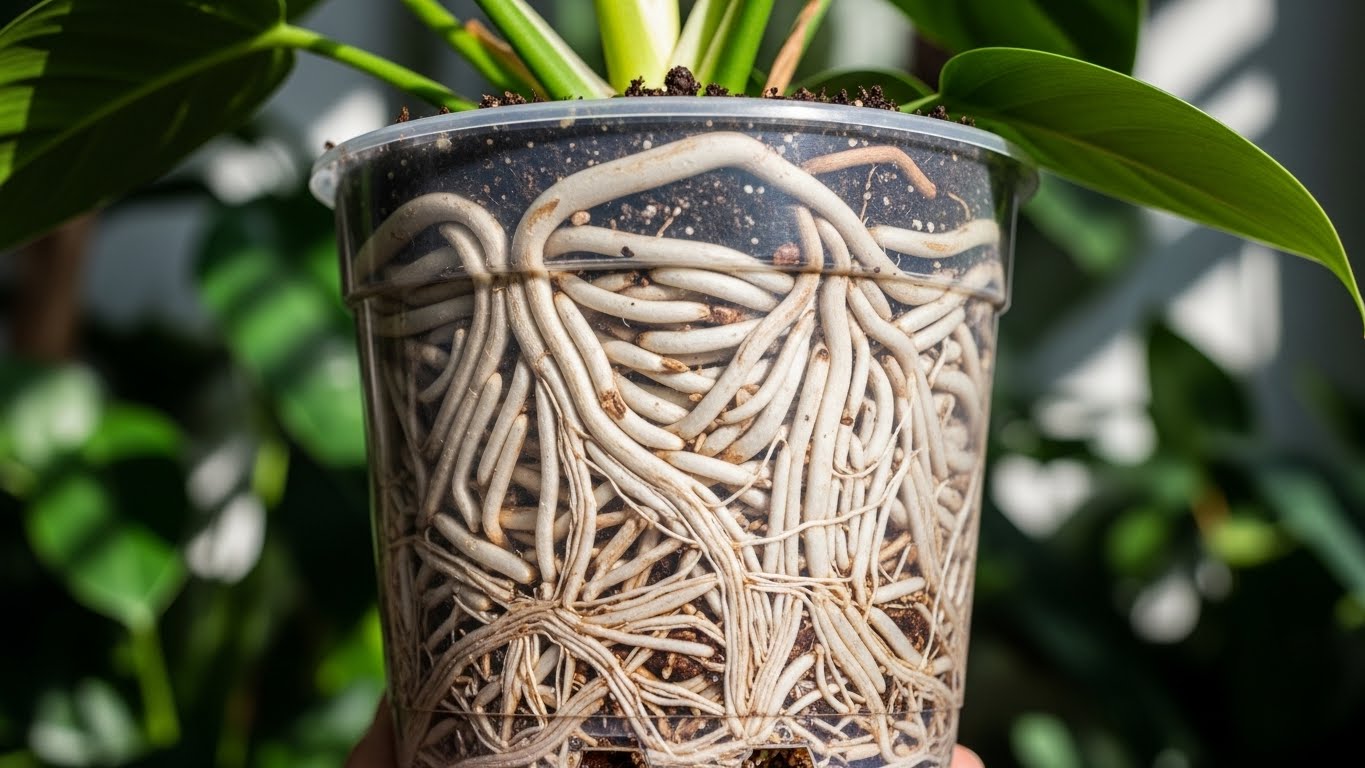
If your Philodendron’s roots are growing through drainage holes, it’s time for a bigger pot! Look for signs like stunted growth, smaller leaves, or soil that dries out too quickly. Yellowing leaves and wilting can also signal trouble, while mold or algae on the soil surface might mean it’s too damp. Finally, a top-heavy appearance or weak stem suggests it needs support. Spotting these signs helps your plant thrive, and there’s more to discover about keeping it happy!
Key Takeaways
- Roots growing through drainage holes indicate the need for a larger pot for healthy growth.
- Stunted growth and smaller leaves suggest the plant may be root-bound and needs more space.
- Soil that dries out too quickly can signify that the pot is too small for the root system.
- Yellowing leaves and wilting may indicate root crowding or poor soil conditions requiring repotting.
- A top-heavy appearance or weak stem often means the plant needs a more stable environment, achievable through repotting.
Roots Growing Through the Drainage Holes
When you notice roots growing through the drainage holes of your Philodendron pot, it’s a clear sign that your plant is ready for a new home! This root growth isn’t just a cute quirk; it’s a vital indicator of root health. When roots escape, they’re searching for more space and nutrients. If you ignore this sign, your plant’s drainage efficiency might suffer, leading to waterlogged soil and unhappy roots. To keep your Philodendron thriving, consider repotting it into a larger pot with fresh soil. This will provide the extra room your plant craves while ensuring proper drainage. Remember, a happy plant means healthier leaves and a vibrant home! So, don’t wait too long; your Philodendron is calling for a change!
Stunted Growth and Smaller Leaves
If your Philodendron seems to be standing still, with stunted growth and smaller leaves, it’s time to take a closer look at its living conditions. When your plant isn’t thriving, it often means it’s not getting the right growth factors it needs. Smaller leaf size can indicate that your Philodendron is root-bound, crammed into its pot, and struggling to absorb nutrients. Check if the roots are crowding the space; this can halt growth altogether. Additionally, evaluate its light and water needs. Sometimes, a little more sunlight or a consistent watering schedule can work wonders. By addressing these issues and repotting, you’ll give your plant the room it craves, helping it bounce back to its vibrant self!
Soil Drying Out Too Quickly
Soil that dries out too quickly can be a major red flag for your Philodendron, signaling it might need a new pot or a change in care. If you find yourself watering more often than usual, it’s time to check the pot size. A pot that’s too small can restrict root growth, leaving the soil moisture unable to hold enough water. It’s vital to guarantee the pot has adequate drainage and is the right size for your plant’s needs. When you notice the soil drying out faster than you’d like, consider repotting into a larger container with fresh, moisture-retaining soil. Your Philodendron deserves a cozy home where it can thrive, so don’t hesitate to give it some extra love!
Yellowing Leaves and Wilting
Yellowing leaves and wilting can be a clear cry for help from your Philodendron, signaling that something’s amiss in its environment. These symptoms often point to leaf discoloration causes, which may include root crowding or poor soil conditions. To guarantee your plant thrives, consider making watering frequency adjustments based on its specific needs.
Symptoms | Possible Causes | Solutions |
|---|---|---|
Yellow Leaves | Root bound or overwatered | Repot with fresh soil |
Wilting | Underwatering | Increase watering frequency |
Dropping Leaves | Nutrient deficiency | Fertilize appropriately |
Stunted Growth | Poor light conditions | Move to brighter spot |
Mold or Algae Growth on the Soil Surface
Mold or algae growth on the soil surface can be an unsettling sight for a Philodendron owner, but it often indicates an underlying issue that needs your attention. This growth usually means your plant’s environment is too damp, which can harm its health. To combat this, focus on mold prevention by allowing the soil to dry slightly between waterings. Improving soil aeration is also essential; you can achieve this by using a well-draining potting mix or adding perlite to your soil. If you see this growth, consider repotting your Philodendron to give it fresh, clean soil. Your plant will thrive, and you’ll feel good knowing you’re taking great care of it!
Top-heavy Appearance or Weak Stem
When you notice your philodendron leaning to one side or its stem looking weak and wobbly, it might be time to contemplate repotting. This top-heavy appearance often signals unbalanced growth patterns that can lead to support issues for your plant. By giving it a fresh pot with new soil, you can help your philodendron regain its strength and stability!
Unbalanced Growth Patterns
If you’ve noticed your Philodendron looking a bit top-heavy or its stem seems weak and spindly, it might be time to contemplate repotting. An unbalanced growth pattern could signal that your plant is ready for a new home. Here are some signs to look for:
- Uneven leaf distribution: If leaves are sprouting more on one side, your plant might be stretching for light.
- Inconsistent height growth: A lopsided appearance often means it’s struggling for nutrients or space.
- Weak stem stability: If the stem bends easily, it may not be able to support new growth.
Stem Support Issues
A top-heavy appearance or a weak stem can signal that your Philodendron needs some extra support. When you notice those long, leggy stems, it’s a sign that your plant might be struggling with stem strength. Without proper support, your Philodendron may lean or topple over, making it look sad and unhealthy.
To help, consider using support methods like stakes or trellises. Gently tie the stems with soft twine, ensuring they’re secure but not constricted. If your plant feels too heavy for its pot, it’s time to repot into a larger container, giving those roots more room to grow. By addressing these issues, you’ll help your Philodendron stand tall and proud!
Conclusion
To sum up, keeping an eye out for your philodendron’s signs can help it thrive. If you notice roots peeking through drainage holes or yellowing leaves, it’s time to take action. Repotting isn’t just a chore; it’s a chance to give your plant a fresh start and some room to grow. Remember, a happy plant equals a happy home, so don’t let your philodendron feel like a fish out of water!


