
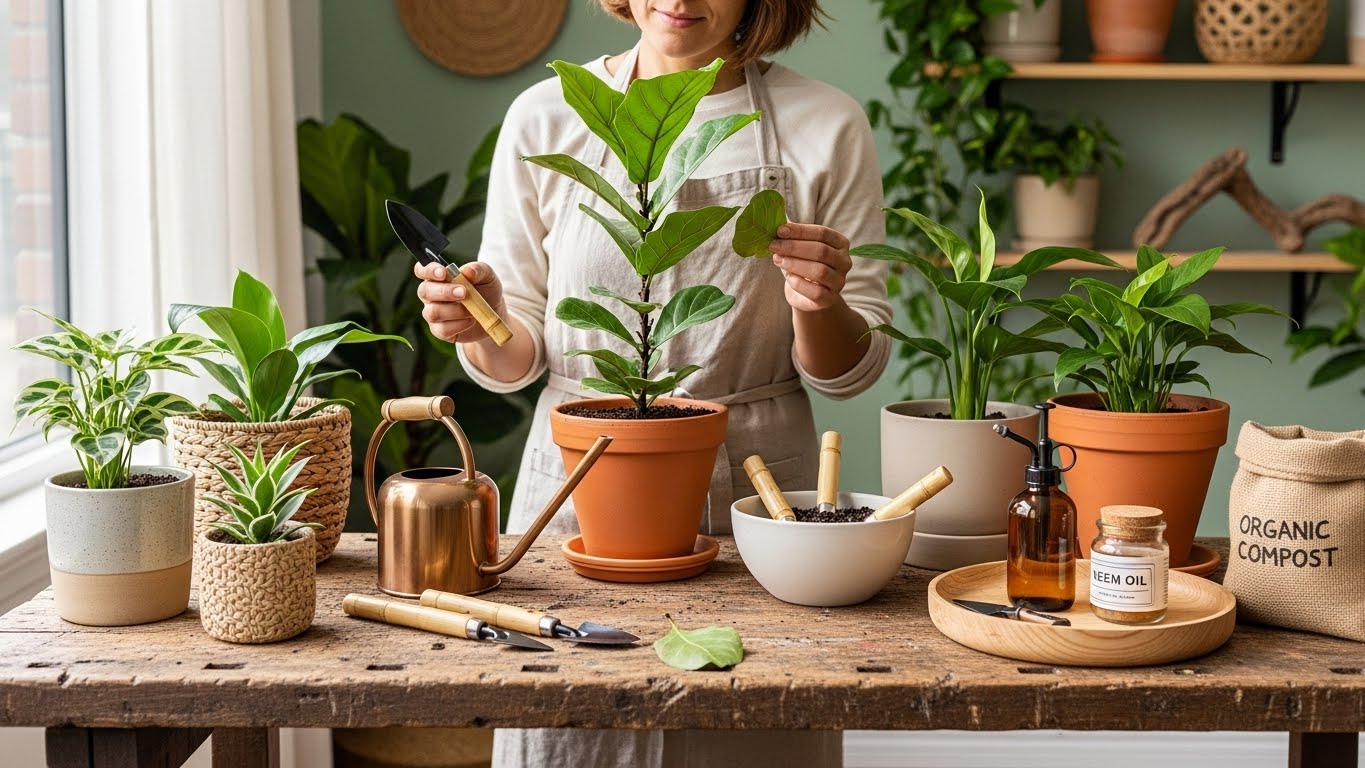
Introduction: Beyond the Green Leaf – The Ethos of Sustainable Plant Parenthood
The presence of indoor plants offers more than just aesthetic appeal; it forges a connection to the natural world that has profound and proven benefits for human well-being. Studies show that being around plants can enhance focus and provide both psychological and physical health advantages. This act of nurturing greenery within our homes is an intimate interaction with nature, presenting a unique opportunity for environmental stewardship. Sustainable plant care extends beyond simple maintenance, embracing a holistic philosophy that considers the entire lifecycle of an indoor garden. It is an approach rooted in minimizing our ecological footprint through conscious, informed choices about the soil our plants grow in, the containers that hold them, the water they drink, and the nutrients they absorb.
This guide explores the core principles of sustainable indoor plant care, reframing the fundamental needs of plants—water, food, light, and space—through an eco-friendly lens. It serves as a comprehensive resource for transforming a simple hobby into a rewarding practice of conscious cultivation, demonstrating that sustainable choices are not only accessible and effective but also deepen the connection between cultivator and plant.
Part I: The Foundation – Building a Sustainable Ecosystem from the Roots Up
The most impactful decisions in a plant’s life are often made before it is even placed on a windowsill. The growing medium and the container form the foundational ecosystem for an indoor plant, and these choices have long-term consequences for resource consumption, waste generation, and the plant’s overall vitality.
The Soil Dilemma – Deconstructing Your Potting Mix
Most houseplants purchased from stores arrive in a standardized potting mix, typically a blend of soil and peat moss that contains a finite amount of chemical fertilizer. After a few months, these nutrients are depleted, leaving the plant reliant on the owner for sustenance. Understanding the components of this mix is the first step toward building a more sustainable and resilient foundation for an indoor garden.
The Peat Moss Controversy – A Carbon Sink in Your Shopping Cart?
Peat moss, specifically sphagnum moss in the North American context, is a ubiquitous component in horticulture. It is a fibrous, partially decomposed organic material that forms over thousands of years in the cool, waterlogged wetlands known as peat bogs. Its popularity stems from its remarkable ability to act like a natural sponge, absorbing up to 20 times its dry weight in water and releasing it slowly as plants need it. This property makes peat-based soils highly forgiving, protecting plants from both under- and over-watering.
However, the convenience of peat moss comes at a significant environmental cost. Peat bogs are one of the planet’s most critical carbon sinks, storing an estimated 25% of global soil carbon—more than all the world’s forests combined. The process of harvesting peat involves draining these vital wetlands, which releases immense quantities of stored carbon dioxide into the atmosphere and contributes directly to climate change. This destructive practice has led to the depletion of up to 95% of peat bogs in regions like Ireland and Scotland, prompting some nations, such as the United Kingdom, to phase out peat-based horticultural products.
The debate becomes more complex when considering the source of most peat sold in the United States: Canada. The Canadian Sphagnum Peat Moss Association (CSPMA) argues that its harvesting practices are sustainable. They contend that peat is a renewable resource in Canada because it is harvested from a minute fraction of the country’s 280 million acres of peatlands—only about 73,000 acres to date—and that the bogs naturally replenish at a rate faster than they are harvested. The CSPMA also highlights its restoration efforts, which involve re-flooding and re-seeding harvested bogs with moss grafts, a process they claim allows for natural restoration within 10 to 15 years. For consumers who choose to use peat, looking for the CSPMA logo on packaging can indicate that the producer is involved in these restoration programs.
Peat-Free Alternatives – Cultivating Without Carbon
In response to the environmental concerns surrounding peat, a variety of sustainable alternatives have become widely available.
- Coconut Coir (Coco Coir): The most prominent peat alternative is coco coir, a fibrous byproduct of coconut husks. It offers many of the same benefits as peat, including excellent water retention, but with several advantages. Coir decomposes more slowly than peat, providing longer-lasting structure to the soil, and it has a more neutral pH, making it suitable for a wider range of plants. A key practical benefit is that it is not hydrophobic; unlike peat, which can be difficult to re-wet once it has completely dried out, coir readily absorbs water. However, choosing coir involves its own set of environmental trade-offs. Its production can be energy-intensive, and because it is sourced from tropical regions, its transportation to markets in North America and Europe carries a significant carbon footprint.
- Other Peat-Free Components: Modern peat-free potting mixes are sophisticated blends of various materials. These often include composted bark, refined forest products like wood pulp, recycled paper fibers, and leaf mold. It is important to note that these mixes behave differently than peat. They often dry out more quickly and may have a different micronutrient profile, necessitating more frequent watering and a consistent fertilization schedule.
- The Cost Factor: While creating a custom peat-free mix at home can be a low-cost option, commercially available peat-free blends can sometimes be more expensive than their peat-based counterparts, with price often reflecting the quality of the ingredients. As the market for sustainable products grows, however, these options are becoming increasingly affordable and accessible.
The Soil-less Frontier – Semi-Hydroponics with LECA and Pon
An increasingly popular alternative to traditional soil is semi-hydroponics, a method of growing plants in an inert, inorganic medium placed over a water reservoir. The plant’s roots self-water by drawing moisture upward through capillary action, or “wicking”.
- LECA (Lightweight Expanded Clay Aggregate): LECA consists of small clay pellets that have been baked at high temperatures, causing them to expand like popcorn. This medium offers several sustainability advantages. The spaces between the pellets provide superior aeration for roots, significantly reducing the risk of root rot from overwatering. Because it is an inorganic medium, it does not harbor soil-dwelling pests like fungus gnats or pathogens. LECA is also infinitely reusable; after a plant is repotted, the clay balls can be washed, sterilized by boiling, and used again, eliminating the waste associated with disposing of old soil.However, transitioning to LECA involves a considerable learning curve and initial investment. The upfront cost can be three to four times that of potting soil. Since LECA is nutritionally inert, plants require a special hydroponic fertilizer to survive. Furthermore, this method requires pots without drainage holes to create the necessary water reservoir. The greatest challenge is the transition process itself. All traces of soil must be meticulously washed from a plant’s roots to prevent decay in the wet environment. During the one-month acclimation period, plants often experience shock and may lose their “soil roots”—a process known as “root melt”—before growing new “water roots” adapted to the semi-hydroponic environment.
- Pon (Mineral Substrate): Pon is a high-quality, peat-free mineral substrate that serves as an alternative to both soil and LECA. It is composed of mineral stones—primarily zeolite, pumice, and lava—and is structurally stable, meaning it will not compact over time, ensuring continuous root aeration. Its benefits are numerous: it provides excellent drainage, prevents waterlogging, stores water and nutrients for release as needed, maintains a stable pH, and its inorganic nature prevents pests like fungus gnats. A key advantage over LECA for beginners is that Pon comes pre-fertilized, providing a steady supply of nutrients for the first 6 to 8 months and simplifying the fertilization challenge.
The choice of a growing medium illustrates a core principle of sustainable living: there is rarely a single “perfect” solution, but rather a series of trade-offs. Peat moss is problematic for its carbon emissions, but its main alternative, coco coir, has a high transportation footprint. LECA is reusable but energy-intensive to produce and requires manufactured nutrients. This complex reality means that the most sustainable choice is not universal but depends on an individual’s priorities, whether they be carbon sequestration, waste reduction, or water conservation. This decision directly shapes the entire care routine. A forgiving, water-retentive peat mix requires less vigilance than a quick-drying wood fiber mix. A semi-hydroponic system eliminates soil pests but introduces the new tasks of managing nutrient solutions and flushing the system. The medium, therefore, dictates the maintenance burden.
Table 1: Comparative Analysis of Potting Media
Medium | Key Characteristics | Environmental Impact (Pros & Cons) | Reusability | Relative Cost | Best For |
Peat Moss | High water retention (up to 20x weight); acidic pH | Con: Harvesting releases significant stored carbon, destroying critical bog ecosystems. Pro (Debated): Canadian industry claims sustainable harvesting and restoration efforts. | Low (degrades and compacts over time) | Low | Acid-loving plants; gardeners who tend to under-water. |
Coconut Coir | Good water retention; neutral pH; slow to decompose; not hydrophobic | Pro: Renewable byproduct of the coconut industry. Con: High carbon footprint from processing and long-distance transportation. | Moderate (can be reused but degrades) | Low to Moderate | A wide range of plants; a direct peat substitute. |
Peat-Free Mix | Varies by component (bark, wood fiber); often drains faster than peat | Pro: Utilizes waste products like composted bark and recycled fibers. Con: Performance can be variable; may require more frequent watering and feeding. | Low to Moderate | Low to High | Gardeners willing to adjust watering and fertilizing routines. |
LECA | Excellent aeration and drainage; inert (no nutrients); wicks water to roots | Pro: Infinitely reusable, reducing waste. Con: Energy-intensive to produce (heating clay); requires manufactured hydroponic nutrients. | High (indefinitely reusable with cleaning) | High (initial) | Plants prone to root rot; gardeners seeking to eliminate soil pests and reduce watering frequency. |
Pon | Structurally stable; excellent aeration and drainage; stores water and nutrients; stable pH | Pro: Peat-free; long-lasting and reusable. Con: Composed of mined minerals; higher initial cost. | High (can be used for years) | High | All houseplants, especially for those transitioning to semi-hydroponics, as it comes pre-fertilized. |
Choosing Your Vessel – Sustainable and Stylish Planters
The container a plant lives in is as much a part of the indoor ecosystem as the soil. Its material affects watering needs, its production impacts the environment, and its potential for reuse or upcycling determines its end-of-life footprint.
The Great Pot Debate – Material Matters
- Terracotta (Clay): Unglazed clay pots are a classic choice for good reason. Their porous nature allows air and water to move through the walls, which helps prevent soil from becoming waterlogged and protects against root rot—a major benefit for drought-loving plants like succulents and cacti. Made from natural soil, terracotta is biodegradable, and shards from broken pots can be repurposed to improve drainage in the bottom of other containers. Their weight also provides stability for top-heavy plants. The downsides are directly related to their porosity: the soil dries out much faster, requiring more frequent watering, and the pots are fragile, easily cracking or breaking if dropped or exposed to freezing temperatures. Their production also carries an environmental footprint, involving the mining of clay and firing in energy-intensive kilns.
- Plastic: Plastic pots are lightweight, inexpensive, and excellent at retaining moisture, which reduces the frequency of watering and makes them a good choice for plants that prefer consistently moist soil. However, this lack of porosity is also their main drawback, as it can lead to poor aeration and waterlogged roots if not managed carefully. From a sustainability perspective, their impact is significant. Most are made from non-biodegradable, petroleum-based materials, and while some are recyclable, many end up in landfills. Over time, exposure to sunlight can also make them brittle and prone to cracking.
- Ceramic (Glazed): Glazed ceramic pots offer a durable, long-lasting, and aesthetically pleasing option. They provide better insulation for plant roots against temperature fluctuations than thin plastic. While their base material is natural clay, the production process is energy-intensive, and the glazes may contain various chemicals. Their primary sustainability benefit lies in their longevity. A high-quality ceramic pot can last for decades, drastically reducing the need for replacements and thereby minimizing waste over its lifespan. This transforms the purchasing decision from one based on immediate shelf price to one based on long-term value, where a higher initial investment in a durable pot is ultimately more sustainable than repeatedly buying and discarding cheaper, less durable alternatives.
The Circular Economy of Pots – Reduce, Reuse, Upcycle
The most sustainable planter is often one that already exists. Embracing a circular approach by reducing new purchases and creatively reusing old items is a cornerstone of eco-friendly gardening.
- Reuse and Second-Hand: The simplest sustainable action is to wash and reuse the plastic nursery pots that plants often come in. Beyond this, thrift stores, yard sales, and online community marketplaces are excellent sources for unique, pre-loved planters, diverting them from the waste stream.
- Upcycling with Purpose: Repurposing household items as planters is not only a powerful act of waste reduction but also a creative exercise. The limitations of an object—its size, shape, and material—can inspire unique planting choices. A shallow teacup is ill-suited for a thirsty fern but becomes the perfect, whimsical home for a small succulent that requires minimal water. A metal colander, with its built-in drainage, is instantly transformed into a functional hanging basket. This approach turns potential constraints into design opportunities, resulting in a truly personalized indoor garden. A vast array of items can be upcycled, including:
- From the Kitchen: Food tins, chipped teacups, coffee mugs, candle jars, and glass containers.
- From Around the House: Old purses, hats, wooden chairs (with a hole cut in the seat), birdcages, and paint cans.
- From the Garage: Old tires, pieces of guttering, and plastic bottles.
Conscious Consumption – Buying New, Better
When purchasing new planters is necessary, conscious choices can support a more circular economy. Many companies now produce planters from post-consumer and industrial waste, transforming discarded materials into durable and stylish containers. These can be made from a variety of materials, including recycled plastics, agricultural byproducts like bamboo fiber, and even reclaimed maritime plastics such as fishing nets and ropes. While some recycled products may carry a slightly higher price tag, studies show that consumers are often willing to pay a premium for sustainability. By choosing products made from recycled materials, consumers help create a stronger market demand, making the practice of recycling more economically viable and encouraging further innovation.
Part II: Nourishment and Hydration – A Closed-Loop Approach
The ongoing care of a plant involves providing it with food and water. A sustainable approach seeks to source these essential inputs by minimizing waste and creating closed-loop systems, often by transforming household byproducts into valuable resources for the indoor garden.
Feeding Your Plants, Feeding the Earth – The Organic Fertilizer Deep Dive
The choice of fertilizer represents a fundamental philosophical and practical divide in gardening. It determines not only what the plant is fed but also how the soil ecosystem is treated in the process.
Organic vs. Synthetic – A Philosophical and Practical Divide
The core difference between organic and synthetic fertilizers lies in their mode of action. Organic fertilizers—derived from decomposed plant and animal matter like compost, manure, and bone meal—function by feeding the vast ecosystem of microbial life within the soil. These microorganisms then break down the organic matter into nutrients that the plant can absorb. This approach is one of soil stewardship, focusing on building a healthy, living, and resilient soil structure that sustains the plant for the long term.
Synthetic fertilizers, in contrast, are chemically formulated salts—often derived from non-renewable resources—that bypass the soil biology to deliver nutrients directly to the plant’s roots in a readily available form. This method is one of direct plant feeding, offering a fast and predictable “fix” that can quickly revive a struggling plant.
While effective in the short term, the long-term use of synthetic fertilizers can be detrimental. They can harm the beneficial organisms that create healthy soil, lead to a buildup of toxic salts, degrade soil structure, and contribute to environmental pollution when excess nutrients run off into waterways. Organic fertilizers, conversely, improve soil structure, enhance water retention, and foster the microbial activity essential for sustained plant health.
Table 2: Organic vs. Synthetic Fertilizers: A Comparative Snapshot
Feature | Organic Fertilizers (e.g., Worm Castings) | Synthetic Fertilizers (e.g., Liquid “Blue Water”) |
Nutrient Source | Decomposed natural materials (plant/animal matter) | Chemically formulated mineral salts |
Release Speed | Slow and steady, as microbes break it down | Fast and immediate |
Impact on Soil Biology | Feeds and supports beneficial microbes, improving soil life | Can harm or kill beneficial microbes over time |
Long-Term Soil Structure | Improves structure, aeration, and water retention | Can lead to soil degradation and compaction |
Environmental Risk | Low; biodegradable and from renewable sources | High; production from non-renewable resources, risk of nutrient runoff and water pollution |
Ease of Use / Risk of Error | Low risk; gentle and non-burning | High risk; easy to over-apply, causing “fertilizer burn” to roots |
Relative Cost | Can be higher upfront, but builds long-term soil health | Often less expensive upfront for concentrated nutrients |
The Magic of Worm Castings – Nature’s Perfect Plant Food
For those seeking an effective and user-friendly entry into organic fertilization, worm castings are an unparalleled choice. Often referred to as “black gold” or “vermicompost,” worm castings are the nutrient-rich excrement of composting worms. They are packed with essential macro- and micronutrients in a water-soluble form that is immediately available for plant uptake.
What truly sets castings apart is their teeming microbial life. They act as a probiotic for the soil, introducing beneficial bacteria and fungi that improve soil structure, enhance water retention, and help suppress soil-borne diseases and pests. Perhaps their most significant advantage, especially for novice gardeners, is that they are exceptionally gentle. Unlike synthetic fertilizers or even potent manures, worm castings will not “burn” plant roots, even if applied generously. This low-risk profile makes them a “gateway” organic amendment, allowing beginners to achieve positive results without the fear of harming their plants, thereby building the confidence to explore other sustainable practices.
Application is straightforward. For existing houseplants, simply apply a ½ to 1-inch layer to the top of the soil every two to three months and gently work it in. When repotting, incorporate castings into the new potting mix at a ratio of about 1 part castings to 4 or 5 parts soil.
Kitchen-to-Plant – DIY Nutrient Boosts
Many common kitchen scraps can be easily repurposed into nutrient-rich supplements for houseplants, creating a closed-loop system that reduces waste and provides free, gentle fertilization.
- Banana Peel Tea: Soaking banana peels in a jar of water for a few days creates a potassium-rich liquid that is excellent for promoting flowers and fruit.
- Used Tea Leaves: Once cooled, the contents of used tea bags can be mixed directly into the top layer of soil to add nutrients.
- Vegetable Boiling Water: The water left over after boiling or steaming vegetables is full of leached nutrients. Once it has cooled completely, it can be used to water plants for a mild nutrient boost.
Indoor Composting – The Bokashi Method
For those living in apartments or small spaces without access to a traditional outdoor compost pile, the Bokashi method offers a hygienic and efficient indoor alternative. Bokashi is an anaerobic process that uses a special inoculated bran to ferment, or “pickle,” all types of food waste—including meat, dairy, and oils that cannot go into traditional compost.
The process is simple: food scraps are layered with the Bokashi bran in an airtight bucket and compacted to remove air. The bucket remains sealed, and every few days a nutrient-rich liquid, or “tea,” is drained from a spigot at the bottom. This tea is highly acidic and must be heavily diluted (a 1:100 ratio with water) to be used as a potent liquid fertilizer for plants. When the bucket is full, it is sealed and left to ferment for two weeks. The resulting product is a “pre-compost” that is still acidic and must undergo a second stage of decomposition. It can be buried in a garden bed or mixed into an outdoor compost pile, where it will break down into usable, nutrient-rich soil in another two to four weeks. While sealed, the system is odorless; when opened, it has a sour, pickle-like scent rather than the smell of decay.
Water Wisdom – Conserving Every Drop
Sustainable watering practices are about both quality and quantity. They involve providing plants with the right amount of water at the right time while seeking out superior, conserved water sources.
Mastering the Art of Watering
The most common cause of houseplant failure is improper watering. Both over- and under-watering can cause similar symptoms, such as drooping leaves, leading to confusion. The key is to always check the soil before adding water. This can be done by inserting a finger about an inch or two into the soil; if it feels dry, it is time to water. For compacted soil, where water may run down the sides of the pot without reaching the roots, a chopstick or skewer can be used to gently poke holes and aerate the soil, allowing for better water penetration. When watering, it is best to do so thoroughly until water runs out of the drainage hole, and then to empty any excess water from the saucer to prevent the plant from sitting in soggy soil, which can lead to root rot.
Harvesting the Sky – The Benefits of Rainwater
Using rainwater is more than a conservation tactic; it is an act of restoring a natural cycle for indoor plants that are otherwise isolated from it. Rainwater is biochemically superior to most municipal tap water. It is naturally “soft,” meaning it is free of the added salts, minerals, and treatment chemicals like chlorine that are found in tap water and can build up in soil over time, altering its pH and harming beneficial microbes. Rainwater has a naturally optimal pH of around 7.0 and contains atmospheric nitrogen and higher levels of oxygen, which can promote faster, greener growth.
Practical Rainwater Collection for Every Home
While homeowners can install large rain barrels connected to gutter downspouts, apartment dwellers can employ simple, effective, small-scale methods.
- Simple Balcony Collection: The easiest method is to simply place a few buckets, jugs, or even clean, large take-out containers on a balcony or windowsill during a rainstorm.
- DIY Mini Rain Barrel: A renter-friendly system can be constructed from a 10-gallon storage bin with a lid. By drilling holes in the lid for water intake and installing a bulkhead union and spigot near the bottom, a functional mini-barrel can be created for about $30-35.
The most critical factor for any urban rainwater harvesting system is hygiene and safety, specifically the prevention of mosquitoes. All collection containers must be covered with a fine mesh screen or a tight-fitting lid to block mosquitoes from laying eggs in the standing water. It is also advisable to use the collected water within a week or two to prevent the growth of algae.
Other Water Conservation Hacks
If collecting rainwater is not feasible, there are other ways to improve water quality and conserve resources. The nutrient-rich water left over from boiling vegetables can be cooled and used to water plants. To improve tap water, simply fill a bucket or watering can and let it sit uncovered for 24-48 hours. This allows the chlorine to evaporate naturally, making the water healthier for plants.
Part III: Holistic Health and Community – Nurturing a Resilient Indoor Garden
A truly sustainable approach to indoor gardening extends beyond soil and water to encompass the overall health of the plant, the longevity of the tools used to care for it, and a connection to the wider community of fellow cultivators.
The Natural Apothecary – Non-Toxic Pest and Disease Management
Sustainable pest control is not about waging a chemical war but about fostering a balanced micro-ecosystem where pests and diseases are less likely to establish themselves. This approach prioritizes proactive “ecosystem hygiene” over reactive treatments.
Prevention as the First Line of Defense
A healthy, clean plant is the best defense against pests and disease. Simple, regular maintenance can prevent most common problems before they start.
- Keep Leaves Clean: Regularly wipe dust from the leaves of larger plants with a clean, damp cloth. Dust can block light and clog a plant’s pores (stomata), hindering photosynthesis and weakening the plant.
- Give Plants a Shower: An occasional shower with tepid water in a sink or bathtub can wash away dust and dislodge common pests like spider mites and aphids.
- Prune Promptly: Remove any dead, dying, or yellowing leaves immediately. This allows the plant to direct its energy toward healthy growth and removes decaying organic matter that can attract fungus gnats and promote fungal diseases.
The Kitchen Pantry as a First-Aid Kit
Many of the most effective and pet-safe treatments for common plant ailments can be made from simple ingredients already found in the average kitchen, making pest control accessible, affordable, and non-toxic.
- DIY Pet-Safe Insecticides:
- All-Purpose Soap Spray: A gentle but effective contact insecticide. Mix 1 teaspoon of mild castile soap or dish soap (without bleach or degreasers) into 1 liter (approx. 4 cups) of water. This spray works by breaking down the outer shell of soft-bodied insects like aphids, mealybugs, and spider mites.
- Neem Oil Solution: A powerful broad-spectrum natural insecticide and fungicide. Mix 2 teaspoons of cold-pressed neem oil and 1 teaspoon of mild soap (as an emulsifier) with 2 cups of water. Spray thoroughly on all parts of the plant, including the undersides of leaves, every 7-10 days to disrupt the pest life cycle.
- Pepper or Garlic Repellent: A deterrent spray that makes plants unpalatable to pests. Steep ¼ cup of hot pepper flakes or a few cloves of minced garlic in a cup of hot water. Let it cool, strain the solids, and add a few drops of soap before spraying.
- DIY Pet-Safe Fungicides:
- Baking Soda Spray: An effective remedy for powdery mildew and other fungal diseases. Mix 1 teaspoon of baking soda (sodium bicarbonate) and a few drops of mild soap into 1 liter of water. The baking soda alters the pH of the leaf surface, making it inhospitable to fungal spores.
- Cinnamon: A natural fungicide. Sprinkling a light layer of ground cinnamon on the surface of the soil can help prevent the growth of mold and deter fungus gnats.
Commercial Pet-Safe Options
For those who prefer the convenience of a pre-mixed product, several brands offer effective and organic pest and disease control solutions that are safe to use around children and pets when applied as directed. Look for products based on natural ingredients, such as:
- Earth’s Ally: Utilizes food-grade citric acid as its active ingredient.
- Arber: A bio-fungicide that uses beneficial bacteria (Bacillus amyloliquefaciens) to protect plants.
- Garden Safe: Offers a 3-in-1 product (fungicide, insecticide, miticide) based on clarified hydrophobic extract of neem oil.
- Sierra Natural Science: Produces fungicides from botanical extracts.
Table 3: DIY Natural Pest & Disease Remedies
Ailment | Symptoms / Identification | DIY Recipe | Application Instructions | Pet Safety Note |
Aphids, Mealybugs, Whiteflies | Small, soft-bodied insects clustered on new growth and under leaves; sticky “honeydew” residue. | Soap Spray: 1 tsp mild soap in 1 liter water. | Spray all affected areas thoroughly, repeating every 4-7 days until pests are gone. | Generally safe, but prevent pets from licking freshly sprayed leaves. Use castile soap for extra safety. |
Spider Mites | Fine, spider-like webbing on leaves and stems; tiny moving dots; stippled or yellowing leaves. | Neem Oil Solution: 2 tsp neem oil + 1 tsp mild soap in 2 cups water. | Spray all plant surfaces, especially leaf undersides, every 7 days. | Neem oil is generally considered pet-safe when used as directed, but keep pets away until the spray has dried. |
Fungus Gnats | Small, dark, fly-like insects hovering around the soil. Larvae live in the top layer of soil. | Cinnamon Dust: Ground cinnamon. | Sprinkle a fine layer of cinnamon over the topsoil after watering. | Cinnamon is non-toxic to cats and dogs. |
Powdery Mildew | White, powdery spots or patches on the surface of leaves and stems. | Baking Soda Spray: 1 tsp baking soda + a few drops of soap in 1 liter water. | Spray affected leaves weekly. Do not apply in direct sun. | Non-toxic, but ingestion of large amounts of baking soda can be harmful. Store solution safely. |
The Sustainable Lifecycle – Longevity and Renewal
A sustainable approach values longevity over disposability, whether it’s the soil a plant lives in or the tools used to care for it.
Soil Refresh vs. Full Repot
It is a common misconception that houseplants need to be completely repotted with fresh soil every year. For many large or established plants, this process is unnecessarily stressful and wasteful. Instead, the soil should be refreshed every 12 to 18 months, or when it shows signs of depletion, such as becoming hard and compacted, or if the plant is wilting just a day or two after being watered. This can be done by gently scraping away the top one or two inches of old soil and replacing it with a fresh layer of compost or worm castings, a practice known as top-dressing.
Caring for Your Tools – Buy Well, Buy Once
Investing in quality tools and maintaining them properly is a fundamental waste-reduction strategy. A well-cared-for trowel or pair of pruners can last a lifetime. The key to tool longevity can be remembered with the simple phrase: Scrub, Sharpen, Sanitize.
- Scrub: After each use, wipe tools clean of soil and sap. Use a wire brush to remove any rust that forms.
- Sharpen: Sharp tools are safer for the user and make cleaner cuts on the plant, which helps prevent disease and promotes faster healing.
- Sanitize: To prevent the spread of diseases from one plant to another, it is crucial to sanitize cutting tools with alcohol wipes or a disinfecting spray, especially between pruning different plants.
- Store: Always store tools in a clean, dry place. A light coating of lubricating oil on metal parts and moving joints will prevent rust and ensure they continue to work smoothly.
The Communal Garden – Sharing and Swapping
The practice of sustainable gardening extends beyond the individual home and into the community. Participating in local plant swaps or online exchange groups is a powerful way to foster a circular economy within the plant hobby.
These exchanges offer numerous benefits. Financially, they allow gardeners to diversify and expand their collections for free, saving money and reducing the consumer demand that drives large-scale commercial horticulture. They also provide access to a wider variety of plants, including locally grown and acclimatized specimens that are often more resilient and better suited to the local environment than mass-produced alternatives.
Environmentally, swaps promote biodiversity and can be a vehicle for encouraging the cultivation of native plants over potentially invasive exotic species, thereby supporting local ecosystems. Most importantly, plant swaps are hubs of community and knowledge. They serve as informal classrooms where gardeners of all skill levels can share tips, trade stories, and build lasting connections, reinforcing the idea that sustainable living is a collective, collaborative endeavor.
Appendix: A Safe and Harmonious Home – A Guide to Pet-Safe Houseplants
For many, a sustainable home must also be a safe one for all its inhabitants, including furry family members. It is crucial for pet owners to be aware of the potential toxicity of common houseplants. Even plants considered non-toxic can cause mild gastrointestinal upset if ingested in sufficient quantities. In case of a suspected poisoning, contact a veterinarian or the ASPCA Animal Poison Control Center immediately at (888) 426-4435.
The following tables list some of the most common houseplants known to be toxic or non-toxic to cats and dogs. This is not an exhaustive list, and it is always best to verify a specific plant’s safety using a reliable resource like the ASPCA’s extensive online plant database before bringing it into a home with pets.
Common Houseplants Potentially Toxic to Cats & Dogs
Common Name | Scientific Name |
Aloe Vera | Aloe vera |
Amaryllis | Amaryllis spp. |
Arrowhead Plant | Syngonium podophyllum |
Azalea / Rhododendron | Rhododendron spp. |
Caladium (Angel Wings) | Caladium spp. |
Calla Lily | Zantedeschia aethiopica |
Dumb Cane | Dieffenbachia spp. |
Elephant Ear | Alocasia spp. / Colocasia spp. |
English Ivy | Hedera helix |
Jade Plant | Crassula ovata |
Lilies (True Lilies & Daylilies) | Lilium spp. & Hemerocallis spp. |
Monstera (Swiss Cheese Plant) | Monstera deliciosa |
Peace Lily | Spathiphyllum spp. |
Philodendron | Philodendron spp. |
Pothos (Devil’s Ivy) | Epipremnum aureum |
Sago Palm | Cycas revoluta |
Snake Plant (Mother-in-Law’s Tongue) | Sansevieria trifasciata |
ZZ Plant | Zamioculcas zamiifolia |
Common Pet-Safe Houseplants
Common Name | Scientific Name |
African Violet | Saintpaulia ionantha |
Areca Palm | Dypsis lutescens |
Baby Rubber Plant | Peperomia obtusifolia |
Bird’s Nest Fern | Asplenium nidus |
Boston Fern | Nephrolepis exaltata |
Calathea (Prayer Plant) | Calathea spp. |
Cast Iron Plant | Aspidistra elatior |
Christmas Cactus | Schlumbergera bridgesii |
Haworthia (Zebra Plant) | Haworthiopsis attenuata |
Hoya (Wax Plant) | Hoya carnosa |
Parlor Palm | Chamaedorea elegans |
Peperomia | Peperomia spp. |
Polka Dot Plant | Hypoestes phyllostachya |
Spider Plant | Chlorophytum comosum |
Staghorn Fern | Platycerium bifurcatum |
Swedish Ivy | Plectranthus spp. |


