
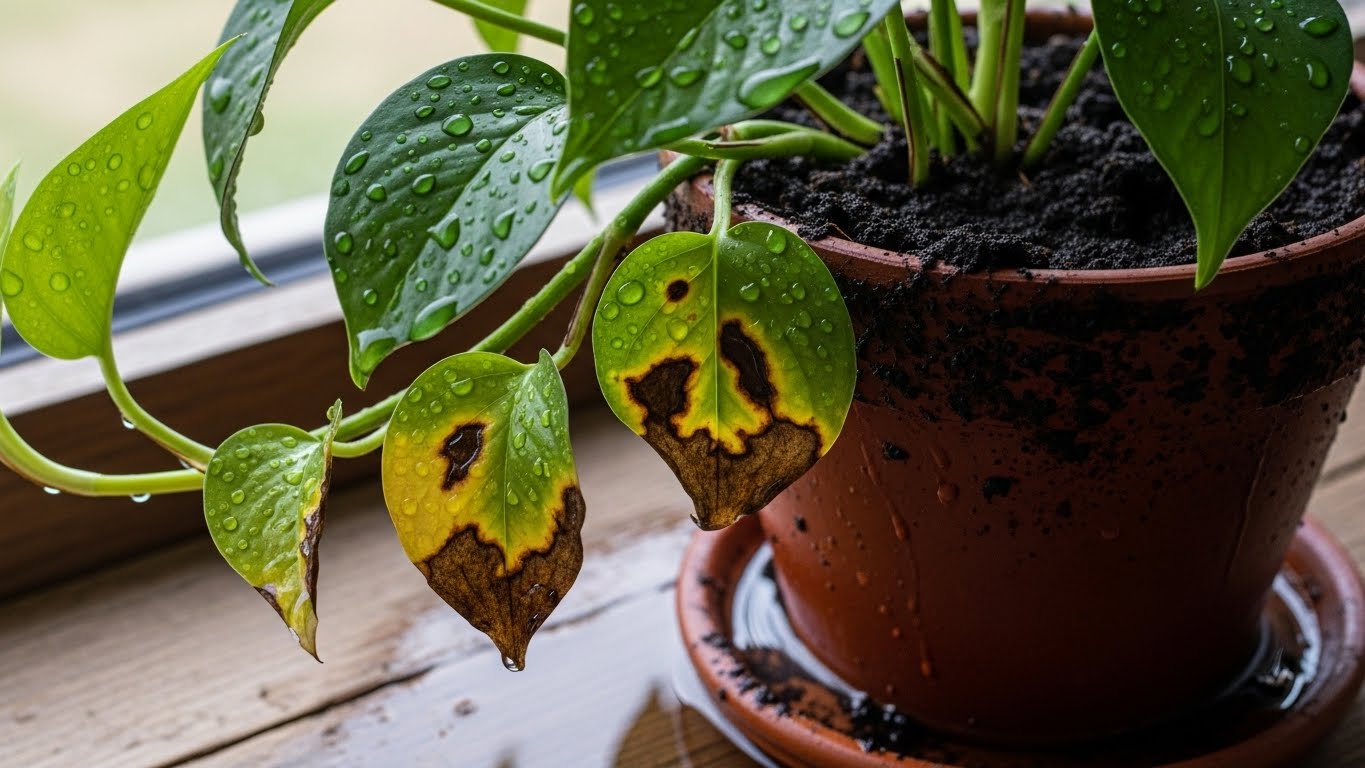
Watering your Pothos plants can be tricky! One common mistake is overwatering, which leads to yellow leaves and droopy stems. On the flip side, underwatering causes dry tips and curling leaves. Seasonal changes affect how much water your plant needs, too! Using tap water with chemicals can harm roots, so opt for distilled instead. Don’t forget about proper drainage—choose pots that allow excess water to escape. Stick around to uncover more tips to keep your Pothos thriving!
Key Takeaways
- Overwatering leads to yellowing leaves and root rot; always check soil moisture before watering.
- Underwatering causes dry leaf tips and stunted growth; ensure consistent watering when soil is dry.
- Neglecting seasonal changes can result in overwatering in winter; adjust watering frequency based on temperature.
- Using tap water may harm Pothos; opt for distilled water to avoid chemical buildup and promote healthy growth.
- Poor drainage from pots can cause water accumulation; choose pots with drainage holes and appropriate sizes for optimal health.
Overwatering: The Silent Killer of Pothos Plants
When you’re caring for your Pothos plants, it’s easy to overlook the importance of a proper watering schedule, but overwatering can be a sneaky problem that leads to serious issues. You might notice overwatering symptoms like yellowing leaves or a droopy appearance. These signs can be alarming, but they’re just the tip of the iceberg. If you keep watering without letting the soil dry out, you risk root rot, which can be devastating for your plant. To avoid this, check the soil moisture regularly; stick your finger in the dirt to gauge its wetness. If it feels soggy, hold off on watering. Your Pothos will thrive when you strike the right balance, keeping it healthy and happy!
Underwatering: Recognizing the Signs
How can you tell if your Pothos plant is suffering from underwatering? Pay close attention to those underwater symptoms that can sneak up on you. One major sign is the appearance of dry leaf tips. If the leaves start to curl or feel crispy, it’s a cry for help! Another clue is the soil—if it’s bone-dry and pulling away from the pot’s edges, your plant is likely thirsty. You might notice that the growth seems stunted, with fewer new leaves sprouting. So, if you’re seeing these signs, it’s time to give your Pothos some love and a good drink! Remember, a little attention can go a long way in keeping your green friend happy and thriving.
Ignoring Seasonal Changes in Water Needs
Ignoring the seasonal changes in your Pothos plant’s water needs can lead to some serious problems, especially since plants aren’t one-size-fits-all when it comes to care. As the seasons shift, your Pothos undergoes seasonal adaptations that affect its water intake. During warmer months, it typically needs more water due to increased growth and evaporation. Conversely, in cooler temperatures, it requires less, as its growth slows down. If you don’t adjust your watering routine for these temperature fluctuations, you might end up overwatering in winter or underwatering in summer. Keep an eye on your plant’s leaves, and remember: a little seasonal awareness goes a long way in keeping your Pothos happy and thriving!
Using the Wrong Type of Water
Using the wrong type of water for your Pothos plant can lead to unexpected problems that might leave you scratching your head in confusion. Many folks don’t realize that tap water concerns, like chlorine and fluoride, can affect your plant’s health. These chemicals can build up in the soil, causing yellowing leaves and stunted growth. Instead, consider using distilled water. Its purity means it’s free from harmful additives, providing your Pothos with the clean hydration it craves. By switching to distilled water, you’re helping your plant thrive, ensuring it gets the nutrients it needs without the worry of unwanted chemicals. So, give your Pothos the best chance at happiness—choose the right water! Your green friend will thank you!
Neglecting Drainage: The Importance of Pots
When caring for your pothos, choosing the right pot is just as essential as watering them properly. A pot with good drainage not only prevents overwatering but also helps keep the soil healthy and your plant thriving. So, let’s explore how proper pot selection and ensuring soil drainage can make a big difference in your pothos’ happiness!
Proper Pot Selection
Choosing the right pot for your pothos plant is essential, and one of the most important features to take into consideration is drainage. Without proper drainage, your plant’s roots can suffer, impacting its health and growth. Here’s what to take into account when selecting a pot:
- Pot Size: Make sure it’s not too big or small; your pothos prefers a snug fit.
- Drainage Holes: Look for pots with drainage holes to prevent water from sitting at the bottom.
- Material: Terracotta pots are great as they allow moisture to escape, promoting better root health.
- Weight: A heavier pot can help stabilize your plant, especially as it grows.
Ensuring Soil Drainage
Ensuring good soil drainage is essential for your pothos to thrive, as standing water can lead to root rot and other issues. Choosing the right pot is just as important as selecting the perfect soil types. Look for pots with drainage holes, which help excess water escape. You might also consider using a well-draining potting mix, ideally one that combines peat, perlite, and pine bark. These drainage techniques allow air to reach the roots, promoting healthy growth. Remember, the goal is to keep your pothos happy and thriving! So, check the soil regularly; if it feels soggy, it’s time to reassess your watering schedule and pot choice. Your pothos will thank you for it!
Watering on a Fixed Schedule Instead of Assessing Soil Moisture
Relying on a strict watering schedule can lead to trouble for your pothos plants. Instead of sticking to a calendar, it’s essential to check the soil moisture first, adjusting your watering based on how dry or damp the soil feels. Don’t forget to take into account the humidity in your home, too; it can really affect how quickly the soil dries out!
Check Soil Moisture
Have you ever wondered why your pothos plant isn’t thriving despite your best efforts? One common mistake is watering on a fixed schedule instead of checking the soil moisture. Your plant’s needs can change, so it’s essential to assess the soil before you pour more water. Here’s how you can do it:
- Use a moisture meter to check the soil moisture level directly.
- Stick your finger about an inch into the soil; if it’s dry, it’s time to water.
- Look for signs like droopy leaves or yellowing, which indicate your plant might be thirsty.
- Regularly test the soil with soil testing methods to better understand its moisture needs.
Listening to your plant can make all the difference!
Adjust for Humidity
While checking soil moisture is a great first step, it’s also important to take into account the humidity levels in your home when watering your pothos. Pothos thrive in higher humidity, so if your space is dry, your plant might need more frequent waterings. Instead of sticking to a fixed schedule, pay attention to how quickly the soil dries out. If you notice that the soil feels dry sooner, consider using a humidity control method, like a pebble tray or a humidifier, to boost moisture in the air. By adjusting your watering routine based on humidity levels, you help your pothos stay healthy and vibrant, avoiding the pitfalls of over or under-watering. Your plant will thank you!
Not Monitoring Humidity Levels in Your Environment
When you overlook the humidity levels in your environment, your pothos plants can suffer, even if you’re watering them just right. To guarantee your pothos thrive, here are some tips for humidity control and environment assessment:
- Check Humidity: Use a hygrometer to measure the humidity levels in your home.
- Ideal Range: Aim for humidity levels between 40% and 60% for peak growth.
- Increase Humidity: If it’s too low, consider using a humidifier or grouping your plants together.
- Observe Your Plants: Look for signs of stress, like browning leaves or drooping stems, which can indicate humidity issues.
Conclusion
In the world of pothos care, watering mistakes can turn your leafy friend from a vibrant green into a droopy disaster. By keeping a keen eye on soil moisture, adjusting for seasonal changes, and ensuring proper drainage, you’ll nurture a thriving plant that dances with joy in its pot. Remember, every drop counts! So, embrace these tips, and watch your pothos flourish, turning your space into a lush, leafy oasis that brings life to your home.


