
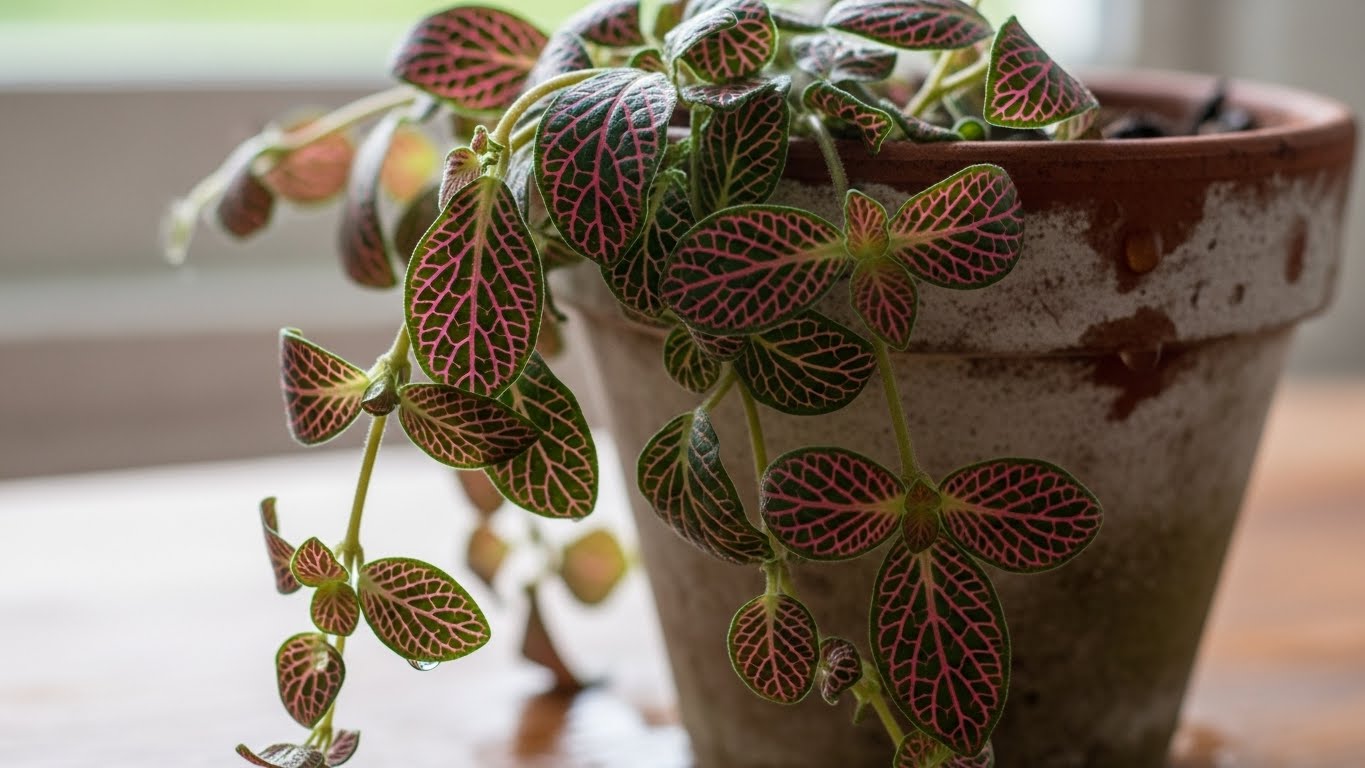
Is your Fittonia drooping? Don’t worry; it could be an easy fix! Check if you’re overwatering or underwatering—both can cause wilting. Make sure the humidity’s right, too; Fittonias love moisture! Also, look at the light and temperature—too dark or too hot can stress them out. Finally, keep an eye out for pests like aphids. Address these issues, and your plant will perk up. Want to know more about keeping your Fittonia healthy?
💡 Understanding the fundamental needs of your Fittonia is crucial for its health.
➜ Master the essentials of Fittonia care
Key Takeaways
💡 Understanding the basics of Fittonia care is crucial for preventing issues like drooping.
➜ Master the essential care techniques
- Overwatering can cause drooping; ensure soil dries slightly between waterings and check for proper drainage.
- Underwatering leads to wilting; keep soil moist but not soggy, watering when the top inch feels dry.
- Low humidity levels can stress Fittonia, so mist leaves or use a humidifier to increase moisture.
- Insufficient light affects plant health; place Fittonia in bright, indirect light to enhance photosynthesis.
- Check for pests like aphids or spider mites, as they can drain energy and cause drooping leaves.
Overwatering Issues
When your Fittonia starts drooping, one of the first things to contemplate is overwatering, which can be a sneaky culprit. If you notice your plant looking sad, check the soil drainage. Too much water can lead to root rot, and that’s not something you want for your precious plant! Make sure your pot has drainage holes so excess water can escape. If the soil feels soggy or clumps together like mud, it’s a sign to cut back on watering. Instead, give your Fittonia a good drink when the top inch of soil feels dry. By paying close attention to these details, you’ll help your plant thrive and bring back its vibrant, cheerful leaves. Your Fittonia deserves your care! Additionally, ensure you use a standard, peat-based potting mix to promote healthy growth.
Underwatering Concerns
Underwatering can be just as problematic for your Fittonia as overwatering, and it’s important to recognize the signs quickly. If you notice your plant’s leaves wilting or curling, it might be crying out for attention. Check the soil moisture; if it feels dry an inch below the surface, your Fittonia needs a drink. When the soil is too dry, it can affect root health, leaving your plant vulnerable and stressed. Make sure you water consistently, allowing the soil to dry slightly between waterings. Remember, a happy Fittonia has vibrant leaves and strong roots. By keeping an eye on soil moisture and responding promptly, you can keep your plant thriving and looking its best!
Inadequate Humidity Levels
Fittonias, often called nerve plants due to their striking leaf patterns, thrive in environments with high humidity, so if the air around your plant is too dry, you might start to see some unfortunate signs. These plants have specific humidity requirements, and when these aren’t met, their leaves can droop, curl, or even turn brown at the edges. To keep your Fittonia happy and healthy, consider some simple humidity solutions. You can mist the leaves regularly, place a humidifier nearby, or group your plants together to create a mini humid environment. Another great trick is to set your pot on a tray filled with water and pebbles, ensuring your plant gets the moisture it craves without sitting in water.
Poor Lighting Conditions
Although you might think your Fittonia can thrive in any light, the truth is that poor lighting conditions can lead to droopy leaves and a sad-looking plant. Fittonias adore bright, indirect natural light, which allows them to flourish. If they’re stuck in a dim corner, lacking essential light spectrum, they can’t photosynthesize properly, leaving them weak and droopy.
To keep your Fittonia happy, place it near a window where it can soak up that lovely light without direct sunburn. If natural light is limited, consider using grow lights designed to mimic the natural spectrum. Your plant will perk up, showing vibrant colors and healthy growth, making you both feel like a plant-parenting superstar!
Temperature Stress
Temperature plays a significant role in the health of your Fittonia. If you’re noticing drooping leaves, it might be due to temperature stress caused by temperature extremes or seasonal fluctuations. Fittonias thrive in a cozy environment, so keeping them in the right temperature range is essential.
Here are three tips to help you maintain a healthy temperature for your plant:
- Avoid Drafts: Keep your Fittonia away from open windows or air conditioning vents that cause sudden temperature changes.
- Ideal Range: Aim for a temperature between 65°F and 80°F (18°C to 27°C) for peak growth.
- Humidity Matters: Increase humidity around your plant, as dry air can exacerbate temperature stress.
Nutrient Deficiency
When your Fittonia starts drooping, it might be trying to tell you something about its nutrients! Just like us, plants need essential nutrients to thrive, so understanding what they lack can help you bring your Fittonia back to life. Let’s explore the signs of nutrient deficiency, the key nutrients your plant craves, and how you can easily supplement them for a happy, healthy Fittonia!
Essential Nutrients for Growth
💡 If your Fittonia is drooping, it might be facing other common problems as well.
➜ Discover proven solutions for common issues
💡 Overwatering is a common cause of drooping in Fittonia plants.
➜ Discover the signs of overwatering
As you nurture your Fittonia, it’s crucial to remember that just like people, plants need a balanced diet to thrive. To guarantee your Fittonia grows happily, focus on these fundamental nutrients:
- Nitrogen: Essential for leaf growth, nitrogen helps maintain that vibrant green color.
- Phosphorus: This nutrient supports root development and overall plant strength, enabling your Fittonia to absorb water and nutrients better.
- Potassium: Important for overall plant health, potassium aids in photosynthesis and helps your Fittonia resist diseases.
To provide these nutrients, consider enriching your soil composition with the right fertilizer types. A well-balanced, slow-release fertilizer is a great option, as it gradually nourishes your plant over time, promoting robust growth and vibrant foliage.
💡 Identifying common problems can help you prevent drooping in your Fittonia.
➜ Explore common Fittonia issues
💡 If your Fittonia is drooping, it may need immediate attention to revive its health.
➜ Get the step-by-step rescue guide
Signs of Nutrient Deficiency
Just like people can feel under the weather without the right nutrients, your Fittonia can show signs of distress when it’s lacking essential elements in its diet. If you notice yellowing leaves, stunted growth, or an overall droopy appearance, it’s time to pay attention. These symptoms often signal a deficiency in key nutrient sources like nitrogen, potassium, or magnesium. Poor soil quality can also contribute to these issues, as it might not retain the nutrients your plant needs. To bring back that vibrant look, check if your Fittonia is in nutrient-rich soil, and verify it’s getting the right balance of water and light. Keeping an eye on these signs will help your plant thrive!
How to Supplement Nutrients
To keep your Fittonia healthy and happy, you need to supplement its nutrients when you notice signs of deficiency. Achieving the right nutrient balance is crucial for vibrant growth. Here are three effective ways to enhance your plant’s health:
- Choose the right fertilizer types: Opt for a balanced, water-soluble fertilizer that contains equal parts nitrogen, phosphorus, and potassium. This promotes overall health.
- Apply sparingly: Fertilize your Fittonia every 4-6 weeks during the growing season. Over-fertilizing can harm your plant.
- Monitor moisture levels: Verify the soil is moist but not soggy. Nutrient absorption is best when the plant isn’t stressed by lack of water.
Pest Infestation
When your Fittonia starts drooping, it might not just be a sign of thirst or hunger; pests could be the culprits too! Common pests like spider mites and aphids can wreak havoc on your plant’s health, leaving you to spot the signs of infestation. Let’s explore how to identify these pesky intruders and what you can do to treat and prevent them from taking over your beautiful Fittonia!
Common Pests Identified
Pest infestations can sneak up on your Fittonia, causing it to droop and lose its vibrant appearance. Recognizing these pests through careful pest identification is key to restoring your plant’s health. Here are three common culprits you should watch for:
- Spider Mites: Tiny and often unnoticed, they suck the moisture from leaves, leaving them dry and crispy.
- Mealybugs: These fluffy white pests cling to the stems and leaves, creating a sticky residue that can weaken your plant.
- Aphids: Small and green, they gather in clusters, draining nutrients and leading to droopiness.
Using natural remedies, like neem oil or insecticidal soap, can help you tackle these pests effectively, ensuring your Fittonia regains its lush charm.
Signs of Infestation
Have you ever looked at your Fittonia and wondered why it seems a little less lively? If you notice yellowing leaves, sticky residue, or tiny webs, these are infestation signs you can’t ignore. Pests like aphids and spider mites can cause serious pest damage, draining your plant’s energy. Check the undersides of leaves and around the stems for any signs of bugs or eggs. If you see little black specks, those might be insect droppings, another indicator of an unwelcome guest. Keep an eye on your Fittonia’s overall health, as drooping might also be a response to stress caused by these pests. Staying vigilant will help you catch any issues before they turn into a bigger problem!
Treatment and Prevention Tips
To keep your Fittonia healthy and thriving, you’ll want to tackle any pest infestations promptly and effectively. Here are some treatment and prevention tips to guarantee your plant’s soil quality and root health remain ideal:
- Inspect Regularly: Check your plant often for any signs of pests. Early detection can save your Fittonia from severe damage.
- Use Natural Remedies: Consider using insecticidal soap or neem oil. These solutions are gentle yet effective in treating pests without harming your plant.
- Maintain Soil Quality: Verify your soil drains well and is nutrient-rich. Healthy soil promotes strong roots, making your Fittonia less susceptible to pests.
Conclusion
In the grand garden of plant care, your fittonia deserves to thrive, not just survive. By addressing overwatering, humidity, light, and other factors, you’ll help it bounce back like a superhero after a tough battle. Remember, plants communicate their needs, so listen closely! With a little love and attention, your fittonia will perk up and dazzle you with its vibrant colors once again, turning your space into a lively oasis that feels like home.
💡 Drooping can often be a sign of overwatering; learn how to identify and address this issue effectively.
➜ Explore advanced methods to identify overwatering
💡 If your Fittonia is drooping, knowing how to revive it can be a game-changer.
➜ Get the step-by-step guide to revive your Fittonia


