
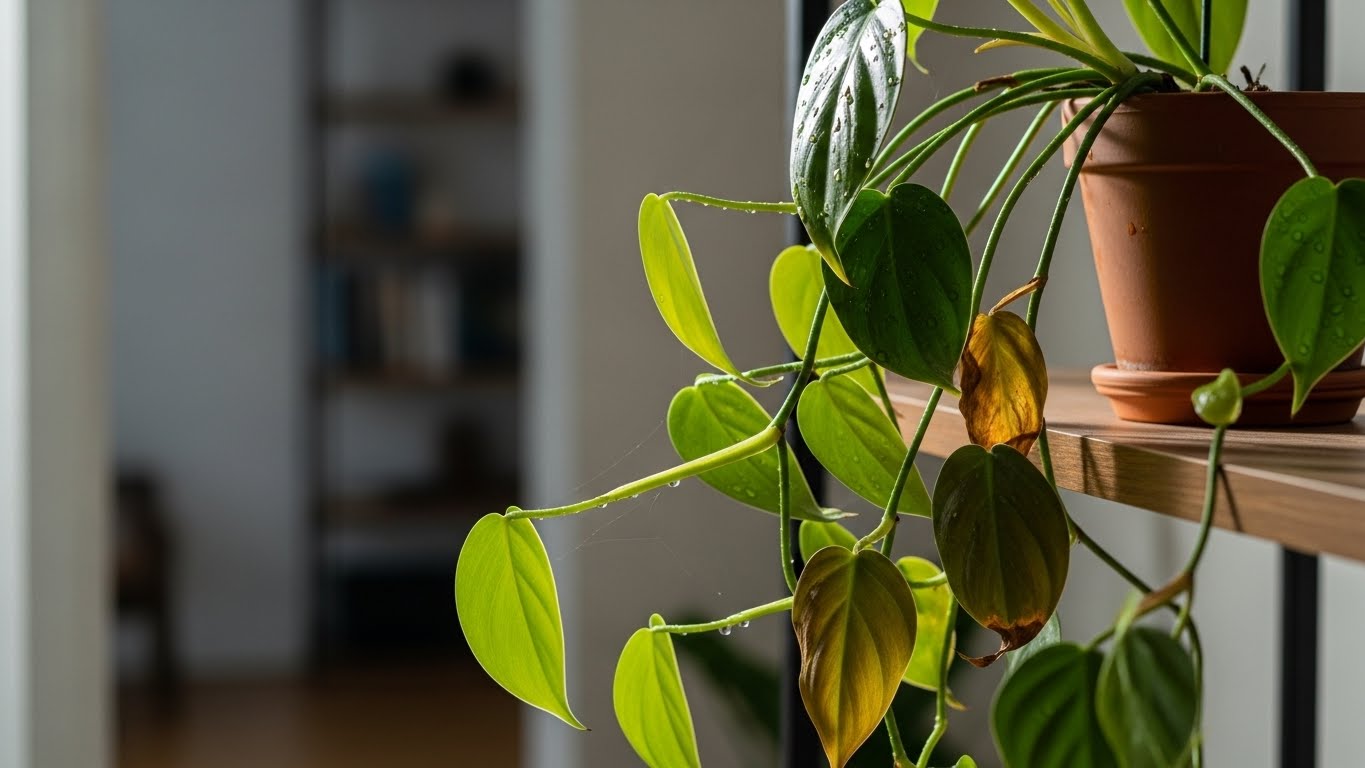
If your philodendron is drooping, it could be due to overwatering, underwatering, or environmental stress. Check for yellow or wilting leaves, which signal overwatering, while dry, browning leaves indicate underwatering. Verify your plant gets bright, indirect light and stays within a comfy 65°F to 80°F (18°C to 27°C) range. Nutrient deficiencies might also play a role, so don’t forget to check soil quality! Let’s explore practical fixes for your droopy friend and bring it back to life!
Key Takeaways
- Ensure your philodendron receives bright, indirect light to prevent stretching and drooping from insufficient sunlight.
- Adjust your watering schedule; allow soil to dry out between waterings to avoid overwatering issues.
- Check for signs of underwatering, such as drooping leaves and dry soil, and increase watering accordingly.
- Maintain ideal temperature conditions between 65°F and 80°F (18°C to 27°C) to prevent environmental stress.
- Address nutrient deficiencies by providing balanced fertilizer and ensuring proper drainage for healthy root growth.
Understanding the Causes of Drooping in Philodendrons
Philodendrons are popular houseplants, and if yours is drooping, you might be wondering what’s going on. Understanding the causes of drooping is essential for nurturing your green friend back to health. A few common reasons include insufficient light, where your plant might be stretching for more sunshine, or low humidity, causing it to feel parched. You might also notice that your philodendron responds to temperature changes, curling its leaves when it’s too cold. This plant behavior can signal distress, urging you to take action. So, take a closer look at your philodendron’s environment. A causes overview helps you pinpoint the issue, ensuring your plant gets the love and care it deserves to thrive once again.
Overwatering: Identifying the Signs
When your philodendron starts drooping, it might be trying to tell you about its watering routine, especially if you’ve been a little too generous with the water. Overwatering signs can be quite clear if you know what to look for. Watch for yellowing leaves, which can signal that your plant’s roots are struggling. You might also notice wilting leaves that don’t bounce back, a common drooping symptom of too much moisture. If you see mushy roots or a sour smell from the soil, those are definite red flags! It’s important to adjust your watering schedule, allowing the soil to dry out between waterings to keep your philodendron healthy and happy.
Underwatering: How to Recognize the Symptoms
When your philodendron starts drooping, it might be signaling that it’s thirsty. You can spot signs of underwatering like dry soil, browning leaves, and a generally sad-looking plant. Recognizing these symptoms early is key to keeping your plant healthy and happy!
Signs of Underwatering
If your Philodendron starts to droop, it might be telling you it needs a little more water. One of the most noticeable underwatering symptoms is its drooping leaves. Instead of standing tall and proud, these leaves may start to sag, making your plant look a bit sad. You might also notice the leaves turning a lighter shade of green or even developing crispy edges. If you catch these signs early, you can help your beloved plant perk up by giving it a drink. It’s important to check the soil, too; if it’s dry several inches down, your Philodendron is definitely thirsty. Remember, a happy plant makes for a happy home!
Effects on Plant Health
Recognizing the effects of underwatering on your Philodendron is crucial for maintaining its health and vigor. When your plant starts showing drooping symptoms, it’s a sign that it’s not getting enough water. Leaves may turn brown, crisp, or even drop off. This stress affects your plant’s overall health, making it more susceptible to pests and diseases. To help your Philodendron recover, use effective recovery techniques like adjusting your watering schedule, checking the soil moisture regularly, and ensuring it’s in a well-draining pot. By responding quickly to these signs, you can revive your plant and restore its liveliness. Remember, a happy Philodendron means a thriving companion in your space!
Environmental Stress: Light and Temperature Considerations
Your philodendron needs the right light and temperature to thrive, so let’s explore what that means for you. These plants love bright, indirect sunlight but can suffer if they get too much direct light or not enough. Plus, knowing the temperature range they tolerate will help you keep your leafy friend happy and healthy!
Light Requirements Explained
When it comes to keeping your philodendron healthy and happy, understanding its light requirements is essential. These plants thrive in bright, indirect light, but too much direct sunlight can scorch those beautiful leaves. You’ll want to find the right balance of light intensity, ensuring it’s bright but not overwhelming.
In terms of light duration, aim for around 12 to 14 hours of light each day. This could mean placing your plant near a window with filtered light or using grow lights if natural light is limited. By keeping these factors in mind, you’ll help your philodendron flourish, avoiding that droopy look and encouraging vibrant growth. Remember, a little attention to light can make all the difference!
Temperature Tolerance Range
Philodendrons are pretty adaptable, but they do have a temperature range that keeps them feeling their best. The ideal temperature for your leafy friend is between 65°F and 80°F (18°C to 27°C). When you keep them within this cozy range, they thrive, showing off their vibrant leaves. However, temperature extremes can lead to drooping, yellowing, or even leaf loss. If it gets too cold, below 50°F (10°C), or too hot, above 90°F (32°C), they’ll stress out. So, be mindful of where you place your plant, avoiding drafts or direct heat sources. By creating a stable environment, you’ll help your philodendron flourish and maintain its charming presence in your home.
Nutrient Deficiencies: What Your Plant Might Be Lacking
Have you ever wondered why your philodendron’s leaves are drooping despite your best care efforts? One possibility might be nutrient deficiencies. Your plant needs specific nutrient types to thrive, and when it lacks them, you’ll notice some telltale deficiency symptoms.
Here’s a quick reference table to help you identify what your philodendron might be missing:
Nutrient Type | Deficiency Symptoms |
|---|---|
Nitrogen | Yellowing leaves, stunted growth |
Phosphorus | Dark green leaves, poor flowering |
Potassium | Leaf edges browning, drooping |
Magnesium | Yellowing between veins, leaf curling |
Potting and Soil Issues: Ensuring Proper Drainage and Aeration
While you might be providing your philodendron with the right amount of water and sunlight, potting and soil issues can still cause those droopy leaves. First, check your potting techniques; using a container with drainage holes is essential. Without proper drainage, water can pool at the bottom, leading to root rot. Next, consider your soil composition. A mix that includes peat moss, perlite, and orchid bark can create a breathable environment, allowing air to reach the roots. Make sure you repot your philodendron every couple of years to refresh the soil and provide room for growth. By focusing on these aspects, you’ll help your plant thrive and keep those leaves standing tall and proud!
Conclusion
In conclusion, if your philodendron’s drooping, don’t despair! By diligently diagnosing the dilemma—whether it’s overwatering, underwatering, or environmental stress—you can restore your plant’s perkiness. Make sure it gets the right nutrients and a potting setup that promotes proper drainage. With a little care and attention, your philodendron can bounce back beautifully, showcasing stunning, sturdy foliage once again. So, take action, and let your plant thrive in its vibrant, verdant glory!


