
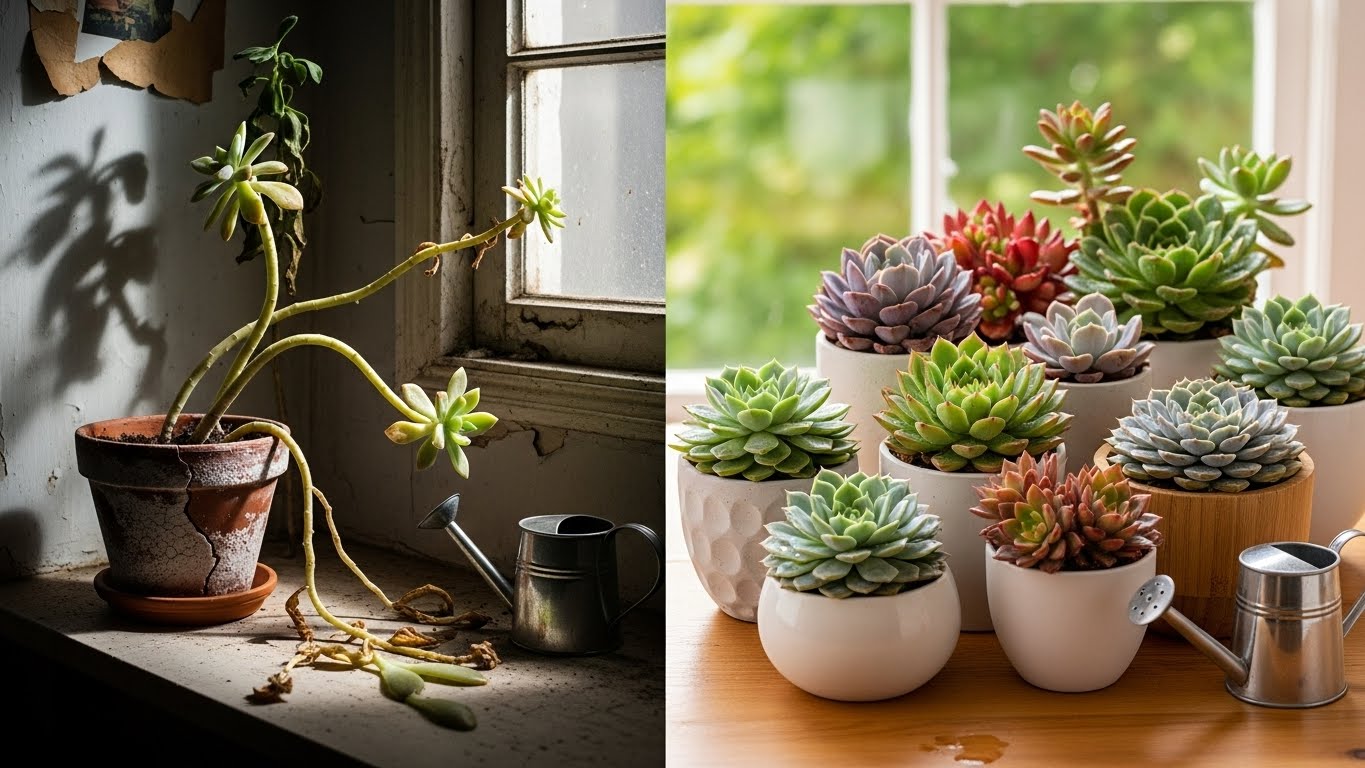
Succulents might look great, but they aren’t always the best indoor plants for everyone. They have limited light needs, thrive in low humidity, and are highly sensitive to overwatering, which can lead to root rot. Plus, these plants need well-draining soil and can struggle with pests. Their size and color limitations might not fit every décor, and they require long-term commitment and care. Want to discover more about their quirks and challenges?
Limited Light Requirements
When you think about plants, you might imagine them basking in bright sunlight, but succulents are a bit different—these hardy little wonders thrive in limited light! Many succulent varieties, like the jade plant and snake plant, have incredible light adaptation skills. They can flourish in spaces where other plants might struggle, making them perfect for your cozy corners.
Even if your room doesn’t get tons of sunlight, succulents can still be your green companions, soaking up whatever light they can get. Just remember, while they’re tough, they still need some care. So, place them near a window or in a well-lit area, and watch them grow, proving that even in low light, they’re ready to shine!
Humidity Sensitivity
Humidity can be a tricky thing for your indoor plants, and succulents have their own set of preferences. These charming plants thrive in low humidity levels, often found in deserts. If your home’s air is too damp, it can lead to problems. Succulents are designed for moisture retention, storing water in their leaves, which means they don’t need a lot of humidity. When the air is too humid, they can struggle to breathe and may succumb to fungal issues. It’s essential to create a balance. If you live in a humid area, consider placing your succulents in a spot with good air circulation or using a dehumidifier. Caring for them requires understanding their unique needs!
Overwatering Risks
Overwatering can be a sneaky problem for your succulents, leading to some serious issues if you’re not careful. You might notice yellowing leaves or a mushy stem, which are clear signs that your plant’s had too much to drink. That’s why choosing the right soil with good drainage is super important, helping to keep your succulent happy and healthy!
Signs of Overwatering
If you’ve ever noticed your succulent’s leaves turning mushy or discolored, it might be a sign that you’ve given it too much water. These overwater symptoms can sneak up on you, leading to more serious issues like root rot. When your plant’s roots sit in soggy soil, they can’t breathe, and this lack of oxygen starts to damage them. You might see the leaves drooping or feel them softening in your fingers, which isn’t a good sign. Plus, if you spot yellowing or blackening leaves, it’s time to take action! Remember, succulents thrive on neglect rather than excess, so always be cautious with that watering can. Keep an eye on your plant, and it’ll thrive the way it’s meant to!
Soil Drainage Importance
When you think about growing healthy succulents, soil drainage plays an essential role in their success. Choosing the right soil types is vital; you want a mix that allows water to flow through easily, preventing those dreaded puddles. Poor drainage can lead to overwatering, which suffocates roots and compromises root health. When roots sit in soggy soil, they can rot, leaving your beloved plants weak and sad. To keep your succulents thriving, look for pots with drainage holes and consider a gritty soil mix specifically designed for them. By prioritizing drainage, you’re setting your plants up for a vibrant, healthy life. Remember, happy roots mean happy succulents, and that’s what we all want!
Soil Composition Challenges
When you grow succulents indoors, getting the right soil mix is essential for their health. You’ll need to pay attention to drainage requirements, make sure they get enough nutrients, and even consider the pH level of your soil. Let’s explore these challenges together, so your plants can thrive and stay vibrant!
Drainage Requirements Explained
To guarantee your succulents thrive indoors, understanding their drainage requirements is essential, especially given the challenges posed by soil composition. Succulents prefer a well-draining soil mix that allows excess water to escape quickly. Without proper drainage systems, water can pool around the roots, leading to rot and other issues. You might think soil that retains water is fine, but it can suffocate your plants! A sandy or gritty mix is often best, ensuring that while some moisture is retained, it doesn’t become a swamp. Consider adding perlite or pumice to boost drainage and keep your succulents happy. Remember, it’s all about balance—enough water for hydration, but never too much for comfort!
Nutrient Deficiency Issues
Nutrient deficiencies can sneak up on you if you’re not careful about your soil composition, so it’s vital to know what your succulents need to thrive. These plants require specific nutrients for ideal nutrient absorption, and without the right balance, they can suffer. Here are three key areas to focus on:
- N-P-K Ratios: Check the nitrogen, phosphorus, and potassium levels in your fertilizer types. Each plays a unique role in plant health.
- Micronutrients: Don’t overlook trace elements like magnesium and iron; they’re essential for your succulents.
- Soil Texture: A well-draining mix not only helps with moisture but also improves nutrient availability.
Ph Level Considerations
Understanding the pH level of your soil is essential for keeping your succulents healthy and happy. The right pH balance is vital, as it affects how well your plants absorb nutrients. If your soil’s acidity is off, your succulents might struggle to thrive.
Here’s a quick look at pH levels and their effects:
pH Level | Soil Acidity | Plant Health |
|---|---|---|
6.0 – 7.0 | Neutral | Ideal for most succulents |
5.5 – 6.0 | Slightly Acidic | Moderate growth |
Below 5.5 | Highly Acidic | Poor growth, stress |
Above 7.0 | Alkaline | Nutrient absorption issues |
Temperature Fluctuations
When it comes to keeping your succulents happy indoors, temperature fluctuations can be a sneaky challenge. These plants thrive in stable environments, and indoor climate shifts can lead to stress. Here’s what you need to watch for:
- Avoid temperature extremes: Sudden heat or cold can shock your succulents, leaving them droopy or discolored.
- Drafty areas: Placing your plants near windows or doors exposes them to drafts, which can disrupt their cozy atmosphere.
- Heating and cooling systems: Air conditioning or heating can create erratic temperatures, making it tough for your succulents to adjust.
Pest Vulnerability
While you’re keeping an eye on temperature fluctuations, it’s also essential to watch out for pests that can sneak up on your succulent collection. These little invaders, like mealybugs or aphids, can cause serious damage if you’re not careful. To protect your plants, consider some effective pest prevention strategies. Regularly inspect your succulents, looking for any signs of trouble. You might want to introduce beneficial insects or use insecticidal soap as part of your indoor pest management plan. Keeping your plants healthy and well-watered can also help, as stressed plants attract pests more easily. By staying vigilant and proactive, you can enjoy your beautiful succulents without the worry of unwelcome guests turning your indoor garden into a battleground.
Aesthetic Limitations
Although succulents are celebrated for their unique shapes and vibrant colors, they do come with some aesthetic limitations that you should be aware of. While they boast a lovely color variety, their overall design versatility may not fit every space. Here are a few points to reflect on:
- Limited Color Range: While some succulents are colorful, many fall into a muted palette that might not pop in your décor.
- Shape Uniformity: Their geometric forms can create a sense of repetition, making arrangements feel predictable.
- Size Constraints: Most succulents are small, which can limit their impact in larger settings.
Long-Term Care Considerations
Taking care of succulents over the long haul can seem challenging, but with the right knowledge, it’s a rewarding endeavor that keeps your plants thriving. Remember, owning succulents is a long-term commitment; they need your love and attention year-round. Start by observing their growth patterns and adjusting care with the seasons. During warmer months, they’ll appreciate more sunlight and water, while in the cooler months, cut back to prevent rot. Regularly check for pests and leaves that may need pruning. Don’t forget about repotting them every couple of years to refresh their soil. By making these seasonal adjustments, you’ll guarantee your succulents stay vibrant and healthy, bringing joy to your space for years to come!
Conclusion
To sum up, while succulents may seem like the perfect indoor companions, they come with their own set of challenges. From their picky light preferences to their sensitivity to humidity, these plants can be more high-maintenance than you’d expect. So, before you welcome one into your home, consider whether you’re ready for the unique care they require. After all, a plant should bring joy, not stress—like a loyal pet that needs a little extra attention!


