
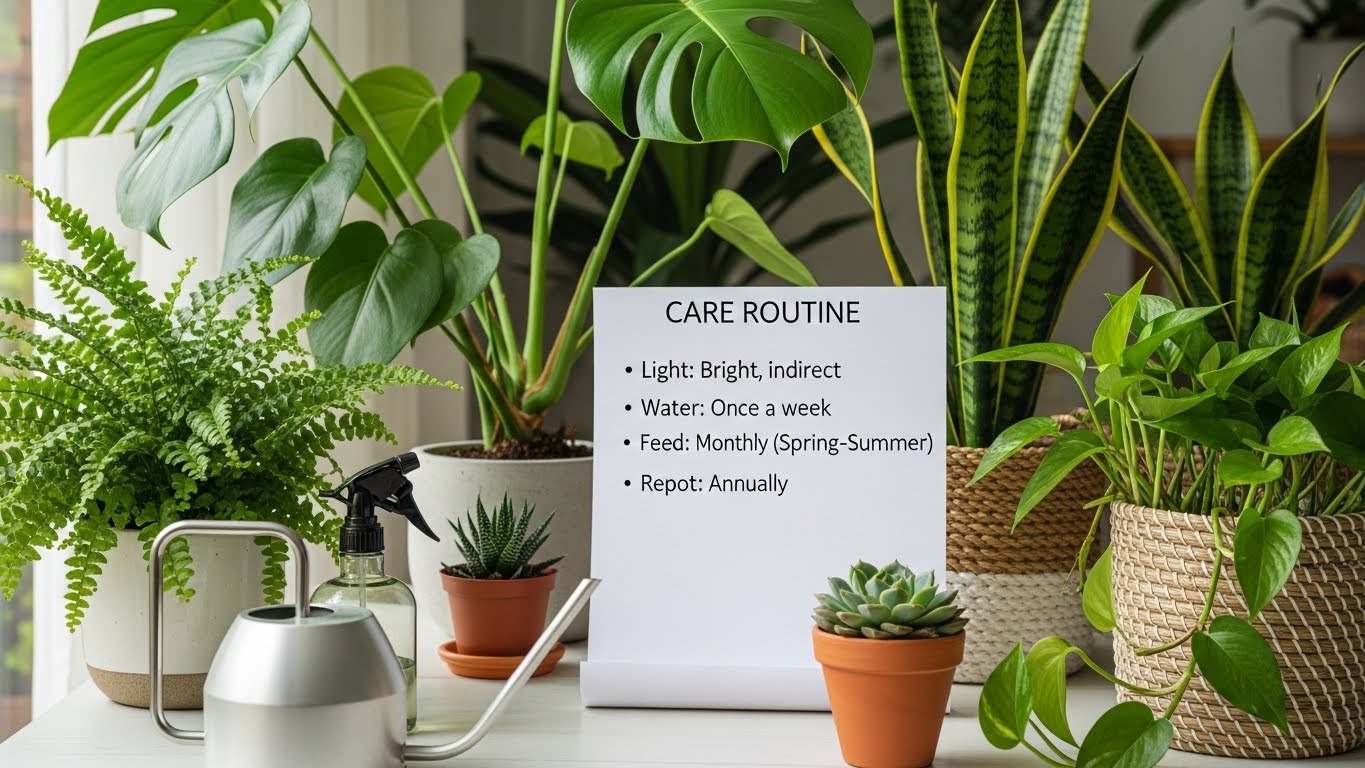
Yes, indoor plants absolutely need a routine to thrive! Just like us, they benefit from consistent care. Regular watering, appropriate light, and the right type of soil help them stay healthy and vibrant. You’ll want to check for signs like yellowing leaves or drooping, which often indicate they need attention. Plus, keeping track of when to fertilize and prune can make a big difference. If you’d like tips on building a great care routine, keep going!
Understanding Plant Needs
💡 Understanding how to fertilize your indoor plants can significantly enhance their growth and blooming potential.
➜ Master this approach
When you immerse yourself in the world of indoor plants, understanding their needs is essential for keeping them healthy and thriving. Each plant has its unique behavior, influenced by various environmental factors like light, temperature, and humidity. Pay attention to how your plants respond; are their leaves drooping or turning yellow? This could signal that they need more light or a change in temperature. Creating the right environment is key to nurturing them. For instance, some plants thrive in bright, indirect sunlight while others prefer low-light conditions. By observing their behavior and adjusting their surroundings, you’ll develop a deeper connection with your plants, ensuring they flourish under your care. Remember, happy plants equal a happy home!
The Role of Watering in Plant Care
Watering plays an essential role in keeping your indoor plants healthy and vibrant, as it provides them with the moisture they need to thrive. To achieve the best results, you should pay attention to watering frequency, which varies depending on your plant type and environment. Some plants prefer to dry out slightly between waterings, while others like to stay consistently moist.
You’ll want to guarantee good moisture retention in the soil by using high-quality potting mix and checking drainage. Always feel the soil with your fingers—if it’s dry an inch down, it’s time for a drink! Remember, overwatering can be just as harmful, so find that perfect balance to keep your leafy friends happy and flourishing.
Importance of Light Exposure
When it comes to indoor plants, light exposure is essential for their health and growth. You’ll want to keep an eye on how much light your plants get, since both the duration and quality of that light can make a big difference. Plus, understanding how seasonal changes affect light can help you create the perfect environment for your leafy friends!
Optimal Light Duration
Light plays an indispensable role in the health and growth of your indoor plants, so understanding the ideal light duration is crucial. Each plant has specific needs, and getting the light duration right will guarantee they thrive.
Plant Type | Ideal Light Duration | Light Intensity |
|---|---|---|
Succulents | 12-14 hours | Bright, indirect |
Ferns | 10-12 hours | Medium, filtered |
Snake Plants | 12-16 hours | Low to moderate |
Aim for consistency; offering the right amount of light each day will help your plants stay vibrant. Remember, overexposure can be just as harmful as too little light, so keep an eye on them to find that perfect balance!
Light Quality Matters
Just like humans need good food to stay healthy, indoor plants thrive on quality light! Think of light intensity and light spectrum as the essential vitamins for your leafy friends. Strong, bright light helps plants photosynthesize, turning sunlight into energy. But it’s not just about brightness; the spectrum matters too! Different wavelengths support various growth stages. For example, blue light encourages leafy growth, while red light promotes flowering. You wouldn’t feed your pet only one type of food, right? Similarly, your plants need a balance of light. So, consider their needs—choose the right spot in your home where they can soak up that quality light! Your plants will thank you with vibrant leaves and beautiful blooms.
Seasonal Light Changes
As the seasons change, so do the light conditions in your home, and this can have a big impact on your indoor plants. Understanding light exposure is key to keeping them healthy and happy. Here are some seasonal adjustments you might consider:
- Winter: With shorter days, move your plants closer to windows to maximize sunlight.
- Spring: As days grow longer, monitor your plants for signs of too much light, and rotate them if needed.
- Summer: Shield delicate leaves from harsh midday sun, perhaps using sheer curtains for filtered light.
Choosing the Right Soil
When you’re picking the right soil for your indoor plants, it’s essential to contemplate what each plant needs, since different types thrive in different conditions. Understanding soil types helps you meet their drainage needs and pH balance. Consider organic options and make use of soil amendments to improve moisture retention and aeration factors.
Here’s a quick guide to help you choose:
Soil Type | Texture Variations | Nutrient Content |
|---|---|---|
Potting Mix | Light & fluffy | High |
Cactus Mix | Coarse & gritty | Moderate |
Seed Starting Mix | Fine & soft | Low |
Nutrients and Fertilization Schedule
To keep your indoor plants thriving, understanding their nutrient needs and establishing a solid fertilization schedule is essential. Different plants require different fertilizer types, so knowing what your green friends need is key. Here’s a simple nutrient timing guide to help you:
- Spring: This is when your plants wake up! Use a balanced fertilizer to support new growth.
- Summer: As they soak up the sun, continue with a diluted fertilizer every 4-6 weeks to keep them energized.
- Fall/Winter: Most plants slow down, so cut back on fertilization. A light feeding every couple of months should suffice.
Pruning and Maintenance Routine
Pruning and maintenance are essential for keeping your indoor plants healthy and thriving. By regularly trimming back overgrown sections and following a seasonal checklist, you can guarantee your plants get the care they need. Watch for signs of overgrowth, like leggy stems or crowded leaves, so you can act quickly and keep your green friends looking their best!
Importance of Regular Pruning
Regularly trimming your indoor plants isn’t just about keeping them looking neat; it’s vital for their overall health and growth. By adopting effective pruning techniques, you can promote better air circulation and encourage new growth. Here are three key reasons why you should make pruning a part of your routine:
- Remove Dead Leaves: Snipping away dead or yellowing leaves helps prevent pests and diseases from taking hold.
- Shape Your Plants: Regular trimming keeps your plants looking balanced and encourages fuller, bushier growth.
- Encourage New Growth: Seasonal timing is important; pruning during the right season can stimulate fresh leaves and blooms.
Embrace pruning as a loving act for your plants, and watch them thrive like never before!
Seasonal Maintenance Checklist
As the seasons change, a well-thought-out maintenance checklist becomes your best friend in keeping indoor plants healthy and vibrant. Seasonal shifts affect your plants, and knowing how to care for them can make a world of difference. Here’s a simple checklist to guide you through each season:
Season | Tasks to Perform | Notes |
|---|---|---|
Spring | Prune dead leaves | Encourage new growth |
Summer | Check for pests | Keep plants hydrated |
Fall | Reduce watering frequency | Prepare for plant dormancy |
Signs of Overgrowth
💡 Watering is crucial for maintathisng a healthy routine for your indoor plants. Avoid common mistakes with our expert tips.
➜ Discover proven techniques
When you notice your indoor plants growing wildly, it might be time to step in and give them some much-needed attention. Recognizing the overgrowth indicators is essential for maintaining your plants’ health and happiness. Here are three signs to watch for:
- Leggy Growth: If your plant’s stems are stretching towards the light, it’s time to trim back those long, awkward branches.
- Crowded Leaves: Overlapping leaves can block sunlight and air circulation, leading to poor plant health.
- Yellowing Leaves: This could signal that your plant’s energy is being stretched too thin and needs a good prune.
Pest Control and Prevention
💡 Proper lighting is vital for the health of your indoor plants. Learn how to provide the best conditions to avoid common issues.
➜ Explore advanced methods
Even though indoor plants can brighten your space and improve air quality, pests can quickly turn your green oasis into a battleground. To keep your plants healthy, focus on pest identification and use organic treatments. Regular inspections help catch infestations early, while preventative measures like cleaning methods and humidity control can keep pests at bay. Consider pest-resistant plants and insect deterrents to further protect your leafy friends. If you notice any issues, use quarantine practices to isolate affected plants. Finally, encourage natural predators to create a balanced environment.
Action | Description |
|---|---|
Pest Identification | Spotting signs of pests |
Regular Inspections | Checking plants frequently |
Organic Treatments | Using natural solutions |
Cleaning Methods | Keeping leaves dust-free |
Humidity Control | Managing moisture levels |
Seasonal Changes and Care Adjustments
Indoor plants thrive on your care, but their needs can shift with the seasons, just like the weather outside. As you navigate these seasonal fluctuations, keep an eye on how your plants react. Here are three key adjustments you might consider:
- Light Exposure: In winter, sunlight can be scarce. Move your plants closer to windows for that extra warmth and brightness.
- Watering Routine: During summer, your plants might drink more, while in winter, they may enter plant dormancy and need less water.
- Humidity Levels: Dry indoor air in winter can stress your plants. Use a humidifier or mist them to keep them comfortable.
Repotting: When and Why
Repotting your plants can be a game-changer for their health and growth, but how do you know when it’s time? If you notice roots poking out of the bottom of the pot, or if your plant seems to be growing slower than usual, it might be time to give it a new home. In this section, we’ll explore the signs that signal it’s time to repot and the best practices to keep your plants thriving.
Signs for Repotting
Have you ever noticed your plant looking a bit cramped or unhappy? It might be time to reflect on repotting! Here are some signs you shouldn’t ignore:
- Root Bound: If roots are growing out of the drainage holes or circling the top of the soil, they’re cramped and need more space.
- Stunted Growth: When your plant’s growth slows down or stops altogether, it’s often a sign its roots can’t absorb nutrients effectively.
- Yellowing Leaves: If leaves are turning yellow or dropping off, it may indicate poor root health due to lack of space or nutrients.
Pay attention to these signs to determine the right repotting frequency, ensuring your plant thrives in the right environment!
Best Repotting Practices
Knowing when to repot your plant is essential for its health and happiness, so understanding the best practices can make a big difference. Generally, you should consider repotting every 1-2 years, depending on your plant’s growth. If you notice roots growing out of the drainage holes, that’s a clear sign!
When it comes to soil selection, choose a mix that caters to your plant’s needs—like a well-draining blend for succulents or a moisture-retaining mix for tropicals. Gently remove your plant from its old pot, loosen any tangled roots, and place it in fresh soil. This care and attention not only boost your plant’s growth but also strengthen your bond with it. Happy repotting!
Temperature and Humidity Considerations
When you create a cozy environment for your indoor plants, temperature and humidity play essential roles in their health and happiness. Keeping your plants comfortable is key, so consider these three factors:
- Temperature Fluctuations: Aim for a stable range, typically between 65°F and 75°F. Sudden changes can stress your plants.
- Humidity Levels: Most indoor plants thrive in humidity levels between 40-60%. If your home is dry, misting your plants or using a humidifier can help.
- Air Circulation: Good airflow prevents mold and diseases. Make sure your plants aren’t cramped together.
Signs Your Plant Needs Attention
Even the healthiest of plants can show signs of needing a little extra care, so it’s essential to keep an eye on them. Look out for these signals that your plant might need your attention:
Sign | What to Look For | Possible Causes |
|---|---|---|
Plant Drooping | Leaves hanging down | Lack of water |
Leaf Discoloration | Yellowing leaves or wilting edges | Nutrient deficiency |
Stunted Growth | No new growth or smaller leaves | Root rot or pests |
Soil Crusting | Hard, dry top layer of soil | Overwatering or dryness |
If you notice leaf drop or pest infestation, don’t panic! Addressing these issues promptly can help your plant thrive again. Remember, a little love goes a long way!
Creating a Care Calendar
Creating a care calendar is a fantastic way to keep your indoor plants thriving and happy, ensuring you never miss an important task. A well-structured calendar can help you enjoy the routine benefits of plant care, making it easier to nurture your leafy friends. Here’s how to get started:
- Watering Schedule: Note how often each plant needs water. Some love it weekly, while others prefer bi-weekly sips.
- Fertilizing Dates: Mark when to feed your plants. Most enjoy a treat every month or so during their growing season.
- Pruning Reminders: Include reminders for trimming dead leaves or branches, keeping your plants healthy and vibrant.
With your care calendar, you’ll cultivate a loving bond with your plants, ensuring they flourish beautifully!
Benefits of a Consistent Routine
A consistent routine for your indoor plants can make all the difference in their health and happiness. When you establish a care routine, you’re not just watering them; you’re nurturing their growth. Regular watering, feeding, and pruning help your plants thrive, creating a vibrant indoor atmosphere.
A consistent care routine nurtures your indoor plants, fostering growth and creating a lively atmosphere in your home.
Benefits include:
- Enhanced Plant Growth: With a predictable schedule, your plants will receive the right nutrients and moisture, promoting robust growth.
- Stress Reduction: You’ll feel more connected to your plants, knowing you’re giving them the care they need.
- Early Problem Detection: A consistent routine lets you spot any issues, like pests or yellowing leaves, before they escalate.
Conclusion
To sum up, establishing a routine for your indoor plants can make all the difference in their health and happiness. Just like you might schedule your homework or sports practice, your plants thrive on consistency too! For instance, imagine a student named Jamie who started watering her peace lily every Wednesday. Within weeks, the plant blossomed beautifully, showcasing vibrant green leaves. So, create that care calendar, and watch your indoor garden flourish! Your plants will thank you!
💡 If your indoor plants are showing signs of distress, it’s essential to understand the causes and solutions.
➜ See how to implement this


