
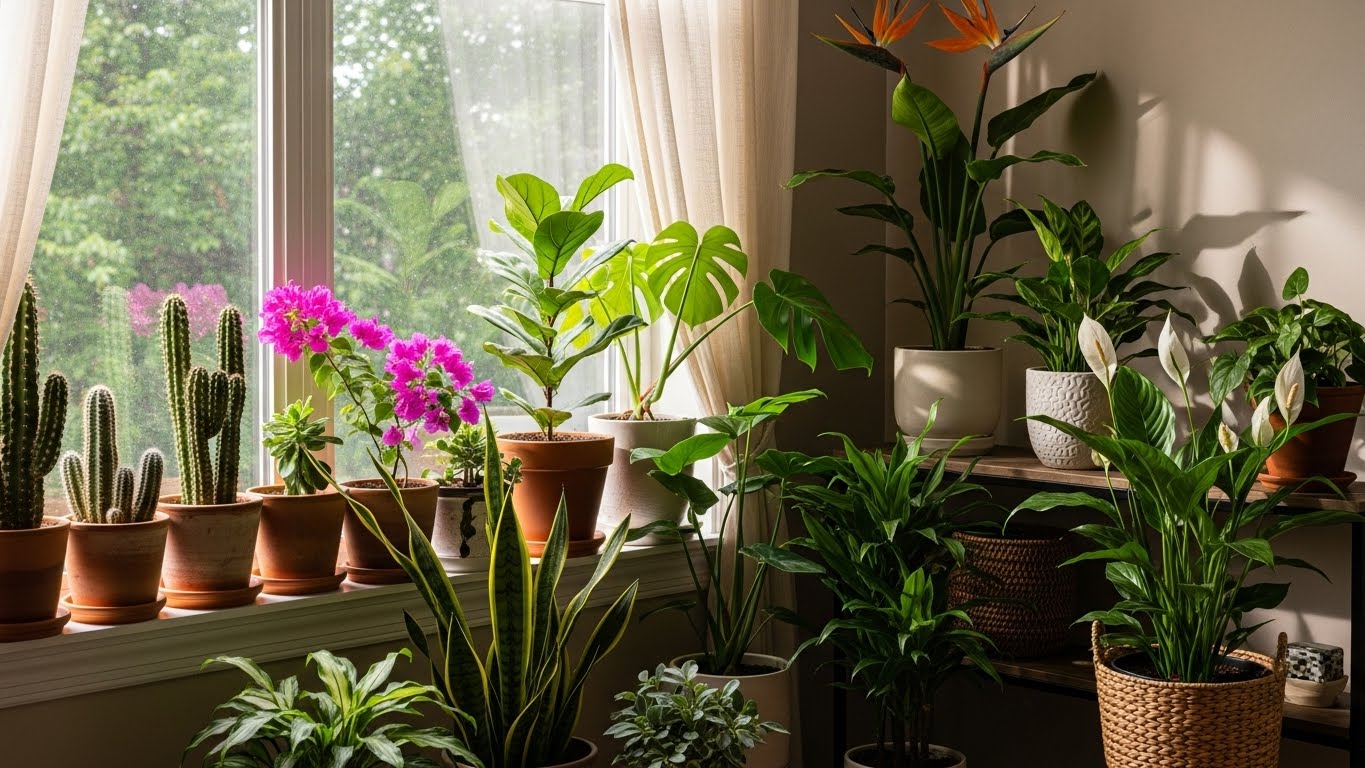
To group your plants by light needs, first identify three key light zones: bright, medium, and low light. Place sun-loving plants like succulents in bright spots with direct sunlight, while medium light plants, like pothos, thrive in indirect sunlight. For low-light areas, go for hardy plants, such as snake plants. Don’t forget to check your space throughout the day for sun direction, ensuring each plant gets just the right amount of light. There’s more to explore about keeping your indoor garden flourishing!
Understanding Light Requirements for Indoor Plants
💡 Understanding the light needs of your plants is crucial for their health. This article provides insights into the best light conditions for specific plants.
➜ Discover proven techniques
When it comes to keeping indoor plants happy and healthy, understanding their light requirements is key. You’ll want to observe the light intensity in your home, as it directly influences your plant’s growth. For instance, placing your leafy friends near a window can provide the bright light they crave, while darker corners may suit low-light plants better. Think about where you position your plants; this can make a world of difference. By grouping plants according to their specific light needs, you create a thriving environment. Remember, some plants flourish in direct sunlight, while others prefer gentle, filtered light. So, take a moment to assess your home’s light conditions, and watch your collection thrive with thoughtful plant placement!
Identifying Bright Light, Medium Light, and Low Light Conditions
To identify the right light conditions for your plants, you’ll need to pay attention to the specifics of their environment. Understanding whether your space offers bright light, medium light, or low light can make all the difference. Here’s a quick breakdown to help you:
Light Type | Description | Plant Examples |
|---|---|---|
Bright Light | Direct sunlight for 6+ hours | Succulents, Cacti |
Medium Light | Indirect sunlight for 4-6 hours | Spider Plant, Pothos |
Low Light | Minimal light, less than 4 hours | Snake Plant, ZZ Plant |
Assessing Your Space: Where to Place Your Plants
After understanding the light needs of your plants, the next step is figuring out where to place them in your home or garden. Start by evaluating your space and observing the light direction. Notice which areas receive direct sunlight, which spots are shaded, and where the light shifts throughout the day. For ideal plant placement, group your plants based on their light requirements. Place bright light lovers near south-facing windows, while medium light plants can thrive in east or west-facing spots. Low light plants appreciate areas that stay mostly shaded. By considering these factors, you’ll create a happy environment for your plants, helping them flourish while adding beauty to your space. Happy planting!
💡 Knowing how to assess light exposure in your home can significantly impact your plant care strategy. This guide will help you understand your space better.
➜ Get the step-by-step guide
Choosing the Right Plants for Each Light Zone
Choosing the right plants for each light zone can feel like a fun puzzle, especially when you know what to look for. Start by identifying your light zones: bright, medium, and low light. For bright spots, consider light sensitive plants like succulents, which thrive in the sun. In medium light, opt for plant groupings such as pothos and peace lilies, which can handle some shade while still enjoying brightness. For low-light areas, choose hardy options like snake plants or ZZ plants, perfect for darker corners. Remember, the key is pairing each plant with its ideal light zone, ensuring they flourish together. This way, you’ll create a vibrant, harmonious indoor garden that thrives in every nook!
Tips for Maintaining Healthy Light Conditions
Maintaining healthy light conditions for your plants can be a rewarding challenge, especially when you see them thrive under your care. To keep your green friends happy, focus on light intensity and light duration. Here are a few tips:
Light Intensity | Light Duration |
|---|---|
Bright, direct light | 10-14 hours daily |
Moderate, indirect light | 6-8 hours daily |
Low light | 4-6 hours daily |
Always observe your plants! If they’re stretching towards the light, they may need more. Conversely, if their leaves are scorched, they might be getting too much. Adjust their positions gradually, and soon you’ll find the perfect balance for every plant. Happy gardening!
Conclusion
By grouping your plants according to their light needs, you’re setting them up for success and creating a vibrant indoor garden. Did you know that about 90% of houseplants struggle due to improper lighting? That’s a huge number! By following these tips and understanding your space better, you can keep your plants thriving and happy. So, get ready to enjoy a flourishing green sanctuary that brings joy and life into your home!
💡 If you’re looking to enhance the beauty of your indoor plants, understanding their light needs is key. This article offers tips on how to encourage blooming.
➜ See how to implement this


