
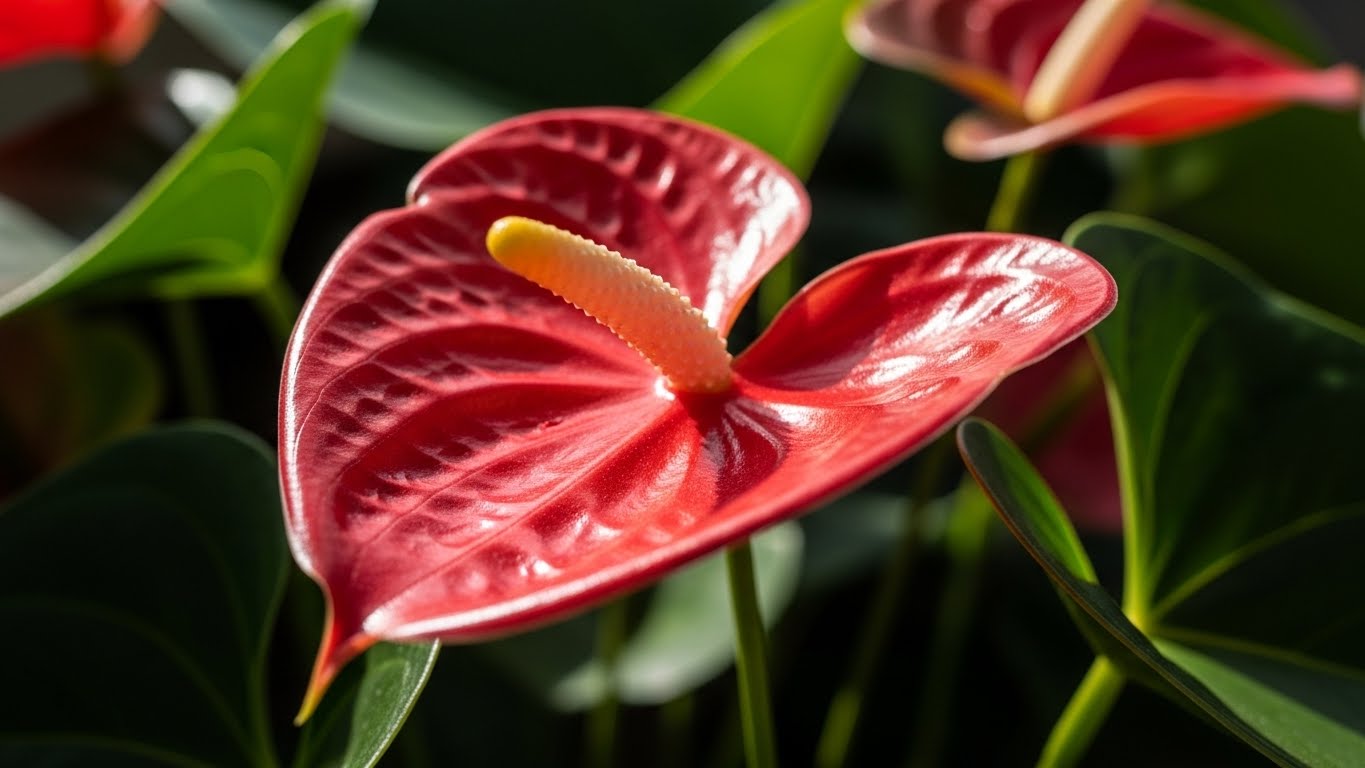
To make your anthuriums bloom longer indoors, start by placing them in bright, indirect light, avoiding harsh sunlight. Keep humidity around 50% to 70% by misting or using pebble trays. Water when the top inch of soil feels dry, and use filtered water to avoid chemicals. Fertilize every two weeks with a balanced fertilizer to boost blooming. Don’t forget to prune spent flowers regularly to encourage new growth. Keep going to discover more tips!
Key Takeaways
💡 To ensure your Anthuriums bloom longer, proper fertilization is key.
➜ Discover proven techniques
- Provide bright, indirect light to enhance blooming and prevent leaf scorch from direct sunlight exposure.
- Maintain humidity levels between 50% to 70% to encourage vibrant blooms and lush foliage.
- Use a high-phosphorus fertilizer every two weeks during the growing season to promote flowering.
- Regularly deadhead spent blooms to encourage new flower growth without competition.
- Prune yellowing or wilting leaves to redirect energy towards producing more flowers.
Understanding Anthurium Care Requirements
When you decide to bring an anthurium into your home, understanding its care requirements is key to helping it thrive and bloom. These beautiful plants love bright, indirect light, so placing them near a window is perfect. Just be careful—direct sunlight can scorch their leaves! When it comes to potting mix, choose a well-draining blend, like one that contains peat moss and perlite. This mix keeps their roots happy and prevents waterlogging, which can lead to root rot. Remember, anthuriums prefer a humid environment, so misting the leaves or placing them on a pebble tray can work wonders. With the right light and potting mix, you’ll create a cozy home for your stunning anthurium, setting the stage for beautiful blooms. Additionally, maintaining high humidity levels is crucial for promoting lush foliage and vibrant blooms.
Choosing the Right Location for Your Anthurium
Choosing the right spot for your anthurium can make all the difference in how well it thrives and blooms. Start by finding a location with bright, indirect light exposure; too much direct sunlight can scorch those beautiful leaves. A spot near a window with sheer curtains often works wonders. Pay attention to temperature preferences as well—your anthurium loves warmth, ideally between 65°F to 80°F (18°C to 27°C). Avoid cold drafts and sudden temperature changes, as they can stress your plant. Consider placing it in a cozy corner of your living room or a well-lit bathroom, where humidity levels are usually higher. With the right location, your anthurium will reward you with stunning blooms, bringing joy to your space!
Optimal Watering Practices for Longer Blooms
To keep your anthurium blooming beautifully, mastering the art of watering is essential. You want to guarantee your plant thrives, so here are some key practices to follow:
- Check Water Quality: Use filtered or distilled water whenever possible. Tap water can contain chemicals that might harm your plant’s delicate roots.
- Mind Pot Drainage: Ascertain your pot has proper drainage holes. This prevents water from pooling, which can lead to root rot.
- Watering Schedule: Water your anthurium when the top inch of soil feels dry. This helps maintain moisture without over-watering.
Fertilizing Techniques to Encourage Flowering
To encourage your anthuriums to bloom, you’ll need to focus on the right fertilizing techniques. Choosing the ideal fertilizer, knowing how often to apply it, and understanding the importance of nutrient balance are key steps in this process. With the right approach, you’ll boost your plant’s health and encourage those stunning flowers to flourish indoors!
Optimal Fertilizer Choice
When you want your anthuriums to burst into beautiful blooms, picking the right fertilizer is essential. The right fertilizer types can make all the difference, especially when you focus on the nutrient ratios. Here’s how to choose the best one:
- Balanced Fertilizer: Look for a formula with equal parts nitrogen, phosphorus, and potassium (like 20-20-20). This promotes overall plant health and flowering.
- High-Phosphorus Fertilizer: A blend higher in phosphorus (like 15-30-15) encourages blooming. It’s perfect when you want those gorgeous flowers to shine.
- Organic Options: If you prefer natural, try fish emulsion or compost. They provide essential nutrients and improve soil health.
With these choices, you’ll set your anthuriums up for success and enjoy their stunning blooms longer!
Application Frequency Guidelines
After selecting the right fertilizer, knowing how often to apply it can really boost your anthuriums’ chances of blooming. Proper application timing helps guarantee maximum nutrient absorption, keeping your plants healthy and vibrant. Here’s a quick guide for you:
Frequency | Best Timing |
|---|---|
Every 2 weeks | During growing season |
Monthly | During dormancy |
After repotting | As needed, post-application |
Nutrient Balance Importance
Understanding the importance of nutrient balance is essential for encouraging your anthuriums to bloom beautifully indoors. A well-fed plant thrives, while nutrient deficiencies can lead to lackluster growth and fewer flowers. To keep your anthuriums flourishing, consider these tips:
💡 Repotting your Anthurium correctly can significantly impact its blooming potential.
➜ Get the step-by-step guide
- Choose the Right Fertilizer: Use a balanced fertilizer with equal parts nitrogen, phosphorus, and potassium. This mix helps support overall health and flowering.
- Monitor Nutrient Sources: Incorporate organic options like compost or worm castings to enrich the soil naturally.
- Watch for Deficiencies: Keep an eye out for signs of nutrient deficiencies, like yellowing leaves, and adjust your fertilizing schedule accordingly.
With the right balance, your anthuriums will reward you with vibrant blooms and lush foliage!
Maintaining Humidity Levels for Anthuriums
💡 Understanding and preventing root rot is essential for maintathisng healthy Anthuriums that bloom beautifully.
➜ Master this approach
To keep your anthuriums thriving indoors, maintaining the right humidity levels is key. Ideally, these plants love humidity around 60-80%, so you’ll want to use some effective techniques to create that perfect environment. By monitoring humidity levels regularly, you can guarantee your anthuriums stay healthy and bloom beautifully!
Ideal Humidity Range
When it comes to keeping your anthuriums blooming indoors, maintaining the right humidity levels is essential for their growth and health. Ideally, you want to keep humidity between 50% and 70%. Too low, and your beautiful plants may struggle; too high, and you risk mold or pests. To measure humidity, you can use a hygrometer to track levels accurately. Here are some humidity sources to take into account:
- Misting: Lightly mist your anthuriums regularly to boost moisture.
- Pebble trays: Place pots on trays filled with water and pebbles to create a humid microclimate.
- Humidifiers: Using a humidifier can help maintain consistent humidity levels in your space.
Humidity-Enhancing Techniques
Maintaining the right humidity is just the beginning; there are several effective techniques you can use to enhance humidity levels for your anthuriums and keep them thriving. One great method is employing misting techniques. Lightly misting your plants with water a few times a week can create a humid microclimate that they’ll love. Just be careful not to overdo it, as excess moisture can lead to mold.
Another fantastic option is using pebble trays. Fill a shallow tray with pebbles and water, then place your anthurium pot on top. As the water evaporates, it’ll raise the humidity around your plant. By incorporating these simple strategies, you’ll provide the ideal environment for your anthuriums to flourish and bloom beautifully indoors.
Monitoring Humidity Levels
Keeping an eye on humidity levels is essential for helping your anthuriums thrive indoors, and you can easily do this with a few handy tools. Accurate humidity measurement is key to ensuring your plants get the moisture they crave. Here are three great ways to monitor humidity levels:
- Hygrometer: Invest in a digital hygrometer to measure humidity accurately. It gives you real-time readings, so you know exactly when to act.
- Humidity Sources: Consider using a humidifier, pebble trays, or even grouping plants together to create a mini humid environment.
- Regular Checks: Make it a habit to check humidity levels daily, especially during dry seasons, to keep your anthuriums happy and blooming longer.
Pruning and Deadheading for Continuous Blooms
To guarantee your anthuriums keep blooming beautifully indoors, it’s essential to embrace the art of pruning and deadheading. Start by using effective pruning techniques, snipping off any yellowing or wilting leaves to promote healthy growth. This helps your plant focus its energy on producing those stunning flowers you adore. For deadheading methods, gently remove spent blooms at their base, allowing new buds to emerge without competition. Remember, timing is key—prune after flowering, and deadhead regularly to encourage a continuous display of vibrant colors. By incorporating these simple practices into your routine, you’ll make certain your anthuriums remain lively and flourishing, filling your space with beauty and joy all year round. Happy gardening!
Identifying and Managing Pests and Diseases
While you’re busy pruning and deadheading your anthuriums to encourage those vibrant blooms, it’s also important to keep an eye out for pests and diseases that could disrupt their beauty. Effective pest identification and disease prevention are key to maintaining your plant’s health. Here are three common issues to watch for:
Pruning your anthuriums is vital, but don’t forget to monitor for pests and diseases that threaten their health.
- Spider Mites: These tiny pests love to hide on the undersides of leaves. Look for webbing or yellow spots.
- Mealybugs: These fluffy little critters can suck the life out of your plant. Spot them clustered in leaf joints.
- Root Rot: Overwatering can lead to this. Keep an eye out for wilting, yellowing leaves.
Conclusion
So, if you want your anthuriums to bloom longer indoors, just remember that they’re not divas—they don’t need a red carpet or a fan blowing in their faces! Instead, give them the right light, water, and nutrients, and they’ll reward you with stunning flowers. With a little care, you can enjoy their vibrant blooms for weeks, proving that with the right attention, even the most demanding plants can be satisfied without a dramatic flair!
💡 Providing the right light conditions is vital for your Anthuriums to thrive and produce blooms.
➜ See how to implement this


