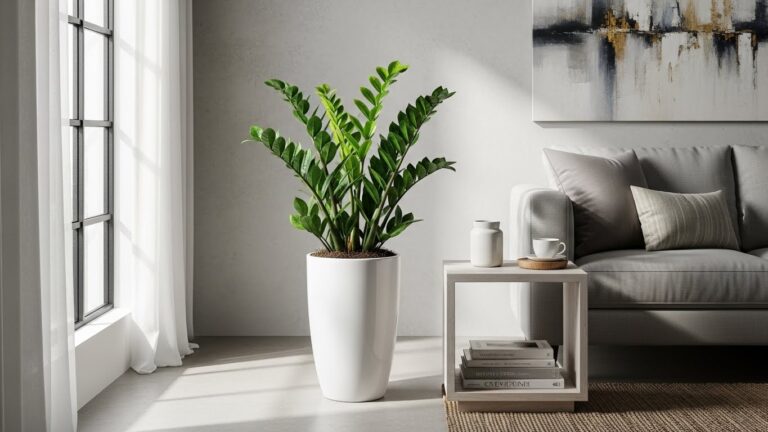
When deciding between the ZZ plant and snake plant, you’ll find both are easy to grow, but they have different needs. The ZZ plant thrives in low light and needs watering every two to three weeks. Meanwhile, the snake plant prefers bright, indirect light and requires water about every two weeks. Both are pet-safe if placed correctly, and avoiding overwatering is key. If you want to know more about their care, keep exploring!
Key Takeaways
- The ZZ plant thrives in low to moderate light, making it easier to place in dim areas compared to the snake plant’s preference for bright, indirect sunlight.
- Both plants require minimal watering, but the ZZ plant is slightly more forgiving, needing water every two to three weeks versus the snake plant’s every two weeks.
- ZZ plants have a higher resistance to pests due to their waxy leaves, making them easier to maintain than snake plants, which can still attract pests.
- Both plants are low-maintenance, but the ZZ plant is less prone to issues from improper lighting and overwatering, ideal for beginners.
- Propagation for both plants is straightforward, but ZZ plants may be easier as they require splitting rhizomes rather than cutting and rooting sections.
Overview of the ZZ Plant
The ZZ plant, known scientifically as Zamioculcas zamiifolia, is a popular houseplant that shines for its striking appearance and low maintenance needs. You’ll love how forgiving this plant is; it can thrive in low light and only needs watering every couple of weeks. The ZZ plant benefits include air-purifying qualities, making it a great choice for your home. However, it’s essential to be aware of some ZZ plant drawbacks. Its leaves can be toxic to pets, so keep it out of reach if you have furry friends. Despite this, the ZZ plant remains a favorite due to its resilience and unique, glossy leaves. Regular assessment of conditions is essential for successful plant health, making it an excellent choice for anyone looking to add a touch of green to their space effortlessly.
Overview of the Snake Plant
With its tall, sword-like leaves reaching for the sky, the snake plant, or Sansevieria trifasciata, is a striking addition to any indoor space. Native to West Africa, this hardy plant thrives in a variety of conditions. Its origins make it resilient and adaptable, perfect for beginners. You’ll find several snake plant varieties, each boasting unique leaf patterns and colors, adding even more charm to your home.
Snake Plant Variety | Description |
|---|---|
Sansevieria trifasciata | Classic green leaves with yellow edges |
Sansevieria cylindrica | Round, thick leaves like a cylinder |
Sansevieria laurentii | Dark green leaves with light stripes |
Sansevieria moonshine | Light green leaves with a silvery hue |
Sansevieria Hahnii | Compact, rosette-shaped leaves |
Embrace the beauty of snake plants and enjoy their easygoing nature!
Appearance and Aesthetic Appeal
When you glance at a snake plant, it’s hard not to be captivated by its striking appearance. The tall, upright leaves have a unique shape, resembling sharp swords that reach for the sky. You’ll notice the incredible color variations, too; some leaves boast rich greens with yellow or white edges, while others exhibit deep, almost black hues. This diversity adds depth to your space, making it visually appealing. The snake plant’s sleek, modern look fits perfectly in any room, from cozy corners to bright offices. Whether you prefer a minimalist aesthetic or a touch of boldness, this plant effortlessly enhances your home’s vibe. It’s not just a plant; it’s a conversation starter, showcasing your style and love for nature.
Light Requirements
Both the ZZ plant and snake plant have unique light requirements that make them popular choices for indoor gardening. The ZZ plant thrives in low to moderate light intensity, so it’s perfect for those dim corners of your home. It can even handle fluorescent lights, which is a bonus! On the other hand, the snake plant loves bright, indirect sunlight but can tolerate lower light conditions, too. When it comes to light duration, both plants are quite forgiving; they don’t need all-day sun. Just a few hours of good light each day will keep them happy. So, whether you have a sun-soaked window or a cozy, shaded spot, you can enjoy the beauty of these resilient plants!
Watering Needs
Since both the ZZ plant and snake plant have unique watering needs, understanding how to care for them can make all the difference in keeping them healthy and thriving. The ZZ plant thrives on less water, so you’ll want to water it every two to three weeks, allowing the soil to dry out between waterings. In contrast, the snake plant prefers a slightly more frequent watering schedule, about every two weeks, but it also likes to dry out. When it comes to water quality, using filtered or distilled water can help maintain the plants’ health, as tap water may contain chemicals that can harm them. By paying attention to watering frequency and quality, you’ll nurture your plants into beautiful companions!
Soil Preferences
Selecting the right soil for your ZZ plant or snake plant can really boost their growth and keep them looking vibrant. Both plants thrive in a well-draining soil composition, which is essential to prevent root rot. A mix of potting soil, perlite, and sand works wonders, ensuring that air circulates around the roots.
When you think about their drainage needs, remember that while both plants can tolerate some neglect, you don’t want them sitting in waterlogged soil. Use a pot with drainage holes to help excess water escape. This combination of soil and proper drainage will create a happy home for your plants, allowing them to flourish and bring life into your space. Happy planting!
Temperature and Humidity Tolerance
Have you ever wondered what temperatures and humidity levels are best for your ZZ plant and snake plant? Both of these green friends are champions of climate adaptability. The ZZ plant thrives in temperatures between 60°F and 75°F, while the snake plant enjoys a slightly wider range, from 50°F to 85°F. When it comes to humidity, both plants love a humidity range of 30% to 50%. They can handle drier air, so don’t stress if your home isn’t a tropical paradise. In fact, they thrive in average household conditions! Just keep them away from extreme cold or heat, and they’ll flourish. Remember, giving them a cozy environment is key to their happiness and health!
Growth Rate and Size
When it comes to growth rate and size, the ZZ plant and snake plant show some interesting differences that can influence your choice. You’ll notice that the snake plant tends to grow faster and can reach a taller height compared to the ZZ plant, which is generally more compact. Understanding these growth patterns is essential, as it helps you decide which plant fits best in your space and how much maintenance you’ll need to keep them thriving.
Growth Rate Comparison
While both the ZZ plant and the snake plant are popular choices for home gardens and indoor spaces, their growth rates and sizes can differ considerably. The ZZ plant tends to grow slowly, thriving in various growth conditions, making it perfect for beginners who appreciate a laid-back approach. In contrast, snake plants often exhibit faster growth patterns, especially when placed in ideal light and warmth. They can quickly fill a space, bringing a vibrant touch to your home. If you’re looking for a plant that offers a steady presence, the ZZ plant is your friend. However, if you want a bit more excitement and rapid growth, the snake plant might just be your new best buddy!
Mature Size Differences
Both the ZZ plant and the snake plant can grow to impressive sizes, but they do so at different rates and with unique characteristics. A mature ZZ can reach about 2 to 3 feet tall, but its growth is slow and steady, which means you’ll have to be patient. In contrast, the mature snake can grow even taller, often exceeding 3 feet and sometimes reaching up to 4 feet in ideal conditions. You’ll notice the snake plant’s leaves are tall and upright, creating a striking vertical presence. While both plants are beautiful, if you’re looking for quicker growth, the mature snake might be your go-to. However, if you prefer a more gradual journey, the mature ZZ will be your faithful companion.
Maintenance Requirements
Caring for your plants is just as important as choosing the right ones, and understanding their maintenance requirements can make all the difference. Both ZZ plants and Snake plants thrive with minimal care, but knowing a few tips can help them flourish.
Plant Type | Pruning Techniques |
|---|---|
ZZ Plant | Trim yellow leaves as needed |
Snake Plant | Remove old leaves to encourage growth |
For fertilization schedules, both plants need a boost during the growing season. A balanced liquid fertilizer every month works wonders. With these simple maintenance tips, you can guarantee your plants stay healthy and vibrant, adding beauty to your space. Enjoy the process; it’s a rewarding journey!
Pest and Disease Resistance
When you choose to bring a ZZ plant or a snake plant into your home, you’re not just picking a pretty decoration; you’re also selecting a resilient companion. Both of these plants are champions when it comes to pest resistance and disease resistance. ZZ plants, with their waxy leaves, naturally deter pests like spider mites and mealybugs. Snake plants, on the other hand, are tough cookies that can withstand common houseplant diseases, making them ideal for beginners. You’ll find that these hardy plants can thrive in various conditions, allowing you to enjoy their beauty without constant worry. Whichever you choose, you’re welcoming a low-maintenance friend that can stand up to life’s little challenges, giving you peace of mind in your plant parenting journey.
Propagation Methods
If you’re keen to expand your plant collection, propagating a ZZ plant or a snake plant is both fun and straightforward! You’ll find several effective propagation techniques for both plants, especially during spring or summer, which is the best propagation timing. Here’s how you can do it:
- ZZ Plant: Split the rhizomes and plant them in moist soil.
- Snake Plant: Cut healthy leaves into sections, let them callous, and then plant them in soil.
- Water Propagation: Both plants can be rooted in water before transferring to soil!
Whichever method you choose, just remember to be patient; you’ll soon have new green friends to cherish! Enjoy the process and watch your little plants thrive!
Toxicity to Pets and Humans
When choosing between a ZZ plant and a snake plant, considering their toxicity levels is vital, especially if you have pets or young children around. Both plants can cause symptoms if ingested, so it’s essential to know what to watch out for. Luckily, there are safe alternatives that can brighten your space without the worry of harmful effects!
Plant Toxicity Levels
Both the ZZ plant and snake plant are popular choices for indoor gardening, but it’s important to know how they affect your pets and family. When considering plant safety, you’ll want to keep in mind the potential risks these plants pose. Here’s a quick look at their toxicity levels:
- ZZ Plant: Mildly toxic to pets and humans if ingested.
- Snake Plant: Also mildly toxic, especially to pets.
- Pet Precautions: Keep both plants out of reach of curious paws.
Symptoms of Ingestion
Understanding the symptoms of ingestion is essential for keeping your pets and family safe around the ZZ plant and snake plant. Both of these plants can cause mild to moderate plant toxicity, so it’s vital to recognize the signs early. If you or your pet accidentally munch on a leaf, watch for ingestion symptoms like drooling, vomiting, or stomach upset. You might notice your furry friend acting lethargic or having difficulty swallowing. In humans, these symptoms can also include irritation in the mouth or throat. If you observe any of these signs, it’s best to consult a doctor or veterinarian right away. Staying informed helps you enjoy your plants while protecting your loved ones from potential harm.
Safe Alternatives Available
While ZZ plants and snake plants can brighten up your home, it’s important to know there are plenty of safe alternatives that won’t pose a threat to your pets or family. You deserve to fill your space with beautiful greenery without worry. Here are some fantastic non-toxic alternatives:
- Spider Plant: Easy to care for, they thrive in various light conditions and produce baby plants!
- Boston Fern: Lush and vibrant, they’re perfect for hanging baskets, adding a lovely touch to your home.
- Bamboo Palm: This palm not only purifies the air but also brings a tropical vibe to your space.
These safe indoor plants are perfect for creating a cozy atmosphere while keeping your loved ones safe. Enjoy your green oasis!
Common Care Mistakes
When caring for your ZZ plant or snake plant, it’s easy to make some common mistakes that can lead to unhappy, unhealthy greenery. One major issue is overwatering; both plants prefer drier conditions, and too much water can cause root rot. Make sure to let the soil dry out completely between watering sessions. Another common pitfall is lighting mistakes. While these plants can adapt to low light, they thrive in bright, indirect sunlight. If you place them in too dark a spot, you’ll notice stunted growth or yellowing leaves. Remember, finding the right balance is key. By avoiding these overwatering issues and lighting mistakes, you’ll be on your way to happy, thriving plants that brighten up your space!
Ideal Locations in Your Home
Finding the perfect spot for your ZZ plant or snake plant can make all the difference in how well they thrive in your home. Both of these beauties prefer bright, indirect light but can tolerate lower lighting conditions. Here are some ideal room placements:
- Living Room: A bright corner with filtered sunlight works wonders.
- Bathroom: The humidity here can keep them happy, especially snake plants!
- Home Office: Set them on your desk to boost your productivity.
Make sure to avoid harsh direct sunlight, as it can scorch their leaves. With the right room placement and ideal lighting, your plants will flourish, bringing life and energy to your space. Enjoy your green companions!
Final Thoughts on Ease of Care
Caring for your ZZ plant and snake plant is a breeze, making them fantastic choices for both novice and seasoned plant parents. These resilient beauties thrive with minimal care, giving you more time to enjoy their lush greenery. For simple care routines, remember to water less than you think; both plants prefer to dry out between waterings.
For beginner tips, place them in indirect light and watch them flourish! If you’re looking for an easy way to beautify your space, you can’t go wrong with these plants. With just a little attention, you’ll see how effortless it is to nurture them. So go ahead, embrace your green thumb, and let your ZZ and snake plants thrive!
Conclusion
In the epic showdown of plant parenting, ZZ and snake plants are like the cool kids in school—both easy to care for, but with their unique flair. If you want a plant that thrives on neglect, the ZZ plant’s your go-to. But if you love a stylish, air-purifying companion, the snake plant’s got your back. So, whether you’re a seasoned plant whisperer or a total newbie, you can’t go wrong with either green friend!