The Enduring Allure of the Zanzibar Gem
The Zamioculcas zamiifolia, known by a host of evocative names including the Zanzibar Gem, Eternity Plant, and simply the ZZ Plant, has cemented its status as the paragon of low-maintenance houseplants. Its appeal lies in a rare combination of sculptural beauty and near-invincible resilience, making it an ideal botanical companion for beginners, frequent travelers, and anyone looking to greenify spaces with limited natural light, such as offices and entryways. The plant’s glossy, architectural foliage provides a touch of modern elegance with minimal effort, thriving on a level of neglect that would spell doom for more demanding species.
This remarkable hardiness is not an accident of cultivation but a direct inheritance from its evolutionary past. Native to a wide swath of East Africa, from Kenya down to South Africa, the ZZ plant’s natural habitat consists of seasonally dry grasslands, rocky forest understories, and riverbanks. These environments are defined by dramatic fluctuations between periods of intense rain and prolonged drought. To survive, the plant evolved a sophisticated set of adaptations for water storage and conservation. Understanding this origin story is the fundamental key to mastering its care; the goal is not to coddle the plant but to replicate the conditions it was built to expect—specifically, the cycle of a thorough drenching followed by a significant dry spell.
First described botanically as Caladium zamiifolium in 1829, the plant was later reassigned and formally named Zamioculcas zamiifolia in 1905. Its name reflects a visual similarity to the ancient cycad genus Zamia. Despite its long botanical history, its global popularity as a houseplant is a relatively recent phenomenon, with Dutch nurseries initiating large-scale commercial propagation around 1996. This rapid ascent from botanical curiosity to interior design staple is a testament to its unique ability to thrive where other plants falter.
Anatomy of a Survivor: Understanding the ZZ Plant’s Secrets
The ZZ plant’s resilience is encoded in its unique anatomy, which functions as a highly efficient, integrated water-management system. The striking upright “branches” are not stems but pinnately compound leaves, each reaching 40 to 60 cm in length and comprised of 6 to 8 pairs of waxy, deep green leaflets. These leaflets, along with their swollen, succulent petioles (leaf stalks), are themselves water reservoirs, with leaves containing up to 91% water.
The true powerhouse of the plant’s survival strategy, however, lies hidden beneath the soil. Here, it develops stout, potato-like underground rhizomes. These are not true roots but modified subterranean stems that serve as the plant’s primary storage organs for water and nutrients. This adaptation allows the plant to endure long periods of drought by entering a state of dormancy, shedding its leaves if necessary and drawing upon its internal reserves until rainfall resumes. This incredible storage capacity is why a ZZ plant can survive for weeks, and sometimes months, without water. This very strength, however, is also the source of its primary vulnerability in a domestic setting. The rhizomes are perfectly adapted for dry conditions but have no defense against the anaerobic environment created by constantly saturated soil, making them highly susceptible to rot.
The Core Principles of ZZ Plant Care
Successful ZZ plant care hinges on four interconnected principles: light, water, soil, and atmosphere. Mastering these fundamentals involves understanding that a change in one factor directly impacts the others, requiring a holistic approach rather than a rigid schedule.
Light: Finding the Sweet Spot
The ZZ plant thrives in a range of low to medium bright, indirect light, roughly corresponding to 50–500 foot-candles. While it is famously tolerant of low-light conditions, it will exhibit faster and more robust growth when provided with brighter light. Ideal placement is often near a north- or east-facing window, which provides gentle morning light. It can also be situated near south- or west-facing windows if protected from harsh rays by a sheer curtain. Its ability to grow well under standard fluorescent lighting makes it a premier choice for office environments. The one absolute rule is to avoid prolonged, intense, direct sunlight, which will scorch the leaves and cause permanent burn damage. For more ideas on plants that flourish in similar conditions, explore our guide to [/types/low-light/].
Water: The Golden Rule of “Drenches Between Droughts”
The single most critical aspect of Zamioculcas care is watering. The cardinal rule is to allow the soil to dry out completely between waterings. This typically translates to a watering interval of 2 to 4 weeks, and often longer, especially in lower light conditions. The best method to determine need is not by a calendar but by physical assessment; insert a finger or a wooden chopstick deep into the soil. If it comes out clean and dry, it is time to water.
When watering, do so thoroughly—a deep “drench” until water flows freely from the pot’s drainage holes. This ensures the entire root system is hydrated. The crucial second step is to allow the pot to drain completely and then discard any excess water that has collected in the saucer. Allowing the plant to sit in standing water is the fastest path to root rot, the most common cause of a ZZ plant’s demise. It is always safer to underwater this plant than to overwater it. Misting the leaves is unnecessary and can be detrimental, as moisture collecting at the base of the stems can encourage fungal growth. To learn more about proper hydration techniques, review our comprehensive guide on [/watering-houseplants-101/].
Soil and Potting: Building the Perfect Foundation
The right soil and container are non-negotiable for preventing water-related issues. The ZZ plant requires a fast-draining, well-aerated potting mix that does not retain excess moisture. Standard potting soil alone is often too dense. An ideal mix can be created by amending a standard indoor potting mix with a cactus or succulent mix, or by adding materials like perlite, pumice, or orchid bark to increase aeration and drainage.
The choice of pot is equally important. A container with at least one drainage hole is essential. Unglazed terracotta pots are highly recommended; their porous nature allows moisture to evaporate through the walls, helping the soil to dry out more quickly and reducing the risk of root rot. For a complete overview of container and media choices, consult [/the-ultimate-potting-soil-container-guide/].
Atmosphere: Temperature and Humidity
The ZZ plant is perfectly suited to typical indoor environments. It prefers a temperature range between 60°F and 85°F (15°C to 29°C) and should be protected from temperatures below 45°F. It is highly adaptable to average household humidity and tolerates dry air well, so supplemental misting or humidifiers are not required. It is advisable, however, to keep the plant away from cold drafts or direct blasts of air from heating and air conditioning vents, as sudden temperature fluctuations can cause stress.
Advanced Care and Maintenance
Fertilizing: A Minimalist’s Approach
As a slow-growing plant, the ZZ plant has modest nutritional needs and is more sensitive to over-fertilizing than under-fertilizing. During the active growing season of spring and summer, it benefits from a light feeding. Use a balanced liquid houseplant fertilizer diluted to half its recommended strength. The frequency can range from once a month to as little as once or twice per year. Do not fertilize during the fall and winter when the plant’s growth naturally slows.
Repotting: Giving a Slow Grower Room to Breathe
ZZ plants grow slowly and prefer to be slightly snug or root-bound in their pots, meaning they require infrequent repotting. Generally, repotting is only necessary every 2 to 3 years, or when the plant shows clear signs of being pot-bound, such as roots emerging from the drainage holes or the pot itself becoming deformed by the pressure of the expanding rhizomes. When it is time to repot, select a new container that is only 1 to 2 inches larger in diameter than the current one to prevent having an excessive volume of soil that can hold too much moisture.
Pruning and Cleaning: Maintaining Form and Function
Pruning is rarely required for the health of a ZZ plant. It is typically done for aesthetic reasons, to remove an occasional yellowing stem, or to harvest material for propagation. To prune, use sterile, sharp shears to cut a stem close to the soil line. The plant’s signature glossy leaves can collect dust over time, which can impede light absorption. To keep them clean and shiny, gently wipe them with a damp cloth. Avoid using commercial leaf shine products, which can clog the leaf pores (stomata) and hinder the plant’s ability to respire.
Troubleshooting: A Diagnostic Guide to Common ZZ Plant Ailments
Even this hardy plant can show signs of stress. Effective troubleshooting requires a process of elimination, starting with the most common culprits.
The Yellow Leaf Conundrum
Yellowing leaves are the most frequent symptom of a problem, and the cause is overwhelmingly overwatering. An overwatered plant will often display yellow leaves starting from the base of the stem, accompanied by a mushy, brown stem base and soil that remains consistently damp. However, other factors can also cause yellowing:
- Underwatering: Before turning yellow, leaves on a thirsty plant may appear wrinkled, wilted, or develop brown, crispy tips.
- Too Much Sun: Direct sunlight can scorch the leaves, causing yellow or brown patches.
- Nutrient Deficiency: This is less common but may be indicated by specific patterns, such as uniform yellowing on older leaves (nitrogen) or yellowing along leaf edges (potassium).
- Natural Aging: It is normal for a single, older stem to yellow and die back as the plant directs energy to new growth.
Structural Issues: Drooping, Curling, and Leaf Drop
- Leaning or Drooping Stems: This is often a sign of inadequate light, as the stems stretch toward a light source. It can also indicate a weakened root system from overwatering or a severely root-bound plant.
- Wrinkled Leaves: This is a definitive sign of thirst and underwatering.
- Pests and Diseases: While generally pest-resistant, ZZ plants can occasionally host common houseplant pests like mealybugs, spider mites, scale, and aphids. These can typically be managed by wiping them off and treating the plant with insecticidal soap or neem oil. The primary disease concern is root rot, a fungal condition caused by overwatering. If caught early, it can be treated by removing the plant from its pot, cutting away all soft, brown, or black rhizomes and roots with a sterile tool, and repotting in fresh, dry soil.
Propagation: Creating New Life from Your ZZ Plant
Propagating a ZZ plant is a straightforward process, best undertaken during the spring or summer growing season. There are three primary methods.
- Division (Quickest): This is the fastest way to produce a new, mature-looking plant. It requires a large mother plant with multiple stems. Simply remove the plant from its pot and gently separate the rhizome clumps, ensuring each new section has stems and roots. Repot the divisions into separate, appropriately sized containers.
- Stem Cuttings (Reliable): Cut a healthy stalk near the base of the plant. The cutting can be placed in a jar of water until a rhizome and roots at least an inch long have formed (this can take several months), then planted in soil. Alternatively, the cutting can be allowed to callus for a few hours and then planted directly into moist soil.
- Leaf Cuttings (Patient): This method is the slowest but is a fascinating process. Cut a healthy leaf from the stalk and insert its base about 1 cm deep into moist soil. In several months, a tiny rhizome will form at the base of the leaf, which will eventually sprout a new stem. This process can take a year or more.
Important Considerations: Toxicity and Safety
It is crucial for owners to be aware that all parts of the Zamioculcas zamiifolia are toxic to humans and pets if ingested. The toxicity is due to the presence of microscopic, needle-like calcium oxalate crystals in the plant’s sap.
The plant is considered mildly toxic; it is an irritant rather than a deadly poison, and severe reactions are rare. Contact with the sap can cause skin irritation or contact dermatitis in sensitive individuals. If chewed or ingested, the crystals cause immediate pain, a burning sensation, and swelling of the lips, mouth, and tongue, which may be followed by vomiting or diarrhea. To ensure safety, keep the plant out of reach of children and pets, and wear gloves when pruning or repotting to avoid contact with the sap. If ingestion occurs, remove any plant matter from the mouth and contact a veterinarian or poison control center for guidance.
Beyond the Classic: Exploring ZZ Plant Varieties
While the classic emerald-green ZZ plant remains a favorite, several exciting cultivars are available that offer unique aesthetics. All varieties share the same fundamental care requirements.
Cultivar | Leaf Color | Size & Growth Habit | Key Feature |
Classic Green (Z. zamiifolia) | Deep, glossy emerald green. New growth is lime green. | Up to 2-3 feet tall. Standard upright growth. | The ubiquitous, hardy original. |
‘Raven’ (‘Dowon’) | New growth is lime green, maturing to a dramatic, deep purple-black. | Similar size to the classic green. | Striking color contrast offers a sophisticated, modern look. |
‘Zenzi’ (‘HANSOTI13’) | Dark green, similar to classic. | Dwarf variety, more compact and bushy, under 2 ft. Leaves are smaller and tightly packed. | Ideal for smaller spaces like desks and shelves. |
‘Chameleon’ | Variegated with irregular streaks and patches of yellow or lighter green. | Similar size to the classic green. | Unique, marbled appearance. Variegation can change with age/light. |
‘Zamicro’ | Dark green. | Dwarf cultivar, smaller stature than classic. | Compact form, but less curly/dense than ‘Zenzi’. |
Sources for Table:
Styling with the ZZ Plant: From Office Desks to Living Room Corners
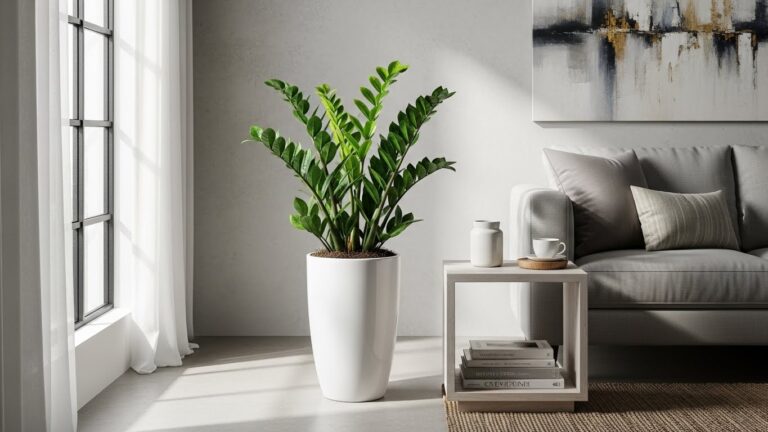
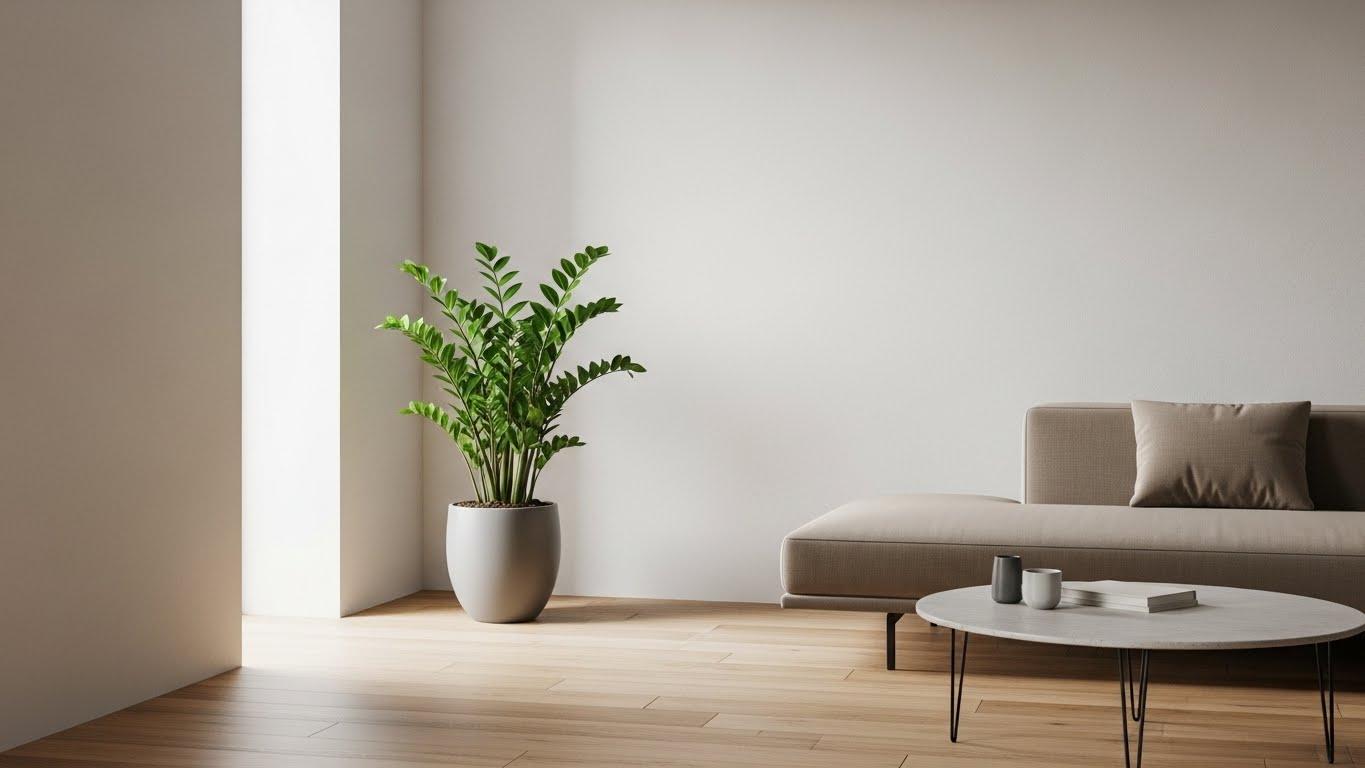
The ZZ plant’s strong vertical lines and bold, glossy foliage make it a powerful element in interior design. Its architectural form can serve as a living sculpture, creating a focal point in a living room when placed in a decorative pot on the floor, or adding a touch of calming green to a bedroom corner. Its tolerance for low and artificial light makes it one of the best plants for brightening office desks, entryways, and other spaces that lack abundant natural light.
While often touted for its air-purifying abilities based on laboratory studies showing it can filter airborne toxins, the real-world impact of a single plant on a room’s air quality is likely modest. Its primary value remains its enduring beauty and incredible ease of care, making it a truly exceptional and rewarding plant for any indoor setting.