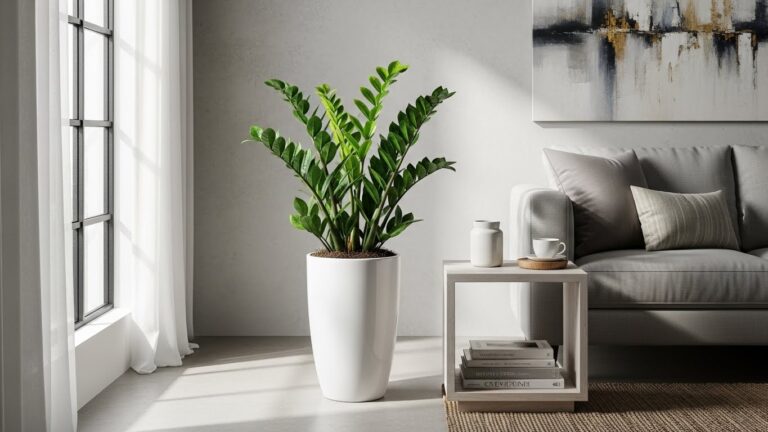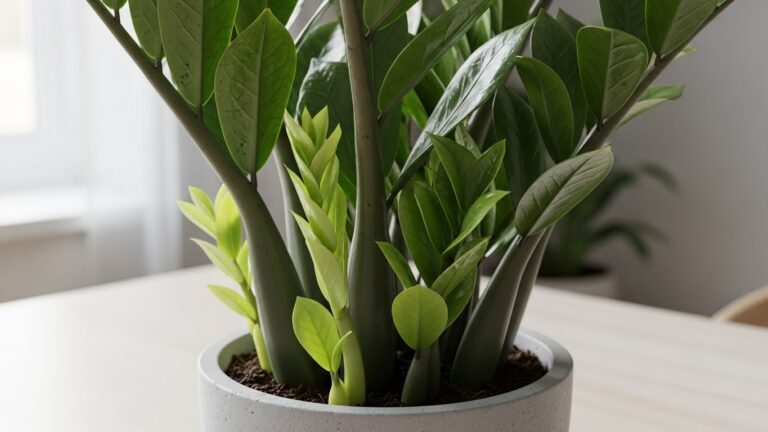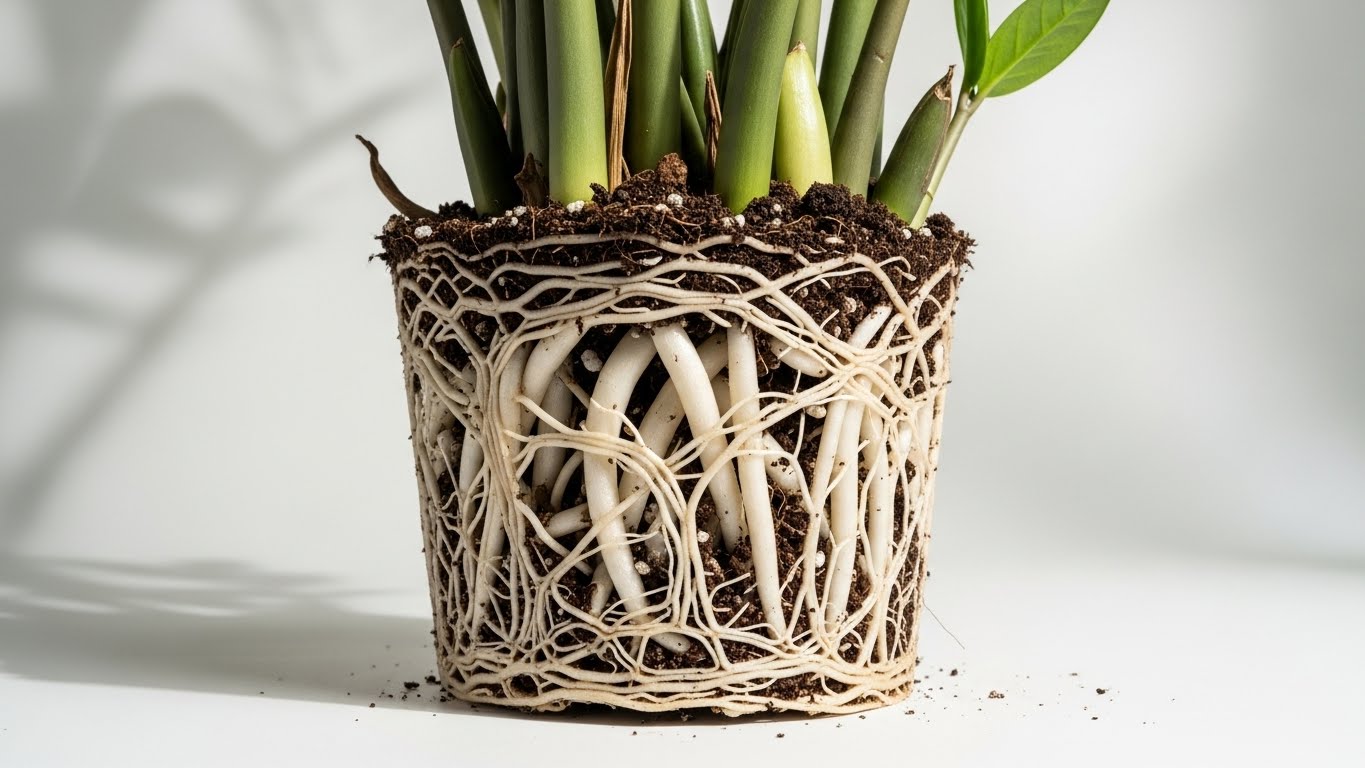
If your ZZ plant is rootbound, you’ll notice several signs. Yellowing leaves, wilting, or drooping foliage may indicate stress. You might see roots growing through the drainage holes or winding around the pot. The plant’s growth slows down, especially during the growing season, and you may even spot pests. These issues suggest the roots are cramped and unable to absorb nutrients. Keep an eye on your plant, and let’s explore solutions to keep it thriving!
Key Takeaways
- Shorter and thinner leaves indicate the plant is lacking energy due to rootbound conditions.
- Roots may push through drainage holes, signaling a need for more space.
- Yellowing leaves suggest cramped conditions that hinder nutrient absorption.
- Wilting or drooping foliage can indicate potential rootbound issues affecting plant health.
- Sparse appearance and stunted growth are signs that roots are struggling to expand.
Understanding Rootbound Conditions
When you think about your ZZ plant thriving, it’s important to understand what rootbound conditions really mean. Fundamentally, when a plant becomes rootbound, its roots are cramped and tangled, preventing them from absorbing nutrients and water effectively. This can lead to poor root health, which ultimately affects the whole plant. To avoid this, proper pot selection is key. Choose a pot that’s slightly larger than the current one, allowing room for growth. Make sure it has drainage holes, too; this helps prevent overwatering, which can worsen rootbound issues. By keeping an eye on your ZZ plant’s roots and ensuring they have enough space, you’re setting the stage for a happy, healthy plant that flourishes in your care. Additionally, regular monitoring for pests or diseases is essential to ensure your plant remains healthy and vibrant.
Signs of Stunted Growth
Recognizing the signs of stunted growth in your ZZ plant is essential for ensuring it remains healthy and vibrant. When your plant isn’t thriving as it should, you might notice a few telltale signs. Here are three key indicators:
Recognizing stunted growth signs in your ZZ plant is crucial for its health and vibrancy.
- Shorter Leaves: You’ll see smaller, less robust leaves than usual, which can indicate a lack of energy.
- Slower Growth: If your plant isn’t adding new growth, it may be struggling with its roots.
- Sparse Appearance: The plant appears thinner or less full, a sign that it’s not getting the right growth factors.
These signs are vital for your plant care routine. Keep an eye out, and remember that addressing these issues can help your ZZ plant flourish once more!
Yellowing Leaves
Noticing yellowing leaves on your ZZ plant can be concerning, especially after spotting signs of stunted growth. This leaf discoloration often signals that your plant is feeling cramped in its pot. When roots don’t have enough space to spread out, they can’t absorb water and nutrients effectively, leading to those sad, yellowing leaves.
To help your ZZ plant thrive again, gently remove it from the pot and check the root system. If it’s tightly packed, it’s time for a bigger home! Choose a pot that’s only one size larger, as too much space can also cause problems. Repotting not only gives your plant room to grow but can bring those yellow leaves back to vibrant green life!
Wilting or Drooping Foliage
Wilting or drooping foliage on your ZZ plant can be a real eye-opener, especially if you’ve been keeping an eye on its overall health. This symptom often signals plant stress, hinting that your beloved plant may be rootbound. To help you assess your ZZ plant’s condition, consider these signs:
Wilting leaves on your ZZ plant could indicate it’s rootbound and in need of some care.
- Leaves that hang limp instead of standing tall.
- Foliage that appears thin or shriveled.
- A noticeable lack of vibrant color in the leaves.
These indicators suggest that your foliage care routine might need a tweak. Check the pot size and consider repotting if it’s too snug. Your ZZ plant deserves to thrive, and a little attention can go a long way in restoring its health!
Roots Growing Through Drainage Holes
If your ZZ plant’s leaves are drooping, it might be time to look a little closer at its roots. One clear sign of a rootbound plant is when you notice roots growing through the drainage holes. This indicates your ZZ plant is cramped and needs some extra love and root care. When roots push their way out, they’re signaling that they’ve run out of space. It’s essential to provide proper drainage solutions, allowing excess water to escape while keeping your plant happy. If you see those roots peeking out, consider repotting your ZZ plant into a larger container. This will give your green friend the room it needs to thrive, bringing new life to your leafy companion!
Watering Issues
Watering your ZZ plant correctly is essential for its health, and there are a few signs that can indicate you’re having issues. If you’re noticing any of the following, it may be time to reevaluate your watering habits:
- Yellowing Leaves: This could be a sign of overwatering effects, leading to root rot and poor root health.
- Wilting Leaves: If your ZZ plant looks sad and droopy, it might be struggling due to inconsistent moisture levels.
- Foul Odor: A musty smell can signal that your plant’s roots are drowning in excess water.
Soil Drying Out Too Quickly
When you notice that the soil in your ZZ plant’s pot dries out too quickly, it might be a sign that your plant is becoming rootbound. Healthy soil moisture is essential for your ZZ plant’s well-being, and if the soil seems to dry out more often than usual, your plant could be outgrowing its pot size.
Rootbound plants struggle to absorb water and nutrients effectively, leading to thirsty, parched soil. You might find yourself watering more frequently, yet the soil still feels dry soon after. If you’re facing this issue, consider repotting your ZZ plant into a larger pot, giving it the space it craves to thrive, and keeping that soil moisture balanced. Your plant will thank you!
Visible Root Circling
Visible root circling is a telltale sign that your ZZ plant may be feeling cramped in its pot. When you spot roots winding around the edge of the pot, it’s time to pay attention. This visible root health issue can impact your plant’s overall well-being and indicates a need for more space. Here are three things to look for:
- Roots forming tight loops around the pot’s edge.
- Roots pushing through drainage holes, seeking freedom.
- Stunted growth, as the root growth patterns struggle to expand.
Recognizing these signs can help you act quickly, ensuring your ZZ plant receives the room it needs to thrive. A little extra space can lead to healthier, happier roots!
Unusual Pot Shape or Size
Unusual pot shapes or sizes can signal that your ZZ plant is cramped and in need of a new home. If you notice your plant’s pot is too small or oddly shaped, it’s time to contemplate some potting recommendations. A pot that’s wider than it is deep can help accommodate your ZZ plant’s growing roots, ensuring it has enough space to thrive. Pay attention to the plant size; you want to choose a pot that allows for at least an inch of space around the roots. This extra room not only promotes healthy growth but also helps prevent water from pooling at the bottom, which can lead to root rot. Remember, a happy plant starts with the right pot!
Slowed Growth During Growing Season
As your ZZ plant enters the growing season, you might notice that its growth has slowed down, which can be a sign that it’s rootbound. During this time of seasonal changes, it’s essential to pay attention to its signals. If your plant isn’t thriving, consider these clues:
- The leaves may appear smaller than usual, lacking their vibrant fullness.
- New growth could be stunted, with fewer shoots emerging than before.
- The overall plant might seem less lively, losing some of its cheerful charm.
If you’re spotting these signs, it might be time to check those roots and see if your ZZ plant needs a bigger home to flourish. Remember, a happy plant means a happy you!
Increased Pest Infestation
If your ZZ plant is rootbound, you might notice an increase in pest infestations. When roots compete for space and nutrients, your plant becomes stressed, making it more vulnerable to pesky critters that love to latch on. Limited access to nutrients not only affects its health, but it can also create an inviting environment for pests to thrive, so keep an eye out!
Limited Nutrient Access
When your ZZ plant becomes rootbound, it might struggle to access essential nutrients, leading to a variety of problems, including increased pest infestations. As the roots compete for space, nutrient deficiency can weaken your plant, making it an inviting target for pests. You may notice:
- Small, discolored leaves that signal nutrient shortages.
- Sticky residue on leaves, a sign of sap-sucking pests like aphids.
- Webbing or spots caused by spider mites or mealybugs.
These pests thrive when your plant’s health declines, as it lacks the nutrients to fend them off. By addressing root competition and ensuring your ZZ plant has enough space, you’ll help it access nutrients better, keeping those pesky critters at bay.
Stress-Induced Vulnerability
Stress can make your ZZ plant more susceptible to pests, especially when it’s rootbound. When your plant feels stressed, it can trigger stress responses that weaken its natural defenses, leading to a decline in plant resilience. Pests like spider mites and mealybugs seize this opportunity, targeting your vulnerable plant. You might notice tiny webs or white, cotton-like spots sneaking onto the leaves. To help your ZZ plant regain strength, first, consider repotting it to relieve the rootbound situation. Regularly check for any signs of pests, and don’t hesitate to wipe down the leaves with a damp cloth. With a little care and attention, your ZZ plant can bounce back, thriving once again and building its resilience against future invaders.
Conclusion
In summary, keeping an eye on your ZZ plant’s health is essential, just like watching for a friend who’s feeling down. If you spot signs of being rootbound, like yellowing leaves or roots peeking out, it’s time to repot. Doing so will help your plant grow strong and vibrant again, just as a little sunshine lifts spirits. Remember, a happy plant makes a happy home, so give your ZZ the care it deserves!