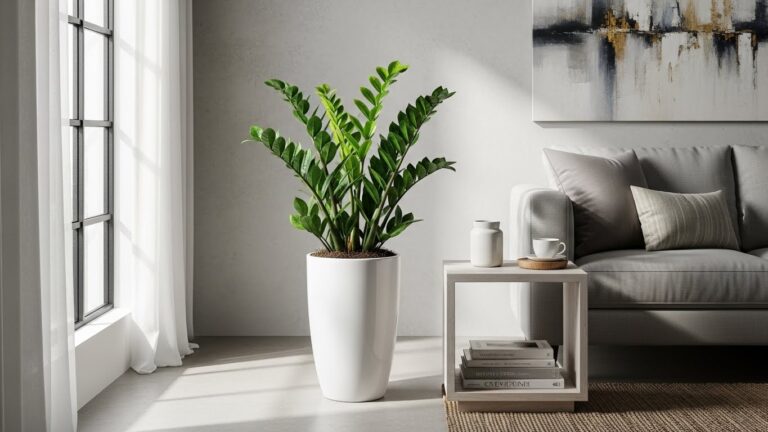
Absolutely, ZZ plants can grow well under LED grow lights! These energy-efficient lights provide the perfect spectrum for healthy growth. ZZ plants thrive in low to moderate light, so if you use LED lights at the right distance, you can encourage lush leaves and vibrant colors. Just make sure to monitor for signs of too much light, like leaf burn or drooping. If you want to know more about caring for your ZZ plant with LED lights, keep exploring!
Key Takeaways
- ZZ plants thrive under LED grow lights, benefiting from their energy efficiency and optimal light spectrum for growth.
- LED lights provide full-spectrum illumination, mimicking natural sunlight, which supports balanced growth for ZZ plants.
- For optimal results, maintain a light duration of 10-12 hours during active growth phases under LED lights.
- ZZ plants adapt well to various light intensities, making them suitable for low to medium brightness from LED sources.
- Proper light placement and duration prevent issues like leaf burn and promote healthy growth in ZZ plants under LED lights.
Understanding ZZ Plants and Their Light Needs
When it comes to understanding ZZ plants and their light needs, you’ll discover that these resilient houseplants thrive in a variety of conditions, making them perfect for both beginners and seasoned plant lovers. ZZ plant adaptations allow them to tolerate low light levels, which means you don’t have to stress about finding the perfect spot. While they can handle low light, they’ll thrive in brighter, indirect light as well. Their light sensitivity isn’t as intense as that of many other plants, giving you more flexibility in placement. Just remember, too much direct sunlight can scorch those beautiful leaves. With a little care, you’ll see your ZZ plant flourish, showcasing its stunning waxy leaves that add charm to any space. Additionally, ZZ plants prefer low to medium bright light, which further enhances their adaptability and resilience.
The Role of Light in Plant Growth
Light plays an essential role in plant growth, so understanding how it affects your green friends is important for helping them thrive. Plants rely on light absorption to fuel the photosynthesis process, turning sunlight into energy. This energy is critical for their development, allowing them to grow strong and vibrant. When plants capture light, they produce glucose and oxygen, which are crucial for their health and yours! Without adequate light, your ZZ plants or any other plants can become weak and leggy, struggling to survive. That’s why it’s important to know how much light they need, whether it’s natural sunlight or artificial light sources. By keeping their light needs in mind, you’ll create a happier, healthier home for your leafy companions.
What Are LED Grow Lights?
LED grow lights are specially designed lighting systems that help plants thrive indoors by mimicking natural sunlight. They come in various types, each offering unique benefits like energy efficiency and adjustable light spectrums, making them perfect for growing ZZ plants and other houseplants. By understanding these lights, you can create the best environment for your plants to flourish, even if you don’t have a sunny spot at home!
Benefits of LED Lights
While you might think all grow lights are the same, LED grow lights stand out for several reasons that can truly benefit your plants, especially ZZ plants. First off, they’re incredibly energy efficient, meaning you can keep your lights on longer without worrying about skyrocketing electricity bills. This efficiency not only saves you money but also reduces your carbon footprint—great for the planet!
Additionally, LED lights emit the perfect spectrum of light, which promotes ideal plant health. Your ZZ plants will thrive, growing lush and vibrant under these lights. With their long lifespan, you won’t need to replace them often, making them a smart investment. So, if you want happy, healthy plants, LED grow lights are the way to go!
Types of LED Grow Lights
When it comes to growing plants indoors, you’ve got several types of LED grow lights to choose from, each designed to meet specific needs. Understanding these LED light types and their grow light features can make a big difference in your plant care journey. Here’s a quick overview:
LED Light Type | Key Features | Best For |
|---|---|---|
Full Spectrum | Mimics natural sunlight | All plant growth |
Red/Blue Spectrum | Encourages flowering | Flowering plants |
Grow Light Strips | Space-saving, flexible | Small areas |
COB LEDs | High intensity, efficient | Large plants |
Panel Lights | Even light distribution | Multi-plant setups |
Benefits of Using LED Grow Lights
Using LED grow lights can truly transform your indoor gardening experience, as they provide numerous benefits that help plants thrive. One of the key LED advantages is their energy efficiency, allowing you to save on electricity bills while nurturing your plants. LED lights promote plant health by delivering the right spectrum of light, enhancing growth speed without overheating. Plus, they’re cost-effective in the long run, thanks to their long lifespan. Their versatile application means you can use them for various plants, whether it’s ZZ plants or others. Additionally, their reduced environmental impact makes them a sustainable choice. With user convenience in mind, these lights are easy to set up and adjust, making your indoor gardening journey enjoyable and rewarding.
How LED Grow Lights Affect ZZ Plants
ZZ plants, known for their hardy nature and attractive appearance, can truly thrive under the right lighting conditions, especially when you introduce LED grow lights into their environment. These lights emit a specific LED light spectrum that’s perfect for promoting ZZ plant growth. Unlike traditional bulbs, LED lights provide energy-efficient illumination while minimizing heat, ensuring your ZZ plant doesn’t get stressed. With the right spectrum, they encourage healthy leaf development and vibrant colors, making your plant look its best. Plus, since ZZ plants are relatively low-light tolerant, using LED grow lights can enhance their growth without overwhelming them. You’ll notice a difference in your plant’s resilience and beauty, creating a stunning display in your home.
Optimal Light Conditions for ZZ Plants
When it comes to ZZ plants, finding the right light conditions is key to helping them thrive. You’ll want to take into account both the light intensity they need and the ideal spectrum that promotes healthy growth. Understanding these factors will not only enhance your plant’s appearance but also guarantee it stays vibrant and strong.
Light Intensity Requirements
While many houseplants thrive in bright light, ZZ plants prefer a more laid-back approach to lighting. They do best in low to moderate light intensity, so don’t worry if your space isn’t flooded with sunlight. These plants are masters of light adaptation, meaning they can adjust to different lighting conditions without much fuss. If you’re using LED grow lights, aim for a gentle glow rather than a harsh brightness—you want to mimic their natural environment. Too much light can lead to stress and leaf burn, while too little can slow their growth. So, find a cozy spot with soft light, and your ZZ plant will thank you with lush, green leaves!
Ideal Light Spectrum
To create the best lighting conditions for your ZZ plant, understanding the ideal light spectrum is crucial. ZZ plants thrive under LED grow lights that provide a balanced light quality across a broad spectral range. Ideally, aim for a mix of blue and red wavelengths. Blue light supports healthy leaf growth, while red light encourages flowering and overall vigor.
When choosing your LED lights, look for those labeled as full spectrum. These lights mimic natural sunlight, giving your plant the energy it needs to flourish. Remember, while ZZ plants can tolerate lower light conditions, they’ll truly shine with the right light spectrum. So, set those lights up, and watch your ZZ plant thrive!
Types of LED Grow Lights Suitable for ZZ Plants
Choosing the right LED grow lights for your ZZ plants can make all the difference in their growth and overall health. You’ll want to look for full-spectrum LED light types, as they provide the balanced light your ZZ plants crave. These lights mimic natural sunlight, promoting healthy ZZ plant growth. Consider using LED panels or bulbs with a color temperature around 4000K to 6500K, which offers the ideal mix of blue and red wavelengths. Additionally, compact fluorescent LEDs are another great option, providing energy efficiency while still offering the necessary light intensity. Remember, the right LED grow lights can create a nurturing environment, helping your ZZ plants thrive and flourish like they deserve!
Recommended Light Duration for ZZ Plants
When it comes to lighting your ZZ plants, the duration of light exposure plays a significant role in their health and growth. To help your lovely green companions thrive, consider these recommended light durations for different growth phases:
- Seedling Phase: 12-14 hours of light daily will boost their initial growth.
- Active Growth Phase: 10-12 hours of light is perfect for encouraging lush, vibrant leaves.
- Resting Phase: 6-8 hours of light helps your ZZ plants recharge and prepare for the next growth cycle.
- Adjusting Conditions: If you notice slow growth, try increasing light duration gradually to see how they respond.
Placement of LED Grow Lights for Maximum Effect
When you’re setting up your LED grow lights, it’s essential to think about where you place them to get the best results for your ZZ plants. You’ll want to find the ideal distance from the plants to guarantee they receive just the right amount of light without getting scorched. Plus, considering the light coverage area and the duration of exposure will help your plants thrive, so let’s explore how to maximize their growth potential!
Optimal Distance From Plants
To get the most out of your LED grow lights, you need to contemplate how far away they should be from your ZZ plants. Finding the best height guarantees proper light distribution, nurturing your plants effectively. Here’s a simple guide to help you gauge the distance:
- 12-24 inches – Perfect for seedlings, giving them a gentle start.
- 24-30 inches – Ideal for young plants, encouraging healthy growth without burning.
- 30-36 inches – Great for mature ZZ plants, allowing them to soak up light while staying safe.
- 36 inches or more – Use for low-light situations, ensuring they still get adequate exposure.
Adjusting the distance helps you foster a thriving environment, letting your ZZ plants flourish beautifully under your care.
Light Coverage Area
Finding the right distance from your ZZ plants is just the start; now, you need to think about where to place those LED grow lights for the best results. To guarantee ideal light coverage, position your lights directly above your plants, spaced evenly apart. This allows each plant to receive the necessary light without leaving any in the shadows. If your plants are close together, adjust the spacing so they get equal exposure. Remember, ZZ plants thrive in well-lit areas, so don’t skimp on the light! You want to create a cozy environment where each plant can flourish, soaking up that beautiful glow. With the right placement and plant spacing, your ZZ plants will thrive like never before!
Duration of Exposure
While it’s exciting to set up your LED grow lights, knowing how long to keep them on is just as essential for your ZZ plants’ health. The right light duration can considerably influence their growth cycles, so finding that sweet spot will make all the difference. Here’s a quick guide to help you:
- Start with 12 hours of light daily for ideal growth.
- Adjust to 10 hours during the winter months, mimicking natural light cycles.
- Observe your plants; if they seem leggy, increase light exposure gradually.
- Be consistent; sudden changes can stress your ZZ plants.
Signs of Overexposure to Light in ZZ Plants
When you place your ZZ plant under bright lights, you might notice some telltale signs that it’s getting too much exposure. Keep an eye out for these symptoms:
Signs of Overexposure | Description |
|---|---|
Leaf Burn | Brown patches on leaves. |
Drooping Leaves | Leaves may start to hang down. |
Yellowing Foliage | Leaves lose their vibrant green. |
Stunted Growth | Plant stops growing altogether. |
Excessive Shedding | Leaves dropping more than usual. |
If you see leaf scorching or fading color, it’s time to reassess the light situation. Growth abnormalities can also emerge, so adjusting the lighting can help your ZZ thrive and stay healthy. Don’t ignore these signs!
Common Problems With ZZ Plants Under LED Lights
When growing ZZ plants under LED lights, you might run into some tricky issues like light intensity, humidity, and temperature fluctuations. Too much light can stress your plant, while low humidity and temperature changes can lead to other problems. Let’s explore these common challenges and how to keep your ZZ plant thriving!
Light Intensity Issues
Even though ZZ plants are known for their resilience, they can face challenges when grown under LED lights, especially regarding light intensity. Finding the right balance is essential for their growth patterns. Here are some common issues you might encounter:
- Too Much Light: Excessive light intensity can scorch leaves, causing them to turn yellow or brown.
- Too Little Light: Insufficient light can lead to leggy growth, with stems stretching awkwardly.
- Inconsistent Exposure: Moving your lights can create uneven growth, leaving some areas lush and others sparse.
- Poor Placement: Positioning too close to the lights can overwhelm them, while too far can stunt their growth.
Understanding these factors will help you nurture your ZZ plant with love and care.
Humidity Concerns
Humidity plays a significant role in the health of ZZ plants, especially when they’re grown under LED lights. Low humidity levels can lead to brown tips or drooping leaves, and you don’t want that! Here’s a quick guide to help you understand how to manage humidity sources effectively:
Humidity Source | Description |
|---|---|
Humidifiers | Adds moisture to the air |
Pebble Trays | Water in trays keeps humidity |
Grouping Plants | Plants can create a microclimate |
Temperature Fluctuations
Temperature fluctuations can be tricky for ZZ plants, especially when they’re basking under LED grow lights. These changes can stress your plant, leading to issues that can break your heart. To keep your ZZ thriving, focus on achieving temperature stability through careful environmental control. Here are some key things to remember:
- Avoid sudden temperature shifts—keep the environment steady.
- Position lights at the right distance—too close can overheat, while too far can cool down.
- Monitor the room temperature—ideally, it should be between 65°F and 75°F.
- Use a thermometer—this helps you track any changes, ensuring your ZZ stays happy.
Tips for Maintaining ZZ Plants in Artificial Light
When you decide to keep ZZ plants under artificial light, you’ll want to follow some important tips to guarantee they thrive. First, position your plants about 12-24 inches away from the lights; this distance helps prevent leaf burn while ensuring they receive enough brightness. Next, rotate your ZZ plants every few weeks; this promotes even growth and keeps them looking balanced. Make sure to monitor the humidity levels; while ZZ plants are tough, they prefer slightly higher humidity. Finally, don’t overwater! Good ZZ plant care involves letting the soil dry out between waterings, especially in artificial lighting, where moisture can evaporate faster. With these tips, your ZZ plants will flourish under the glow of your LED lights!
Fertilizing ZZ Plants Grown Under LED Lights
Fertilizing ZZ plants grown under LED lights can make a significant difference in their growth and overall health, so it’s essential to get it right. To maintain a healthy nutrient balance, consider these fertilizer types:
- Balanced Liquid Fertilizer: Provides essential nutrients easily absorbed by the plant.
- Slow-Release Granules: Offer a steady supply of nutrients over time, reducing the need for frequent feeding.
- Organic Fertilizer: Enriches the soil naturally, promoting a healthier environment for your ZZ plant.
- Diluted Fertilizer Solutions: Perfect for sensitive plants, ensuring they receive nutrients without overwhelming them.
Comparing LED Grow Lights to Other Light Sources
Although many plant enthusiasts might be familiar with traditional light sources like fluorescent bulbs or incandescent lights, LED grow lights have quickly become the go-to choice for indoor gardening, especially for ZZ plants. When you compare these light types, you’ll notice LED advantages like superior light efficiency and energy savings. Traditional comparisons often highlight how incandescent bulbs waste energy as heat, while LEDs focus on growth performance. This means your ZZ plants thrive better under LEDs, enhancing their overall plant health. While initial cost factors might seem higher for LED lights, the long-term savings on energy bills make them a smart investment. Ultimately, choosing LEDs over other sources can lead to happier, healthier plants and a more flourishing indoor garden.
Real-Life Experiences: ZZ Plants Under LED Grow Lights
ZZ plants under LED grow lights have shown remarkable results, and many indoor gardeners are excited to share their personal experiences. You might find it inspiring to hear how others have thrived with their ZZ plant growth using these lights! Here are some common insights:
- Faster Growth: Many noticed their plants grew quicker under LED lights.
- Vibrant Leaves: The colors of the leaves seemed to pop like never before.
- Healthier Roots: Gardeners reported healthier root systems with proper LED light duration.
- Low Maintenance: With the right setup, these plants require minimal care.
Conclusion
To summarize, ZZ plants can thrive under LED grow lights, making them a great choice for indoor gardening. For instance, Sarah, a middle school student, set up her ZZ plant under a full-spectrum LED light and was amazed to see it grow faster and healthier than ever before! By providing the right light and care, you can enjoy these resilient plants all year round, brightening up your space with their lush, green leaves. Happy gardening!