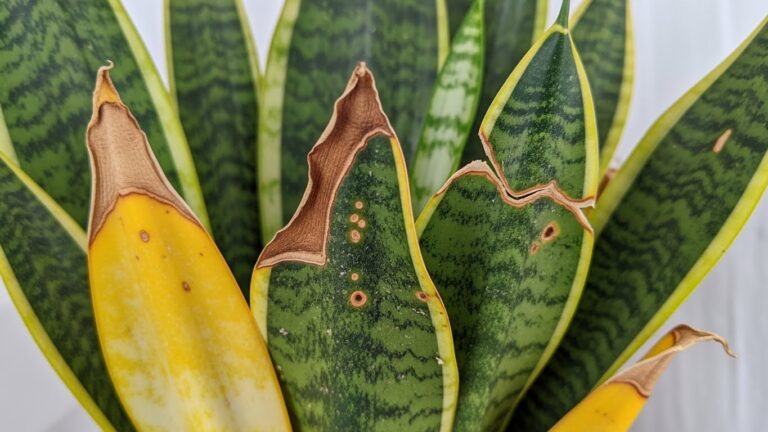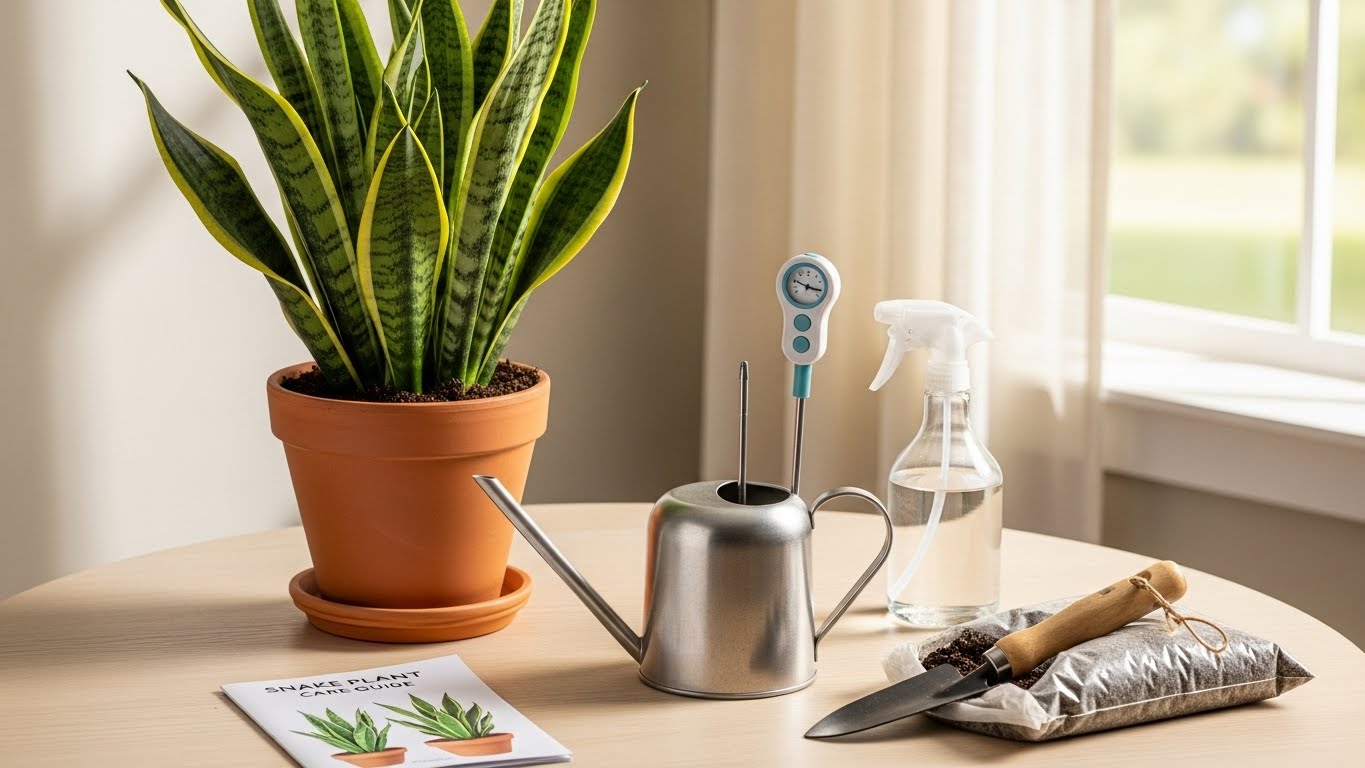
To care for your snake plant, make sure it gets bright, indirect sunlight, though it can handle low light. Water every two to three weeks, letting the soil dry out completely between waterings. Choose a well-draining soil mix, like cactus or succulent blend. Keep an eye out for pests like mealybugs and spider mites, and use soap solutions to tackle them. Want more tips on propagation and maintenance? There’s plenty more to discover!
Key Takeaways
- Place snake plants in bright, indirect sunlight; they tolerate low light but thrive in optimal conditions.
- Water every two to three weeks, allowing the soil to dry completely between waterings.
- Use well-draining soil, ideally a cactus or succulent mix with perlite or sand for drainage.
- Regularly check for pests like mealybugs and spider mites, using natural remedies for control.
- For propagation, cut healthy leaves into 4-6 inch sections and let them dry before planting.
Understanding Light Requirements for Snake Plants
When you think about caring for a snake plant, understanding its light requirements is key to keeping it healthy and thriving. Snake plants love bright, indirect sunlight. They can tolerate low light, but if you want them to flourish, you’ll want to find that sweet spot where the light intensity is just right. Place your snake plant near a window with filtered light, and it’ll soak up the goodness without getting burned. If you notice its leaves stretching or becoming pale, it might be craving more light, so don’t hesitate to move it closer to the window. Remember, too much direct sunlight can scorch those lovely leaves, so always aim for that perfect balance in light exposure! Additionally, optimal light intensity for snake plants ranges from 500 to over 1,000 foot-candles for thriving growth.
Watering Techniques for Optimal Growth
Watering your snake plant might seem simple, but getting it just right is essential for its health and growth. First, consider the watering frequency; it’s better to underwater than overwater. Let the soil dry out completely between waterings, which usually means every two to three weeks. Check the humidity levels in your home, as snake plants thrive in dry environments. If your home is particularly humid, you might need to adjust your schedule slightly. When you do water, give it a thorough soak, allowing excess water to drain out. This helps prevent rot and keeps your plant happy. Remember, your snake plant appreciates your attention, so keeping an eye on its needs will go a long way!
Choosing the Right Soil Mix
Choosing the right soil mix is essential for helping your snake plant thrive, especially since they prefer well-draining conditions. You should look for a blend that promotes excellent soil drainage, like a cactus or succulent mix. These mixes often contain ingredients like perlite or sand, which help water flow through easily, preventing root rot.
Additionally, aim for a pH level between 6 and 7, which is slightly acidic to neutral—perfect for your snake plant. You can also create your own mix by combining potting soil with sand and perlite. This way, you’ll guarantee your plant gets the right nutrients while avoiding excessive moisture. With the right soil mix, your snake plant will flourish beautifully in your home!
Common Pests and How to Manage Them
After ensuring your snake plant has the right soil mix, it’s time to focus on keeping it healthy by watching out for common pests that can invade your plant. Pest identification is key; look for mealybugs, spider mites, and aphids, which can sap your plant’s vigor. If you spot any pests, don’t worry! You can use natural remedies, like a gentle soap solution or neem oil, to get rid of them. Just mix a few drops of soap with water, spray it on the affected areas, and let it work its magic. Regularly checking your plant helps catch issues early, ensuring your snake plant stays vibrant and thriving. Remember, a little attention goes a long way in pest management!
Tips for Propagating Snake Plants
When you want to expand your collection of snake plants, propagation is an exciting way to do it! There are a couple of fun propagation methods you can try. One popular technique is leaf division, where you cut a healthy leaf into sections, each about 4-6 inches long. Make sure to let the cut edges dry out for a day or two before placing them in soil. Another method is using the water propagation technique, which involves placing the cut leaf sections in water until roots develop. Whichever method you choose, keep the soil moist but not soggy, and give them bright, indirect light. With a little patience, you’ll soon have new snake plants to cherish and share!
Conclusion
Taking care of your snake plant can feel like a balancing act—too much water and it might drown, too little light and it could wilt. But with the right mix of care, like knowing when to water and how to pick the best soil, you’ll keep your plant thriving. Whether you’re a seasoned plant parent or just starting out, remember that with a little attention, your snake plant will reward you with its stunning beauty for years to come.