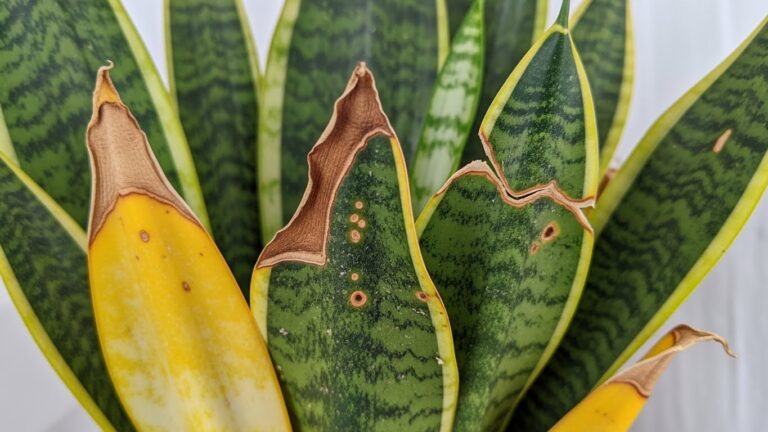
I. An Introduction to a Botanical Icon
Few houseplants possess the universal recognition and architectural grace of the snake plant. With its stiff, sword-like leaves that stand sentinel in homes and offices worldwide, it has earned a reputation for being nearly indestructible. Yet, to truly understand and cultivate this plant is to look beyond its minimalist facade and into its rich botanical history, its recent taxonomic shift, and the evolutionary adaptations that make it a paragon of resilience.
A. Beyond “Mother-in-Law’s Tongue”: Unraveling the Plant’s Identity
The plant is known by a host of evocative common names, including Mother-in-law’s Tongue and Viper’s Bowstring Hemp—both alluding to the sharp, fibrous nature of its leaves—as well as more auspicious titles like Good Luck Plant. Its botanical name is now formally recognized as Dracaena trifasciata. A member of the Asparagaceae family, it is a stemless, evergreen, herbaceous perennial characterized by its clumping, erect habit. The species epithet trifasciata translates to “three bundles” or “three stripes,” a reference to the distinctive cross-banding patterns on its foliage.
Historically, the plant held practical significance beyond its ornamental value. The strong fibers within its leaves were harvested to create bowstrings, giving rise to the name “bowstring hemp”. Its cultural importance is deeply rooted in its native Africa, where certain varieties are associated with powerful orishas (deities) like Ọya, the goddess of storms, and Ògún, the god of war. In Nigerian tradition, it is used in rituals to ward off the evil eye. This protective symbolism has carried over into Afro-Brazilian religions like Umbanda, where the plant, known as espada de São Jorge (“Saint George’s sword”), is grown outside homes to guard against harm.
B. The Great Shift: Understanding the Reclassification from Sansevieria to Dracaena
For centuries, the snake plant was known to botanists and hobbyists alike under the genus Sansevieria, a name honoring an 18th-century Italian patron of horticulture, Pietro Sanseverino. However, in 2017, a significant taxonomic revision occurred. Based on the conclusive evidence of molecular phylogenetics—the study of evolutionary relationships through DNA sequencing—the entire Sansevieria genus was officially subsumed into the Dracaena genus. The genus name Dracaena itself is derived from the ancient Greek word for “female dragon,” a reference to the red resin of some species, known as “dragon’s blood”.
While the scientifically correct name is now Dracaena trifasciata, the name Sansevieria remains deeply entrenched in the horticultural trade and is still used almost interchangeably by nurseries and enthusiasts. This reclassification, however, is more than a mere academic footnote; it provides a crucial clue for successful cultivation. Genetic relatedness often implies shared physiological traits and, therefore, similar care requirements. The placement of snake plants within Dracaena underscores their fundamental intolerance for waterlogged soil, a characteristic they share with many other popular dracaenas like the Madagascar dragon tree (Dracaena marginata). Understanding this connection allows a grower to apply a core principle—excellent drainage is non-negotiable—across a broader family of plants, moving from rote memorization of rules to a more intuitive, science-based approach to care.
C. Echoes of the Wild: How Its Native Habitat Informs Modern Care
The snake plant’s legendary toughness is a direct inheritance from its native environment. It hails from the seasonally dry tropical biome of West and West Central Africa, in regions including Nigeria and the Congo. In this habitat, it is an adaptable colonizer, found in conditions ranging from the deeply shaded forest floor to rocky outcrops exposed to intense sun. This challenging environment forged the plant’s key survival mechanisms.
Its thick, fleshy, succulent leaves evolved to store water, allowing it to endure long periods of drought. It spreads via a creeping rhizome—a horizontal underground stem—that can push through tough, rocky soil to find new ground. Furthermore, D. trifasciata utilizes a specialized form of photosynthesis known as Crassulacean Acid Metabolism (CAM). Unlike most plants, which open their leaf pores (stomata) during the day to take in carbon dioxide, CAM plants open their stomata only at night. This minimizes water loss through evaporation in the hot sun, a critical adaptation for survival in arid climates.
These evolutionary traits are the blueprint for its indoor care. The plant’s reputation as “low-maintenance” is simply a reflection of its adaptation to neglect. To master its care is to replicate the conditions of its origin: provide a porous, rocky substrate that does not hold water; allow for periods of drought by letting the soil dry completely; and then provide a thorough soaking that mimics an infrequent but heavy seasonal rain. This single guiding principle—emulate its native habitat—is the key to unlocking vigorous, healthy growth.
Table 1: Dracaena trifasciata – At a Glance
Attribute | Description |
Botanical Name | Dracaena trifasciata (formerly Sansevieria trifasciata) |
Common Names | Snake Plant, Mother-in-law’s Tongue, Viper’s Bowstring Hemp |
Family | Asparagaceae |
Native Range | West and West Central Africa |
Light | Tolerates low light; thrives in medium to bright, indirect light (~50–1,000+ fc) |
Water | Infrequent; allow soil to dry out completely between waterings (every 2–4+ weeks) |
Soil | Gritty, fast-draining succulent or cactus mix; pH 5.5–7.5 |
Temperature | 60–85°F (15–29°C); not frost-tolerant, avoid temperatures below 50°F (10°C) |
Humidity | Average indoor humidity (30–50%); no supplemental humidity needed |
Toxicity | Mildly toxic to cats and dogs if ingested |
II. The Pillar of Light: From Mere Survival to Vibrant Growth
Perhaps the most pervasive misunderstanding surrounding the snake plant is its classification as a “low light” plant. While its ability to endure in dimly lit conditions is one of its most celebrated traits, this tolerance represents a state of survival, not optimal health. To unlock the plant’s full potential for vigorous growth and vibrant color, one must provide it with the bright light it truly prefers.
A. Debunking the “Low Light” Myth: Survival vs. Thriving
Snake plants are exceptionally tolerant of low light conditions, which is why they are ubiquitous in offices and darker corners of homes. However, in such environments, the plant’s metabolism slows dramatically. Photosynthesis—the process of converting light into energy—is severely restricted, causing growth to grind to a halt. The plant enters a state of near-dormancy, merely surviving on its stored resources. The ideal condition for a snake plant is bright, indirect sunlight, where it will actively produce new leaves and grow robustly.
This distinction is critical because the plant’s marketing as a low-light champion inadvertently sets many owners up for failure. The most common cause of a snake plant’s demise is root rot from overwatering. This issue is directly linked to light exposure. In a low-light setting, a plant uses very little water because its metabolic processes are suppressed. An owner, believing the plant to be “easy,” may water it on a regular schedule. Since the plant cannot use this moisture, the soil remains saturated, creating the perfect anaerobic environment for the fungal and bacterial pathogens that cause roots to rot. Therefore, “low light tolerance” must be understood as a survival state that demands a correspondingly drastic reduction in watering frequency.
B. A Quantitative Approach: Translating Foot-Candles into Home Placement
Light intensity, measured in foot-candles (fc), provides a scientific basis for understanding a plant’s needs. One foot-candle is the amount of light produced by a single candle one foot away. While a snake plant can subsist in as little as 50 fc, this is a deep-shade condition that will not support any growth. For sustained health and slow growth, a minimum of 200-400 fc is recommended. To truly thrive, snake plants, like many succulents, prefer light levels in the range of 500 to over 1,000 fc.
Translating these values into a typical home environment provides clear placement guidance. A spot several feet from a north-facing window might receive only 50-250 fc, qualifying as low light. An east-facing window, which receives gentle morning sun, provides ideal medium light (250-1,000 fc). A location a few feet away from a south- or west-facing window, shielded from the harshest direct rays by a sheer curtain, can provide high levels of bright, indirect light (1,000-2,000 fc).
C. The Science of Sight: How Light Governs Growth, Color, and Variegation
Light exposure directly impacts the plant’s physical appearance. In bright, indirect light, growth is faster, leaves are stronger and more upright, and the colors are deeper and more defined. Conversely, intense, direct afternoon sun can be damaging, leading to scorched patches, yellowing, or bleached-out color on the leaves.
The plant’s variegation—the patterns of yellow, white, or silver on its leaves—also serves as a dynamic indicator of its light exposure. These lighter-colored sections of the leaf lack chlorophyll, the green pigment essential for photosynthesis. When a variegated plant is placed in low light, it must compensate for the reduced energy source by maximizing its photosynthetic capacity. To do this, it produces more chlorophyll, which often causes the non-green, variegated areas to shrink or disappear entirely as the leaf reverts to a more efficient solid green. Therefore, the vibrancy of a plant’s variegation can be used as a visual light meter. If the bright yellow edges of a ‘D. trifasciata ‘Laurentii” begin to fade and narrow, it is an early and reliable sign that the plant is not receiving enough light to maintain its characteristic pattern and should be moved to a brighter location.
D. Strategic Positioning: A Guide to Window Exposures and Artificial Light
Based on light intensity and quality, specific home placements can be recommended for optimal health:
- East-Facing Windows: Often considered the ideal location, providing several hours of gentle morning sunlight that is bright but not scorching.
- West- and South-Facing Windows: These offer very bright light but can expose the plant to intense afternoon sun. To prevent leaf burn, position the plant 3-5 feet back from the window or filter the light with a sheer curtain.
- North-Facing Windows: These provide the lowest light levels. A snake plant will survive here, but growth will be minimal to non-existent. Watering must be significantly reduced in this location.
- Artificial Light: Snake plants adapt remarkably well to fluorescent or LED grow lights, making them excellent choices for windowless offices or basements. To support photosynthesis, the lights should be on for at least 10-12 hours per day.
Table 2: Light Intensity Guide for Home Placement
Light Level | Foot-Candle (fc) Range | Practical Placement Examples | Expected Outcome |
Very Low | 50–250 fc | North-facing room, >5 ft from window; windowless hallway | Survival only; no growth, high risk of rot if overwatered |
Medium | 250–1,000 fc | Directly in an east-facing window; a few feet from a west-facing window | Healthy, steady growth; good color retention |
High (Indirect) | 1,000–2,000+ fc | 2–4 ft from a south- or west-facing window, filtered by a sheer curtain | Vigorous growth; vibrant coloration and strong variegation |
Direct Sun | 2,000–5,000+ fc | Directly in an unfiltered south- or west-facing window | Risk of leaf scorch, yellowing, and drying out |
III. Mastering Moisture: The Art and Science of Watering
The single most important skill in snake plant care is proper watering. Due to its succulent nature and adaptations to an arid native habitat, its needs are fundamentally different from those of typical tropical foliage plants. Mastering the rhythm of its watering requirements is the key to ensuring its long-term health and preventing its most common ailment: root rot.
A. The Cardinal Rule: Why Overwatering is the Greatest Threat
Overwatering is unequivocally the most common and rapid cause of snake plant failure. The plant’s entire physiology is designed to withstand drought, storing ample water in its thick leaves and robust rhizomes. Consequently, it is far more resilient to being too dry than it is to being too wet. Its roots are highly susceptible to rot when they are deprived of oxygen in soil that remains saturated for extended periods. This waterlogging creates an anaerobic environment where fungal and bacterial pathogens, such as Pythium and Phytophthora, can proliferate. These pathogens attack the roots, causing them to suffocate, decay, and lose their ability to absorb water and nutrients, ultimately leading to the collapse of the entire plant.
B. Beyond the Calendar: Tactile and Visual Cues for When to Water
A fixed watering schedule is unreliable and often detrimental to a snake plant. The correct time to water is dictated not by the calendar, but by the condition of the soil. The guiding principle is to allow the potting medium to dry out completely from top to bottom before providing any more moisture. Depending on a variety of environmental factors, this drying period can last anywhere from two to six weeks, or even longer during winter.
Several reliable methods can be used to assess soil moisture:
- The Finger Test: The most direct method is to insert a finger or a wooden chopstick deep into the soil. For a snake plant, the soil should feel dry at least 2-3 inches down; if any moisture is detected, it is best to wait longer before watering.
- Pot Weight: A pot filled with dry soil is noticeably lighter than one containing moist soil. With practice, lifting the pot becomes an intuitive way to gauge its moisture content.
- Visual Soil Cues: As soil dries completely, it often shrinks and pulls away from the inner edges of the pot, creating a small gap. This is a clear visual sign that the medium is dry.
C. Techniques for Optimal Hydration: Deep Watering and Avoiding the Crown
When the soil is confirmed to be thoroughly dry, the plant should be watered deeply and completely. This “soak and dry” method mimics the infrequent but heavy downpours of its native habitat.
- Thorough Soaking: Water the soil evenly until it flows freely from the container’s drainage holes. This ensures that the entire root system has access to moisture.
- Discard Excess Water: After a thorough watering, it is crucial to empty any water that has collected in the saucer or cachepot. Allowing the plant to sit in standing water is a primary cause of root rot.
- Avoid the Crown: When watering from the top, direct the water onto the soil surface and avoid pouring it directly into the center of the plant’s rosette. Water that becomes trapped in the base of the leaves can lead to crown rot, a fungal decay that can quickly kill the plant.
D. The Dynamic Watering Schedule: Adjusting for Season, Light, and Environment
Watering frequency is not a static number; it is a dynamic response to the plant’s environment. Several factors influence how quickly the soil dries and how often the plant needs water:
- Season: During the active growing season of spring and summer, when light is more intense and temperatures are warmer, the plant’s metabolic rate increases, and it will use water more quickly. During this time, it may need watering every 2-4 weeks. In the fall and winter, the plant enters a period of dormancy, and its water needs decrease dramatically. Watering may be reduced to once every 4-8 weeks or even less.
- Light: A plant in a bright location will photosynthesize more actively and use water much faster than a plant in a low-light corner. The watering frequency must be adjusted accordingly, with low-light plants receiving water far less often.
- Pot Material: The type of container has a significant impact on soil moisture. Porous, unglazed terracotta pots allow moisture to evaporate through their walls, causing the soil to dry out very quickly. In contrast, non-porous materials like plastic or glazed ceramic hold moisture for much longer, requiring less frequent watering.
IV. The Foundation: Engineering the Perfect Potting Environment
Creating the right foundation for a snake plant is the most effective preventative measure against its primary vulnerability: root rot. The choice of potting medium and container are not secondary considerations but are central to establishing a healthy, resilient plant. The goal is to engineer an environment that provides structural support and essential nutrients while aggressively shedding excess water.
A. The Anatomy of an Ideal Soil Mix: Prioritizing Aeration and Drainage
D. trifasciata requires a potting medium that is exceptionally gritty, porous, and fast-draining. Standard, all-purpose potting soils are unsuitable on their own, as they are designed to retain moisture and will become compacted and waterlogged, leading to root suffocation and decay. The ideal mix mimics the sandy, rocky soils of its native habitat, allowing water to flush through quickly while retaining enough air pockets for the roots to breathe. The soil should also have a pH that is slightly acidic to neutral, generally in the range of 5.5 to 7.5. The foundation of a good mix is typically a pre-bagged cactus or succulent soil, which is then amended with additional inorganic materials to further enhance its drainage and aeration properties.
B. Expert Soil Recipes: Crafting a Custom Substrate
While commercial cactus mixes can be used, creating a custom blend allows for precise control over drainage and texture. The components serve distinct functions: a base like potting soil or compost provides nutrients and structure; coarse materials like sand or grit facilitate rapid drainage; and lightweight amendments like perlite or pumice create air pockets, ensuring aeration.
Several effective recipes can be tailored to available materials:
- Simple Starter Mix: An excellent and easy starting point is a 1:1 ratio of commercial cactus/succulent soil and perlite or pumice. This simple blend significantly improves the drainage of a standard bagged mix.
- Comprehensive DIY Mix: For a more customized blend, combine two parts standard potting soil, one part coarse horticultural sand, one part perlite or pumice, and one part coconut coir. The coco coir helps with structure and moisture retention without becoming as compacted as peat moss.
- Advanced Gritty Mix: For maximum drainage and aeration, especially in humid climates, a mix with a higher proportion of inorganic material is ideal. A blend of two parts pumice, one part coconut coir, and one part compost provides excellent structure and prevents waterlogging.
C. A Gardener’s Choice: Pumice vs. Perlite
Perlite and pumice are the two most common amendments for increasing soil porosity. Both are lightweight volcanic rocks, but they have distinct properties that make one a superior choice for snake plants.
- Perlite is volcanic glass that has been superheated, causing it to expand into a lightweight, white material. It is excellent for creating air pockets but is fragile, can crush over time, and is so light that it often floats to the surface of the soil during watering.
- Pumice is a natural volcanic rock with a highly porous structure. It is heavier and more durable than perlite, so it does not break down or float away. Its microscopic pores can hold small amounts of water and nutrients that plant roots can access, while the larger channels between particles ensure that excess water drains away freely.
The additional weight of pumice provides a significant functional advantage. Tall snake plant cultivars can become top-heavy and unstable in their pots. A soil mix amended with lightweight perlite offers little ballast. In contrast, the greater density of pumice helps to anchor the plant, providing much-needed stability and preventing tipping. This makes pumice not just a better horticultural choice for its structural integrity and moisture regulation, but also a better physical engineering choice for supporting the plant’s upright form.
D. The Terracotta Advantage: Why Pot Choice is a Critical Care Decision
The choice of container is as important as the soil within it. For snake plants, unglazed terracotta pots are highly recommended and offer a significant advantage over other materials. The porous nature of the clay allows air and water to move through the walls of the pot. This process, known as wicking, actively pulls excess moisture out of the soil, allowing it to dry much more quickly and evenly than it would in a non-porous plastic or glazed ceramic pot. This “breathability” provides a crucial buffer against overwatering and is one of the most effective ways to prevent root rot.
E. Repotting Strategy: A Minimalist Approach
Snake plants are slow-growing and perform well when their roots are slightly confined, a condition known as being root-bound. This preference means they require infrequent repotting, typically only once every 2 to 5 years. A clear sign that it is time for a new pot is when the strong, expanding rhizomes begin to distort or crack the current container, or when roots are densely packed and emerging from the drainage holes. When repotting, it is essential to select a new container that is only 1-2 inches larger in diameter than the previous one. Moving to a pot that is too large will result in a large volume of soil that stays wet for too long, increasing the risk of root rot.
V. Establishing the Ideal Climate: Temperature and Humidity
Replicating the atmospheric conditions of the snake plant’s native tropical habitat is straightforward in most indoor settings. It is tolerant of a typical range of household temperatures and humidity levels, but it has a critical vulnerability to cold that must be respected to prevent irreversible damage.
A. Defining the Comfort Zone: Optimal Temperature and Humidity Ranges
D. trifasciata thrives in warm conditions, with an ideal temperature range between 60°F and 85°F (15°C to 29°C). It can tolerate temperatures up to 90°F (32°C), but its growth may slow in extreme heat.
Regarding humidity, the snake plant is exceptionally adaptable. It is perfectly content with average indoor humidity levels, typically between 30% and 50%. Unlike many other tropical houseplants, it does not require high humidity or regular misting. This tolerance for drier air is another evolutionary trait inherited from its native environment. This characteristic serves as a powerful reminder of the plant’s overall preference for dry conditions. Practices like misting, which are beneficial for humidity-loving ferns or calatheas, are unnecessary for snake plants and can be detrimental, as moisture sitting on the leaves for prolonged periods can encourage the development of fungal spots.
B. Recognizing the Danger Zone: Preventing Irreversible Cold Damage
The most significant environmental threat to a snake plant is cold. It is a tropical plant with no natural frost tolerance. Prolonged exposure to temperatures below 50°F (10°C) can cause severe cellular damage and is often fatal. When the water inside the plant’s cells freezes, it expands and ruptures the cell walls, turning the affected leaf tissue into a soft, dark, mushy mess. This damage is irreversible. The combination of cold temperatures and wet soil is particularly lethal, as it can rapidly lead to widespread rot in both the roots and the crown of the plant. To prevent this, snake plants must be kept in a location protected from cold drafts from windows, doors, and air conditioning vents, especially during the winter months.
VI. A Proactive Guide to Plant Health: Troubleshooting and Solutions
Despite its hardy reputation, the snake plant can encounter problems, nearly all of which stem from improper environmental conditions rather than pests or diseases. Learning to interpret the plant’s visual cues is the key to diagnosing issues early and implementing effective solutions.
A. Reading the Leaves: A Diagnostic Guide to Common Ailments
The leaves of a snake plant are a clear barometer of its health. The most common challenge is distinguishing between the symptoms of overwatering and underwatering, as both can cause the leaves to droop.
- Signs of Overwatering: This is the most critical issue to identify. Symptoms include leaves turning yellow, especially starting from the base of the plant; a soft, mushy texture in the stems or leaves; leaves falling over from a weakened base; and a distinct musty or foul odor emanating from the soil.
- Signs of Underwatering: While less dangerous, prolonged dehydration will also cause stress. Symptoms include fine wrinkles appearing on the leaf surface; leaves curling inward along their length (like a taco); the tips of the leaves becoming brown and crispy; and the leaves feeling thin and less turgid.
B. The Anatomy of Root Rot: Identification, Treatment, and Recovery
Root rot is a fungal or bacterial infection that requires immediate intervention. If overwatering is suspected, the only way to confirm and treat root rot is to remove the plant from its pot and inspect the root system directly.
- Identification: Healthy snake plant roots are typically firm and pale, ranging in color from white or tan to a vibrant orange. In contrast, rotted roots will be dark brown or black, feel soft and mushy to the touch, and may have a foul, decaying smell. They will often break away from the plant with little resistance.
- Treatment Protocol:
- Remove and Clean: Gently take the plant out of its pot and wash all the soil from the roots to get a clear view.
- Prune Infected Roots: Using a pair of sharp, sterilized scissors or pruning shears, meticulously cut away all affected roots. Be thorough and remove any tissue that is dark, soft, or mushy, cutting back into the healthy, firm part of the root.
- Disinfect (Optional): To help eliminate any remaining pathogens, the healthy roots can be treated with a diluted solution of 3% hydrogen peroxide and water (typically a 1:2 ratio).
- Callous: Allow the plant to sit out of the soil in a dry, shaded area for several hours or up to a day. This allows the cut surfaces on the roots to dry and form a callus, which helps prevent new infections.
- Repot: Plant the trimmed root system in a clean pot with fresh, completely dry, well-draining succulent mix.
- Wait to Water: This is the most critical step for recovery. Do not water the newly repotted plant for at least one week. This waiting period gives the damaged roots time to heal before being introduced to moisture.
C. Pest and Disease Management: An Integrated Approach
Snake plants are naturally pest-resistant due to the presence of chemical compounds called saponins in their leaves, which deter many insects. However, a plant stressed by improper growing conditions can become vulnerable.
- Common Pests: The most likely pests are mealybugs (appearing as white, cottony masses in leaf crevices), spider mites (indicated by fine webbing on the leaves), and fungus gnats (small black flies hovering around the soil).
- Prevention and Treatment: The best defense is a healthy plant in the correct environment. Overwatering is the primary attractant for fungus gnats, so allowing the soil to dry out is the most effective control measure. For mealybugs and spider mites, infestations can often be managed by wiping the leaves with a cloth dipped in rubbing alcohol or by spraying the plant thoroughly with neem oil or an insecticidal soap.
- Fungal Diseases: In addition to root rot, high humidity and poor air circulation can sometimes lead to fungal leaf spot diseases like Anthracnose or Southern Blight. These appear as dark, sometimes wet-looking spots on the leaves. Treatment involves cutting off the affected leaves with a sterile tool, improving air circulation around the plant, and applying a copper-based fungicide if the problem persists.
Table 3: Diagnostic Chart: Overwatering vs. Underwatering
Symptom | Overwatering | Underwatering |
Leaf Color | Yellowing, often starting from the base | Brown, crispy tips and edges |
Leaf Texture | Soft, mushy, collapsing at the base | Wrinkled, thin, curling lengthwise |
Soil Condition | Consistently damp or wet; may have a foul odor | Bone dry; may be pulling away from the pot’s sides |
Root Appearance | Dark brown or black, mushy, slimy | Dry, brittle, shriveled |
VII. Propagation and the Diversity of Form
One of the most rewarding aspects of growing snake plants is their ease of propagation, allowing a single plant to be multiplied into many. This, combined with the stunning diversity of available cultivars, makes D. trifasciata a collector’s delight.
A. Methods of Multiplication: A Step-by-Step Guide
There are two primary methods for propagating snake plants, each with its own advantages.
- Rhizome Division: This is the most straightforward and reliable method for creating new, mature plants. It is best performed during repotting.
- Carefully remove the entire plant from its pot and gently shake off the excess soil to expose the thick, orange, underground rhizome structure.
- Identify natural clumps or sections, each with a set of leaves and attached roots.
- Using a clean, sharp knife, cut the rhizome to separate these sections.
- Pot each new division into its own appropriately sized container with fresh, well-draining soil.
- Leaf Cuttings: This method allows for the creation of many plants from a single leaf, though it takes longer to produce a mature plant.
- Select a healthy, mature leaf and use a sterile blade to cut it from the base of the plant.
- The leaf can be cut into smaller sections, each 2-3 inches long. Be sure to keep track of which end is the bottom.
- Allow the cuttings to sit in a dry place for 1-2 days for the cut ends to callus over. This prevents rot.
- Place the calloused, bottom-end of the cutting about an inch deep into a pot of moist succulent mix or suspend it in a jar of water.
- Roots should begin to form in one to four months, after which the cutting can be potted in soil.
A crucial consideration for leaf cuttings is that variegated cultivars, such as the popular ‘Laurentii‘ with its yellow edges, will not propagate true to type. The new plants that grow from the cutting will revert to the all-green form of the species. To preserve the variegation, rhizome division must be used.
B. A Collector’s Showcase: Exploring Striking D. trifasciata Cultivars
The world of D. trifasciata extends far beyond the common green-and-yellow variety. Selective breeding has produced a spectacular array of cultivars with different sizes, shapes, and colors.
- Tall, Architectural Varieties: These cultivars maintain the classic upright form, often reaching heights of 2-4 feet. Examples include ‘Black Gold‘, which features deep green centers and wide, golden-yellow margins, and ‘Bantel’s Sensation‘, a patented variety with narrow leaves adorned with striking vertical white stripes.
- Bird’s Nest (Hahnii) Varieties: These are compact, dwarf cultivars that grow in a tight, bird’s nest-like rosette, typically reaching only 6-8 inches in height. ‘Golden Hahnii‘ is a popular example, with yellow and green variegated leaves.
- Cylindrical Forms: Formerly classified as a separate species, ‘Dracaena angolensis‘ (syn. Sansevieria cylindrica) is often grouped with snake plants. It produces stiff, smooth, cylindrical leaves that resemble green spears.
- Unique Coloration: Cultivars like ‘Moonshine‘ are prized for their unique coloring, featuring broad leaves of a pale, ethereal silver-green. ‘Golden Flame‘ offers a dramatic display, with new leaves emerging a brilliant golden-yellow.
Table 4: Showcase of Popular Dracaena trifasciata Cultivars
Cultivar Name | Key Characteristics | Mature Size (Indoor) |
‘Laurentii’ | Deep green leaves with wide, vertical yellow margins | 2–4 ft. tall |
‘Black Gold’ | Dark green centers with prominent golden-yellow edges | 2–3 ft. tall |
‘Bantel’s Sensation’ | Narrow green leaves with elegant white vertical stripes | ~3 ft. tall |
‘Moonshine’ | Broad leaves with a uniform, pale silver-green color | 1–2 ft. tall |
‘Golden Hahnii’ | Compact, rosette-forming “bird’s nest” shape with yellow and green variegation | 6–8 in. tall |
‘Cylindrica’ | Stiff, round, spear-like leaves that can be braided | 2–3 ft. tall |
VIII. Living with the Snake Plant: Design, Safety, and Air Quality
Integrating a snake plant into a living space involves more than just meeting its basic care needs. It requires an awareness of its potential toxicity to pets, a clear-eyed understanding of its much-touted air-purifying abilities, and an appreciation for its powerful role as an element of interior design.
A. A Note on Toxicity: Ensuring a Safe Environment for Pets
Dracaena trifasciata is classified as mildly toxic to both cats and dogs by the ASPCA. All parts of the plant contain chemical compounds called steroidal saponins, which can cause gastrointestinal irritation if ingested. The saponins have a bitter taste and a foaming quality that typically deters pets from consuming large quantities.
If a pet does ingest part of the plant, the most common symptoms are nausea, vomiting, diarrhea, excessive drooling, and a loss of appetite. While the reaction is generally mild and not considered life-threatening, it can cause significant discomfort. If ingestion is suspected, it is advisable to contact a veterinarian for guidance.
B. The NASA Clean Air Study Revisited: Fact from Myth
The snake plant is famously associated with the 1989 NASA Clean Air Study, which investigated the ability of houseplants to remove volatile organic compounds (VOCs) from the air in sealed environments. The study found that D. trifasciata was effective at removing toxins such as benzene, formaldehyde, and trichloroethylene from a small, sealed chamber. This finding has been widely publicized and is often cited as a primary health benefit of the plant.
However, it is crucial to contextualize these results. The NASA experiments were conducted in controlled, airtight chambers—an environment that does not reflect a typical home or office with regular air exchange from windows, doors, and HVAC systems. Subsequent scientific reviews have concluded that in a real-world setting, the rate of air purification provided by a few houseplants is negligible compared to the building’s natural ventilation rate. To achieve a meaningful reduction in indoor air pollutants, one would need to place an impractically high density of plants—essentially creating an indoor jungle.
While the plant does absorb trace amounts of VOCs, its most significant and scientifically supported benefits are aesthetic and psychological. The presence of indoor plants has been shown to reduce stress and improve mood and well-being. A more unique benefit of the snake plant is its use of CAM photosynthesis, which causes it to release oxygen primarily at night, making it an excellent choice for bedrooms.
C. The Plant as a Design Element: Leveraging Its Architectural Form
The snake plant is a powerhouse of interior design, valued for its strong, clean, vertical lines and sculptural presence. Its architectural form makes it exceptionally versatile, complementing a wide range of decor styles, from minimalist and modern to industrial and bohemian.
- Vertical Accent: Tall cultivars are perfect for adding height and drama to a space. Placed in a narrow corner, flanking a doorway, or beside a piece of furniture, they draw the eye upward, making a room feel more spacious.
- Space Definition: In open-concept living areas, a row or grouping of snake plants can act as a subtle, living screen or partition, visually defining different functional zones without closing them off.
- Textural Contrast: The plant’s smooth, rigid leaves create a beautiful contrast with other textures. Pairing it with different containers—a rustic terracotta pot for an earthy feel, a sleek matte black ceramic planter for a modern look, or a woven basket for a bohemian touch—adds layers of visual interest.
- Small-Scale Statements: The compact, rosette-forming ‘Hahnii’ varieties are ideal for smaller spaces. They add a touch of structured greenery to bookshelves, desks, and windowsills without creating clutter.