
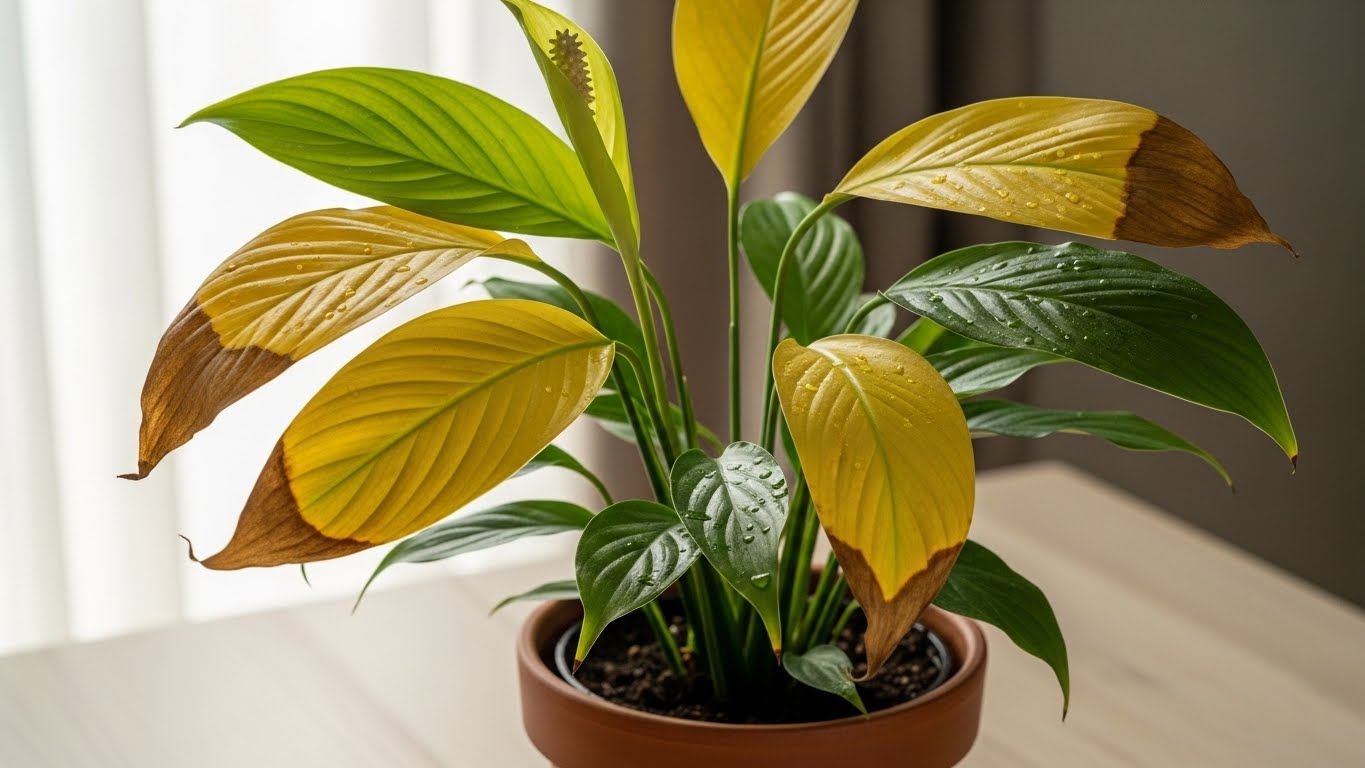
If your Peace Lily leaves are turning yellow, don’t panic! This often happens due to overwatering, underwatering, or poor soil drainage. Check if the leaves feel mushy or crispy—these can signal issues. Make sure your plant gets enough light and nutrients, which are essential for its health. Avoid putting it near drafts or heating vents. By addressing these factors, you can bring back its vibrant green color. Stick around to discover more helpful tips!
Key Takeaways
- Insufficient light exposure can cause yellowing leaves; ensure your Peace Lily receives adequate indirect light for optimal growth.
- Overwatering or underwatering leads to stress; check soil moisture regularly and allow the top inch to dry out before watering again.
- Nutrient deficiencies may result in yellowing; use a balanced fertilizer during the growing season to provide essential nutrients.
- Pests like spider mites or aphids can damage leaves; inspect for infestations and treat with insecticidal soap or neem oil.
- Maintain humidity levels between 50-60% and avoid temperature fluctuations to prevent environmental stress on the plant.
Understanding Peace Lily Care
When you bring a Peace Lily into your home, you’re not just adding a beautiful plant; you’re inviting a little piece of nature that needs proper care to thrive. To keep your Peace Lily happy, start with regular watering—just enough to keep the soil moist, but not soggy. Pruning is essential, too; snip away any yellowed leaves to encourage new growth. If you’d like to expand your plant family, consider peace lily propagation by dividing the root clumps during repotting. This way, you can share the beauty with friends or create a lush indoor garden. Remember, a little attention goes a long way in nurturing your Peace Lily, ensuring it flourishes and brightens your space! Proper light conditions are crucial for photosynthesis and flower production.
Common Causes of Yellowing Leaves
Yellowing leaves on your Peace Lily can be a frustrating sight, especially when you’ve put in the effort to care for it. Understanding the yellow leaf causes is vital to keeping your plant healthy. Here are some common peace lily symptoms you might notice:
Yellowing leaves on your Peace Lily can be disheartening, but recognizing the causes is key to maintaining its health.
- Nutrient Deficiency: A lack of essential nutrients can lead to yellowing.
- Poor Light Conditions: Too much or too little light can stress your plant.
- Pests: Insects like spider mites can cause damage and discoloration.
- Temperature Fluctuations: Sudden changes in temperature can shock your Peace Lily, resulting in yellow leaves.
Overwatering: Signs and Solutions
Overwatering is a common mistake many plant owners make, and it can be particularly harmful to your Peace Lily. You might notice overwatering symptoms like yellowing leaves, wilting, and a musty smell. These signs often point to root rot, a serious condition where the roots decay due to excess moisture. To fix this, make sure you’re using a well-draining pot and soil. Allow the top inch of soil to dry out before you water again; this helps prevent sogginess. If your Peace Lily shows severe signs of root rot, you may need to repot it, trimming away any damaged roots. Caring for your plant means being mindful of its water needs—your Peace Lily will thank you!
Underwatering: How to Identify
If you notice your Peace Lily’s leaves starting to droop or curl, it might be signaling that it’s not getting enough water. Identifying underwatering signs can help you act quickly and restore your plant’s health. Check your Peace Lily’s moisture levels by observing the following:
- Leaves appear dry and crispy at the edges.
- The soil feels dry several inches down.
- The plant looks weak and limp.
- Yellowing leaves, especially lower ones, are common.
If you spot these signs, it’s time to give your plant a drink! Gently water until it drains from the bottom, ensuring the soil retains some moisture. Your Peace Lily will perk up, and you’ll be back to enjoying its lush beauty in no time!
Poor Drainage Issues
If your Peace Lily’s leaves are turning yellow, poor drainage might be the culprit. You need to pay attention to the soil composition, pot size, and how often you water. Each of these factors plays an essential role in keeping your plant healthy and vibrant, so let’s explore them together!
Soil Composition Matters
When it comes to keeping your Peace Lily healthy, the soil you choose plays an essential role in its well-being. Poor soil composition can lead to yellowing leaves, so pay attention to a few key factors.
- Soil pH: Aim for a slightly acidic range between 5.5 and 6.5 to promote growth.
- Organic matter: Incorporate materials like compost to boost nutrients.
- Drainage: Verify your mix allows excess water to escape easily.
- Aeration: A well-aerated soil prevents root rot and keeps your plant thriving.
Pot Size Considerations
Choosing the right pot size for your Peace Lily can make a huge difference in its health, especially when it comes to drainage. If the pot is too small, the roots won’t have enough space to grow, leading to waterlogged soil. Conversely, an oversized pot can hold too much moisture, creating poor drainage conditions.
Here’s a quick reference table to help you:
Pot Size | Ideal Root Space | Pot Material | Drainage Type |
|---|---|---|---|
Small | 4-6 inches | Plastic | Limited drainage |
Medium | 8-10 inches | Terracotta | Moderate drainage |
Large | 12+ inches | Ceramic | Excellent drainage |
Extra Large | 14+ inches | Wood | Variable drainage |
Keep these factors in mind, and your Peace Lily will thrive!
Watering Frequency Impact
Understanding how pot size affects your Peace Lily sets the stage for another important aspect of plant care: watering frequency. If you’re not careful, poor drainage can lead to water stress, causing those vibrant leaves to turn yellow. Striking a moisture balance is key to keeping your plant happy.
Here are some tips to help you manage your watering frequency:
- Check the top inch of soil; if it’s dry, it’s time to water.
- Make sure your pot has drainage holes to prevent water from pooling.
- Use a well-draining potting mix that allows excess moisture to escape.
- Adjust your watering schedule based on seasonal changes in humidity.
Nutrient Deficiencies
When your peace lily’s leaves start turning yellow, it might be a sign that it’s not getting the essential nutrients it needs. Understanding the signs of deficiency can help you spot the issue early, allowing you to give your plant the best chance to thrive. By correcting any nutrient imbalance, you’ll not only restore your peace lily’s vibrant color but also promote healthy growth!
Essential Nutrients for Growth
A healthy Peace Lily thrives on a balanced diet of essential nutrients, and without them, you might notice those beautiful green leaves turning a distressing shade of yellow. Ensuring proper nutrient absorption is essential for your plant’s growth. Here are some key minerals your Peace Lily needs:
- Nitrogen: Boosts healthy leaf growth.
- Phosphorus: Supports root development and flowering.
- Potassium: Enhances overall plant health and stress resistance.
- Magnesium: Crucial for photosynthesis and leaf stability.
When your Peace Lily lacks these essential nutrients, it can lead to yellowing leaves. Regularly check your soil and consider a balanced fertilizer to keep your plant thriving. Remember, a well-fed Peace Lily is a happy Peace Lily!
Signs of Deficiency
Noticing changes in your Peace Lily’s leaves can be a clear indication that something’s off. If the leaves start to turn yellow, it might signal a nutrient imbalance. Each nutrient plays a crucial role, and deficiencies can lead to visible symptoms. For instance, a lack of nitrogen often shows up as yellowing leaves, while insufficient potassium can cause browning tips. It’s also essential to reflect on soil acidity—if your soil’s pH is off, it can hinder nutrient absorption, making your plant struggle. Keep an eye on your Peace Lily and make sure it’s getting the right balance of nutrients. Understanding these signs can help you nurture your plant back to health and keep it thriving in your home.
Correcting Nutrient Imbalance
To bring your Peace Lily back to vibrant health, correcting any nutrient imbalance is key. Start by evaluating its current condition—yellowing leaves often signal nutrient deficiencies. Make certain you’re using the right nutrient sources, like balanced fertilizers, to nourish your plant. Here are a few tips to help you out:
- Use a balanced fertilizer, ideally one with equal parts nitrogen, phosphorus, and potassium.
- Apply fertilizers during the growing season, typically spring and summer.
- Watch for signs of over-fertilization, like brown leaf tips, and adjust accordingly.
- Regularly check soil pH to verify nutrients are accessible.
Pests and Diseases
When you notice your Peace Lily’s leaves turning yellow, it might be time to investigate potential pests and diseases that can affect your plant’s health. Pests like spider mites and aphids can cause a pest infestation, sucking the life out of your lovely plant. Look for tiny webs or sticky residue; these are signs that your Peace Lily needs attention. For disease management, watch out for symptoms like leaf spots or mildew, which indicate fungal or bacterial issues. It’s crucial to act quickly, using insecticidal soap or neem oil for pests, and removing affected leaves for diseases. Keeping your plant clean and healthy can help prevent these problems and guarantee your Peace Lily thrives!
Environmental Stress Factors
When caring for your Peace Lily, it’s essential to pay attention to environmental stress factors like temperature extremes and humidity levels. If your plant experiences sudden changes in temperature or isn’t getting enough moisture in the air, you might notice those lovely leaves turning yellow. Understanding these elements will help you create the perfect home for your Peace Lily to thrive!
Temperature Extremes
Temperature extremes can really stress out your peace lily, leading to those frustrating yellow leaves you might’ve noticed. It’s important to keep an eye on temperature regulation, as both heat stress and cold drafts can harm your plant. Here are some tips to help you create a cozy environment for your peace lily:
- Keep it between 65°F and 85°F (18°C to 29°C) for ideal growth.
- Avoid placing it near heating vents or air conditioning units, which can cause sudden temperature changes.
- Don’t let it sit in a cold room, especially during winter nights.
- Monitor for signs of stress; if you see yellow leaves, it might be time to adjust its location.
Your peace lily will thank you for it!
Humidity Levels
If you want your peace lily to thrive, you can’t overlook the importance of humidity levels in its environment. Peace lilies adore humidity, and their humidity requirements are higher than most houseplants. Ideally, you should keep the humidity around 50-60%. If your home is too dry, those lovely leaves might start to turn yellow. You can boost humidity by misting the leaves, using a humidifier, or placing a tray of water nearby. Remember, humidity monitoring is key; consider getting a hygrometer to check the moisture in the air. By keeping an eye on those humidity levels, you’re giving your peace lily the cozy environment it needs to flourish, ensuring it remains healthy and vibrant.
Temperature Fluctuations
Even though peace lilies are known for their lush, green leaves and stunning white blooms, they can be quite sensitive to their surroundings, especially when it comes to temperature fluctuations. If you notice yellowing leaves, it might be a sign your plant’s struggling with temperature regulation. Maintaining climate stability is key to keeping your peace lily healthy.
Peace lilies thrive in stable temperatures; yellowing leaves signal they may be struggling with their environment.
Here are some tips to help you manage temperature for your plant:
- Keep your peace lily away from drafty windows and doors.
- Avoid placing it near heating vents or radiators.
- Make sure the room temperature stays between 65°F and 85°F (18°C to 29°C).
- Monitor sudden temperature changes, especially during seasonal shifts.
With a little care, your peace lily will thrive!
Light Exposure Problems
When peace lilies don’t get the right amount of light, they can start to show signs of distress, like yellowing leaves. These beautiful plants thrive in bright, indirect sunlight, so it’s important to find that sweet spot. If your peace lily’s in a dark corner, it might not receive enough light intensity, causing those lovely leaves to fade to yellow. On the flip side, too much direct sunlight can scorch them, leading to similar issues. To keep your plant happy, try placing it near a window with filtered light or using sheer curtains to soften the rays. Remember, a little adjustment can make a big difference in your peace lily’s health and happiness!
Soil Quality and Composition
Soil quality and composition play an essential role in keeping your peace lily healthy and vibrant. If you notice those yellowing leaves, it might be time to take a closer look at the soil. The right soil guarantees your peace lily gets the nutrients it needs, while maintaining the perfect soil pH and organic matter levels. Here are some key points to take into account:
- Use a well-draining potting mix that retains some moisture.
- Verify the soil pH is between 5.8 and 6.5 for ideal growth.
- Incorporate organic matter, like compost, to enrich the soil.
- Avoid compact soil, which can suffocate roots and hinder water absorption.
Repotting Considerations
Repotting your peace lily can be a game-changer in keeping it healthy and vibrant, especially if those yellow leaves are making an appearance. Knowing the right repotting timing and using proper repotting techniques can make all the difference.
Repotting Timing | Repotting Techniques |
|---|---|
Spring | Choose a slightly larger pot. |
Every 1-2 years | Use well-draining soil mix. |
When root-bound | Gently loosen roots. |
After flowering | Water thoroughly before repotting. |
Keep an eye on your peace lily’s growth. If it seems cramped or the soil drains poorly, it’s time to repot! With a little care, your peace lily will thrive again, and those yellow leaves will be a thing of the past.
Seasonal Changes and Their Impact
As the seasons change, your Peace Lily may feel the effects of temperature fluctuations and varying light availability. Cooler months can cause the plant to struggle, leading to yellowing leaves, while increased sunlight in spring might boost growth but could also overwhelm it if it’s too intense. By paying attention to these seasonal shifts, you can better care for your plant and keep those leaves vibrant and green!
Temperature Fluctuations Effects
When temperatures swing dramatically, your Peace Lily can react in surprising ways, especially during seasonal changes. These fluctuations can lead to temperature stress, causing those vibrant green leaves to turn yellow. It’s crucial to maintain a stable environment for your plant. Here’s how you can help your Peace Lily thrive:
- Keep it away from drafts: Protect it from cold air blowing from windows or doors.
- Avoid extreme heat sources: Position it away from heaters or radiators.
- Monitor nighttime temperatures: Verify the temperature doesn’t drop too low at night.
- Use a thermometer: Regularly check the temperature to aid in temperature regulation.
Light Availability Changes
Light plays an essential role in the health of your Peace Lily, and as the seasons change, so does the availability of natural sunlight. During spring and summer, light intensity increases, providing your plant with the energy it craves. However, as autumn and winter roll in, those seasonal shifts can lead to lower light levels, making your Peace Lily vulnerable to stress. You might notice yellowing leaves, a sign it’s not getting enough light. To help your plant thrive, consider moving it closer to a window or using a grow light during darker months. Remember, balancing light needs with temperature and moisture is key to keeping your Peace Lily happy and healthy throughout the year!
Tips for Preventing Yellow Leaves
To keep your Peace Lily looking vibrant and healthy, it’s essential to take proactive steps to prevent those dreaded yellow leaves. A consistent care routine is your best friend in yellow leaf prevention. Here are some tips to guarantee your plant stays lush and happy:
- Water regularly, but let the top inch of soil dry out between waterings.
- Place your Peace Lily in bright, indirect light; avoid harsh direct sunlight.
- Feed your plant with a balanced fertilizer every few months during the growing season.
- Monitor humidity levels; Peace Lilies thrive in higher humidity, so consider misting them or using a pebble tray.
Conclusion
To wrap it up, keeping your peace lily healthy is like nurturing a friendship; it requires attention, care, and understanding. By identifying the causes of yellowing leaves—like overwatering or poor soil—you can help your plant thrive. Remember to adjust your watering habits, check for drainage issues, and provide quality soil. With a little love and the right conditions, your peace lily will bounce back, showing off its vibrant green leaves once again!


