
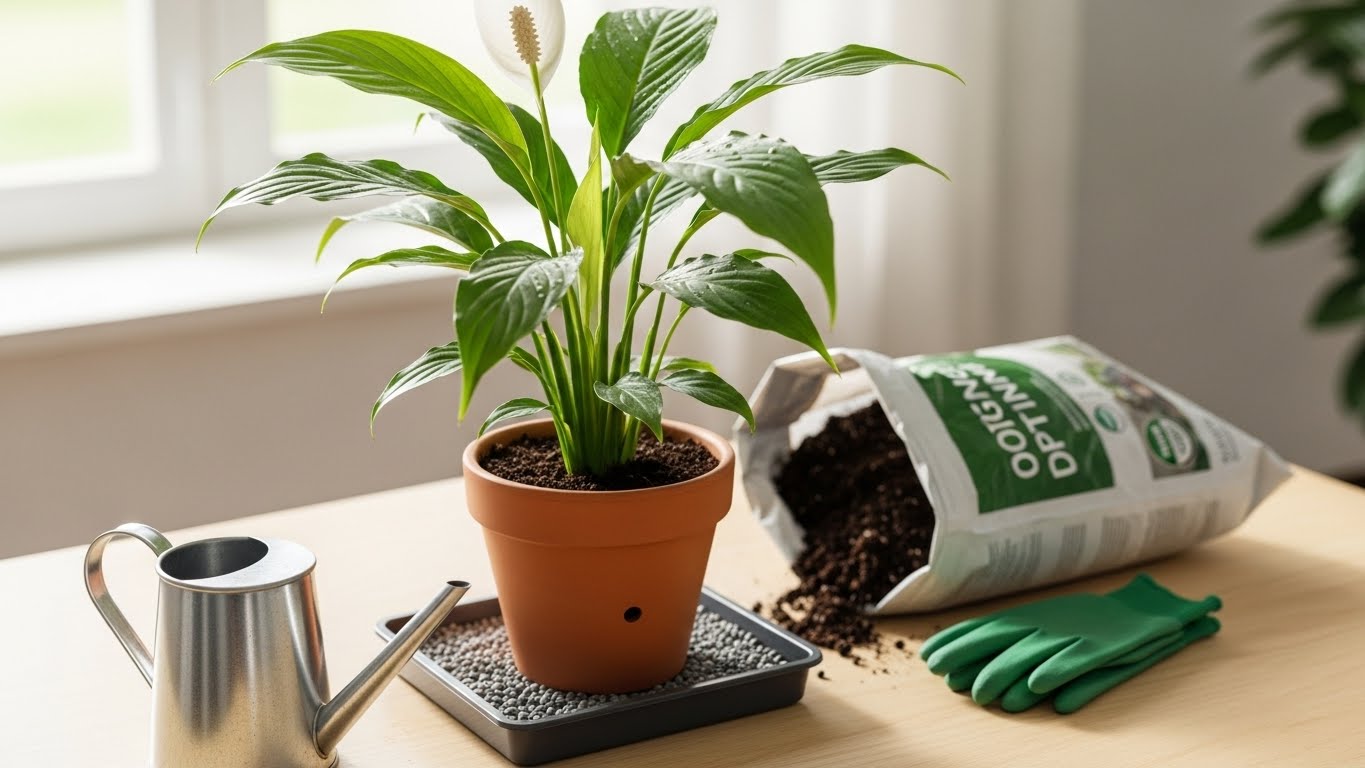
If you’re new to caring for Peace Lilies, you’re in for a treat! These elegant plants thrive in bright, indirect light, but they can survive in low light too. Water them when the top inch of soil feels dry and make sure to use well-draining soil. Keep an eye out for pests like spider mites and yellowing leaves, which can signal stress. Excited to discover more about keeping your Peace Lily happy? There’s even more to learn!
Key Takeaways
- Provide bright, indirect light and avoid direct sunlight to ensure healthy growth and blooming.
- Use a well-draining potting mix and choose a pot with drainage holes.
- Water when the top inch of soil feels dry, adjusting frequency based on the season.
- Regularly check for pests like spider mites and mealybugs to maintain plant health.
- Monitor for stress signs, such as yellowing leaves or drooping, and adjust care accordingly.
Understanding Peace Lily Basics
When you first encounter a Peace Lily, you might be struck by its elegant, glossy leaves and stunning white blooms. This beautiful plant isn’t just a pretty face; it has a rich peace lily history. Native to tropical rainforests, it symbolizes peace, purity, and tranquility, making it a perfect addition to your home. Many believe that having a Peace Lily brings good luck and harmony, filling your space with positive energy. Recognizing its importance isn’t just about aesthetics; it connects you to nature’s soothing qualities. Understanding peace lily symbolism can deepen your appreciation for this lovely plant, reminding you of the calm and serenity it represents. Furthermore, its ability to purify negative energy makes it a popular choice in Feng Shui practices. So, embrace its beauty and let it inspire peace in your life!
Ideal Lighting Conditions
When it comes to lighting, peace lilies thrive best in bright, indirect light, which helps them flourish and produce those gorgeous blooms. Don’t worry if your space isn’t super sunny; these plants have a low light tolerance, making them perfect for cozy corners. Just remember, direct sunlight can scorch their leaves, so be mindful of their spot to keep them happy and healthy!
Bright Indirect Light
Have you ever wondered what makes the Peace Lily thrive? The secret lies in its love for bright indirect light. When you choose the right spot for your plant, you’re giving it the perfect chance to flourish. Here’s what to keep in mind for ideal light exposure and plant placement:
- Soft, filtered sunlight keeps the leaves vibrant.
- Avoid direct sun that can scorch those lovely green leaves.
- Near a window with sheer curtains works wonders.
- Rotate your plant occasionally for even growth.
Low Light Tolerance
While bright indirect light is perfect for a Peace Lily, don’t worry if your space doesn’t get much sunlight. These plants are incredibly adaptable, thriving even in low-light conditions. One of the fantastic low light benefits is their ability to survive and still produce those beautiful white blooms, giving your space a touch of elegance.
Here’s a simple breakdown of Peace Lily lighting needs:
Light Condition | Growth Rate |
|---|---|
Low Light | Slower growth |
Indirect Bright Light | Ideal growth |
Direct Sunlight | Harmful |
Avoid Direct Sunlight
To keep your Peace Lily thriving, you must avoid direct sunlight, as it can scorch the leaves and hinder the plant’s growth. Instead, focus on the right peace lily placement to guarantee it gets the gentle light it craves.
Consider these tips for ideal sunlight exposure:
- Choose a location with filtered light, like near a sheer curtain.
- Avoid windows that face direct sunlight, as they can be too harsh.
- Monitor the leaves; if they turn yellow, it’s a sign of too much light.
- Rotate your plant occasionally to guarantee even growth.
Watering Your Peace Lily
When it comes to watering your Peace Lily, keeping a careful eye on the soil is essential because these lovely plants thrive on just the right amount of moisture. Aim to water when the top inch of soil feels dry but don’t let it stay too dry for too long.
Watering Frequency | Ideal Water Temperature | Signs of Overwatering |
|---|---|---|
Once a week | Room temperature (68-72°F) | Yellowing leaves |
Adjust in winter | Avoid cold water | Wilting |
Check more often in summer | Root rot |
Using room-temperature water helps avoid shocking your plant. By observing these details, you’ll create a nurturing environment for your Peace Lily to flourish.
Soil and Potting Recommendations
To keep your Peace Lily thriving, choosing the right soil and pot is essential. You’ll want a well-draining mix that allows moisture to escape while still holding some nutrients, and selecting the right pot size can make all the difference in your plant’s growth. Plus, knowing when to repot will help your Peace Lily flourish for years to come!
Ideal Soil Mix
Finding the right soil mix is essential for keeping your Peace Lily happy and thriving. A well-balanced mix will support its growth while ensuring proper drainage. Here are some key elements to reflect on:
- Organic amendments like peat moss or compost enrich the soil, promoting healthy roots.
- A blend of potting soil and perlite improves drainage importance, preventing waterlogged conditions.
- Aim for a slightly acidic pH, keeping your plant vibrant and flourishing.
- Regularly check moisture levels to maintain that perfect balance between wet and dry.
With these tips, you’ll create a cozy environment for your Peace Lily to flourish, making your plant parent journey a joyful experience. Remember, a happy plant means a happy home!
Pot Size Guidelines
Choosing the right pot size for your Peace Lily is just as important as the soil mix you create. A pot that’s too small can restrict growth, while one that’s too big may hold excess moisture, leading to root rot. Aim for a pot size that’s about 1-2 inches larger in diameter than your plant’s current container. This gives your Peace Lily room to grow without overwhelming it. Always verify your pot has drainage holes to prevent water from pooling at the bottom, which can suffocate the roots. Using a well-draining potting mix will help maintain the right moisture level. Remember, the perfect pot size helps your Peace Lily thrive and keeps it happy in its new home!
Repotting Frequency Tips
Repotting your Peace Lily isn’t just about changing the pot; it’s an essential step in keeping your plant healthy and happy. Recognizing repotting signs is key—like tightly packed roots or yellowing leaves. Aim to repot every 1-2 years, but keep an eye on root health.
Here are some tips to guide you:
- Look for roots peeking out of the drainage holes.
- Notice if the soil dries out too quickly.
- Observe if growth has slowed considerably.
- Check for signs of wilting, even with proper watering.
Fertilizing for Optimal Growth
When it comes to keeping your Peace Lily thriving, fertilizing correctly is essential for ideal growth. To achieve a healthy nutrient balance, consider the plant’s growth stages. During the active growing season, which typically spans spring and summer, your Peace Lily needs more nutrients. A balanced, water-soluble fertilizer works wonders, but be careful not to over-fertilize, as it can harm your plant.
Here’s a quick reference to help you out:
Growth Stage | Fertilizer Frequency |
|---|---|
Spring | Every 4-6 weeks |
Summer | Every 4-6 weeks |
Fall | Every 8-10 weeks |
Winter | No fertilization needed |
Common Pests and Diseases
Even with proper care, your Peace Lily might encounter some pesky pests and diseases that can affect its health. Understanding pest identification and practicing disease prevention is essential for keeping your plant thriving. Here are some common issues to watch for:
- Spider Mites: Tiny, red bugs that leave webbing on leaves.
- Mealybugs: Cotton-like pests that cluster on stems and leaves.
- Root Rot: Caused by overwatering, leading to mushy roots.
- Leaf Spot: Brown spots indicating fungal infections from excess moisture.
Signs Your Peace Lily Needs Attention
Your Peace Lily can be a true delight, but it won’t always thrive on its own, so recognizing when it needs a little extra care is essential. Keep an eye out for leaf discoloration signs, which often indicate stress. Yellowing leaves may mean overwatering, while brown tips can signal underwatering or low humidity. Drooping leaves are another clear sign your plant’s feeling neglected; it might be thirsty or need repotting. Don’t ignore these signals! Addressing them promptly can restore your Peace Lily’s health. Remember, a little attention goes a long way. By tuning into your plant’s needs, you’ll keep it vibrant and flourishing, bringing joy to your space for years to come.
Propagation Techniques for Peace Lilies
Propagation techniques for Peace Lilies can be a fun and rewarding way to expand your collection or share these beautiful plants with friends. You can use division methods or even explore seed propagation, both of which offer unique experiences. Here’s how you can get started:
- Divide your mature plant: Carefully separate the roots into sections, ensuring each has leaves and roots.
- Choose healthy seeds: If you opt for seed propagation, select seeds from healthy blooms for the best chance.
- Provide proper care: After propagating, give your new plants bright, indirect light and keep the soil moist.
- Celebrate growth: Watch as your new plants thrive, bringing joy and beauty to your space.
Enjoy the process and create lasting memories with your Peace Lilies!
Conclusion
Taking care of a peace lily is a rewarding adventure, and with the right knowledge, you’ll have a thriving plant in no time. Remember, every plant has its quirks, so don’t be afraid to learn along the way. By keeping an eye on its needs and providing the right conditions, you’ll watch your peace lily flourish like a champ. So, roll up your sleeves, immerse yourself in plant care, and enjoy the journey!


