
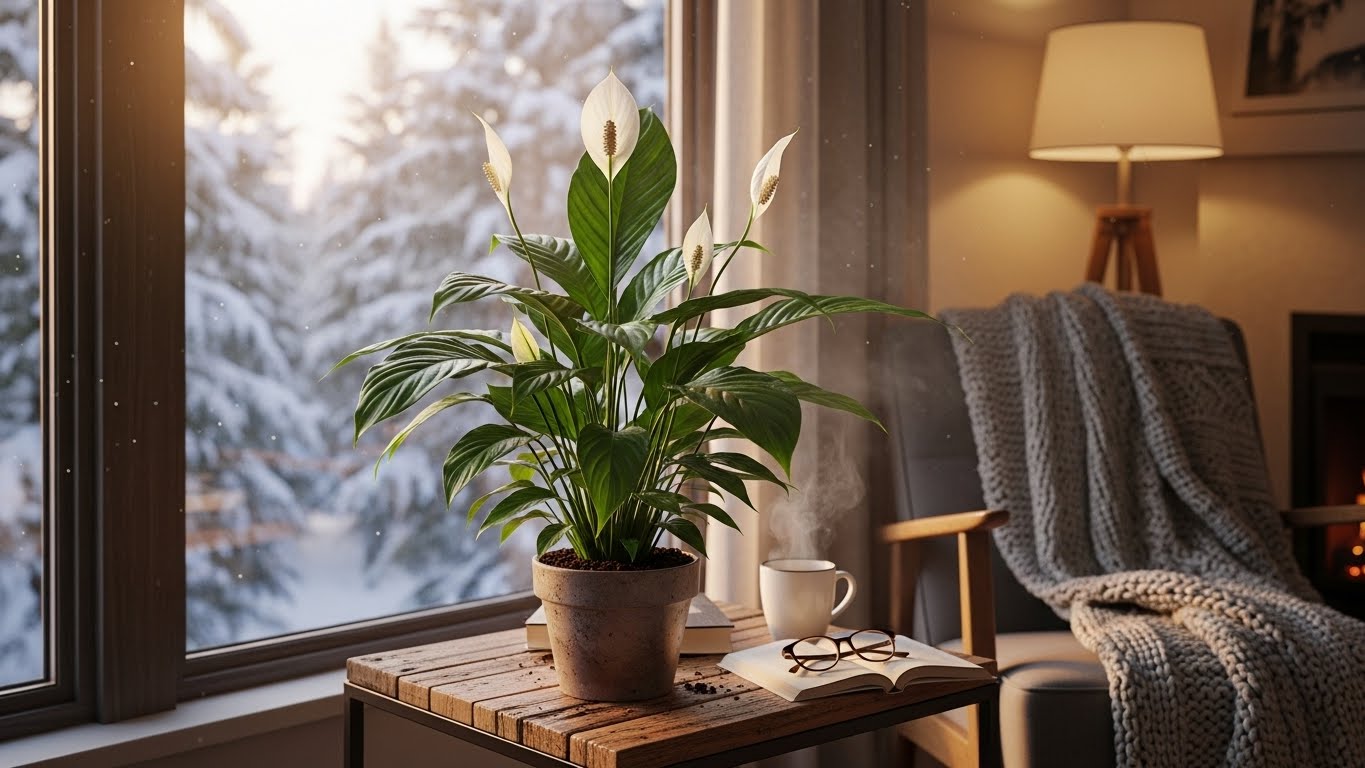
To keep your Peace Lily thriving this winter and prevent cold stress, maintain a cozy indoor environment. Keep the temperature between 65°F and 80°F, away from chilly drafts. Water only when the top inch of soil feels dry, adjusting your routine as growth slows. Boost humidity to around 50%-60% using methods like misting or pebble trays. Don’t forget to prune yellowing leaves! Want to learn more about winter care for your plant? There’s more to explore!
Key Takeaways
- Maintain indoor temperatures between 65°F and 80°F to prevent cold stress in Peace Lilies.
- Shield plants from cold drafts by placing them away from windows and doors.
- Monitor humidity levels, keeping them between 40% and 60% to avoid droopy leaves.
- Adjust watering frequency; check soil moisture before watering to prevent root rot.
- Use balanced fertilizer every 6 to 8 weeks during winter to support healthy growth.
Understanding Cold Stress in Peace Lilies
When you care for your Peace Lily during the chilly winter months, understanding cold stress is essential, as it can greatly affect your plant’s health. Cold stress happens when your plant experiences temperatures below what it can handle, causing its leaves to droop or turn yellow. You’ll notice these signs, and it’s important to act quickly to boost your plant’s resilience. To help your Peace Lily thrive, keep it away from cold drafts, like those from windows or doors. Additionally, maintaining a consistent indoor temperature will provide a cozy home for your plant. Remember, by protecting your Peace Lily from cold stress, you’re not just preserving its beauty; you’re nurturing its overall well-being, keeping it vibrant and healthy all winter long. Regular monitoring of humidity levels is also crucial, as Peace Lilies prefer high humidity to thrive.
Assessing Your Indoor Environment
How can you create the perfect indoor environment for your Peace Lily during winter? Start by evaluating your indoor temperature and other environmental factors. Keeping your plant cozy helps prevent cold stress. Consider the following table to visualize the ideal conditions:
Factor | Ideal Condition | Notes |
|---|---|---|
Indoor Temperature | 65°F – 80°F | Avoid drafts and extremes |
Humidity Levels | 40% – 60% | Use a humidifier if needed |
Light Exposure | Indirect sunlight | Too much sun can scorch leaves |
Watering Frequency | Weekly or bi-weekly | Check soil moisture regularly |
Ideal Temperature Range for Peace Lilies
When caring for your Peace Lily, keeping an eye on the temperature is essential. These plants thrive best in a cozy range between 65°F and 85°F, so make sure your home stays within that zone during the winter months. If the temperature drops too low or rises too high, your Peace Lily might show signs of stress, like drooping leaves or a lack of blooms.
Optimal Temperature Conditions
To keep your Peace Lily thriving during the winter months, it’s essential to maintain ideal temperature conditions. Aim for a cozy range of 65 to 85°F (18 to 29°C). This warmth helps your plant feel secure, even as the world outside gets chilly. Be cautious of temperature fluctuations; sudden drops can stress your Peace Lily. To combat this, make seasonal adjustments by moving it away from drafty windows or heating vents. Consistency is key, so try to keep the temperature stable. Remember, your Peace Lily loves a warm, gentle environment, and when you provide that, you’ll see its vibrant, lush leaves flourish. Nurturing these favorable conditions will keep your plant happy and healthy all winter long!
Temperature Stress Symptoms
Temperature stress can really take a toll on your Peace Lily, and recognizing the signs is essential for keeping it healthy. Your plant’s sensitivity to temperature fluctuations means you might see some clear symptoms when it’s not happy. Pay attention to these signs:
- Wilting leaves: Your Peace Lily may droop or look sad.
- Brown leaf tips: This could indicate the air is too dry or it’s too cold.
- Yellowing leaves: A sign of stress from being too hot or cold.
- Slow growth: If it’s not growing as it should, it might be struggling with temperature issues.
Watering Practices During Winter
As winter settles in, you might notice that your Peace Lily has different needs, especially when it comes to watering. During this chilly season, it’s important to adjust your winter watering routine. The cooler temperatures slow down your plant’s growth, which means it won’t need as much water. Check the top inch of the soil; if it feels dry, it’s time to water. Aim for a balance—too much water can lead to root rot, while too little can cause stress. Focus on moisture retention by using well-draining soil and ensuring your pot has drainage holes. By being attentive to your Peace Lily’s needs, you’ll help it thrive throughout the winter and beyond!
Humidity Levels and Their Importance
To keep your peace lily thriving during winter, you need to pay attention to the humidity levels in your home. Ideally, these plants love humidity levels between 40% and 60%, so if the air feels dry, you might notice some signs of distress, like droopy leaves or brown tips. Let’s explore how to maintain that perfect moisture balance and keep your peace lily happy!
Optimal Humidity Range
When it comes to keeping your Peace Lily happy and healthy, maintaining the right humidity levels is essential. Ideally, you want to keep the humidity between 50% and 60%. This range helps your plant thrive and prevents stress during the colder months. Here are some handy humidity sources to evaluate for effective humidity control:
- Misting: Lightly misting your plant can boost humidity.
- Pebble trays: Place a tray filled with pebbles and water beneath your pot to create a humid microclimate.
- Humidifier: Investing in a small humidifier can provide consistent moisture.
- Grouping plants: Cluster your Peace Lily with other houseplants to naturally increase humidity levels.
Signs of Low Humidity
Understanding the signs of low humidity is vital for keeping your Peace Lily in tip-top shape during winter. If you notice your plant’s leaves curling or browning at the tips, that’s one of the main humidity indicators you should watch for. Additionally, dry air can lead to yellowing leaves, making your beloved plant look less vibrant. Another sign is if the soil dries out faster than usual; this can stress your Peace Lily, affecting its health. To combat these issues, consider using a humidifier or placing a tray of water nearby to increase moisture levels. By being attentive to these signs, you’ll help guarantee your Peace Lily thrives, even when winter brings dry air.
Choosing the Right Location for Your Plant
Choosing the right spot for your Peace Lily is crucial for keeping it happy and healthy, especially during the winter months. The location you choose can noticeably affect its growth and health. Here are some tips for perfect plant placement:
- Use indirect sunlight: Peace Lilies thrive in bright, filtered light but can’t handle direct sun.
- Avoid cold drafts: Keep your plant away from windows or doors that let in chilly air.
- Maintain warmth: Choose a spot where the temperature remains consistently warm, ideally between 65°F and 80°F.
- Consider humidity: A location that naturally retains moisture, like a bathroom or kitchen, can be ideal.
Protecting Your Peace Lily From Drafts
To keep your Peace Lily happy during the winter, it’s essential to protect it from chilly drafts. Start by identifying any drafty areas in your home, like near windows or doors, where cold air might sneak in. You can also use protective barriers, such as moving your plant away from these spots or placing it behind furniture, to create a cozy environment that keeps it thriving.
Identify Drafty Areas
When you’re caring for your Peace Lily, it’s essential to spot drafty areas in your home, as these chilly gusts can stress your plant and hinder its growth. To help with draft detection, keep an eye out for cold corners where drafts often lurk. Here are some tips to find those sneaky spots:
- Check windows and doors for air leaks.
- Feel around baseboards and electrical outlets for cold air.
- Notice if your Peace Lily wilts near drafty areas.
- Observe how the temperature changes with the seasons.
Use Protective Barriers
After identifying those sneaky drafty areas in your home, it’s time to think about how to shield your Peace Lily from those chilly breezes. Using protective barriers can make a huge difference! You can place your Peace Lily away from windows and doors, but if you can’t move it, consider wrapping it in thermal blankets during particularly cold nights. These blankets provide excellent frost protection, keeping your plant cozy and warm. Another option is to use decorative screens or curtains around your plant, creating a shield from those unwanted drafts. Remember, your Peace Lily loves a stable environment, and taking these small steps can help it thrive through winter. Show your green friend some love, and it’ll reward you with stunning blooms!
Adjusting Lighting Conditions in Winter
As the days grow shorter and the sun’s rays become less intense, your Peace Lily needs a little extra help to thrive during the winter months. Adjusting the light intensity in your home can make a big difference. Here are some simple seasonal adjustments you can make:
As winter approaches, ensuring your Peace Lily receives adequate light can help it flourish indoors.
- Move it closer to a window: Find a spot with indirect sunlight.
- Rotate the plant: This guarantees all sides get equal light exposure.
- Use sheer curtains: They diffuse harsh sunlight while still letting some in.
- Consider grow lights: If natural light is scarce, these can provide the boost your Lily needs.
Fertilizing Guidelines for Winter Care
Fertilizing your Peace Lily during the winter months is just as important as adjusting its lighting conditions, ensuring it stays healthy and vibrant. In winter, the plant’s growth slows down, so you’ll want to focus on winter fertilization every 6 to 8 weeks. Choose a balanced, water-soluble fertilizer with equal parts nitrogen, phosphorus, and potassium to maintain a healthy nutrient balance. This helps your Peace Lily retain its lush green leaves and encourages occasional blooms. Remember, less is more during this time; over-fertilizing can stress the plant. Always dilute the fertilizer to avoid burning the roots. By following these guidelines, you’ll keep your Peace Lily thriving and ready to greet spring with beautiful growth!
Pruning and Maintenance Tips
When you take the time to prune and maintain your Peace Lily during the winter months, you’ll not only enhance its appearance but also promote healthier growth. Incorporating simple pruning techniques into your maintenance schedule can make a big difference. Here are some tips to keep your plant thriving:
- Trim away any yellowing or dead leaves to redirect energy.
- Use clean, sharp scissors to prevent damage and disease.
- Prune spent flowers to encourage new blooms.
- Check for any pests hiding in the foliage and remove them promptly.
Recognizing Signs of Distress
How can you tell if your Peace Lily is feeling a bit under the weather? Keep an eye on those beautiful leaves! If you notice leaf discoloration, such as yellow or brown spots, your plant might be struggling. This can signal stress from the cold or improper care. Drooping leaves are another clear sign; they often indicate that your Peace Lily is unhappy, possibly due to a sudden temperature drop or insufficient water. Don’t ignore these signs, as they’re your plant’s way of communicating its needs. By recognizing these distress signals early, you can take steps to help your Peace Lily thrive, ensuring it stays vibrant and healthy throughout the winter months. Remember, prevention is key!
Reviving a Struggling Peace Lily
Reviving a struggling Peace Lily can feel like a bit of a challenge, but don’t fret! With the right reviving techniques, your plant can bounce back beautifully. Here are some steps to help you:
- Check the soil: If it’s too compact, consider making soil adjustments to improve drainage.
- Adjust watering habits: Overwatering can lead to root rot, while underwatering can cause wilting; find a balance.
- Increase humidity: Peace Lilies love moisture, so misting them can help revive their spirit.
- Provide indirect light: Make sure your plant gets the right amount of light; too much direct sun can stress it out.
With a little care, your Peace Lily will thrive again. Just remember, every plant deserves some TLC!
Preparing for Spring: Transitioning Your Plant
As your Peace Lily starts to recover from the winter chill, it’s the perfect time to think about getting it ready for the warmer days ahead. Adjusting your plant for spring growth involves a few essential steps. First, gently clean the leaves to remove any dust that accumulated during winter. This helps the plant absorb more light. Next, consider repotting it in fresh soil, allowing for better drainage and nutrient availability. As you notice the seasonal changes, increase watering gradually, ensuring the soil remains slightly moist but never soggy. Finally, place your Peace Lily in a bright spot, avoiding direct sunlight. With these simple actions, you’ll nurture your plant’s spring growth and create a thriving environment for it to flourish!
Conclusion
By understanding cold stress and adjusting your care routine, you can keep your peace lily thriving through winter’s chill. Imagine the vibrant green leaves and lovely white blooms returning as the days grow warmer. As you prepare for spring, remember the little steps you took to protect your plant, nurturing it back to health. With a bit of attention and care, your peace lily will shine brightly again, ready to greet the sunshine and bring joy to your space.


