
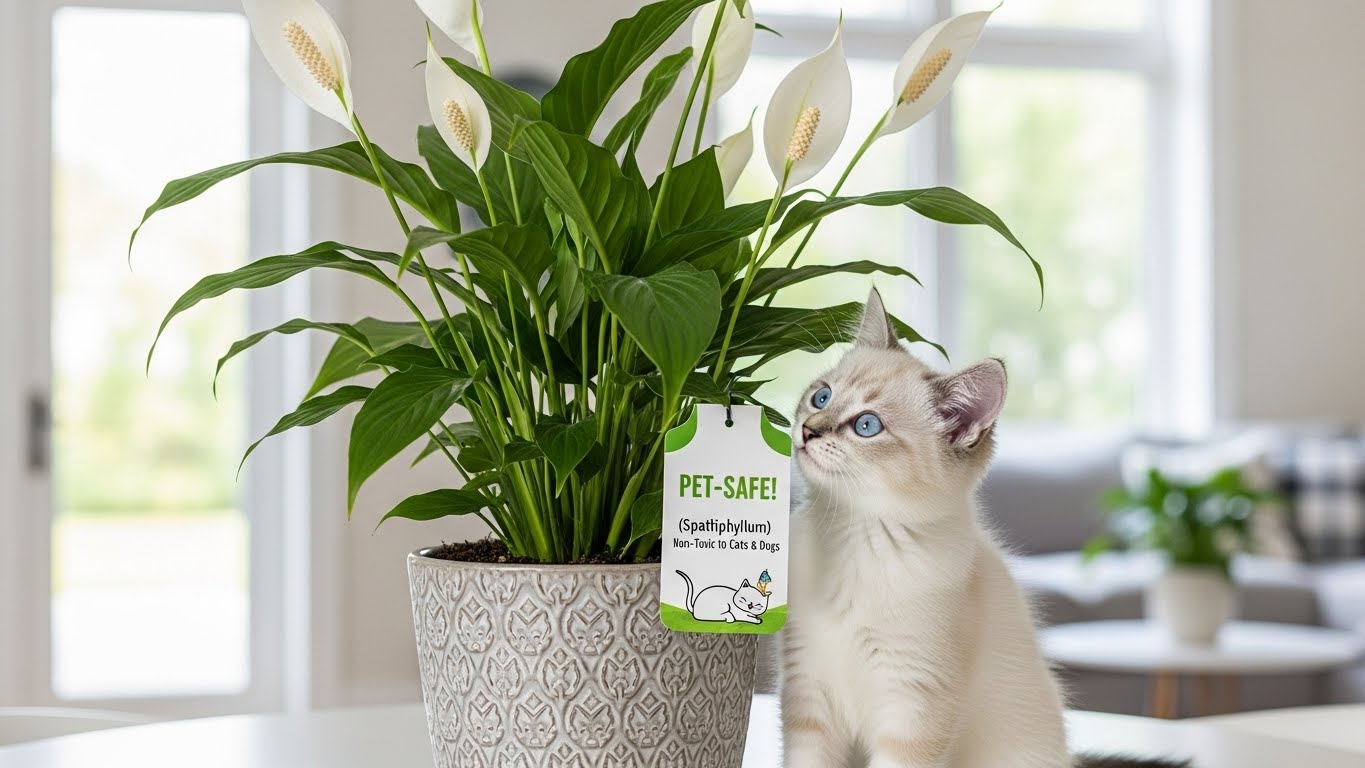
If you’re a U.S. pet owner, you should know that peace lilies are toxic to pets because they have calcium oxalate crystals. These can cause your furry friends discomfort, like mouth irritation and vomiting, if ingested. Keep peace lilies out of your pets’ reach, and monitor them for any symptoms. If ingestion happens, contact your vet immediately. Luckily, there are plenty of pet-friendly plants you can enjoy, and there’s more to learn about keeping your home safe for pets!
Key Takeaways
- Peace lilies are toxic to pets due to calcium oxalate crystals, causing oral irritation and gastrointestinal distress if ingested.
- Symptoms of peace lily poisoning include excessive drooling, vomiting, and swelling in the mouth or throat.
- Immediate veterinary consultation is essential after ingestion; do not induce vomiting without professional advice.
- Long-term exposure to peace lilies can lead to kidney damage, impaired liver function, and chronic gastrointestinal issues in pets.
- Consider pet-friendly plant alternatives, like spider plants or Boston ferns, to maintain a safe home environment for your pets.
Understanding Peace Lily Toxicity
When it comes to houseplants, the peace lily is a popular choice because of its beautiful white blooms and easy care. However, if you have pets, you should be aware of its toxicity. While peace lilies add a lovely touch to your home, they contain calcium oxalate crystals, which can cause discomfort if ingested by your furry friends. For pet safety, it’s vital to place these plants out of reach. When caring for your peace lily, make sure you keep it well-watered but not soggy—this way, you can enjoy its beauty without worrying too much. Just remember, a little precaution goes a long way in keeping both your plants and pets safe and happy. Additionally, being aware of the toxic effects of calcium oxalate can help you make informed decisions about your home environment.
Symptoms of Peace Lily Poisoning in Pets
If your pet happens to munch on a peace lily, you might notice some unsettling signs. Understanding the symptoms overview can help you identify if your furry friend is experiencing toxic reactions. Here are some common symptoms to watch for:
Symptom | Description |
|---|---|
Oral Irritation | Signs of discomfort in the mouth |
Drooling | Excessive saliva production |
Vomiting | Possible upchuck after ingestion |
Swelling | Inflammation in mouth or throat |
These symptoms can be concerning, but recognizing them early is essential. Stay alert, and keep a close eye on your pet, as prompt action can make all the difference in their recovery process.
Immediate Actions to Take if Your Pet Ingests a Peace Lily
Taking quick action is essential if your pet has eaten a peace lily, as their health could be at risk. Follow these steps to guarantee their safety:
- Stay Calm: Your pet can sense your anxiety, so take a deep breath.
- Contact Emergency Contacts: Call your veterinarian or a pet poison hotline for immediate guidance.
- Monitor Symptoms: Keep an eye on your pet for signs like drooling or vomiting, and note the time of ingestion.
- Administer Pet First Aid: If advised, you may need to induce vomiting, but only do this if instructed by a professional.
Long-Term Effects of Peace Lily Ingestion
When a pet eats a peace lily, the immediate effects can be concerning, but what about the long-term consequences? You might not realize that ingestion can lead to potential organ damage or even chronic respiratory issues down the line. It’s essential to understand these risks so you can keep your furry friend safe and healthy.
Potential Organ Damage
Ingesting Peace Lilies might seem like a harmless mistake, but the potential for long-term organ damage shouldn’t be underestimated. If your pet nibbles on this plant, it could lead to serious health issues down the road. Here’s what you should know about the risks:
- Potential kidney damage: Over time, harmful substances can stress the kidneys, leading to dysfunction.
- Liver function: Ingestion can affect liver health, impairing its ability to filter toxins effectively.
- Gastrointestinal distress: Prolonged irritation may result in chronic digestive problems.
- Overall health decline: Continuous exposure can weaken your pet’s immune system.
Being aware of these risks helps you protect your furry friends and keep them healthy and happy!
Chronic Respiratory Issues
Chronic respiratory issues can sneak up on your pet after they’ve nibbled on a Peace Lily, even if the initial symptoms seem mild. You might notice a persistent, chronic cough developing over time, which could lead to further complications. As your furry friend continues to experience respiratory distress, they may also develop respiratory allergies that make breathing even more challenging. These long-term effects can rob them of their energy and zest for life, leaving you worried and wanting to help. If your pet starts showing signs like wheezing or labored breathing, it’s essential to consult your veterinarian right away. They can provide the best guidance to help your pet breathe easier and regain their playful spirit.
Safe Alternatives to Peace Lilies for Pet Owners
Finding the perfect houseplant can be a fun challenge, especially when you want to keep your furry friends safe. Fortunately, there are plenty of pet-friendly plants that add beauty to your home without the worry of toxicity. Here are some great alternatives to Peace Lilies:
- Spider Plant – Known for its air-purifying qualities, it’s a resilient choice.
- Boston Fern – This lush greenery thrives in humidity, making it a lovely addition.
- Areca Palm – A stunning palm that’s safe for pets and adds a tropical vibe.
- Bamboo Palm – Not only is it non-toxic, but it also helps improve indoor air quality.
Choosing these non-toxic greenery options guarantees your space is both beautiful and safe for your beloved pets!
Tips for Pet-Proofing Your Home
When it comes to keeping your home safe for pets, you’ll want to choose plant alternatives that won’t harm them and set up designated areas just for your furry friends. By swapping out toxic plants for pet-friendly options, you can create a beautiful space without worrying about their safety. Plus, establishing specific areas where your pets can roam freely will help keep them happy and secure in their environment.
Safe Plant Alternatives
If you’re a pet owner looking to brighten your home with greenery, don’t worry—there are plenty of safe plant alternatives that can keep both your space vibrant and your furry friends safe. Here are some great options for safe indoor plants and pet-friendly flowers:
- Spider Plant – Easy to care for and purifies the air.
- Bamboo Palm – Adds a tropical feel while being non-toxic to pets.
- Boston Fern – Lush and beautiful, perfect for hanging baskets.
- African Violet – A lovely flowering plant that’s safe for pets.
Designated Pet Areas
Creating designated pet areas in your home not only keeps your furry friends safe but also helps you maintain a peaceful and organized living space. Start by setting up designated pet zones where your pets can play and relax without getting into trouble. Choose areas away from toxic plants, like the peace lily, and consider their safety when deciding on plant placement. Use baby gates or playpens to keep these zones secure while allowing your pets some freedom. Don’t forget to include cozy beds, toys, and fresh water in these areas to make them inviting. By establishing these spaces, you’ll foster a happy environment for your pets, minimizing accidents and keeping your home tidy!
Educating Family and Friends About Plant Safety
Educating family and friends about plant safety is essential, especially since many popular houseplants, like the peace lily, can be harmful to pets. Sharing pet education can help create a safer environment for furry friends. Here are four key points to share:
Educating loved ones about plant safety is crucial for protecting pets from harmful houseplants like peace lilies.
- Know the plants: Familiarize yourself and others with toxic plants, like peace lilies.
- Placement matters: Keep plants out of reach of curious pets.
- Signs of trouble: Teach everyone the symptoms of plant poisoning, such as vomiting or drooling.
- Emergency contacts: Share important numbers, like your vet or local poison control center, for quick access if needed.
Resources for Pet Health and Poison Control
When it comes to keeping your pets safe, knowing where to find reliable resources for pet health and poison control can make a big difference. You should bookmark a few key pet health resources, like the ASPCA Animal Poison Control Center, which offers a 24-hour hotline. This way, if your furry friend gets into something they shouldn’t, you can get immediate help. Additionally, many local veterinarians provide valuable information and can guide you on the best steps to take in emergencies. Remember to keep their poison control contacts handy, so you’re prepared. By having these resources at your fingertips, you’re taking a proactive step in ensuring your pet’s well-being and peace of mind.
Enjoying Houseplants With Pets: Best Practices
Bringing houseplants into your home can brighten your space and improve air quality, but if you’ve got pets, it’s essential to choose the right plants to keep everyone safe. Here are some best practices for enjoying indoor gardening with your furry friends:
- Select pet-friendly plants: Look for options like spider plants, Boston ferns, or bamboo palms.
- Keep plants out of reach: Place them on high shelves or use hanging pots to prevent curious pets from nibbling.
- Monitor plant health: Regularly check for signs of pests or disease, as unhealthy plants can be more appealing to pets.
- Educate your pets: Train them not to chew on houseplants, reinforcing positive behaviors with treats.
With these tips, you can create a lush, safe environment for everyone!
Conclusion
In wrapping up, remember that peace lilies can be beautiful, but they come with risks for your furry friends. Think of your home as a garden, where safety blooms when you choose pet-friendly plants and take precautions. By staying informed and making smart choices, you can enjoy vibrant greenery without worry. So, let your space flourish with life, while keeping your pets safe and sound, turning your home into a haven for both plants and pets.


