
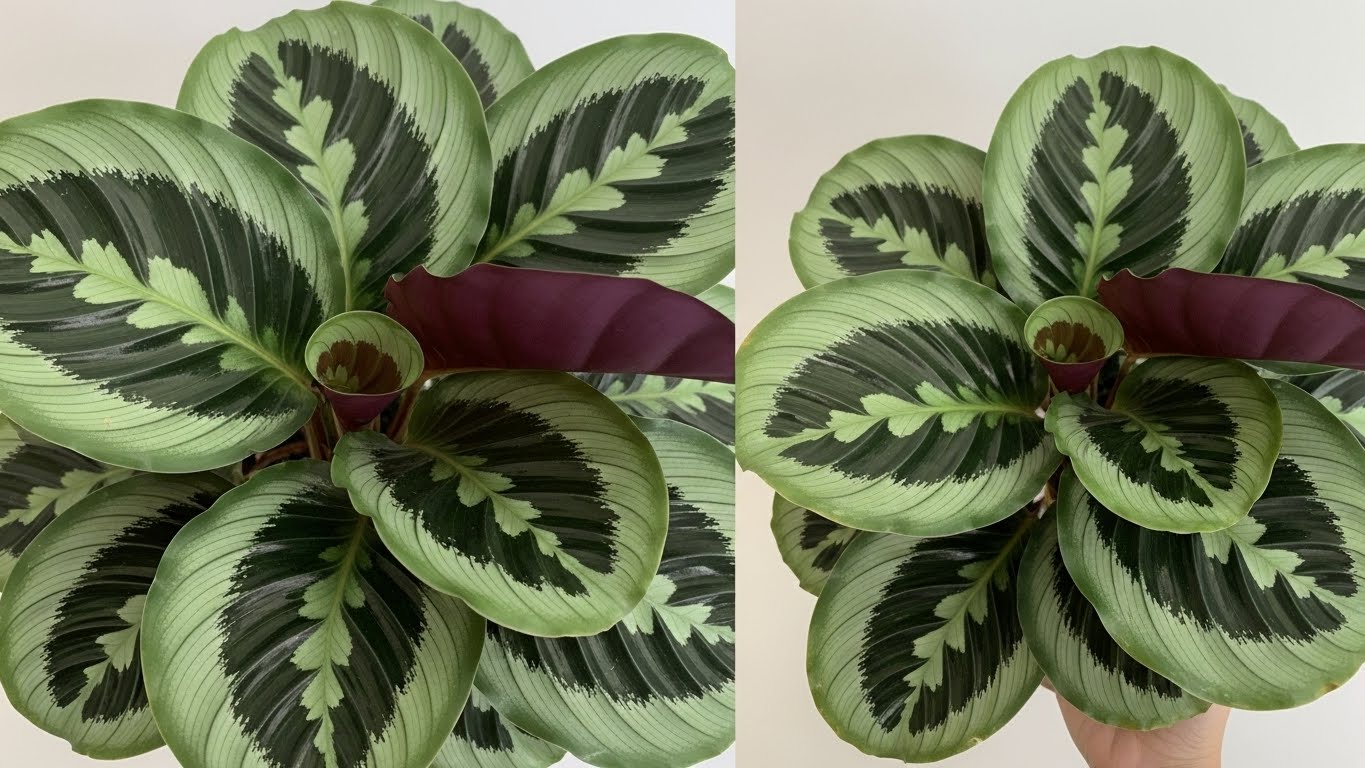
Calathea and Maranta, both part of the Marantaceae family, are known as prayer plants, but they have some key differences. Calathea features larger, oval leaves with vibrant colors, while Maranta boasts smaller, elongated leaves with striking patterns. With regard to growth, Calathea grows taller, up to 3 feet, whereas Maranta tends to stay shorter, around 12 to 18 inches. They have unique care needs too, like differing watering habits and humidity preferences. Curious about how to care for them? You’ll learn more soon!
Key Takeaways
💡 If you’re new to caring for Calathea, this guide is essential for your success.
➜ Get the step-by-step guide
- Calathea features larger, oval leaves with vibrant colors, while Maranta has smaller, elongated leaves with intricate patterns and bold stripes.
- Calathea grows taller, reaching up to 3 feet, whereas Maranta is a low-growing plant, typically 12 to 18 inches tall.
- Both plants prefer bright, indirect light and high humidity, but Calathea maintains color better in lower light than Maranta.
- Calathea requires evenly moist soil, while Maranta prefers slightly drier soil between waterings, highlighting their differing watering needs.
- Calathea is generally more pest-resistant than Maranta, which is more susceptible to common pests like spider mites and aphids.
Botanical Classification
When diving into the world of plants, you might be surprised to learn that Calathea and Maranta, often referred to as prayer plants, belong to the same family and share some fascinating traits. In the taxonomic hierarchy, they’re both part of the Marantaceae family, which includes a variety of beautiful species. When you explore their genus classification, Calathea includes many unique varieties, while Maranta is known for its distinctive leaf patterns. This shared lineage connects them in more ways than one, showcasing how nature intertwines. By understanding their classifications, you gain a deeper appreciation for these plants, making your journey into the world of greenery even more exciting. Each plant tells a story of evolution, beauty, and connection within nature.
Leaf Structure and Patterns
Though you might think all leaves are created equal, Calathea and Maranta showcase striking differences in their leaf structure and patterns that make them truly unique. Calathea leaves tend to be larger and more oval, often adorned with vibrant leaf coloration differences. You’ll notice deep greens, light greens, and even purples, creating a stunning visual feast. On the other hand, Maranta leaves are usually smaller and more elongated, featuring intricate pattern variations with bold stripes. The unique markings on Maranta leaves can be a delightful surprise, often contrasting beautifully with their lush base colors. Both plants truly elevate your space, but their leaves tell distinct stories that reflect their individuality and charm—an enchanting touch for any plant lover!
Growth Habits and Size
When you compare Calathea and Maranta, their growth habits and sizes tell quite a story. Calathea tends to grow a bit taller and more upright, while Maranta often spreads out with its low-growing, sprawling nature. Understanding these differences can help you choose the right plant for your space and care routine! Additionally, Goeppertia reclassification emphasizes the importance of knowing the correct plant names, as it may affect care approaches.
Growth Rate Comparison
Both Calathea and Maranta are popular houseplants known for their stunning foliage, but they also differ considerably in their growth habits and size. When it comes to growth speed, Calathea tends to take its time, often showing slow and steady growth phases. This means you’ll see new leaves emerge gradually, making it a bit of a patient gardener’s plant. On the other hand, Maranta usually grows faster, putting out new leaves more quickly, which can be exciting for those enthusiastic to see their plants flourish. If you’re looking for a lively addition to your space, Maranta might be your best bet, while Calathea offers a more tranquil growing experience. Which one suits your style best?
Size Variations Explained
While Calathea and Maranta both bring vibrant greenery to your home, their size variations can be quite striking. You’ll notice that Calathea often reaches heights of up to 3 feet, showcasing its lush, broad leaves. In contrast, Maranta usually stays more compact, typically growing between 12 to 18 inches tall. These size differences mean that if you’re looking for a bold statement plant, Calathea might be your go-to. However, if you prefer something smaller and more manageable, Maranta could be perfect for you. Understanding these height variations helps you choose the right plant for your space, ensuring it complements your decor while thriving in its environment. Whichever you choose, both will add unique charm to your collection!
Light Requirements
When it comes to light requirements, both Calathea and Maranta have their unique preferences that can really impact their growth. You’ll want to understand the ideal light conditions for each plant, as well as how they handle low light and their preferences for sunlight exposure. Let’s explore how you can create the perfect lighting environment for these beautiful houseplants!
Ideal Light Conditions
Have you ever wondered what kind of light your indoor plants really need to thrive? When it comes to Calathea and Maranta, the right light conditions can make all the difference. Both plants prefer bright, indirect light, which means they’ll flourish near a window without getting scorched by direct rays. Think of it as a cozy spot where they can soak up natural sunlight without being overwhelmed. While they enjoy good lighting, you don’t want to place them in harsh, glaring conditions. Instead, aim for soft, filtered light that mimics their native habitats. Remember, with the right indoor lighting, your Calathea and Maranta will show off their stunning colors and patterns, making your space feel vibrant and alive!
Tolerance to Low Light
Even if you can’t provide your Calathea or Maranta with bright, indirect light, don’t worry—they’re more forgiving than you might think! Both plants show impressive light adaptability, thriving even in lower light conditions. While they prefer bright spots, they can handle shadows better than many houseplants.
💡 Understanding the signs of an unhappy Calathea can save your plant from distress.
➜ Discover proven techniques
Calathea, with its stunning leaves, can tolerate low light without losing its vibrant colors. Similarly, Maranta, known as the prayer plant, can flourish in darker corners of your home. Just remember, too much darkness can lead to leggy growth or dull leaves, so keep an eye on them. With a little care, these beauties will brighten your space, no matter how much light you’ve got!
Sunlight Exposure Preferences
💡 Curling leaves can be a common issue for Calathea owners, and knowing how to fix it is crucial.
➜ See how to implement this
While both Calathea and Maranta can thrive in lower light, they do have their own preferences when it comes to sunlight exposure. Calathea loves bright, indirect light, so place it near a window where it can soak up that gentle glow without getting scorched. Too much sunlight intensity can harm its leaves, causing browning. On the other hand, Maranta enjoys a bit more flexibility; it can handle moderate light but prefers bright, indirect light as well. Both plants benefit from consistent light duration, so try to keep them in similar light conditions daily. By understanding their unique needs, you can create a cozy, vibrant space where these lovely plants can flourish together!
Watering Needs
When you’re caring for Calathea and Maranta, understanding their watering needs is essential to keeping them healthy and vibrant. Both plants thrive on consistent moisture, but their watering frequency can differ slightly. Calathea loves to be kept evenly moist, so you’ll want to water it when the top inch of soil feels dry. Maranta, on the other hand, appreciates a bit more drying out between waterings—aim for a slightly drier soil.
Both plants excel at moisture retention, so be cautious of overwatering. A good rule of thumb is to check the soil regularly, ensuring it’s not soggy. By tuning into their needs, you’ll help your Calathea and Maranta flourish, showcasing their stunning leaves for all to admire.
Humidity Preferences
To keep your Calathea and Maranta thriving, it’s essential to understand their love for humidity. Both plants adore high humidity levels, so you’ll want to create a cozy, moist environment for them. Ideally, aim for humidity levels between 50% and 70%. If your home’s air is dry, consider using a humidifier or placing a tray of water with pebbles beneath their pots to enhance moisture retention. Misting their leaves can also help, but don’t overdo it; too much water can lead to issues like mold. Remember, these beauties thrive on moisture, so keeping their surroundings humid will make them flourish. Your effort in maintaining their preferred humidity will keep them vibrant and happy!
Common Varieties
With the right humidity levels in place, you might be curious about the different varieties of Calathea and Maranta that can brighten up your space. Both plants boast some common varieties that are popular among plant lovers.
For Calathea, you can’t go wrong with the Calathea Orbifolia, known for its large, round leaves with stunning stripes, or the Calathea Medallion, which features intricate patterns that feel like artwork.
In the Maranta family, the Red-Striped Maranta is a favorite, showcasing gorgeous red veins, while the Green Maranta, with its simple, elegant look, is perfect for those who prefer subtle beauty. Each variety brings its charm, so choose what resonates with you!
Pest and Disease Susceptibility
Pest and disease susceptibility can be a real challenge for both Calathea and Maranta plants, especially since these tropical beauties thrive in humid environments that pests love just as much as we do. You’ll find that while Calathea tends to be slightly more pest-resistant, both plants can fall victim to spider mites, aphids, and mealybugs. To keep your plants healthy, focus on disease prevention by ensuring good air circulation and avoiding overwatering. Regularly check for any signs of pests, and don’t hesitate to remove them quickly. By fostering a strong, well-cared-for plant, you can enhance its natural pest resistance, making it less likely to suffer from infestations. Consistent attention goes a long way in keeping your leafy friends thriving!
Care Tips for Optimal Growth
Keeping your Calathea and Maranta healthy goes beyond just managing pests and diseases; it also involves providing the right care for ideal growth. First, focus on soil composition—choose a well-draining mix rich in organic matter to keep their roots happy. Water them regularly, ensuring the soil stays moist but not soggy. During the growing season, don’t forget fertilizer application; a balanced, water-soluble fertilizer every 4-6 weeks will give them a boost. Both plants thrive in bright, indirect light, so find the perfect spot in your home. Finally, maintain humidity levels above 50%—a simple pebble tray or humidifier can make a world of difference. With these tips, your leafy friends will flourish beautifully!
Conclusion
In the showdown of Calathea vs. Maranta, both bring their unique charms to your indoor jungle. With their stunning leaves and specific care needs, you can’t go wrong with either plant. Just remember, whether you’re drawn to the bold patterns of Calathea or the striking shapes of Maranta, providing the right light, water, and humidity is key to keeping these beauties thriving. So, choose your favorite and let it flourish, brightening your space like a splash of color!
💡 Fertilizing your Calathea correctly can make a significant difference in its growth and health.
➜ Master this approach


