
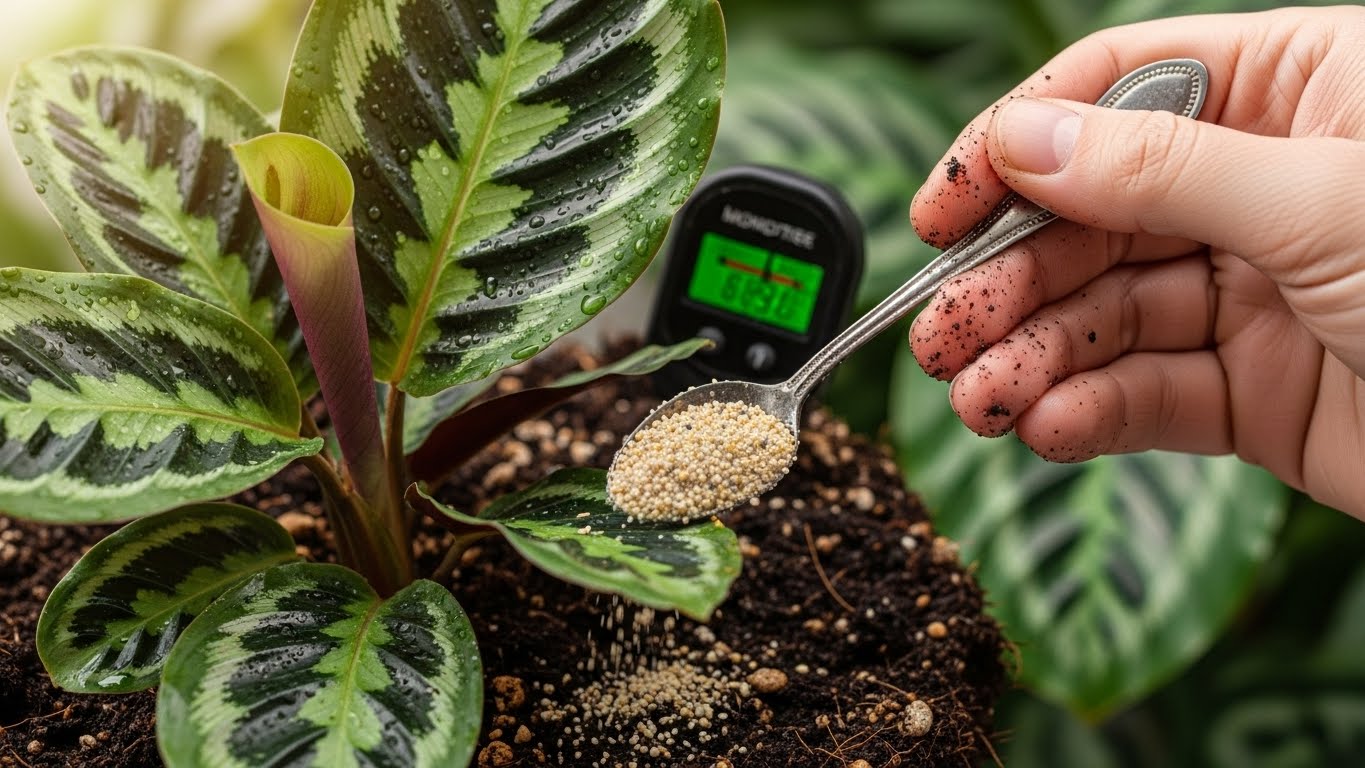
Yes, Calatheas need fertilizer to stay vibrant and healthy! Use a balanced liquid fertilizer or organic options like fish emulsion and worm castings. Fertilize every 4-6 weeks during the growing season, but ease off in fall and winter when growth slows down. Remember, proper watering before applying fertilizer prevents root issues. Avoid over-fertilizing, as it can harm your plant. Want to master the art of feeding your Calathea? You’ll find more tips ahead!
Key Takeaways
💡 If you’re new to Calathea care, this guide is a must-read.
➜ Get the step-by-step guide
- Yes, Calatheas need fertilizer for optimal growth, especially during the growing season when they require more nutrients.
- Use balanced liquid fertilizers or organic options like fish emulsion for gentle nourishment.
- Fertilize every 4-6 weeks during the growing season; reduce frequency in fall and winter.
- Always dilute fertilizers to half strength and water the plant before application to prevent root burn.
- Monitor for signs of nutrient deficiency, such as yellowing leaves or stunted growth, to adjust fertilization as needed.
Understanding Calatheas and Their Nutritional Needs
When you think about Calatheas, you might picture their stunning, patterned leaves that can brighten up any room, but these tropical plants also have specific nutritional needs that are essential for keeping them healthy and vibrant. Different Calathea varieties, like the Medallion or Rattlesnake, thrive best in well-draining soil that retains moisture without becoming soggy. It’s important to choose a potting mix rich in organic matter, like peat or coconut coir, which helps maintain the balance your plants crave. Keeping their soil requirements in check not only supports their growth but also enhances those beautiful colors you adore. By understanding these elements, you can create the perfect environment for your Calatheas to flourish, ensuring they remain a stunning addition to your space. Additionally, fertilization during active growth is crucial for optimal health, particularly in spring and summer.
Signs That Your Calathea Needs Fertilizer
If you notice your Calathea’s leaves turning yellow, it might be signaling a nutrient deficiency. You may also see stunted growth or a lack of vibrant color in the leaves, which can indicate it’s time for some fertilizer. Paying attention to these signs can help keep your plant healthy and thriving!
Yellowing Leaves Indicate Deficiency
Calatheas can be quite the divas when it comes to their care, and one of the most noticeable signs that your plant might be in need of a little extra love is yellowing leaves. When you spot those leaves turning yellow, it’s often a sign of nutrient imbalance in the soil. This can happen if your Calathea hasn’t received enough fertilizer or if the nutrients have been washed away through watering. To help revive your plant, consider applying a balanced, water-soluble fertilizer diluted to half strength. Watch how quickly your Calathea perks up! Remember, keeping an eye on those leaves can make all the difference in ensuring your beloved plant thrives and stays vibrant.
Stunted Growth Observed Over Time
As you keep an eye on your Calathea, you might notice that it isn’t growing as quickly or as vibrantly as it used to, which can be a clear sign that it’s time for some fertilizer. Stunted growth is often tied to nutrient deficiencies that affect essential growth factors. If your plant’s leaves seem to be staying the same size or the stems look weak, it’s a signal that your calathea care routine needs a boost. Regularly feeding your Calathea with the right fertilizer can help restore its energy and promote healthy growth. Remember, a little love and attention can go a long way, so don’t hesitate to nourish your plant when you see these signs. Your Calathea will thank you!
Poor Leaf Color Intensity
When you notice your Calathea’s leaves looking lackluster or fading in color, it’s a clear sign that it might be time for a nutrient boost! This poor leaf color intensity can indicate that your plant isn’t absorbing nutrients effectively. You might also see leaf pattern changes, which can be a result of insufficient fertilizer.
To bring back that vibrant hue, consider using a balanced, water-soluble fertilizer every 4-6 weeks during the growing season. This will enhance nutrient absorption, helping your Calathea thrive! Just be careful not to over-fertilize, as that can lead to more issues. With a little love and the right nutrients, your Calathea will be back to its stunning self in no time!
Best Types of Fertilizer for Calatheas
Fertilizing your Calatheas is like giving them a tasty treat that helps them thrive. To keep your leafy friends happy, consider using organic fertilizers and liquid nutrients. These options provide a gentle boost without overwhelming their delicate systems.
Here are some of the best types to try:
- Balanced liquid fertilizer: It’s easy to use and quickly absorbed.
- Slow-release organic granules: They feed your plant over time, which is perfect for busy folks.
- Fish emulsion: Packed with nutrients, it gives your Calatheas a natural boost.
Choosing the right fertilizer can make a huge difference in how vibrant and healthy your Calatheas look. Happy feeding!
💡 The right soil mix is crucial for Calathea health.
➜ Discover proven techniques
How to Fertilize Your Calathea Properly
Getting the most out of your chosen fertilizer for Calatheas means knowing how to apply it properly. Start by using the right fertilizer application techniques; dilute the fertilizer to half strength for your Calathea, ensuring you don’t overwhelm the roots. Water your plant thoroughly before applying, as this helps prevent fertilizer burn. Stick to a seasonal fertilization schedule, typically every 4-6 weeks during the growing season, which is spring and summer. In fall and winter, ease off, as your plant’s growth slows down. Always check the soil’s moisture before fertilizing, and if it feels damp, wait a bit longer. With these tips, your Calathea will thrive, showcasing its stunning leaves and vibrant colors!
💡 Identifying and solving common issues is key to maintathisng healthy Calatheas.
➜ Master this approach
When to Fertilize Calatheas Throughout the Year
Although Calatheas are known for their stunning foliage, knowing when to fertilize them throughout the year can make all the difference in keeping them healthy and vibrant. Timing your seasonal fertilization with their growth cycles is key.
- Fertilize during spring and summer, when your Calathea is actively growing.
- Cut back in fall and winter, as their growth slows down and they need less food.
- Use a balanced, water-soluble fertilizer to keep those beautiful leaves looking their best.
Common Mistakes to Avoid When Fertilizing Calatheas
When you’re fertilizing your Calatheas, it’s easy to make a couple of common mistakes that can harm your plants. Over-fertilizing can lead to burnt roots and stunted growth, while choosing the wrong products might not provide the nutrients your plant needs. Let’s explore these pitfalls so you can keep your Calatheas thriving!
Over-fertilizing Risks
Over-fertilizing your Calatheas can lead to some serious problems that you might not expect. You may think giving them extra nutrients is a good thing, but it can actually cause more harm than help. Watch out for these over fertilizing symptoms:
- Yellowing leaves, which can signal nutrient burn
- Brown leaf tips, indicating too much fertilizer
- Stunted growth, as the plant struggles to absorb nutrients properly
The long-term effects of over-fertilizing can be devastating, leaving your beloved Calatheas weak and vulnerable to pests. To keep your plants thriving, always follow the recommended fertilizer guidelines, and remember that less can often be more. Your Calatheas will thank you for it!
Choosing Wrong Products
Choosing the right fertilizer for your Calatheas can be just as important as the amount you use. Many beginners make the mistake of opting for harsh synthetic options, which can damage your plants over time. Instead, consider choosing organic fertilizers that offer gentle nourishment. They promote healthy growth without the risk of chemical buildup.
Also, avoid using products meant for other plants; Calatheas have unique needs. You might think that all-purpose fertilizers are convenient, but they often lack the specific nutrients your Calatheas crave. Remember, it’s about quality over quantity. So, take the time to research and select the right product, and your beautiful Calatheas will thrive with the care they deserve. Happy gardening!
Alternative Ways to Nourish Your Calathea
While many plant owners rely on traditional fertilizers to keep their Calatheas healthy, there are plenty of alternative methods you can explore to nourish these beautiful plants. Embracing organic alternatives not only benefits your greens but also the environment. Here are some great options to contemplate:
- Compost Tea: Brewed from nutrient-rich compost, it’s a fantastic way to promote healthy growth.
- Fish Emulsion: This liquid fertilizer provides essential nutrients and a boost of energy to your plants.
- Worm Castings: Packed with nutrients, they enhance soil quality, ensuring balanced nourishment.
Additionally, you can practice foliar feeding, apply nutrient-rich mulch, or make your own homemade fertilizers. These methods help in nutrient balancing, creating a thriving environment for your beloved Calathea.
Conclusion
To sum up, taking care of your Calathea’s nutritional needs is like giving it a warm hug—crucial for its growth and vigor. By recognizing when it needs fertilizer and choosing the right type, you’re setting the stage for vibrant, healthy leaves. Remember, timing is everything, so don’t rush this process. With a little attention and care, your Calathea will flourish, transforming your space into a lush oasis that brings joy and beauty to your home.
💡 Winter care can significantly impact your Calathea’s health.
➜ Explore advanced methods


