
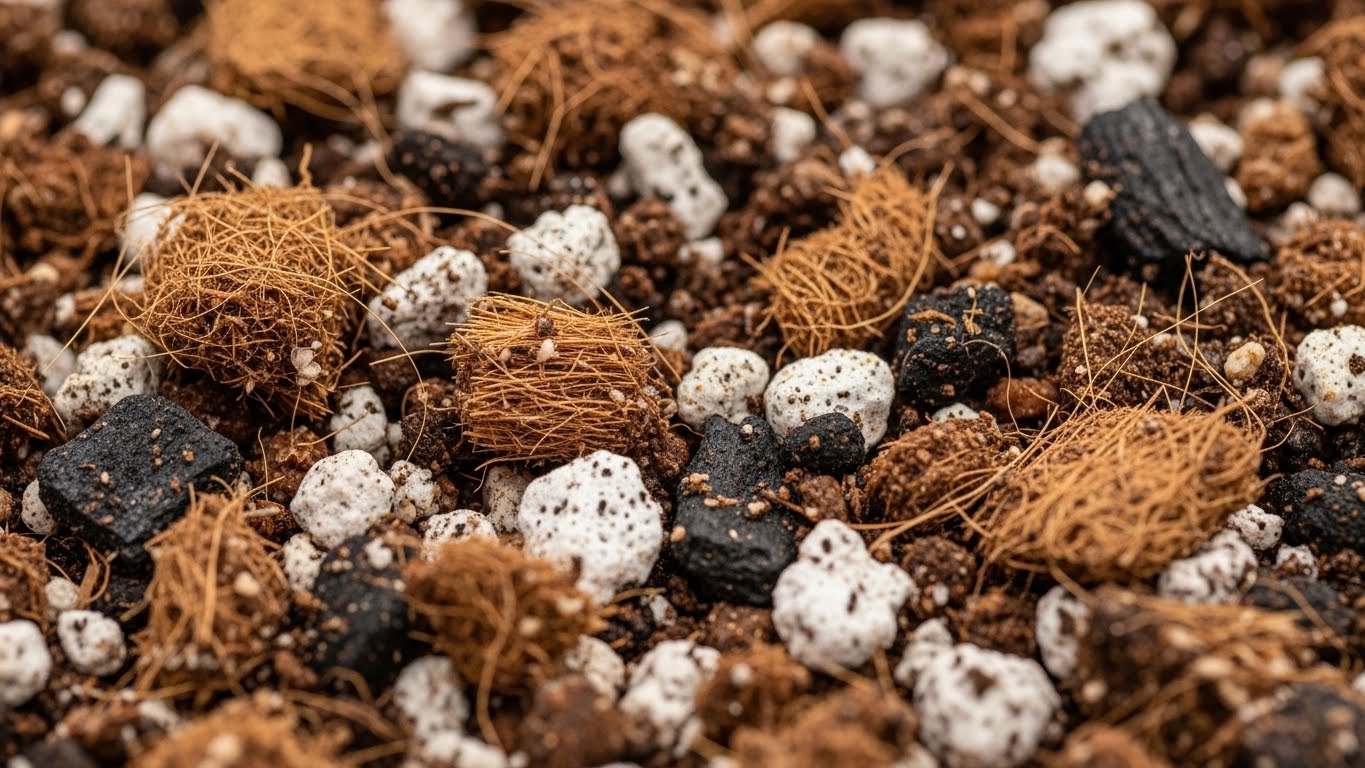
To keep your Calathea’s roots healthy, you need an ideal soil mix! Combine 50% peat moss for moisture, 30% perlite for aeration, and 20% orchid bark for drainage. This mix prevents sogginess while allowing the roots to breathe. Make sure your pot has drainage holes and watch for signs of poor soil like yellowing leaves or bad odors. With the right care, your Calathea will thrive—stick around to discover more tips for keeping it happy!
Key Takeaways
💡 If you’re just starting your journey with Calathea, this guide is perfect for you.
➜ Get the step-by-step guide
- Use a mix of 50% peat moss, 30% perlite, and 20% orchid bark for optimal moisture retention and drainage.
- Incorporate coconut coir for added moisture retention and organic matter enrichment.
- Add worm castings and compost to enhance soil health with beneficial nutrients and microorganisms.
- Ensure the pH level is slightly acidic, ideally between 6.0 and 6.5, for effective nutrient absorption.
- Regularly check for drainage and aeration; signs of poor soil include yellowing leaves and water pooling on the surface.
Understanding Calathea Plant Needs
When you bring a Calathea plant into your home, it’s like welcoming a little tropical friend that thrives on specific care. To guarantee healthy calathea growth, you must pay attention to its needs. These plants adore humidity, so misting their leaves or placing them near a humidifier can make a world of difference. Additionally, they prefer indirect sunlight, as harsh rays can scorch their delicate leaves. When it comes to root development, consistent watering is key—let the top inch of soil dry out before giving your plant a drink. Remember, Calatheas are sensitive to chemicals, so using filtered water can keep them happy. By nurturing these aspects, you’ll enjoy a vibrant, flourishing Calathea for years to come! Maintaining the right moisture levels in soil is essential for preventing root rot and ensuring healthy growth.
Importance of the Right Soil Mix
Choosing the right soil mix for your Calathea is just as important as meeting its watering and lighting needs. The soil composition directly influences root health, which is essential for your plant’s overall well-being. A well-balanced mix provides the necessary nutrients and aeration, allowing roots to breathe and absorb moisture effectively. If the soil is too compact or lacks organic matter, it can lead to root rot or stunted growth, leaving your lovely Calathea in distress. By ensuring you have the right mix, you create a thriving environment, helping your plant flourish with vibrant leaves and stunning colors. Remember, happy roots equal a happy plant, so take the time to choose wisely!
Key Components of an Ideal Soil Mix
To create the ideal soil mix for your Calathea, you need to focus on a few key components that really make a difference. First, think about drainage materials, which help prevent water from sitting around the roots, then consider the benefits of organic matter that enriches the soil. Finally, you’ll want to pay attention to the pH level, ensuring it stays balanced for optimal growth—let’s explore these elements in detail!
Drainage Materials Importance
Creating the perfect soil mix for your Calathea begins with understanding the importance of drainage materials. These components play an essential role in maintaining a healthy soil structure, ensuring your plant’s roots can breathe and thrive. If your soil retains too much moisture, it can lead to root rot, which is something you definitely want to avoid.
Organic Matter Benefits
When it comes to nurturing your Calathea, incorporating organic matter into your soil mix is like giving your plant a nutritious snack that fuels its growth. Organic matter enriches soil health by improving drainage, aeration, and nutrient retention. It also encourages beneficial microorganisms, creating a thriving ecosystem in your pot.
Here’s a quick look at the benefits of organic matter:
Benefit | Description |
|---|---|
Nutrient Supply | Provides essential nutrients for growth |
Moisture Retention | Helps soil hold moisture, keeping roots happy |
Better Drainage | Prevents waterlogging, protecting roots |
Soil Structure | Enhances soil texture for healthier roots |
Microbial Activity | Boosts beneficial organisms for plant health |
With organic matter, your Calathea will flourish beautifully!
Ph Level Considerations
Understanding the pH level of your soil mix is essential for keeping your Calathea happy and healthy. Most Calatheas thrive in slightly acidic soil, with a pH range between 6.0 and 6.5. To guarantee your plant’s roots get the best nutrients, regular pH testing is a must. You can easily check the pH using simple kits available at garden centers. If you discover your soil’s pH isn’t in that sweet spot, don’t worry! Adjusting pH is straightforward. For example, adding sulfur can lower pH, while lime can raise it. By maintaining the right pH, you’ll help your Calathea flourish, showing off its stunning leaves while keeping those roots strong and vibrant!
Retaining Moisture Without Sogginess
To keep your Calathea’s roots happy and healthy, it’s essential to find a soil mix that retains moisture without turning into a soggy mess. Achieving the right moisture balance is key; too much water can lead to root rot, while too little can dry out those delicate roots. Look for a mix that includes ingredients like peat moss, coconut coir, or vermiculite, as they hold moisture well while allowing for air circulation. This balance not only promotes root health but also keeps your plant looking vibrant. Remember, your Calathea craves a little extra love, so check the soil regularly. A happy plant means flourishing leaves and a beautiful addition to your home.
Ensuring Proper Drainage
When it comes to caring for your Calathea, ensuring proper drainage is key to keeping those roots happy and healthy. Without good drainage, excess water can lead to root rot, which no plant parent wants to deal with! Let’s explore why drainage matters, what materials can help, and how to spot the signs that your plant might be struggling.
Importance of Drainage
Proper drainage is essential for healthy Calathea roots, and it can make all the difference in your plant’s well-being. Without proper drainage, water can accumulate, leading to root rot and other issues that jeopardize your beloved plant. You’ll want to explore various drainage techniques, like using pots with holes or creating a mix that encourages excess water to escape. Simple drainage solutions, such as adding perlite or orchid bark, can really help your Calathea thrive. Remember, these plants love humidity but can’t stand soggy roots. So, keep that soil airy and well-drained. By prioritizing drainage, you’re setting up your Calathea for a happy, healthy life, and isn’t that what we all want?
Drainage Materials to Use
Choosing the right drainage materials is essential for keeping your Calathea roots happy and healthy. You want to create a cozy environment where they can thrive. Here are some great options to contemplate:
- Perlite: This lightweight material helps aerate the soil while improving drainage.
- Coconut Coir: A fantastic, eco-friendly option that retains moisture without waterlogging your roots.
- Pumice: Similar to perlite, pumice provides excellent drainage and aeration, making it a solid choice.
- Gravel: Small gravel can be added at the bottom of your pot to encourage extra drainage.
Mixing these materials will guarantee your Calathea roots get the right balance of moisture and airflow. Happy planting!
Signs of Poor Drainage
💡 Understanding fertilization is essential for healthy roots.
➜ Discover proven techniques
Recognizing the signs of poor drainage is essential for keeping your Calathea roots healthy and thriving. If you notice yellowing leaves or a mushy texture at the base of the plant, it might be a sign of root rot. This happens when waterlogging occurs, leaving your roots sitting in too much moisture. You might also see water pooling on the surface of the soil, indicating that the mix isn’t allowing proper drainage. When the soil feels constantly wet, and you can’t seem to dry it out, your Calathea is in trouble. To help your plant recover, consider repotting it in a better-draining mix and guarantee you’ve got the right pot with drainage holes. Your Calathea will thank you!
Nutrient-Rich Additives for Calathea
💡 Repotting is a crucial step after selecting the right soil mix.
➜ Master this approach
When you want your Calathea to thrive, incorporating nutrient-rich additives into the soil mix can make all the difference. These organic additives provide essential nutrient sources that your plant craves. Here are some fantastic options to take into account:
- Coconut coir – This retains moisture while offering nutrients.
- Worm castings – A powerhouse of beneficial microbes and nutrients.
- Compost – Enriches the soil with a variety of organic matter.
- Pelleted organic fertilizers – Slow-release nutrients that keep the soil balanced.
Recommended Soil Mix Recipes
When you’re mixing soil for your Calathea, it’s essential to choose the right ingredients that promote healthy growth. You’ll want to take into account drainage and aeration needs to keep the roots happy and thriving, along with the perfect pH level to support their development. Let’s explore some fantastic soil mix recipes that will help your plants flourish!
Ideal Ingredients for Mix
Creating the perfect soil mix for your Calathea can be like crafting a secret recipe that helps your plant thrive. The right combination of ideal ingredients guarantees a healthy soil texture, giving your roots the best chance to flourish. Here’s a simple recipe to get you started:
- Peat Moss – It retains moisture without becoming soggy, perfect for Calatheas.
- Perlite – This lightweight ingredient promotes aeration, allowing roots to breathe.
- Coconut Coir – It adds organic matter while enhancing moisture retention.
- Orchid Bark – This chunky addition helps create a well-draining yet supportive environment.
Mixing these elements will give your Calathea the cozy home it craves. Enjoy watching your plant thrive with this delightful blend!
Drainage and Aeration Needs
To guarantee your Calathea roots thrive, understanding their drainage and aeration needs is essential. Calatheas love moisture, but they can’t stand soggy roots. You need a soil mix that promotes root aeration while keeping the right soil texture. Here’s a simple guide to help you blend the perfect soil mix:
Component | Purpose | Ratio |
|---|---|---|
Peat Moss | Retains moisture | 50% |
Perlite | Enhances drainage | 30% |
Orchid Bark | Improves aeration | 20% |
Ph Level Considerations
Understanding the pH level of your soil mix is essential for keeping your Calathea healthy and happy. The right pH guarantees that your plant absorbs nutrients effectively. Here are some pH level considerations to keep in mind:
- Aim for a pH of 6.0 to 7.0 – This range is perfect for Calatheas.
- Use pH measurement techniques – Test your soil with a pH meter or test strips to get accurate readings.
- Make soil pH adjustments – If your soil’s pH is too low or too high, you can add lime to raise it or sulfur to lower it.
- Recheck regularly – Keeping an eye on your pH levels helps maintain a thriving environment for your plant.
With these tips, you’ll nurture your Calathea’s roots beautifully!
Store-Bought vs. Homemade Soil Mix
When it comes to choosing the right soil mix for your Calathea, you might find yourself torn between store-bought options and homemade blends. Store-bought options often come pre-mixed with the right nutrients, making them convenient and easy to use. They take the guesswork out, ensuring your plant gets what it needs right from the start. On the other hand, homemade recipes allow you to customize your mix, giving you complete control over the ingredients. You can combine peat moss, perlite, and pine bark to create a well-draining mix tailored to your Calathea’s preferences. Ultimately, the choice depends on your lifestyle and comfort level with mixing ingredients. Whatever path you choose, your Calathea will thrive with the right care!
Signs of Poor Soil Conditions
As you care for your Calathea, it’s essential to keep an eye out for signs of poor soil conditions, which can seriously affect your plant’s health. When the soil texture becomes unsuitable, it can hinder root health, leading to unhappy leaves. Watch for these four telltale signs:
- Water pooling: If water collects on the surface after watering, your soil may be too compacted.
- Foul odor: A rotten smell indicates that the roots are struggling in unhealthy conditions.
- Stunted growth: If your Calathea isn’t growing as expected, the soil might not be providing enough nutrients.
- Yellowing leaves: This could be a sign of root rot or poor drainage in the soil.
Stay attuned to these signs to nurture your Calathea’s well-being!
How to Repot Your Calathea
Repotting your Calathea can be a rewarding experience, especially when you see how quickly they thrive in fresh soil. First, choose the right time; spring is ideal for Calathea repotting since the plant is waking up from dormancy. Gently remove your Calathea from its pot, being careful not to damage the roots. Shake off the old soil and inspect the roots for any signs of rot. Next, prepare your new pot with a well-draining soil mix, rich in organic matter. Place your plant in the center, fill in with soil, and water it lightly. Finally, give it some time to adjust—your Calathea will appreciate the fresh start and reward you with vibrant leaves!
Maintaining Soil Health Over Time
After giving your Calathea a fresh start with a new pot and soil, keeping the soil healthy over time is just as important for its continued growth and vibrancy. Here are some soil rejuvenation techniques that’ll help you maintain that beautiful, nurturing environment:
- Regular soil testing: Check pH and nutrient levels every few months.
- Top-dressing: Add a thin layer of fresh compost or potting mix to replenish nutrients.
- Rotate: Change the position of your pot to guarantee even light exposure, promoting balanced growth.
- Aeration: Gently loosen the soil surface occasionally to improve drainage and airflow.
Tips for Watering and Soil Care
When it comes to keeping your Calathea thriving, understanding the right way to water and care for its soil is vital. To start, create a consistent watering schedule; your plant will appreciate the routine. Aim to water when the top inch of soil feels dry, ensuring you don’t let it sit in water. This helps maintain ideal soil moisture, which is important for healthy roots. Remember, Calatheas love humidity, so misting the leaves or placing a humidity tray nearby can help keep them happy. Check the soil regularly, and if it’s compacted, gently aerate it to encourage air flow. By nurturing your Calathea’s watering needs and soil care, you’ll be rewarded with vibrant, healthy foliage.
Conclusion
Now that you know how to create the perfect soil mix for your Calathea, are you ready to help your plant thrive? With the right balance of moisture and drainage, your Calathea will reward you with stunning, vibrant leaves. But remember, caring for your plant doesn’t stop at the soil. Keep an eye out for signs of stress, and you’ll be well on your way to becoming a Calathea expert. What will your next plant care adventure be?
💡 Identifying root-related issues can prevent further problems.
➜ Explore advanced methods


