
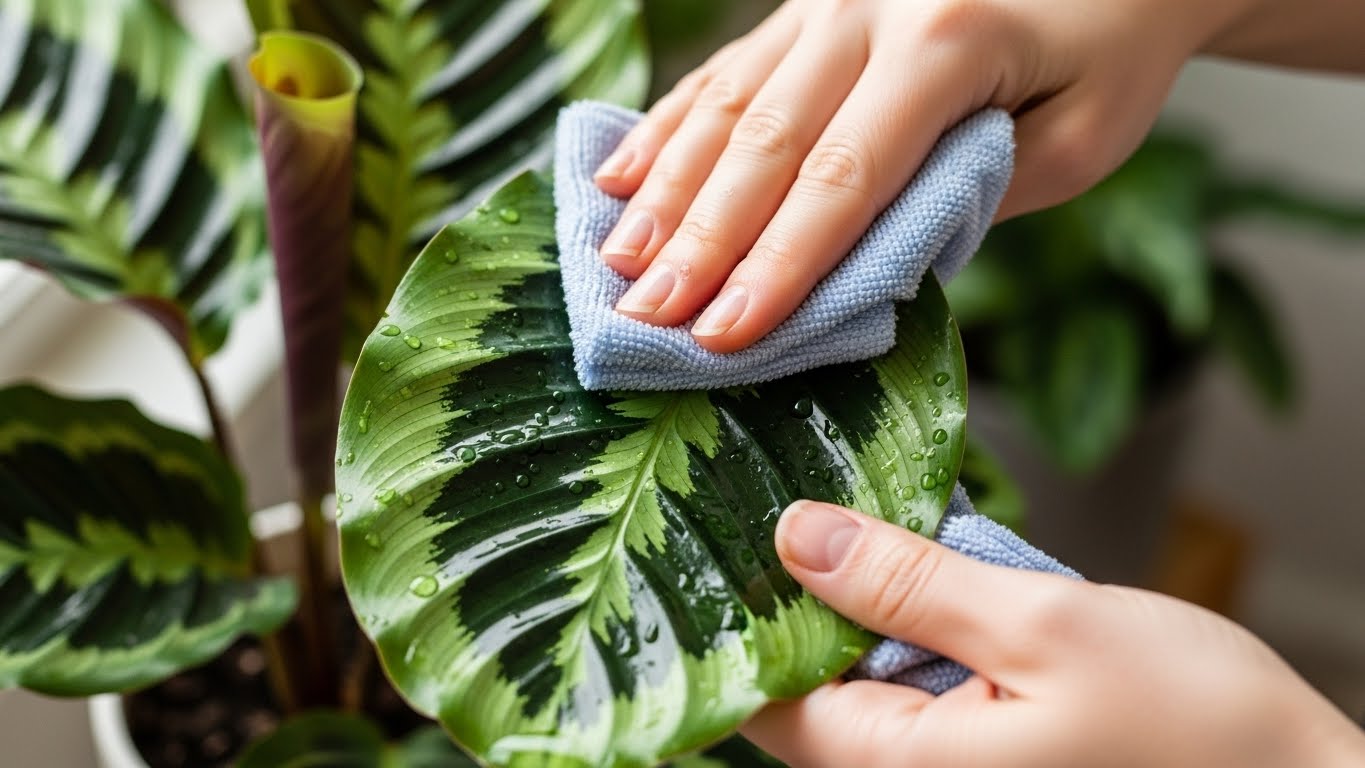
To keep your Calathea looking its best, start by pruning yellow or brown leaves at their base using sharp scissors. Make sure to do this in spring or early summer for the best results. When cleaning, gently wipe the leaves with a damp cloth to remove dust or use a mild dish soap for stubborn spots, then rinse. Regular maintenance helps promote new growth and prevents issues, ensuring your plant thrives beautifully. Curious about more care tips?
Key Takeaways
💡 If you’re noticing yellowing leaves on your Calathea, it’s crucial to understand the underlying issues.
➜ Discover proven techniques
- Use sharp scissors or shears to snip yellow or brown leaves at the base for effective pruning.
- Lightly trim crowded leaves every few weeks to improve airflow and promote healthier growth.
- Gently wipe leaves with a damp cloth to remove dust and enhance light absorption.
- For tougher spots, use a mild dish soap solution, then rinse and dry leaves to prevent water spots.
- Regularly inspect leaves for pests and maintain humidity to support optimal plant health.
Understanding the Calathea Plant
Calathea plants, often called prayer plants, are known for their stunning, vibrant leaves that can brighten up any space. You’ll find various calathea varieties, each with unique leaf patterns that are truly mesmerizing. From the classic Calathea Orbifolia with its bold, circular leaves to the Calathea Medallion showcasing intricate designs, there’s a calathea for every taste! These plants thrive in indirect light, loving humidity and warmth, making them perfect for your cozy corner. By understanding their needs, you’ll help them flourish and maintain their beautiful foliage. Keep an eye out for any browning tips or fading colors, as these signs can guide you in caring for your beloved calathea. Mimicking rainforest conditions can significantly enhance their growth and overall health. Embrace the beauty and charm these plants bring into your life!
Tools Needed for Pruning and Cleaning
Pruning and cleaning your calathea can be a rewarding experience, and having the right tools makes all the difference. To start, you’ll need sharp pruning tools, like small scissors or pruning shears, to make clean cuts without damaging the plant. A soft cloth or sponge is essential for cleaning the leaves, ensuring you gently remove dust and dirt. You might also want a bucket of lukewarm water mixed with a mild soap for thorough cleaning. Finally, keep a pair of gloves handy to protect your hands while you work. With these tools by your side, you’ll feel confident tackling your calathea’s care, making it shine and thrive in your home. Happy pruning!
When to Prune Your Calathea
Knowing when to prune your Calathea is key to keeping it healthy and thriving. Look for signs of overgrowth, like crowded leaves or yellowing edges, which often indicate it’s time for a trim. Seasonal changes also play a role, so understanding the best times to prune can help your plant flourish throughout the year.
Signs of Overgrowth
Have you ever noticed your Calathea looking a bit too lush or unruly? If you see overgrowth symptoms like excessive foliage crowding the center or leaves overlapping, it’s time to take action. This can make your plant look messy and even hinder its growth. Another sign of overgrowth is yellowing or browning leaves, which can be a cry for help. When your Calathea has too many leaves, it struggles to get the light and air circulation it needs. Don’t worry, pruning isn’t scary! It’s a way to keep your plant healthy and vibrant. By addressing these signs of overgrowth, you’ll guarantee your Calathea remains a stunning centerpiece in your home.
Seasonal Pruning Timing
When it comes to keeping your Calathea looking its best, timing is everything! The best time for pruning your plant is during the growing season, which typically runs from spring to early summer. This is when your Calathea is most vibrant and ready for a little TLC. You’ll want to keep an eye on pruning frequency—aim for a light trim every few weeks to encourage new growth. Seasonal considerations matter, too; avoid heavy pruning in fall and winter when your plant is resting. By timing your pruning just right, you’ll promote healthy foliage and a beautiful, lush appearance. Remember, a little attention during the right seasons can make all the difference for your beloved Calathea!
Leaf Health Indicators
Keeping your Calathea healthy and vibrant involves paying attention to its leaves. Watch for leaf discoloration causes, like yellowing or browning, which often mean it’s time for a trim. This could indicate issues with watering or lighting, so check those factors too!
Additionally, keep an eye out for pest damage signs. If you spot tiny webs or sticky residue, pests might be snacking on your plant. Pruning affected leaves not only improves your Calathea’s appearance but also helps it thrive.
Step-by-Step Pruning Techniques
💡 Curling leaves can be a sign of stress in your Calathea, often requiring immediate attention.
➜ Explore advanced methods
Pruning your Calathea leaves can be a rewarding experience that not only enhances the plant’s appearance but also promotes its health. Start by gathering your tools: sharp scissors and clean hands. First, identify any yellow or brown leaves—these are your targets. Using your scissors, snip the damaged leaves at the base, making a clean cut. This pruning technique encourages new growth and improves airflow. Next, check for any leaves that look crowded. Trim those back too, giving your plant room to breathe and flourish. Remember, proper leaf care doesn’t just mean cutting away; it’s about nurturing your Calathea. Regularly assess your plant, and you’ll soon see vibrant, healthy foliage thriving under your care!
Cleaning Calathea Leaves: Best Practices
💡 Proper fertilization is essential for vibrant Calathea leaves, especially after pruning.
➜ Master this approach
Cleaning your Calathea leaves regularly not only keeps them looking stunning but also helps the plant stay healthy and vibrant. Start by gently wiping the leaf surface with a damp cloth to remove dust and dirt. This simple practice allows your plant to better absorb light. For tougher spots, mix a few drops of mild dish soap with water as a cleaning solution. Apply this solution to a cloth and gently scrub those stubborn areas. Rinse the leaves with clean water to remove any soap residue. Finally, don’t forget to dry the leaves with a soft towel to prevent any water spots. With these best practices, your Calathea will shine like never before, showcasing its beautiful patterns!
Tips for Encouraging New Growth
To encourage new growth in your Calathea, it’s essential to pay attention to a few key factors. Start by ensuring your plant gets just the right amount of light, and don’t forget about proper watering techniques that keep the soil moist but not soggy. Finally, a thoughtful fertilization schedule can really help your Calathea thrive and produce those beautiful new leaves you’re looking for!
Optimal Light Conditions
When it comes to creating the perfect environment for your Calathea, light plays an essential role in encouraging new growth. These beautiful plants thrive best in bright, indirect light. Direct exposure to natural sunlight can scorch their delicate leaves, so it’s crucial to find that sweet spot where they can soak up the brightness without getting burned. Placing your Calathea near a window with sheer curtains can provide the perfect balance. If you notice the leaves stretching or becoming pale, it’s a sign they need a little more light. Remember, consistent light levels are key; sudden changes can stress your plant. Nurturing your Calathea with the right light will reward you with lush, vibrant foliage that brings joy to your space!
Proper Watering Techniques
Although you might be enthusiastic to see your Calathea flourish, getting the watering right is essential for promoting new growth. Start by checking the water temperature; room temperature water is perfect, as it’s gentle on your plant. Water your Calathea when the top inch of soil feels dry, ensuring you maintain consistent soil moisture. Too much water can lead to root rot, while too little can cause your plant to droop. When you water, do so thoroughly, letting excess drain out, which helps prevent overwatering. Remember, your Calathea loves humidity, so consider misting the leaves occasionally, too! With these proper watering techniques, your Calathea will be well on its way to thriving and producing those stunning, vibrant leaves you adore.
Fertilization Schedule Tips
Fertilizing your Calathea plays a pivotal role in encouraging vibrant growth and keeping those stunning leaves in top shape. To meet your plant’s nutrient requirements, opt for a balanced liquid fertilizer, which works wonders during the growing season—spring and summer. Aim to fertilize every 4-6 weeks, ensuring you dilute the fertilizer to avoid burning those delicate roots.
You might also consider using slow-release granules, providing a steady supply of nutrients over time. Remember, too much fertilizer can harm your plant, so stick to the recommended dosage. Keep an eye on your Calathea; if the leaves start to lose their luster, it’s a sign they’re craving more nourishment. Happy fertilizing!
Common Issues and Solutions for Calathea Leaves
Calathea plants can be a bit tricky, but don’t worry—common issues with their leaves often have straightforward solutions! If you notice leaf discoloration, it could be due to low humidity or inconsistent watering. To fix this, try increasing humidity levels by misting your plant or placing a humidifier nearby. For pests, like spider mites or aphids, use pest management strategies such as insecticidal soap or neem oil to keep them at bay. Regularly check the undersides of leaves to catch these pesky intruders early. Remember, your Calathea thrives on attention, so stay vigilant and attentive to its needs. With a little care, you’ll enjoy those vibrant leaves for a long time!
Conclusion
To sum up, keeping your Calathea healthy and vibrant isn’t just about watering; it’s also about regular pruning and cleaning. By following the steps we discussed, you’ll not only enhance its appearance but also encourage new growth. Think about how great it feels to see your plant thrive, right? With a little care and attention, your Calathea will flourish, bringing a splash of beauty to your space. So, grab those pruning shears and start today!
💡 Recognizing when your Calathea is unhappy is key to maintathisng its health and beauty.
➜ Get the step-by-step guide


