
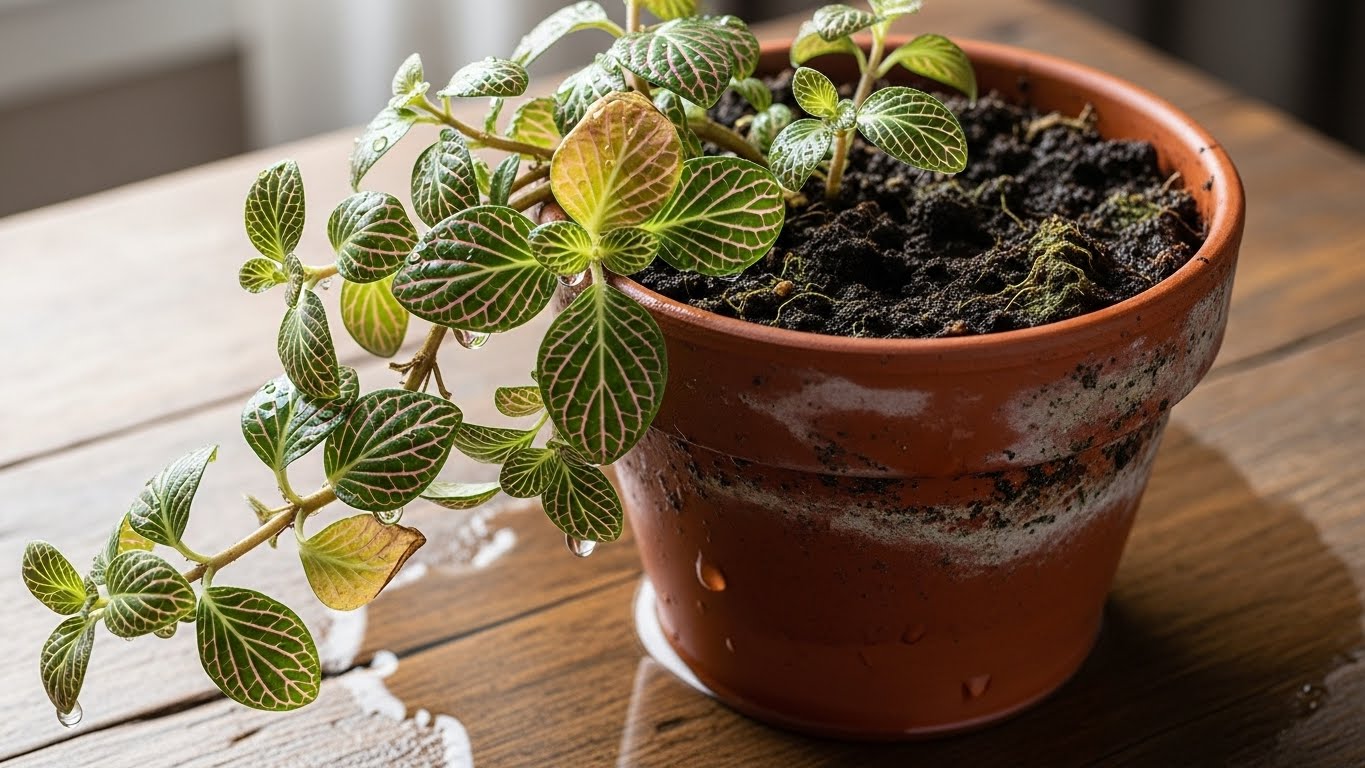
If you notice wilting leaves despite moist soil, yellowing leaves, or mushy roots in your Fittonia, you might be overwatering them. Other signs include a foul odor from the soil, dark leaf spots, or stunted growth. Make sure your soil drains well and check for roots that are blackened or mushy, as these can indicate root rot. Keeping an eye on these signs will help your Fittonia thrive, and there’s more to discover to keep them happy!
💡 Understanding the right watering frequency is crucial for your Fittonia’s health.
➜ Master your watering schedule
Key Takeaways
💡 Understanding how often to water your Fittonia is crucial to prevent overwatering.
➜ Master the watering schedule
- Wilting leaves despite moist soil indicate potential overwatering and root rot issues in Fittonia plants.
- Yellowing leaves and leaf drop are common signs of overwatering stress that require immediate attention.
- Mushy or blackened roots suggest serious health problems and need to be addressed quickly for recovery.
- A foul odor from the soil indicates excessive moisture and potential decay, necessitating a review of watering habits.
- Stunted growth and poor overall health often signal excessive watering, leading to small leaves and weak stems.
Wilting Leaves Despite Moist Soil
When you notice your Fittonia plants’ leaves wilting, even though the soil feels moist, it can be quite confusing. You might think you’re doing everything right, but the truth is, the leaf texture plays an essential role here. Fittonias thrive in humidity, and if the air is too dry, their leaves can droop despite the wet soil. This can happen if you’re watering too frequently, leading to root rot. To keep your lovely Fittonia healthy, check the soil moisture regularly; it should be damp, not soggy. Adjust your watering frequency based on the environment—like a warm, sunny room needing more attention, while a cooler spot might need less. Additionally, ensuring adequate humidity levels is crucial for their overall health. Your plants will thank you with vibrant, perky leaves!
Yellowing Leaves and Leaf Drop
Yellowing leaves and leaf drop can be alarming signs that your Fittonia is struggling, even when you believe you’re giving it the right care. When you notice those vibrant leaves turning yellow, it’s a clear indicator that something’s off, often due to overwatering. Your plant may be telling you it’s drowning in moisture, leading to stress and eventually leaf drop. It’s essential to take a step back and evaluate your watering routine. Are you checking the soil moisture before adding more water? Remember, these lovely plants prefer their soil to dry out a bit between waterings. By adjusting your care, you can help your Fittonia bounce back and keep those beautiful leaves healthy and vibrant!
Mushy or Blackened Roots
When you check your Fittonia plants, pay close attention to the roots, as mushy or blackened roots can signal serious trouble. These decaying roots not only look unappealing, but they can also hinder your plant’s growth and overall health. By understanding how to inspect the root structure and recognizing signs of decay, you can help your Fittonia thrive!
Root Structure Inspection
Inspecting the root structure of your Fittonia plant is crucial, especially if you suspect overwatering, as roots that are mushy or blackened can signal serious trouble. To check the root health, gently remove the plant from its pot and examine the roots. Healthy roots should be firm and white, while mushy or blackened roots indicate damage. If you find these unhealthy roots, you need to improve soil aeration. This can be done by repotting your Fittonia in fresh, well-draining soil and ensuring the pot has drainage holes. Remember, proper root health is essential for your plant’s overall vitality, and by taking these steps, you can help your Fittonia thrive.
Signs of Decay
Recognizing signs of decay in your Fittonia’s roots is important for maintaining a healthy plant, especially because mushy or blackened roots can lead to serious problems. If you notice these symptoms, it’s imperative to act quickly. Poor soil drainage often plays a role in root decay, making decay prevention essential.
Signs of Decay | Recommended Actions |
|---|---|
Mushy roots | Improve soil drainage |
Blackened roots | Remove affected roots |
Foul odor | Repot in fresh soil |
Wilting leaves | Adjust watering schedule |
Leaf discoloration | Check for pests |
Taking these steps can help revive your Fittonia and keep it thriving. Remember, love and attention can turn things around!
Impact on Growth
After addressing the signs of decay, it’s important to reflect on how mushy or blackened roots can impact your Fittonia’s growth. When roots begin to rot, they struggle to support your plant’s growth patterns. This decay hampers nutrient absorption, leaving your Fittonia starved of essential minerals and vitamins. You might notice stunted growth or even yellowing leaves as a result. If you want your plant to thrive, it’s vital to act quickly. You could trim those damaged roots and repot your Fittonia in fresh, well-draining soil. This way, you give your plant a fighting chance to bounce back, encouraging healthy growth and vibrant leaves. Remember, happy roots lead to a happy Fittonia!
Foul Odor From the Soil
If you notice a foul odor coming from your Fittonia’s soil, it’s a clear sign that something’s off. This unpleasant smell often arises from overwatering, which can lead to root rot and unhealthy plant conditions. Ignoring this issue can seriously impact your plant’s health, so it’s essential to address it right away!
Causes of Foul Odor
When you notice a foul odor wafting from the soil of your Fittonia plant, it’s usually a sign that something’s gone awry in the watering department. Poor soil drainage is often the culprit, trapping excess water and creating a soggy environment where harmful bacteria thrive. This can lead to the breakdown of organic matter, causing that unpleasant smell. Additionally, the quality of compost you use plays a significant role; if it’s too rich or not well-aerated, it can contribute to odor issues. To keep your Fittonia happy, guarantee you’re using well-draining soil and monitor your watering habits closely. With proper care, you can help your lovely plant flourish without any funky scents!
💡 Identifying problems early can save your Fittonia from distress.
➜ Discover proven techniques for common issues
💡 Identifying and solving common issues can save your Fittonia from distress.
➜ Discover proven techniques
Impact on Plant Health
While you might love the vibrant colors and unique patterns of your Fittonia, a foul odor emanating from the soil can signal serious trouble for your plant’s health. This unpleasant smell often indicates root rot, which can devastate your beloved plant. To guarantee you’re on top of your plant care, keep an eye out for these signs:
💡 Preventing leggy growth is often linked to proper watering and light conditions.
➜ Explore advanced methods
💡 Humidity plays a crucial role in your Fittonia’s health and can affect its watering needs.
➜ Explore advanced methods for humidity control
- Soggy soil – If the soil feels mushy, it’s time to reassess your watering habits.
- Wilting leaves – Even with enough water, overwatering can cause wilting.
- Yellowing leaves – This often indicates distress from poor soil drainage.
- Fungus growth – Mold or fungus on the soil surface is a red flag.
Act quickly to save your Fittonia!
Mold or Fungus Growth on Soil Surface
Mold or fungus growth on the surface of your Fittonia plant’s soil can be a clear sign that you’re overwatering. When you notice fuzzy white or green patches, it’s essential to act quickly. This is mold, and identifying it early helps in preventing further issues. To tackle this problem, let your plant dry out between waterings. You can also improve air circulation around your plant by moving it to a brighter spot, but avoid direct sunlight. If the mold persists, consider replacing the top layer of soil. Remember, healthy soil means a happy Fittonia! By practicing proper mold identification and fungus prevention, you’ll keep your plant thriving and vibrant, making both you and your Fittonia very happy.
Stunted Growth and Poor Health
Stunted growth and poor health in your Fittonia plant can often signal that it’s receiving too much water, leading to a host of problems. You might notice stunted foliage, which means your plant isn’t thriving. Here are some signs to watch for:
- Small leaves: The leaves are noticeably smaller than usual.
- Weak stems: Stems appear limp and lack strength.
- Slow growth: Your plant shows little to no new growth.
- Poor vigor: The overall energy of the plant seems diminished.
If you spot these signs, it’s time to assess your watering routine. Remember, a happy Fittonia means a healthy, vibrant addition to your space. Adjusting your approach will help revive your plant’s spirit!
Leaf Spots and Browning Edges
When you notice leaf spots and browning edges on your Fittonia plant, it’s not just a minor issue; it’s a clear sign that something’s off in its care routine. These symptoms often indicate leaf discoloration causes related to overwatering. You might also observe leaf texture changes, making the leaves feel mushy or limp. To help you identify these issues, here’s a quick reference:
Problem | Description | Action Needed |
|---|---|---|
Leaf Spots | Dark, water-soaked patches | Reduce watering |
Browning Edges | Crispy, brown edges | Improve drainage |
Leaf Discoloration | Yellowing or fading colors | Check soil moisture |
Leaf Texture Changes | Soft or mushy leaves | Adjust watering frequency |
Overall Health Decline | Stunted growth and poor health | Evaluate care routine |
Adjusting your care routine can help your Fittonia thrive again!
Excessive Soil Moisture Retention
Excessive moisture in the soil can spell trouble for your Fittonia plants, even if they seem to be thriving at first glance. When your soil retains too much water, it can lead to stress for your lovely greenery. Here’s what you should look out for:
Excess moisture can harm your Fittonia, leading to stress despite initial appearances. Keep an eye on your soil!
- Soil feels soggy or muddy to the touch.
- Leaves begin to droop, losing their vibrant perk.
- A musty smell arises from the soil, signaling decay.
- You notice fewer new growths as the plant struggles.
To combat this, consider using soil aeration techniques, like incorporating perlite or sand, and drainage solutions, such as choosing pots with holes. Keeping your Fittonia happy means ensuring its roots breathe and thrive!
Root Rot Diagnosis and Prevention
Root rot, a sneaky problem that can affect your Fittonia plants, often goes unnoticed until it’s too late. If you notice yellowing leaves or a mushy stem, it’s time to check your plant’s root health. Gently pull your Fittonia from its pot and examine the roots; healthy roots are white and firm, while rotten ones appear brown and soft. To prevent root rot, adjust your watering frequency. Confirm the top inch of soil dries out before watering again, allowing your plant to breathe. You can also improve drainage by using well-aerated soil or adding perlite. By keeping an eye on these signs and adjusting your care routine, you’ll help your Fittonia thrive and avoid the dreaded root rot.
Conclusion
So, if your Fittonia is throwing a tantrum with wilting leaves or a funky smell, it’s probably begging for a break from all that water! Remember, it’s not a fish; it doesn’t need to swim in a puddle! By keeping an eye out for those telltale signs of overwatering, you can save your plant from a soggy fate. So, let it dry out a bit, and your Fittonia will be back to its vibrant self in no time!
💡 If your Fittonia shows signs of distress, knowing how to revive it can be a game-changer.
➜ Get the step-by-step guide to revival
💡 If your Fittonia is showing signs of distress, it’s essential to act quickly.
➜ Get the step-by-step guide


