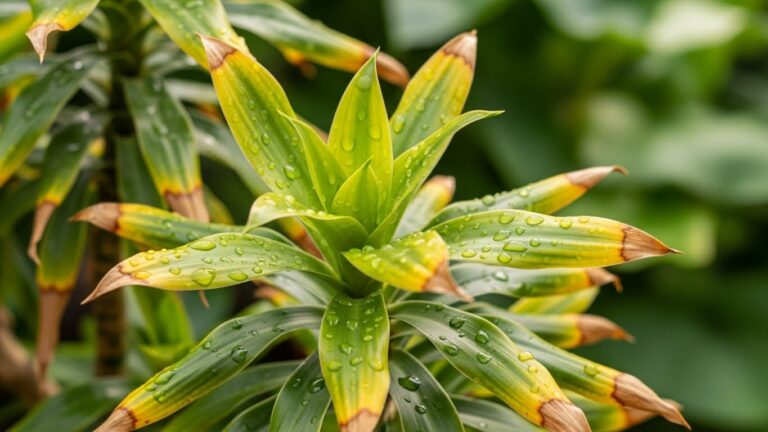
Watering your Dracaena with tap water can have its pros and cons. While tap water delivers essential minerals like calcium and magnesium, it may also contain chlorine and fluoride, which could harm your plant. To make it safer, let the water sit for a day to allow chlorine to evaporate. Always keep an eye on your soil moisture and avoid overwatering. If you’re curious about how to maximize your Dracaena’s health, there’s more to learn!
Key Takeaways
💡 Understanding the right watering frequency is crucial for your Dracaena’s health.
➜ Master the watering schedule
- Tap water can contain beneficial minerals, but its chlorine and fluoride levels may negatively impact Dracaena growth if not managed properly.
- Allowing tap water to sit for 24 hours helps chlorine evaporate, improving water quality for your Dracaena.
- Regularly testing tap water pH ensures it stays within the preferred range for Dracaenas, promoting better nutrient absorption.
- Using filtered or rainwater as an alternative can provide purer hydration, potentially enhancing plant health and vitality.
- Consistent monitoring of soil moisture is essential to prevent over or under-watering, regardless of the water source used.
Understanding Dracaena’s Watering Needs
Understanding how to water your Dracaena is key to keeping it healthy and thriving. You’ll want to pay attention to the watering frequency, which can vary based on the season and your plant’s environment. Generally, let the top inch of soil dry out before watering again. This helps guarantee your plant isn’t sitting in soggy soil, which can lead to root rot. Check the soil moisture regularly; if it feels dry when you poke your finger in, it’s time to give your Dracaena a drink. Remember, these plants prefer a balance—too little water can stress them, but overwatering can be just as harmful. Additionally, Dracaenas are sensitive to fluoride and chlorine, so using filtered water can enhance their health. So, keep an eye on those moisture levels, and your Dracaena will reward you with vibrant growth!
The Composition of Tap Water
When you turn on your faucet, you might not think about what’s flowing out, but tap water is a mix of various elements that can affect your Dracaena. The tap water composition includes minerals like calcium, magnesium, and sometimes chlorine or fluoride, all of which can influence water quality. Each city has its unique blend, meaning the water from your tap can vary greatly. While some of these minerals can benefit your plant, others might not be as friendly. It’s essential to understand how these elements interact with your Dracaena, so you can provide the best care possible. Keeping an eye on your tap water’s composition is a simple way to guarantee your plant thrives!
Potential Issues With Tap Water
When you water your Dracaena with tap water, you might run into a few issues you wouldn’t expect. Chlorine and fluoride, common in many municipal water supplies, can affect your plant’s growth, while mineral buildup can create problems in the soil over time. Plus, the pH level of tap water can vary, which might not be ideal for your Dracaena’s health, so it’s important to keep these factors in mind!
Chlorine and Fluoride Effects
While you might not think twice about using tap water for your Dracaena, it’s important to reflect on the potential effects of chlorine and fluoride, two common chemicals found in municipal water supplies. Both can adversely affect your plant’s health, especially if it’s sensitive to chlorine or if fluoride toxicity becomes an issue.
Here are three points to weigh:
- Chlorine Sensitivity: Many houseplants, including Dracaena, can show signs of distress, like leaf burn, when exposed to high chlorine levels.
- Fluoride Toxicity: This chemical can accumulate in the plant over time, leading to yellowing leaves and stunted growth.
- Water Quality: Testing your tap water can help you determine its suitability for your beloved plant.
Mineral Buildup Risks
Using tap water for your Dracaena can lead to some unexpected issues, especially when it comes to mineral buildup. Over time, the minerals in tap water can accumulate in the soil, affecting the overall water quality your plant receives. This buildup can create a crusty layer on the soil’s surface and may even hinder your plant’s ability to absorb nutrients. If you notice white or yellow spots on your Dracaena’s leaves, it’s likely a sign of mineral accumulation. To keep your plant happy and healthy, consider using distilled or filtered water. By doing so, you can help prevent these risks and guarantee your Dracaena thrives in a clean, nutrient-rich environment. Your plant deserves the best!
Ph Level Concerns
Even though tap water seems like a convenient choice for watering your Dracaena, it often comes with hidden pH level issues that can affect your plant’s health. Here are a few things to contemplate about pH fluctuations and water quality:
- Chlorine and Fluoride: These chemicals can raise the pH level, leading to an imbalance that your Dracaena might struggle to adapt to.
- Hard Water: High mineral content can also affect pH, making it difficult for your plant to absorb nutrients effectively.
- Acidic Conditions: If your tap water is overly acidic, it can hinder your Dracaena’s growth over time.
Monitoring your water’s pH can help guarantee your plant thrives, so keep an eye on those levels!
Benefits of Using Tap Water
Using tap water for your Dracaena can actually be beneficial in several ways. For starters, when you let it sit out, the chlorine naturally evaporates, making it safer for your plant. Plus, tap water often contains essential minerals that can help your Dracaena thrive, and it’s a cost-effective solution that saves you money compared to buying bottled water!
💡 If your Dracaena is struggling, knowing how to revive it can save your plant.
➜ Discover proven techniques to revive your plant
Chlorine Evaporation Benefits
When you fill your watering can with tap water, you might not realize that letting it sit for a while can actually benefit your Dracaena plants. By allowing chlorine to evaporate, you’re enhancing your plant health in several ways:
💡 Healthy plants are less susceptible to pests, making it essential to understand their care.
➜ Get the step-by-step guide to pest management
- Better Nutrient Absorption: With less chlorine, your Dracaena can absorb nutrients more effectively, promoting robust growth.
- Reduced Stress: Chlorine can be harsh on plants. By letting the water stand, you minimize stress, helping your Dracaena thrive.
- Improved Soil Balance: Chlorine can disrupt the microbial balance in the soil. Allowing it to evaporate creates a healthier environment for beneficial microbes.
Mineral Content Advantages
Tap water is more than just a convenient choice for watering your Dracaena—it’s often packed with essential minerals that can really benefit your plant’s growth. When you use tap water, your plant gets a natural boost in mineral absorption, which helps strengthen its roots and foliage. These minerals, like calcium and magnesium, contribute to a healthy nutrient balance, ensuring your Dracaena thrives.
Plus, the right mineral content can enhance photosynthesis, making your plant more vibrant and resilient. While it’s important to monitor the water quality, the benefits of using tap water often outweigh the risks. So, next time you grab that watering can, remember that you’re not just hydrating your plant; you’re nourishing it with a rich blend of minerals that promote healthy growth!
Cost-Effective Water Source
Many plant owners appreciate the budget-friendly nature of tap water, making it a smart choice for keeping your Dracaena healthy. Choosing tap water not only guarantees cost savings, but it also provides easy access to water availability right from your home. Here are some benefits of using tap water:
- Affordable: You won’t need to spend money on bottled water or expensive filtration systems.
- Convenient: Just turn on the faucet! You always have fresh water at your fingertips.
- Consistent Supply: Tap water is available whenever you need it, so you can maintain your plant’s hydration without hassle.
Alternatives to Tap Water
While tap water is a common choice for watering your Dracaena, there are several alternatives that can benefit your plant even more. One great option is filtered water; it removes impurities and chemicals that might harm your plant. You can easily use a pitcher filter or a faucet attachment to give your Dracaena the best possible hydration.
Another fantastic choice is rainwater collection. If you have the space, setting up a rain barrel can provide your plant with pure, natural water. Dracaenas thrive in this kind of environment, as it closely mimics their natural habitat. By trying these alternatives, you’ll not only keep your plant healthy but also enjoy the satisfaction of nurturing it with the best care possible!
How to Prepare Tap Water for Dracaena
Have you ever wondered how to make tap water safe and beneficial for your Dracaena? Preparing your water can make a huge difference! Here’s how to do it:
Learn how to prepare tap water for your Dracaena to ensure its health and vitality!
- Water Filtration: Use a simple water filter to remove impurities and chlorine. This can help your plant thrive by providing cleaner water.
- Let It Sit: After filtering, let the tap water sit for 24 hours. This allows harmful chemicals like chlorine to evaporate, making it gentler for your Dracaena.
- pH Adjustment: Test the pH of your water. Dracaenas prefer a slightly acidic to neutral pH (6.0-7.0). If needed, use pH adjustment solutions to make it just right.
Best Practices for Watering Dracaena
When it comes to watering your Dracaena, knowing the best practices can make all the difference in keeping your plant healthy and vibrant. First, check the dracaena humidity—these plants thrive in moderate levels, so misting them or placing a humidity tray nearby can help. Water your Dracaena when the top inch of soil feels dry; this guarantees it gets just the right amount of moisture. Be mindful of soil drainage; use a pot with drainage holes to prevent water from pooling, which can lead to root rot. When you do water, give it a good soak, allowing excess water to escape. Following these tips will keep your Dracaena looking lush and happy!
Conclusion
In summary, while tap water can be a convenient choice for watering your Dracaena, it’s important to take into account its composition. Did you know that over 60% of households use tap water for their plants? This means many of us might unknowingly expose our beloved greenery to potential harm. By understanding how to prepare and care for your Dracaena, you can guarantee it thrives. So, go ahead, water wisely, and watch your plant flourish!
💡 Proper fertilization can enhance your Dracaena’s resilience against water quality issues.
➜ Explore advanced fertilization methods