
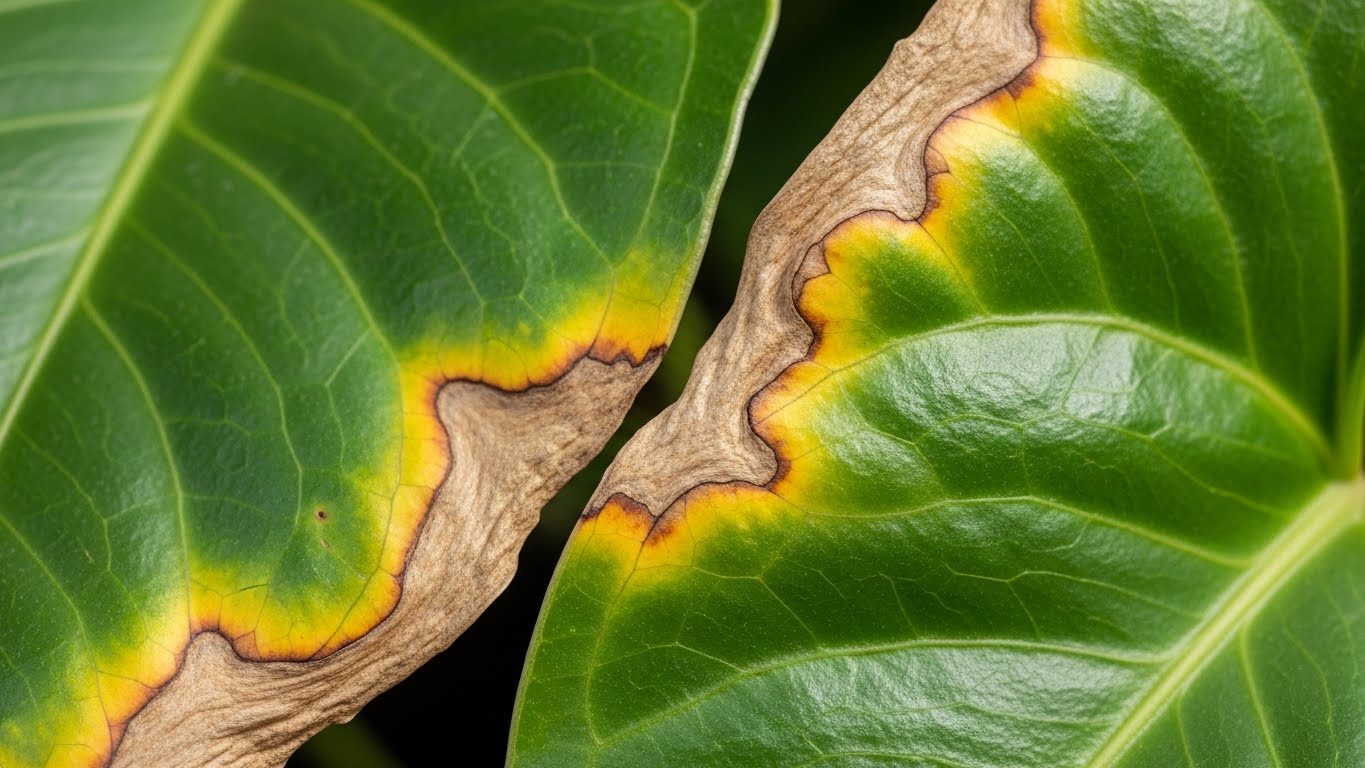
If your anthurium leaves are turning brown, it’s often due to a few common issues. Overwatering or underwatering can be a culprit, so make sure to check your watering practices. Nutrient deficiencies, particularly potassium, may also cause browning. Pests like spider mites could be affecting your plant’s health as well. By adjusting care routines and providing proper light and humidity, you can revitalize your anthurium. Learn more tips on how to keep your plant thriving!
Key Takeaways
💡 Proper fertilization can prevent brown leaves and promote healthier growth. Get the step-by-step guide to fertilizing your Anthurium effectively.
➜ Get the step-by-step guide
- Ensure proper watering; both overwatering and underwatering can cause browning leaves in Anthuriums.
- Check for nutrient deficiencies, especially potassium, as they can lead to leaf discoloration.
- Maintain humidity levels between 60-80% to prevent browning tips and promote healthy growth.
- Inspect for pests like spider mites or aphids, as infestations can harm leaf health.
- Provide bright, indirect light and avoid temperature extremes to support optimal leaf vitality.
Common Causes of Brown Leaves on Anthurium
When you’ve noticed brown leaves on your anthurium, it can be a bit concerning, but don’t worry—there are a few common causes behind this issue. One major factor is improper watering. If you’re overwatering, the roots can rot, leading to leaf discoloration. On the flip side, underwatering can result in crispy brown edges. Nutrient deficiencies, especially a lack of potassium, can also trigger these plant health indicators. Finally, pests like spider mites might be sucking the life out of your leaves. To keep your anthurium thriving, monitor its watering schedule and check for any pesky critters. By addressing these leaf discoloration causes, you’ll be on your way to rejuvenating your beloved plant. Additionally, ensuring high humidity levels is crucial for preventing browning tips and improving overall health.
Environmental Factors Affecting Your Plant
Environmental factors play an essential role in the health of your anthurium, so understanding them can help you keep your plant in tip-top shape. Here’s a quick look at the key factors:
Factor | Importance |
|---|---|
Light Conditions | Bright, indirect light helps leaves thrive. |
Humidity Levels | Higher humidity (around 60-80%) is best for growth. |
Temperature Extremes | Keep away from cold drafts; 65-80°F is ideal. |
Soil Type | Well-draining, organic soil prevents root rot. |
If your anthurium isn’t getting enough light or humidity, or if it’s exposed to temperature extremes, those brown leaves may be a signal to adjust your care routine. Remember, a little attention goes a long way!
Watering Issues: Overwatering vs. Underwatering
When it comes to your Anthurium, getting the watering just right is essential for its health. Too much water can lead to soggy roots and brown leaves, while not enough can make them crispy and dry. Let’s explore the signs of overwatering and underwatering, so you can keep your plant thriving!
Signs of Overwatering
Recognizing the signs of overwatering is essential for keeping your Anthurium healthy and vibrant. If you’re noticing some changes, pay attention to these key signs:
- Leaf Discoloration: Yellowing or browning edges on the leaves can indicate waterlogged soil, which is one of the main leaf discoloration causes.
- Wilting: Despite the excess water, your plant may still appear droopy or wilting, which is a confusing but common response.
- Mold or Mushy Roots: A soil moisture assessment can reveal if your Anthurium’s roots are suffering from rot, which often comes from too much water.
Signs of Underwatering
💡 If you’re dealing with brown leaves, root rot could be the culprit. Discover proven techniques to identify and recover from this common issue.
➜ Discover proven techniques
While it might be easy to focus solely on overwatering, underwatering can also lead to significant problems for your Anthurium. If you notice your plant’s leaf texture becoming crispy or dry, that’s a clear sign it’s thirsty. Leaves may start curling or drooping, which means it’s time to check your soil moisture. You might find the top layer of soil dry, indicating your plant needs a drink. Another clue is if the lower leaves start turning brown, signaling stress from lack of water. To help your Anthurium thrive, feel the soil regularly and water when it’s dry about an inch down. Keeping a consistent watering routine will keep those vibrant leaves looking their best!
Nutrient Deficiencies and Their Impact
💡 Repotting can stress your plant and lead to browning leaves if not done correctly. See how to implement this technique safely to keep your Anthurium thriving.
➜ See how to implement this
Nutrient deficiencies can sneak up on your anthurium, leaving its once vibrant leaves looking sad and brown. If you’re noticing this change, it might be due to a nutrient imbalance in the soil quality. Don’t worry, though! Here are three essential nutrients your plant might be missing:
Nutrient deficiencies can dull your anthurium’s vibrancy; check for imbalances in soil quality to revive those sad leaves.
- Nitrogen: Essential for healthy leaf growth, a lack can cause yellowing and browning edges.
- Phosphorus: Vital for root development; without it, your plant might struggle to absorb water and nutrients.
- Potassium: This nutrient helps regulate water; insufficient potassium can lead to browning leaves.
Pest Infestations: Identifying and Treating
Even with the right nutrients, your anthurium can still face challenges, particularly from pesky pests that love to munch on those beautiful leaves. To start pest identification, keep an eye out for common culprits like spider mites and aphids. Look for tiny webs or sticky residue that signals their presence. Once you’ve spotted them, don’t worry; treatment methods are easy to tackle! You can gently wipe your leaves with a damp cloth to remove them or use insecticidal soap for a more thorough approach. Regularly checking your plant is key, so you can catch any infestations early. Remember, a little vigilance goes a long way in keeping your anthurium thriving and free from those unwelcome guests!
Care Tips to Revive Your Anthurium
When your anthurium’s leaves start turning brown, it can be a bit worrying, but don’t lose hope! You can revive your plant with a few simple care tips that nurture both its health and your connection to it.
- Pruning Techniques: Trim away the brown leaves gently, which not only improves its appearance but encourages new growth.
- Soil Selection: Choose a well-draining potting mix, ideally one that retains some moisture but isn’t soggy, to keep your roots happy.
- Watering Routine: Make sure you’re watering your anthurium when the top inch of soil feels dry, avoiding both overwatering and underwatering.
Follow these tips, and you’ll soon see your anthurium thriving again, adding beauty and joy to your space!
Conclusion
Now that you know the reasons behind your anthurium’s brown leaves, you can take action to bring it back to life! Whether it’s adjusting your watering routine, checking for pests, or boosting nutrients, each step can make a big difference. So, why let your plant struggle when you can help it thrive? With a little care and attention, you’ll soon see those vibrant green leaves again, adding joy and beauty to your space!
💡 Watering issues are a common cause of brown leaves. Master this approach to ensure your Anthurium gets the right amount of moisture.
➜ Master this approach


