
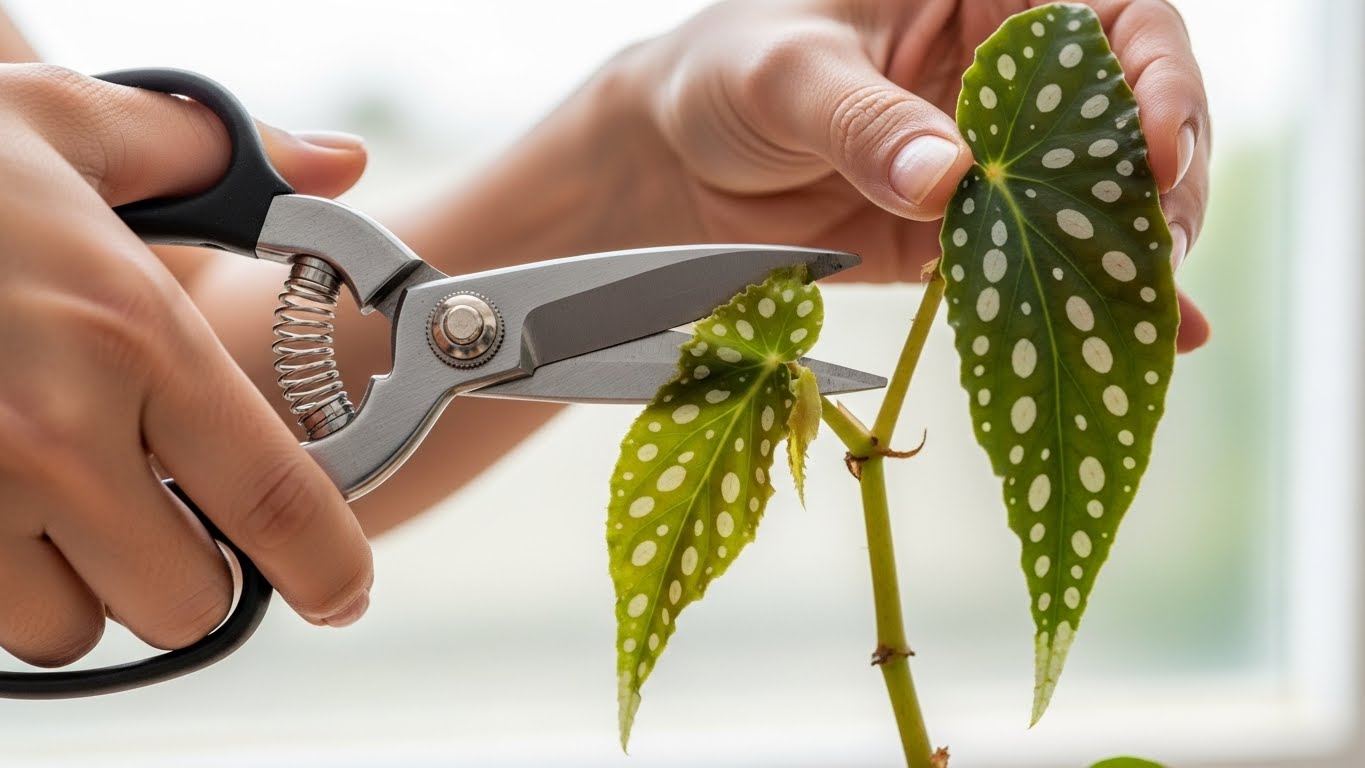
Pruning begonias is key to keeping your plants healthy and flourishing! Start by checking for signs of overgrowth in spring or fall, and use sharp, clean pruning shears to remove dead leaves and leggy stems. Different types of begonias, like Rex and Wax, need specific techniques, so keep that in mind. After pruning, care for them by watering and adding fertilizer to kickstart new growth. Stick around for more tips on how to maintain your begonias!
Key Takeaways
💡 To ensure your begonias thrive, it’s essential to keep them bushy and compact.
➜ Master this approach
- Prune begonias in spring after frost, focusing on overgrown or damaged areas to encourage new growth and vitality.
- Use sharp, clean pruning shears to make precise cuts and prevent plant damage; disinfect tools before and after use.
- For Rex and Wax begonias, remove dead leaves and leggy stems while snipping spent flowers throughout the growing season.
- Post-pruning, apply a balanced fertilizer two weeks later and ensure adequate hydration and light for optimal recovery.
- Avoid over-pruning; maintain a consistent schedule and monitor for signs of stress to promote healthy growth.
Understanding the Importance of Pruning Begonias

Pruning begonias might seem like a chore, but it’s actually an exciting way to guarantee your plants thrive and look their best! By regularly pruning your begonias, you’re not just tidying up; you’re enhancing their overall health. One of the biggest pruning benefits is that it encourages new growth, helping your plants become bushier and more vibrant. This process removes dead or damaged leaves, allowing sunlight to reach the healthier parts of the plant, which boosts plant health greatly. Plus, pruning helps prevent diseases by improving air circulation, so you can keep those pesky pests at bay. Additionally, regular pruning can help maintain optimal temperature ranges for your begonias, ensuring they flourish in their indoor environment. So, grab your pruning shears, and get ready to give your begonias the care they deserve! You’ll feel proud of your green thumbs!
Identifying the Right Time to Prune
Knowing when to prune your begonias is essential for keeping them healthy and vibrant. You’ll want to pay attention to seasonal changes and look for signs of overgrowth, like leggy stems or crowded leaves. By timing your pruning right, you can help your begonias thrive and bloom beautifully!
Seasonal Pruning Guidelines
When you’re enthusiastic to keep your begonias looking their best, timing your pruning just right is essential. For ideal spring timing, wait until the threat of frost has passed. This is when your begonias start to wake up, and a gentle trim can encourage fuller growth and vibrant blooms. You’ll want to remove dead or damaged leaves and any spent flowers.
As summer fades into fall, focus on fall maintenance. It’s the perfect time to prune back any leggy growth and prepare your plants for dormancy. This helps your begonias conserve energy and come back stronger in the spring. Remember, a little seasonal attention goes a long way in keeping your begonias healthy and thriving!
Signs of Overgrowth
As your begonias thrive and grow, you might notice some signs that indicate it’s time to give them a little haircut. Look out for overgrowth symptoms like leggy stems, crowded leaves, or flowers that seem to be fading away. When your begonias start to look unruly, it’s a clear signal they need a trim to boost their plant health. If you see yellowing leaves or a lack of blooms, that’s another hint they’re struggling. By recognizing these signs early, you’ll help your begonias flourish and maintain their vibrant beauty. Regular pruning not only keeps them tidy but also encourages new growth, ensuring they stay healthy and full of life. So, grab those pruning shears, and let’s get to work!
Tools You’ll Need for Pruning
To tackle the task of pruning begonias successfully, you’ll need a few essential tools that make the job easier and more efficient. Having the right gear can transform your pruning techniques into a smooth experience. Here’s a handy list of what you’ll need:
- Sharp pruning shears: For clean cuts that promote healthy growth.
- Gardening gloves: To protect your hands from sharp leaves and dirt.
- Spray bottle: To mist your begonias before and after pruning, keeping them hydrated.
- Measuring tape: To check dimensions and verify balanced pruning.
- Trowel: For any soil adjustments or repotting after pruning.
With these essential tools, you’ll be ready to give your begonias the care they deserve!
Techniques for Pruning Different Types of Begonias
Now that you’ve got your tools ready, let’s explore how to effectively prune different types of begonias. Whether you’re working with the vibrant Rex begonias, the hardy Wax begonias, or the unique Tuberous begonias, each type has its own special pruning needs. Understanding these techniques will help your begonias thrive and look their best, so let’s get started!
Pruning Rex Begonias
Pruning Rex begonias can feel a bit like giving your plant a stylish haircut, and it’s an essential step in keeping them healthy and vibrant. To guarantee your rex begonia thrives, consider these key tips for pruning:
💡 Fertilization plays a crucial role in the health of your begonias.
➜ Discover proven techniques
- Remove any dead or yellowing leaves to promote new growth.
- Cut back leggy stems to encourage bushy development.
- Snip off spent flowers to redirect energy to foliage.
- Use clean, sharp scissors to prevent damage and infection.
- Prune in spring for ideal rex begonia care and propagation.
Trimming Wax Begonias
When it comes to trimming wax begonias, getting the hang of the right techniques can make all the difference in keeping your plants looking their best. Start by removing any yellowing leaves or spent flowers, as this encourages healthy growth. Use sharp, clean scissors to make clean cuts just above a leaf node, which aids in wax begonia propagation. Don’t be afraid to cut back excessive growth; this helps maintain their compact shape. Regular wax begonia care includes pruning every few months to promote bushier plants. Remember, the best time to trim is during the growing season, when your begonias are bursting with energy. With these simple tips, you’ll keep your wax begonias thriving and vibrant!
💡 Healthy begonias are less prone to diseases, which can be mitigated through proper pruning.
➜ Explore advanced methods
Shaping Tuberous Begonias
Shaping tuberous begonias can be a rewarding experience, especially when you see how well they respond to proper pruning techniques. To enhance your tuberous begonia care and guarantee ideal growth, follow these handy tips:
- Start early: Prune in spring when new growth appears.
- Remove dead leaves: This encourages healthy foliage and blooms.
- Cut back stems: Trim to about 4-6 inches to promote bushiness.
- Shape gently: Always aim for a balanced look while pruning.
- Use clean tools: Sanitize your shears to prevent disease.
How to Remove Dead or Damaged Leaves
Removing dead or damaged leaves from your begonias not only improves their appearance but also promotes healthier growth. Start by practicing leaf identification; look for leaves that are brown, yellow, or wilted. These are your targets! Use clean, sharp scissors or pruning shears to make precise cuts. Trim the leaves at their base, avoiding any damage to surrounding healthy foliage.
Consider your pruning frequency; regular checks will help you catch issues early. Aim to prune every few weeks during the growing season, adjusting as needed for your plant’s unique needs. By keeping your begonias tidy, you’re encouraging them to thrive and bloom beautifully. You’ll love seeing the difference!
Shaping Your Begonia for Optimal Growth
To cultivate a thriving begonia, you’ll want to think about its shape and overall structure. Shaping your begonia with the right techniques can greatly enhance its growth patterns. Here are some tips to get you started:
Consider the shape and structure of your begonia; proper shaping techniques can significantly boost its growth and beauty.
- Pinch back stems to encourage bushiness.
- Remove leggy growth to promote a fuller appearance.
- Trim older leaves to redirect energy to new growth.
- Choose a focal point to maintain balance and symmetry.
- Rotate your plant regularly for even light exposure.
These shaping techniques not only enhance the beauty of your begonia but also help it thrive in its environment. Investing a little time in shaping now will reward you with healthy, vibrant blooms that bring joy to your space.
Post-Pruning Care for Your Begonias
Once you’ve finished pruning your begonias, it’s essential to give them the right care to help them recover and thrive. Start with a gentle fertilizer application about two weeks post-pruning. This boost will encourage new growth, so choose a balanced fertilizer and follow the instructions carefully. Keep an eye out for any pests that might take advantage of your plant’s stress; effective pest management is vital during this time. Regularly inspect the leaves and stems, and don’t hesitate to remove any unwanted visitors. Confirm your begonias get enough light and water, but avoid overwatering, as this can lead to root rot. By nurturing them with care, you’ll soon see vibrant, healthy begonias flourishing in your garden!
Common Mistakes to Avoid When Pruning Begonias
When you’re pruning begonias, it’s easy to make some common mistakes that can hinder their growth or even harm the plant. To guarantee your begonias thrive, keep these tips in mind:
Pruning begonias requires attention to detail to avoid mistakes that can hinder their growth.
- Ignoring Pruning Frequency: Don’t wait too long between prunings; regular attention is key.
- Using Dull Tools: Always use sharp, clean tools for effective pruning techniques that minimize damage.
- Pruning at the Wrong Time: Prune during the growing season for best results, not in winter.
- Over-Pruning: Be careful not to remove too many leaves or stems at once; moderation is essential.
- Neglecting to Clean Tools: Avoid transferring diseases by disinfecting your tools before and after use.
Conclusion
To sum up, pruning begonias is a balancing act between removing the old and encouraging new growth. When you cut away the dead leaves, you create space for fresh, vibrant foliage to thrive. Remember, the right tools and techniques can transform your plants from scraggly to stunning. With proper care after pruning, your begonias will flourish, showcasing their beauty. Ultimately, a little effort today can lead to a lush and lively garden tomorrow. Happy pruning!
💡 Pruning can significantly influence blooming in begonias.
➜ Get the step-by-step guide


