
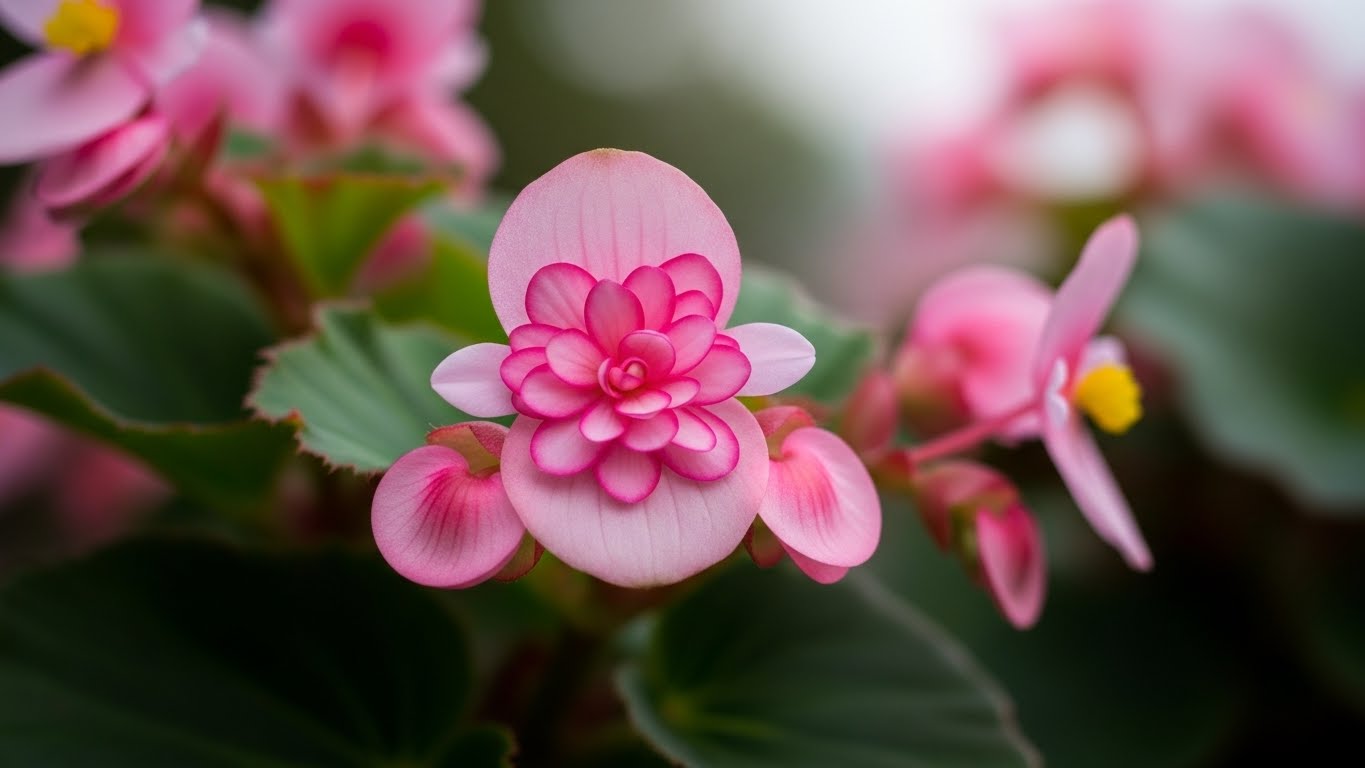
Yes, begonias can bloom indoors! To encourage flowers, make sure to provide bright, indirect sunlight for about 12-14 hours daily. Keep the temperature between 65-75°F and maintain humidity around 50-60%. Water them when the top inch of soil dries out, using room-temperature or distilled water. Additionally, fertilize every four to six weeks during the growing season and don’t forget to prune and deadhead spent blooms for vibrant results. There’s more to discover about keeping your begonias happy!
Key Takeaways
💡 Understanding the right fertilization schedule can significantly impact your begonias’ blooming potential.
➜ Discover proven techniques
- Provide 12-14 hours of bright, indirect sunlight daily to encourage blooming in indoor begonias.
- Maintain ideal temperatures between 65-75°F (18-24°C) and humidity levels at 50-60% for optimal growth.
- Use a well-draining potting mix and fertilize every four to six weeks during the growing season for healthy blooms.
- Regularly prune yellowing leaves and deadhead spent flowers to promote new growth and continuous flowering.
- Monitor for pests like aphids and spider mites, as healthy plants are more likely to produce vibrant blooms.
Understanding Begonia Varieties
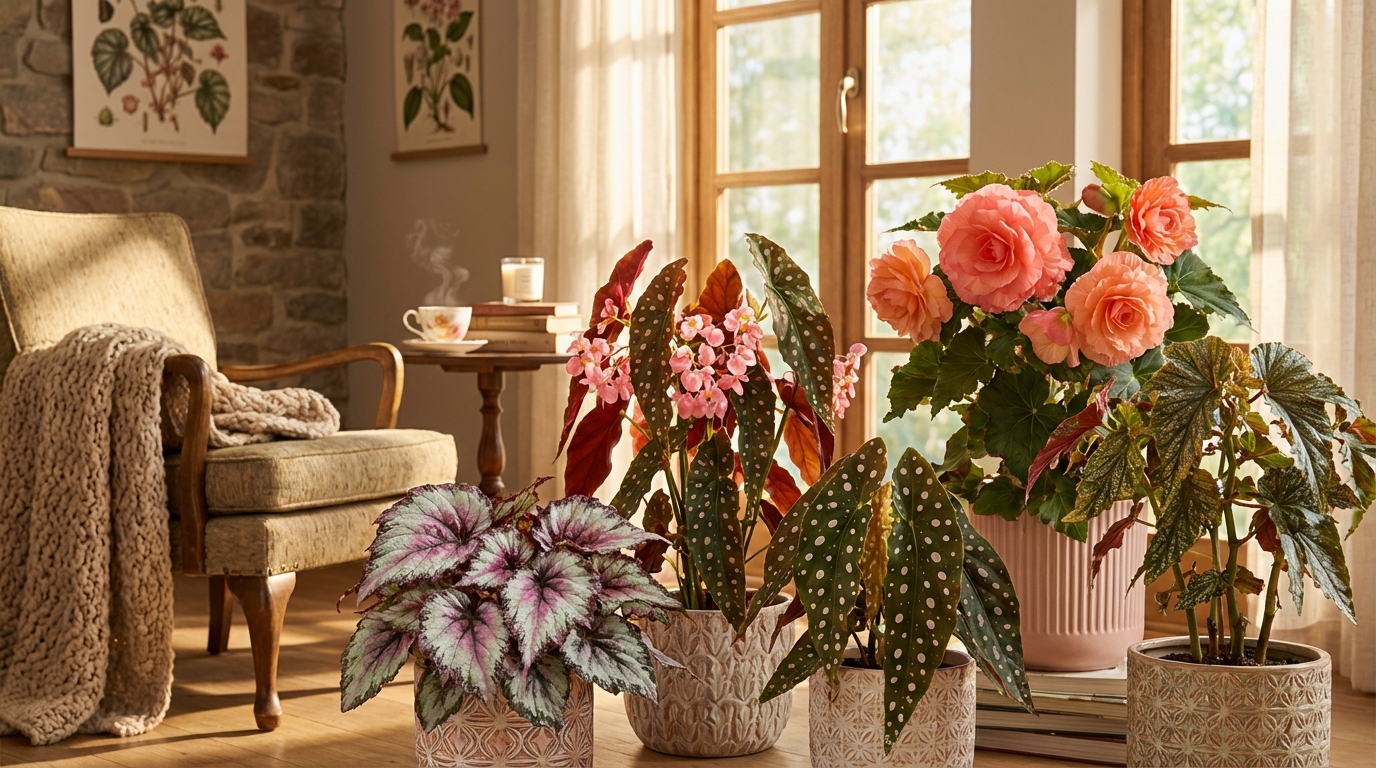
When it comes to begonias, you’ve got a fantastic variety to explore! With so many begonia types available, each brings its unique charm to your space. You might fall in love with the Rex begonia, known for its stunning leaf shapes that resemble intricate patterns and colors. These leaves can be heart-shaped, round, or even elongated, adding a playful element to your collection. Don’t overlook the Wax begonia, either; its thick, glossy leaves and bright flowers will surely catch your eye. As you immerse yourself in the world of begonias, remember that their diverse foliage can create a beautiful tapestry in your home. Additionally, understanding their care requirements will help you provide the best environment for these delightful plants. So, pick a few types that excite you, and enjoy the journey of growing these delightful plants!
Ideal Indoor Conditions for Begonias
Creating the ideal indoor conditions for begonias is essential if you want these vibrant plants to thrive in your home. To help your begonias flourish, aim for an ideal temperature of 65-75°F (18-24°C) and maintain peak humidity around 50-60%. Here’s a simple guide to guarantee your begonias are happy and healthy:
Condition | Recommendation |
|---|---|
Ideal Temperature | 65-75°F (18-24°C) |
Peak Humidity | 50-60% |
Watering Frequency | When the top inch dries |
Soil Type | Well-draining potting mix |
The Importance of Lighting
When it comes to growing begonias indoors, lighting is essential for their success. These vibrant plants thrive in bright, indirect sunlight, and the duration of light exposure can greatly affect their blooming potential. As the seasons change, you’ll need to adjust their light conditions to keep them happy and healthy!
Bright Indirect Sunlight
Bright indirect sunlight is essential for the happiness and health of your begonias. To create the perfect environment, focus on these key factors:
- Lighting Intensity: Aim for moderate light—too much direct sun can scorch leaves.
- Light Placement: Position your begonias near a window with filtered light, like sheer curtains, to provide the warmth without the burn.
- Rotate Regularly: Turn your pot every few weeks to guarantee even light exposure on all sides.
Duration of Light Exposure
While it’s easy to think that all plants need sunlight for a short time each day, begonias thrive on a consistent duration of light exposure to truly flourish. These vibrant beauties need around 12 to 14 hours of light each day to really spark those flowering triggers. If you can provide this steady light duration, you’ll create an environment where your begonias can bloom beautifully.
Seasonal Light Changes
As the seasons change, so does the light that your begonias receive, and this can profoundly impact their blooming potential. To help your begonias thrive, it’s crucial to make seasonal adjustments that cater to their needs. Here are some tips to take into account:
- Adjust Light Intensity: Verify they’re getting enough light, especially during shorter winter days.
- Rotate Your Plant: Turn your begonias regularly to provide even light exposure, preventing them from leaning towards the light source.
- Use Grow Lights: If natural light is limited, think about supplementing with grow lights to maintain healthy growth and encourage blooms.
Watering Practices for Healthy Growth
When it comes to watering your begonias, getting the frequency just right is essential for their healthy growth. You’ll want to pay attention to the quality of the water too, as using clean, room-temperature water can make a big difference. So, let’s explore how often to water these beauties and why the water you choose matters!
Frequency of Watering
💡 Choosing the right begonia variety can enhance your indoor garden’s aesthetic and blooming success.
➜ Explore advanced methods
To keep your begonias thriving indoors, you should water them regularly but not too often. It’s all about finding that perfect balance to maintain moisture levels. Here are some tips for your watering frequency:
- Check the Soil: Always poke your finger about an inch into the soil. If it feels dry, it’s time to water.
- Watering Schedule: Generally, you should water every 1-2 weeks, adjusting based on your home’s humidity and temperature.
- Observe Your Plants: Watch for signs of distress, like drooping leaves or yellowing. These can indicate you need to tweak your watering routine.
Water Quality Importance
💡 Humidity plays a vital role in the health and blooming of indoor begonias, and knowing how to manage it can make all the difference.
➜ Master this approach
While you might think any water will do, the quality of the water you use for your begonias matters more than you might realize. Using tap water can sometimes introduce chemicals that harm your plants, so consider your watering methods carefully. Rainwater and distilled water are excellent choices, as they’re gentle and free from harsh additives. If you must use tap water, let it sit out for 24 hours to allow chlorine to dissipate. This simple step can make a significant difference! Remember, the right water quality not only helps your begonias thrive but also encourages those beautiful blooms you’re keen to see. By paying attention to what you’re watering with, you’re nurturing your plants’ health and happiness.
Soil Selection and Potting Tips
Choosing the right soil and potting your begonias properly can make a big difference in how well they thrive indoors. To create the ideal environment, consider these important soil composition and potting techniques:
Selecting the proper soil and potting techniques is crucial for thriving indoor begonias.
- Well-draining mix: Use a potting mix designed for houseplants, ideally with perlite or vermiculite to improve drainage.
- pH balance: Aim for slightly acidic soil, with a pH between 5.5 and 6.5, to keep your begonias happy.
- Pot size: Choose a pot that’s one size larger than their current home, ensuring enough room for roots to grow without becoming waterlogged.
Fertilizing Your Begonias
Fertilizing your begonias is like giving them a tasty meal that helps them grow strong and vibrant. To keep your plants happy, choose the right fertilizer types, like a balanced 10-10-10 or 20-20-20 formula. These provide a nutrient balance that supports both foliage and blooms. During the growing season, apply fertilizer every four to six weeks to give your begonias the boost they need. Remember, over-fertilizing can harm them, so always follow package instructions. If you notice yellowing leaves or stunted growth, it might be time to adjust your feeding routine. With the right care, your begonias will reward you with colorful flowers that brighten up your space and make your gardening efforts truly worthwhile.
Humidity and Temperature Requirements
When it comes to growing begonias indoors, understanding their humidity and temperature requirements is crucial for their success. Here’s what you need to keep in mind:
- Humidity Levels: Begonias thrive in humidity levels between 50% and 70%. If your home’s air is dry, consider using a humidifier or placing a tray of water near your plants.
- Temperature Range: Aim for a cozy temperature range of 65°F to 75°F (18°C to 24°C). Avoid placing them near drafts or heating vents, as extreme temperatures can stress them out.
- Consistent Conditions: Keeping their environment stable helps encourage blooming. Regularly check humidity and temperature to make sure your begonias feel right at home!
With these tips, you’re all set to help your begonias flourish indoors.
Pruning and Deadheading Techniques
To keep your begonias blooming beautifully, it’s essential to master the art of pruning and deadheading. Start by using proper pruning techniques; gently trim away any yellowing leaves or spent stems to promote healthy growth. This not only opens up the plant but also encourages new blooms. When it comes to deadheading flowers, grab a pair of clean scissors or just pinch the faded flowers off with your fingers. This simple act signals your begonia to produce more blooms, keeping your plant vibrant. Remember, the key is to prune regularly and remove those spent flowers; it’s a rewarding way to show your begonias some love while ensuring they thrive indoors. Happy gardening!
Common Pests and How to Manage Them
After ensuring your begonias are well-pruned and ready to bloom, it’s important to keep an eye out for common pests that might want to take advantage of your beautiful plants. Effective pest identification is key to keeping your begonias healthy. Here are three common pests and how to manage them:
- Aphids: These tiny bugs suck sap from leaves. Use insecticidal soap as an organic treatment.
- Spider mites: They leave tiny webs and yellow spots on leaves. Increase humidity or spray with neem oil for a natural solution.
- Mealybugs: They look like little cotton balls. Dip a cotton swab in alcohol and dab them away.
Conclusion
In the garden of your home, begonias are like shy butterflies, waiting for the right conditions to spread their wings and bloom. By giving them the warmth of your care, the light of your attention, and the sustenance of good soil and water, you can coax these lovely plants into a vibrant display. Remember, just like nurturing friendships, patience and proper care are key. With a little effort, your indoor begonias can flourish and brighten your space beautifully!
💡 If you’re looking for easy-care options that still produce stunning blooms, wax begonias are a great choice.
➜ Get the step-by-step guide


