
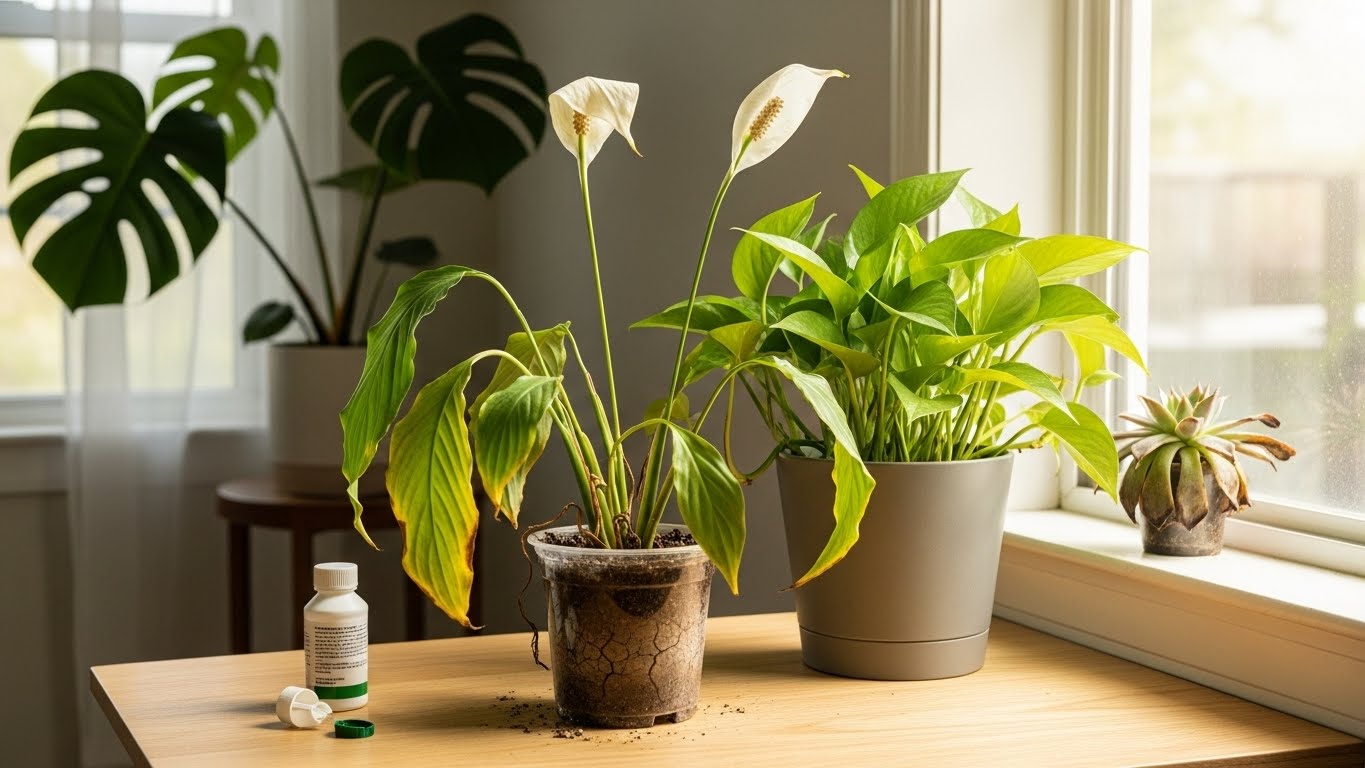
Introduction: Welcome to the Club (Everyone Kills a Plant)
Let’s start with a universal truth of indoor gardening: everyone kills a plant at some point. It’s a rite of passage, a leafy badge of honor worn by even the most seasoned horticulturists. If you’re reading this guide after the untimely demise of a beloved fern or succulent, you are not a failure, and you certainly do not have a “black thumb.” You are simply a new plant parent on a learning curve.
Most indoor plant mistakes made by plant care beginners are not born from neglect, but from an abundance of love and enthusiasm. This is the great paradox of plant parenthood: we often kill our plants with kindness. That extra splash of water, that prime spot in the blazing sun—these are acts of care that, without a deeper understanding of a plant’s needs, can lead to its decline. The central question of why houseplants die often points back to these well-intentioned missteps.
This guide is designed to demystify the process, transforming those moments of panic into opportunities for learning. We will explore the ten most common pitfalls for new plant parents, explaining not just what to do, but why you’re doing it. By understanding the science behind the symptoms, you’ll learn to read your plant’s signals, build confidence, and cultivate a thriving indoor jungle.
The Top 10 Mistakes in Beginner Plant Care
1. The Loving Mistake: Overwatering
This is, without a doubt, the number one reason houseplants don’t survive. It stems from the deeply human impulse to nurture; a belief that more water equals more love. New plant parents often check only the top inch of soil, which dries out quickly, and assume the entire pot is thirsty.
The Telltale Signs (Consequences)
Overwatering is not a single error but the start of a domino effect. The initial act of providing too much water sets off a chain reaction that transforms the plant’s environment from life-sustaining to toxic. The soil becomes waterlogged, which displaces the air pockets that roots need to breathe. This leads to the most feared consequence: root rot. It’s a process of suffocation where roots, deprived of oxygen, begin to die and decay. Healthy roots are firm and white or yellow, while rotted roots become brown or black, soft, and mushy.
The visible symptoms can be confusing. The plant’s leaves may turn yellow or brown but will feel soft and droopy, unlike the crispy texture of an underwatered plant. Both old and new leaves might drop at the same time, the base of the stem can feel mushy, and the soil may even emit a sour, rotten odor. Paradoxically, as the rotting roots lose their ability to absorb water, the plant begins to wilt from dehydration, even while sitting in soggy soil—a major point of confusion for beginners. This anaerobic environment also becomes a perfect breeding ground for pests like fungus gnats and for mold that can grow on the soil’s surface. In some cases, this excess moisture can increase a home’s humidity and harbor mold spores like Aspergillus, potentially impacting the owner’s respiratory health.
The Path to Recovery (Solutions)
- Use the Finger Test: Before you even think about watering, stick your finger 1 to 2 inches into the soil. If it feels damp, wait another day or two before checking again.
- Water Deeply, Not Frequently: When it is time to water, do so thoroughly. Pour water over the soil until it flows freely from the drainage holes. This encourages roots to grow deep and strong. The crucial next step is to empty any excess water from the saucer or cachepot. A plant should never sit in standing water.
- Adjust for Season and Light: A plant’s water needs change. During winter, when growth slows, reduce watering frequency. Similarly, a plant in a low-light corner will use water much more slowly than one in a bright spot.
- Perform Emergency Root Rot Surgery: If you suspect severe root rot, you must act fast. Gently remove the plant from its pot and wash away the soil. Using sterilized scissors, trim off every root that is black, brown, or mushy. Repot the plant in fresh, appropriate soil and be very careful with watering as it recovers.
2. Blinded by the Light: Providing Incorrect Lighting
The light inside a home is fundamentally different from the light outdoors, and our eyes are notoriously poor judges of its intensity from a plant’s perspective. Beginners frequently misinterpret care tags, placing a “bright, indirect light” plant in a dim corner that seems bright to the human eye but is near darkness for a plant.
The Telltale Signs (Consequences)
A plant’s physical response to incorrect lighting is not a passive sign of sickness but an active, strategic adaptation to survive. By learning to recognize these signals, you can understand what your plant is trying to communicate.
- Too Little Light: When a plant is not receiving enough light for photosynthesis, it will actively try to find more. It will stretch its stems toward the nearest window, resulting in a “leggy” or etiolated appearance with large gaps between the leaves. To conserve its limited energy, it will produce smaller new leaves or stop producing new growth altogether. If it’s a variegated plant with white or pink markings, it may revert to solid green to maximize its chlorophyll-producing surface area and capture every possible photon of light.
- Too Much Light: Just like human skin, leaves can get sunburned. Intense, direct sunlight can break down chlorophyll, causing scorched brown or black patches, or a faded, bleached, “washed-out” appearance.
The Path to Recovery (Solutions)
- Decode “Bright, Indirect Light”: This term describes a location where the plant has a wide, unobstructed view of the sky but is not in the path of the sun’s direct rays for more than an hour or two. This is typically found a few feet away from a south- or west-facing window, or directly in an east-facing window that gets gentle morning sun.
- Assess Your Windows: In the Northern Hemisphere, south-facing windows provide the most intense light. West-facing windows get strong afternoon sun, east-facing windows get milder morning sun, and north-facing windows offer the least light.
- Rotate Your Plants: To prevent leaning and encourage even, balanced growth, give your plant a quarter turn each time you water it.
- Supplement with Grow Lights: If your home lacks sufficient natural light, modern full-spectrum LED grow lights are an affordable and highly effective way to keep your plants happy anywhere.
3. The Drowning Pool: Forgetting About Drainage
Beginners often fall for a beautiful ceramic or metal pot that lacks a critical feature: a drainage hole. Planting directly into these decorative containers, known as cachepots, is a common mistake that prioritizes aesthetics over the plant’s fundamental needs.
The Telltale Signs (Consequences)
- Guaranteed Root Rot: Without an exit, any excess water pools at the bottom of the pot, creating a swampy, oxygen-deprived environment. This condition, which experts call “wet feet,” is a fast track to root rot and displays the same symptoms as overwatering.
- Toxic Salt Buildup: Watering flushes excess mineral salts from fertilizer out of the soil. In a pot without drainage, these salts accumulate to toxic levels, which can burn and damage the plant’s roots.
- The Underwatering Trap: Ironically, being aware of the danger can lead to another mistake. In an attempt to avoid creating a pool of water, a beginner might only give the plant small sips, never providing enough water to reach the deeper roots.
The Path to Recovery (Solutions)
- Use the Pot-in-a-Pot Method: This is the gold standard for houseplant care. Keep your plant in its plastic nursery pot (which has drainage holes) and simply place this pot inside your decorative cachepot. When it’s time to water, take the inner pot out, water it thoroughly in a sink or tub, allow it to drain completely, and then place it back in the cachepot.
- Drill a Hole: For those who are comfortable with power tools, drilling a drainage hole into a ceramic or terracotta pot is a viable option.
- Debunk the Gravel Myth: A widespread but incorrect piece of advice is to add a layer of rocks or pebbles to the bottom of a pot for drainage. This does not work. It simply raises the level of saturated water, bringing the oxygen-deprived zone higher up and closer to the plant’s root crown, often accelerating root rot.
4. A Poor Foundation: Using the Wrong Soil
A frequent assumption among beginners is that “dirt is dirt.” However, using the wrong type of soil can be just as detrimental as overwatering. Heavy garden soil, for example, is far too dense for container life, and the peat-heavy mix that plants come in from a nursery is designed for greenhouse conditions, not the average living room.
The Telltale Signs (Consequences)
- Compaction and Suffocation: Soil taken from a garden will quickly compact in a pot, squeezing out air pockets and preventing water from draining, which inevitably leads to root rot.
- The “Perched Water Table” Effect: If you repot a plant from its dense nursery soil into a larger container with an airy, well-draining mix without first removing the old soil, you create a dangerous situation. The original dense soil ball acts like a sponge, holding an excessive amount of water directly against the plant’s roots and crown, while the surrounding soil remains drier. This is a primary cause of rot in newly repotted plants.
- Nutrient Depletion: Over time, soil in a pot becomes compacted and depleted of essential nutrients. It loses its structure and ability to hold both air and water, effectively starving the plant.
The Path to Recovery (Solutions)
- Match Soil to Plant Type: Different plants have different needs. Cacti and succulents require a sandy, fast-draining mix. Most tropical houseplants thrive in an all-purpose indoor potting mix amended with materials like perlite or orchid bark to improve aeration and drainage.
- Repot with Care: When moving a plant from a dense nursery mix to a lighter, airier one, it is crucial to gently loosen and remove as much of the old, heavy soil from the root ball as possible. This prevents the perched water table effect and encourages roots to grow into the new medium.
- Amend Your Soil: A simple way to improve almost any store-bought potting mix is to add a handful of perlite. This lightweight volcanic glass creates air pockets, which improves drainage and gives roots the oxygen they need.
5. Ignoring the Air: Neglecting Humidity
The vast majority of popular houseplants are native to tropical regions with high humidity. Our homes, especially in winter with central heating, are often as dry as a desert. This discrepancy is a hidden stressor that many beginners overlook.
The Telltale Signs (Consequences)
- Brown, Crispy Leaf Tips and Edges: This is the hallmark symptom of low humidity. The dry air causes moisture to evaporate from the leaves (a process called transpiration) faster than the roots can absorb and deliver new water. The leaf tips and edges, being the furthest points from the roots, dry out and die first.
- Curling or Shriveling Leaves: To conserve water, leaves may begin to curl inward, reducing their surface area.
- Stuck New Growth: New, delicate leaves can have trouble unfurling in dry air. They may appear “stuck” inside their protective sheath (the cataphyll) and can emerge damaged or torn.
The Path to Recovery (Solutions)
- Use a Humidifier: This is the single most effective way to consistently increase the ambient humidity in a room. Your plants (and your skin) will thank you.
- Group Plants Together: Plants naturally release water vapor as they transpire. By clustering them together, you create a small, humid microclimate that benefits the entire group.
- Create a Pebble Tray: Place your plant pot on a saucer or tray filled with pebbles and water. The water will evaporate, increasing humidity directly around the plant. Just ensure the bottom of the pot is sitting on the pebbles, not submerged in the water, to avoid root rot.
- Choose the Right Room: Bathrooms and kitchens are typically the most humid rooms in a house, making them ideal locations for humidity-loving plants like ferns and Calatheas.
- Misting is a Myth (Mostly): While misting leaves provides a momentary burst of moisture, it evaporates within minutes and does little to change the overall humidity. Frequent misting can also leave foliage wet for extended periods, especially at night, which can encourage fungal diseases.
6. Starting on “Hard Mode”: Choosing a Finicky Plant
In the age of social media, it’s easy for beginners to be captivated by trendy but notoriously difficult plants like the Fiddle Leaf Fig or the intricately patterned Calathea. Starting with an “expert-level” plant often sets a new plant parent up for a frustrating and discouraging experience.
The Telltale Signs (Consequences)
- Rapid Decline and Frustration: Finicky plants have very specific needs and react dramatically to the slightest inconsistency. A Fiddle Leaf Fig might drop all of its leaves in protest if you move it to a new spot. A Calathea will quickly develop crispy, brown edges without high humidity and purified water.
- The “Black Thumb” Fallacy: The most significant consequence is psychological. When a difficult plant inevitably struggles, the beginner often internalizes the failure, concluding they have a “black thumb” and giving up on the hobby altogether. The choice of a first plant is less about horticulture and more about building confidence. A resilient, forgiving plant provides the positive reinforcement needed to stay engaged and learn, while a difficult plant can prematurely end the journey.
The Path to Recovery (Solutions)
- Start Simple, Build Confidence: Begin your plant journey with species known for their resilience and adaptability. Success with an “easy” plant will teach you the fundamentals and empower you to tackle more challenging varieties later.
Table 1: Beginner-Friendly vs. Challenge-Level Houseplants | |
Start Here: The Forgiving Five | Graduate To: The Finicky Five |
1. Snake Plant (Sansevieria trifasciata): Thrives on neglect. Tolerates low light and infrequent watering. Almost impossible to kill unless overwatered. | 1. Fiddle Leaf Fig (Ficus lyrata): Temperamental. Demands bright, consistent light and hates being moved. Prone to dramatic leaf drop. |
2. ZZ Plant (Zamioculcas zamiifolia): The “eternity plant.” Tolerates deep shade and drought. Stores water in underground rhizomes. | 2. Calathea Varieties (Prayer Plants): The “divas.” Require high humidity, consistently moist soil, and often prefer distilled water to prevent leaf browning. Prone to spider mites. |
3. Pothos (Epipremnum aureum): The classic trailing plant. Adaptable to various light levels and forgiving of inconsistent watering. Easy to propagate. | 3. Maidenhair Fern (Adiantum): Extremely delicate. Needs constant high humidity and consistently moist soil. Can turn crispy and die in a matter of days if its needs aren’t met. |
4. Spider Plant (Chlorophytum comosum): Resilient and a prolific propagator, producing “spiderettes” for easy new plants. Tolerant of a range of conditions. | 4. Alocasia Varieties (Elephant Ear): Prone to spider mites and can go dormant unexpectedly, causing beginners to think they’ve killed it. Needs high humidity and careful watering. |
5. Cast Iron Plant (Aspidistra elatior): Lives up to its name. Nearly indestructible. Tolerates very low light and significant neglect. | 5. Orchid (Phalaenopsis): Requires specific light, temperature, and humidity balance. Watering is tricky, and reblooming can be a challenge for novices. |
7. Tough Love: Improper Fertilizing
Plant food is a common source of confusion. Beginners often either forget to fertilize entirely, leading to nutrient deficiencies, or they overdo it with the “more is better” mindset, causing serious damage.
The Telltale Signs (Consequences)
- Over-fertilizing (Fertilizer Burn): All fertilizers contain mineral salts. When applied too heavily or too often, these salts accumulate in the soil, creating a toxic environment that actually draws moisture out of the plant’s roots, causing them to “burn.” Symptoms include a white, crusty layer on the soil surface, brown and crispy leaf tips and margins, stunted growth, and sudden wilting.
- Under-fertilizing: A plant that is starved for nutrients will exhibit slow or nonexistent growth, pale or yellowing leaves (a condition called chlorosis), and a general lack of vigor.
The Path to Recovery (Solutions)
- Follow the Seasons: Most houseplants actively grow in the spring and summer and go into a dormant or rest period in the fall and winter. Fertilize only during the growing season.
- Less is More: It is always safer to under-fertilize than over-fertilize. A good rule of thumb is to dilute any liquid fertilizer to half the strength recommended on the packaging.
- Water First, Feed Second: Never apply fertilizer to dry soil. Water your plant thoroughly first, then apply the diluted fertilizer. This protects the roots from being burned.
- Flush the Soil: If you see signs of fertilizer burn, you can flush the excess salts out of the pot. Take the plant to a sink or shower and let a large volume of lukewarm water run through the soil and out the drainage holes for several minutes.
8. Growing Pains: Potting and Repotting Errors
Knowing when and how to repot a plant is a skill that comes with experience. Beginners often make mistakes at both ends of the spectrum: repotting a brand-new plant immediately out of excitement, or waiting far too long, leaving the plant to languish in a cramped pot.
The Telltale Signs (Consequences)
- Repotting Too Soon (Transplant Shock): A plant just brought home is already under stress as it adjusts to new light, temperature, and humidity levels. Repotting immediately adds another major shock to its system, which can cause leaves to drop, yellow, and wilt.
- Waiting Too Long (Root-Bound): A root-bound plant has filled its pot entirely with roots, leaving little to no soil to hold water and nutrients. The plant will dry out extremely quickly after watering, its growth will be stunted, and it will slowly starve. Clear signs include roots growing out of the drainage holes or becoming visible on the soil surface.
- Choosing a Pot That’s Too Large: It seems logical to give a plant “room to grow,” but a pot that is too big is a recipe for disaster. The excess soil holds moisture that the plant’s small root system cannot absorb, leading to persistently wet conditions and, ultimately, root rot.
The Path to Recovery (Solutions)
- The Two-Week Acclimation Period: When you bring a new plant home, resist the urge to repot it right away. Give it at least two weeks to acclimate to its new environment first.
- Know the Signs to Repot: Repot your plant when it becomes root-bound. The best time to do this is in the spring, at the beginning of the active growing season.
- Follow the “2-Inch” Rule: When it’s time to upsize, select a new pot that is only 1 to 2 inches larger in diameter than the current one. This provides enough new soil for growth without creating a waterlogged environment.
9. Unwanted Guests: Overlooking Pests
Few things cause more panic for a new plant parent than discovering bugs. Because pests are often tiny and adept at hiding on the undersides of leaves or in plant crevices, infestations can become well-established before they are even noticed.
The Telltale Signs (Consequences)
- Visible Pests and Damage: Regularly inspect your plants for common culprits. Look for the fine, delicate webbing of spider mites; the white, cottony clusters of mealybugs; or small, soft-bodied aphids on new growth. Damage can appear as tiny yellow or white dots on leaves (stippling), distorted new growth, or a clear, sticky residue called honeydew, which can lead to sooty mold.
The Path to Recovery (Solutions)
- Quarantine All New Plants: The best defense is a good offense. Always keep a new plant isolated from your existing collection for at least one to two weeks to ensure it hasn’t brought any pests home with it.
- Inspect Regularly: Make it a habit to look over your plants, including the undersides of leaves, every time you water. Early detection is key.
- Start with Simple Treatments: For minor infestations, physical removal is often effective. A strong spray of water from a showerhead can dislodge many pests. Mealybugs and scale can be wiped away with a cotton swab dipped in rubbing alcohol.
- Use Neem Oil or Insecticidal Soap: For more persistent problems, neem oil and insecticidal soap are effective, less toxic options that are readily available at garden centers. Always follow the package directions.
10. Location, Location, Location: Ignoring Drafts and Temperature
Plants are often placed where they look best, without consideration for the invisible environmental factors that can cause them stress. Drafts from windows, doors, and HVAC vents create rapid temperature fluctuations that most houseplants cannot tolerate.
The Telltale Signs (Consequences)
- Sudden and Unexplained Decline: A plant that seemed perfectly healthy may suddenly wilt, drop a large number of leaves, or develop brown or black spots almost overnight. This is a classic sign of temperature stress.
- Cold Damage: Tropical plants exposed to cold drafts from a window in winter may develop blackened leaves or even collapse entirely.
- Heat Stress: Hot, dry air blowing from a heating vent can rapidly desiccate leaves, causing them to yellow, curl, and become crispy.
The Path to Recovery (Solutions)
- Be an Environmental Detective: Before deciding on a permanent spot for your plant, hold your hand in that location for a minute. Do you feel a draft? Is it directly in the path of a heating or air conditioning vent?
- Seek Stability: Most common houseplants are happiest in stable temperatures between 65°F and 75°F (18°C to 24°C). Keep them away from front doors, drafty windows, radiators, and fireplaces.
The New Plant Parent’s Quick-Start Checklist
Bringing a new plant home can be overwhelming. This checklist breaks it down into a simple, actionable plan to set you and your new green friend up for success.
The First 48 Hours:
- Quarantine: Find a spot for your new plant that is isolated from any other houseplants you may have. This prevents the potential spread of pests.
- Inspect Thoroughly: Use this quarantine period to give your plant a full check-up. Look under every leaf, along the stems, and at the soil surface for any signs of bugs or disease.
- Check, Don’t Water: Resist the urge to water it immediately. Stick your finger in the soil to gauge its moisture level. Plants from stores are often oversaturated, so only water if the soil is genuinely dry.
The First Two Weeks:
- Find Its “Forever Home”: Based on your research of the plant’s needs, choose a permanent location with the appropriate light and away from drafts. Once you place it, try not to move it again, as plants thrive on stability.
- Hold Off on Repotting: Let the plant acclimate to its new home for at least two weeks before introducing the additional stress of repotting.
- Monitor and Learn: Pay close attention to how the plant responds to its new environment. This is your first lesson in understanding its unique language and needs.
Essential Toolkit for Beginners:
- A watering can with a long, thin spout for precise watering.
- A selection of pots with drainage holes and matching saucers.
- A bag of quality all-purpose indoor potting mix and a small bag of perlite for amending.
- A clean, sharp pair of pruning shears or scissors for trimming dead leaves.
- A balanced, water-soluble fertilizer for use during the growing season.
- A soft microfiber cloth for gently dusting leaves.
Frequently Asked Questions & Troubleshooting Guide
When a plant shows signs of distress, it’s easy to panic. This section provides a structured way to diagnose common problems, moving you from a state of worry to one of analytical problem-solving. This framework will help you build the critical thinking skills needed for long-term plant care success.
Q1: Why are my plant’s leaves turning yellow?
- Answer: Yellow leaves are a plant’s main signal for stress. The most common culprit is overwatering, which typically results in soft, yellowing leaves and soggy soil. However, it can also be caused by underwatering (often the lower, older leaves turn yellow and crispy first), insufficient light (leaves become a pale, washed-out yellow), or a nutrient deficiency.
Q2: What do brown, crispy tips on leaves mean?
- Answer: This symptom almost always points to a moisture issue—either in the air or the soil. The most likely causes are low humidity, inconsistent watering (allowing the soil to become bone dry between waterings), or a buildup of mineral salts from hard tap water or excess fertilizer.
Q3: What does “bright, indirect light” actually mean?
- Answer: It’s simpler than it sounds. Imagine a spot in a room where your plant can “see” a large portion of the sky through a window, but where the sun’s hot, direct rays won’t hit its leaves for an extended period. If you could comfortably read a book in that spot for most of the day without needing a lamp, it’s likely receiving bright, indirect light.
Q4: How do I know when it’s time to repot my plant?
- Answer: Your plant will give you clear physical clues. Look for roots growing out of the drainage holes at the bottom of the pot, or roots becoming visible on the surface of the soil. Another sign is that water runs straight through the pot almost immediately, indicating there’s more root than soil to absorb it. If the plant’s growth has stalled, you can gently slide it out of its pot to check if the roots have formed a dense, tightly wound mass.
Q5: What are these tiny black flies buzzing around my soil?
- Answer: You’ve met fungus gnats. They are attracted to consistently moist soil. While they are harmless to humans and generally don’t damage mature plants, they are a definitive sign that you are overwatering or that your soil is not drying out quickly enough. The solution is to allow the top few inches of soil to dry out completely between waterings. You can also place yellow sticky traps on the soil to catch the flying adults.
Q6: Is it better to underwater or overwater?
- Answer: When in doubt, it is always better to underwater. A thirsty plant will often show dramatic signs like drooping, but it can almost always be revived with a thorough watering. An overwatered plant, on the other hand, is at risk of root rot, a condition that is often irreversible and fatal.
Table 2: Plant Symptom Checker | ||
Symptom | Possible Causes | Quick Solution |
Yellow, droopy leaves; wet soil | Overwatering, Root Rot | Stop watering immediately. Check roots for rot. |
Brown, crispy leaf tips/edges | Low humidity, inconsistent watering, salt buildup | Increase humidity (humidifier/pebble tray). Water consistently when top soil is dry. Flush soil with water. |
Leggy, stretched growth; small leaves | Too little light | Move to a brighter location or supplement with a grow light. |
Brown/black spots on leaves | Too much direct sun (scorch), overwatering, pests | Move out of direct sun. Check soil moisture. Inspect for pests. |
White, cottony spots on leaves/stems | Mealybugs | Isolate plant. Wipe off pests with a cotton swab dipped in rubbing alcohol. |
Tiny webs under leaves | Spider Mites | Isolate plant. Spray forcefully with water in the shower. Treat with neem oil. |
Wilting plant, dry soil | Underwatering | Water thoroughly until it drains from the bottom. |


